
The smartphone landscape in 2024 is more competitive than ever. With Google’s Pixel 8 Pro pushing the boundaries of AI integration and computational photography, and Apple rumored to launch a budget-friendly iPhone 16e, consumers are asking: is Apple losing its edge? Or is the buzz around Android innovation mostly marketing smoke and mirrors? This isn’t just about specs—it’s about real-world experience, ecosystem loyalty, and where innovation truly matters.
Design and Build: Simplicity vs Sophistication
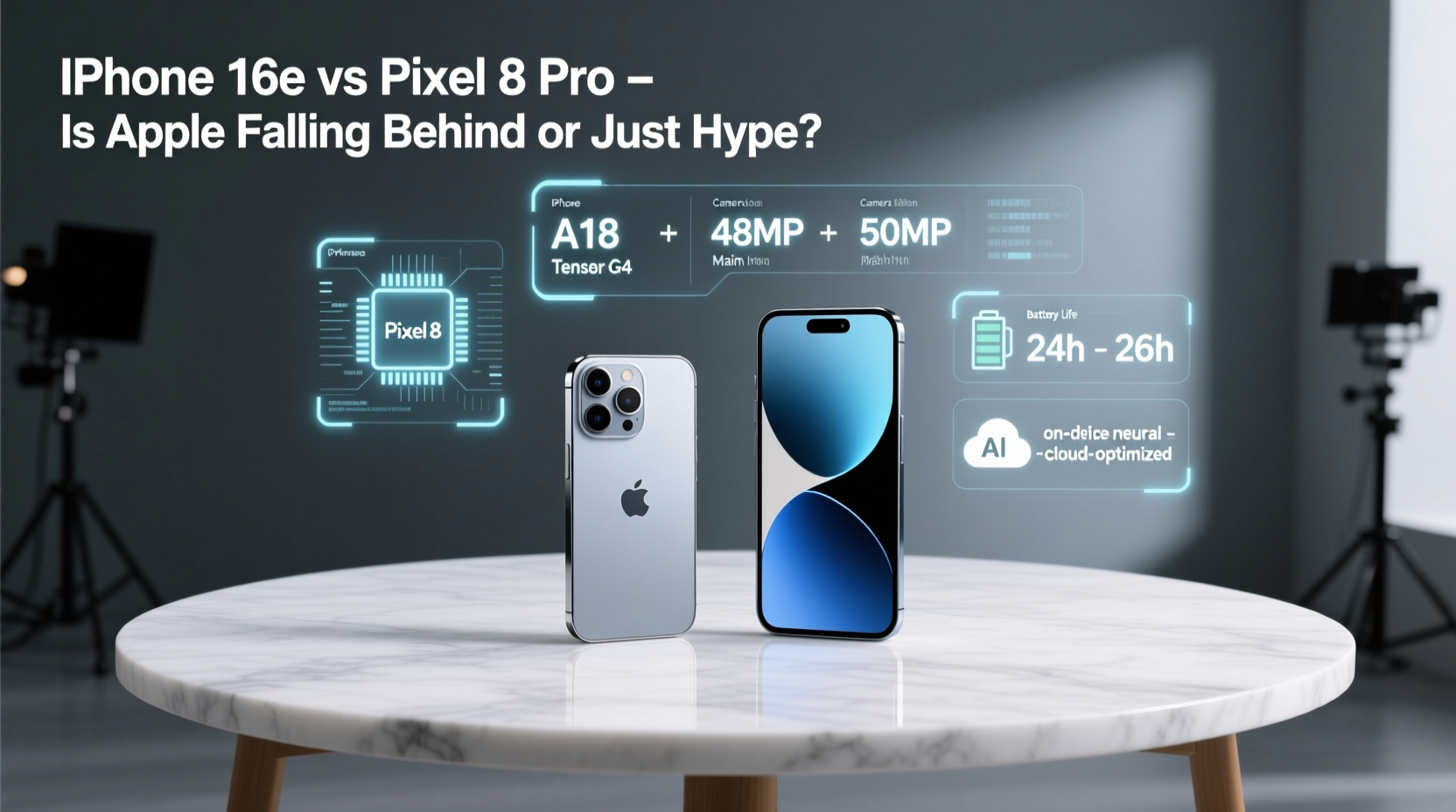
Apple has long championed minimalist design, and early leaks suggest the iPhone 16e will follow suit—compact, aluminum frame, flat edges, and a single-lens rear camera setup. It's expected to be lighter and more pocketable than the current iPhone SE line. Meanwhile, the Pixel 8 Pro continues Google’s trend of premium materials: frosted glass back, polished titanium frame, and a bold two-tone finish that divides opinion but stands out on shelves.
While the Pixel 8 Pro feels undeniably high-end, the iPhone 16e may appeal to users who prioritize durability and simplicity. Apple’s aerospace-grade aluminum and Ceramic Shield glass remain resilient, even in a lower-cost package. However, the absence of IP68 water resistance in the 16e (if confirmed) could be a dealbreaker for some.
Performance and Software: Raw Power vs Longevity
Benchmarks tell one story; real-world usage tells another. The Pixel 8 Pro runs on Google’s Tensor G3 chip—a custom SoC built for machine learning and AI tasks. While it doesn’t match Apple’s A-series chips in raw CPU/GPU performance, it excels in voice processing, photo enhancement, and on-device AI features like Call Screen and Magic Editor.
In contrast, the iPhone 16e is expected to feature the A18 chip, likely a slightly downclocked version of the flagship processor. Even in a budget form factor, Apple’s silicon consistently outperforms mid-tier Android chips in sustained workloads. More importantly, iOS updates are guaranteed for at least five years, compared to three for the Pixel 8 Pro.
“Longevity isn’t just about hardware—it’s about software support. Apple’s five-year update promise gives it a structural advantage.” — David Lin, Mobile Analyst at TechPulse Insights
For users planning to keep their phone beyond three years, the iPhone 16e could offer better long-term value despite its lower starting price.
Camera Comparison: Computational Photography vs Consistency
This is where the debate gets heated. Google has spent years refining its computational photography engine. The Pixel 8 Pro’s triple-lens system—with its 50MP main sensor, 48MP telephoto, and ultra-wide—delivers stunning dynamic range, natural color science, and best-in-class night shots. Its AI-powered features, such as Best Take and Audio Erase, feel almost magical in practice.
The iPhone 16e, however, will likely feature only a 48MP main sensor and no telephoto lens. While Apple’s Smart HDR and Deep Fusion produce reliable, true-to-life images, they lack the “wow” factor of Pixel’s AI enhancements. That said, for users who prefer minimal post-processing and consistent results across lighting conditions, the iPhone’s approach remains unmatched.
| Feature | iPhone 16e (Expected) | Pixel 8 Pro |
|---|---|---|
| Main Camera | 48MP, f/1.8 | 50MP, f/1.7, variable aperture |
| Telephoto Lens | No | 48MP, 5x optical zoom |
| Ultra-Wide | 12MP | 14MP |
| Video Recording | 4K@60fps, Dolby Vision | 4K@60fps, HDR |
| AI Features | Basic scene detection | Magic Editor, Audio Erase, Photo Unblur |
User Experience and Ecosystem Lock-In
Specs don’t exist in a vacuum. For millions of users, the decision between iPhone and Android hinges on ecosystem integration. If you own an Apple Watch, AirPods, or a MacBook, the iPhone 16e offers seamless handoff, Universal Clipboard, and Instant Hotspot—features Android still struggles to replicate.
Google counters with deeper AI integration. The Pixel 8 Pro can summarize emails, transcribe voicemails in real time, and even suggest calendar entries based on messages. These tools are powerful, but they’re also fragmented across apps and require constant cloud connectivity to function optimally.
Apple’s tighter control over hardware and software ensures smoother background task management and battery efficiency. Early reports suggest the iPhone 16e could deliver up to 18 hours of mixed usage—impressive for a compact device. The Pixel 8 Pro, while efficient, often sees performance dips when multiple AI services run simultaneously.
Mini Case Study: Sarah Cho, Freelance Photographer
Sarah switched from an iPhone 14 Pro to a Pixel 8 Pro for its superior night mode and editing tools. Initially thrilled, she found herself frustrated by inconsistent app behavior and slower backup sync with her Mac. After six months, she returned to an iPhone—not because the camera was better, but because her workflow with iCloud, Photos.app, and Final Cut Pro was simply faster and more reliable.
“The Pixel takes prettier photos,” she admits, “but the iPhone helps me get my work done. That’s what matters.”
Is Apple Falling Behind—or Is It Just Hype?
The narrative that Apple is “falling behind” assumes innovation is measured solely by new features. But Apple measures progress differently: reliability, privacy, longevity, and ecosystem cohesion. While Google introduces flashy AI tools annually, Apple integrates them quietly—on-device, without compromising user data.
Consider on-device AI. The Pixel 8 Pro relies heavily on Google’s servers for complex AI tasks, raising privacy concerns. Apple processes most AI locally using the Neural Engine in the A18 chip. Face ID, Siri suggestions, and photo categorization happen without uploading your data to the cloud.
Moreover, Apple’s App Store review process and stricter permissions model make iPhones less prone to malware—a critical factor for enterprise and security-conscious users. Android’s openness is a strength, but it comes with trade-offs.
Checklist: Choosing Between iPhone 16e and Pixel 8 Pro
- Evaluate your ecosystem: Do you use other Apple or Google devices regularly?
- Assess camera needs: Do you need telephoto zoom or AI-powered editing?
- Consider longevity: How long do you plan to keep the phone?
- Prioritize privacy: Are you comfortable with cloud-based AI processing?
- Test real-world performance: Try multitasking, video recording, and low-light photography in person if possible.
Frequently Asked Questions
Will the iPhone 16e support USB-C?
Yes. In compliance with EU regulations, all iPhone models released in 2024 and beyond—including the iPhone 16e—will feature USB-C ports. However, charging speeds may be limited to 20W, unlike the 30W+ fast charging on the Pixel 8 Pro.
Can the Pixel 8 Pro function well without a Google account?
Technically yes, but you’ll lose access to core features like Gmail integration, Google Photos backup, and Assistant. Some AI tools won’t work at all without signing in. The iPhone 16e works fully even with minimal Apple ID usage.
Is the iPhone 16e worth it over older Pro models?
If budget is a concern and you value long-term updates, yes. The A18 chip and iOS support make it a smarter long-term investment than discounted older Pros with outdated batteries and nearing end-of-support.
Conclusion: Beyond the Hype, Choose What Works for You
The rivalry between iPhone and Pixel isn’t just technological—it’s philosophical. Google bets on AI as the future of mobile. Apple bets on privacy, consistency, and ecosystem synergy. The iPhone 16e may not have the flashiest camera or the most viral AI trick, but it delivers a dependable, secure, and integrated experience that resonates with millions.
Apple isn’t falling behind. It’s choosing a different path—one that prioritizes user trust over novelty. Whether that matters to you depends on how you use your phone. For creators, travelers, and tech enthusiasts drawn to cutting-edge tools, the Pixel 8 Pro is compelling. For professionals, families, and long-term thinkers who value peace of mind, the iPhone 16e might be the smarter choice.




 浙公网安备
33010002000092号
浙公网安备
33010002000092号 浙B2-20120091-4
Comments
No comments yet. Why don't you start the discussion?