
For years, the iPhone SE has been the go-to choice for Apple fans who want flagship-level performance in a compact, affordable package. But with rumors of the iPhone 16e entering the conversation—potentially replacing or redefining Apple’s budget-friendly lineup—the question arises: Is it finally time to move on from the SE 3?
The decision isn’t just about new features. It’s about whether those upgrades translate into meaningful improvements in your daily use. If you're still happily using an iPhone SE (3rd gen), you might wonder if the latest rumored model brings enough to justify the cost and change.
Understanding the iPhone SE 3’s Strengths
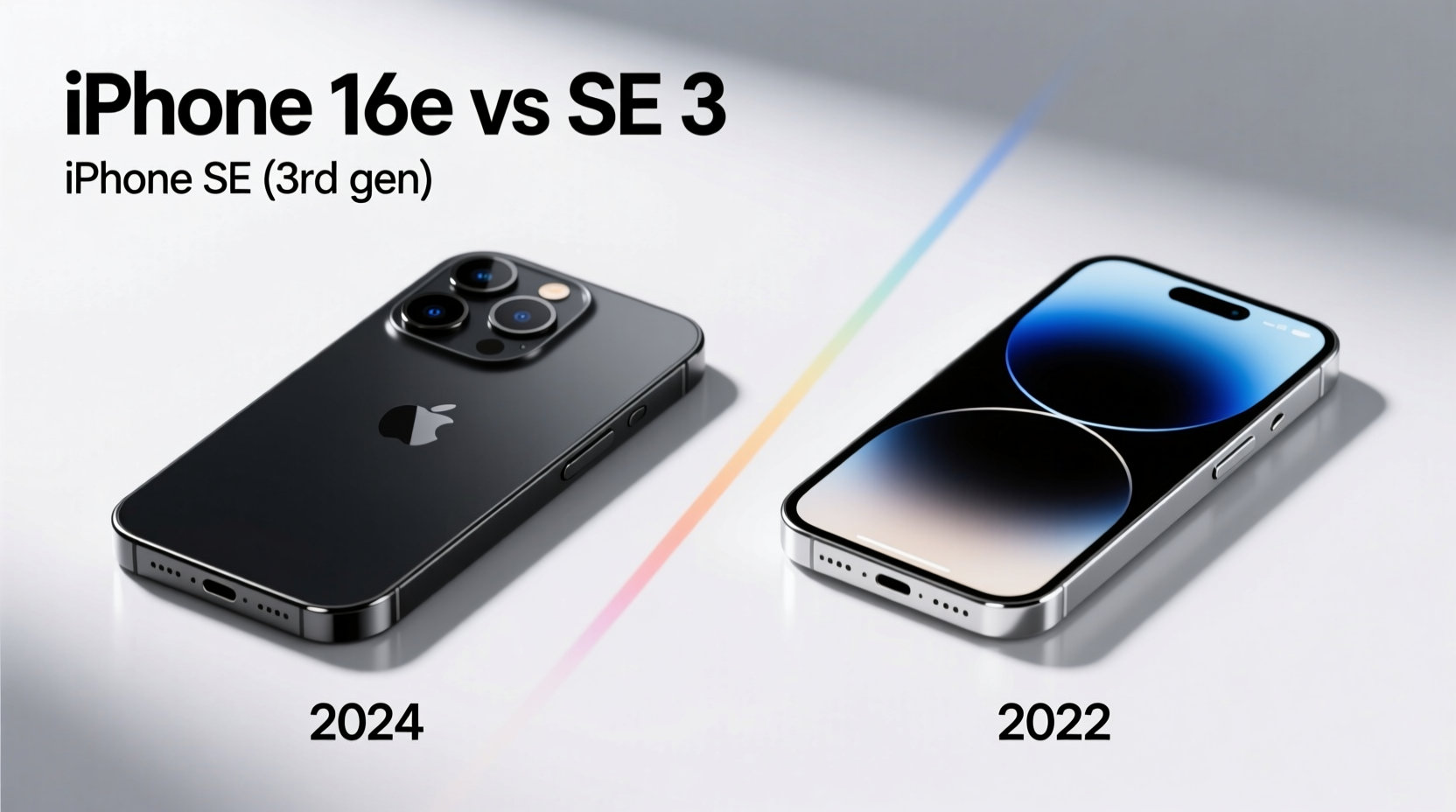
The iPhone SE (3rd generation) remains a compelling device even years after its release. Packed with the same A15 Bionic chip found in the iPhone 13, it delivers snappy performance for everyday tasks, gaming, and multitasking. Its compact 4.7-inch display appeals to users who prefer one-handed operation, and Touch ID offers a familiar, reliable unlock method.
Battery life is modest but sufficient for light to moderate users. The single 12MP rear camera captures solid photos in good lighting, though low-light performance lags behind newer models. iOS updates are guaranteed for several more years, meaning security and feature support remain strong.
What We Know About the iPhone 16e
While Apple hasn’t officially announced an “iPhone 16e,” industry analysts and supply chain reports suggest a new entry-level model could launch in 2025, possibly branded under a refreshed naming scheme. This device is expected to succeed the SE line with modernized design and upgraded internals.
Rumored specs include:
- A 6.1-inch OLED display (a major leap from the SE’s LCD)
- Face ID instead of Touch ID
- An A16 or A17 chip for improved efficiency and AI capabilities
- Dual-camera system with better low-light processing
- USB-C port (complying with EU regulations)
- Better battery life due to larger capacity and efficient chip architecture
This shift signals Apple’s intent to phase out older designs and align even its most affordable iPhone with current standards—especially in display quality and connectivity.
“Apple’s move to OLED and USB-C across all tiers reflects a broader strategy: no iPhone should feel outdated at first glance.” — Mark Liu, Senior Analyst at TechInsight Asia
Key Differences: iPhone 16e vs SE 3
| Feature | iPhone SE 3 | iPhone 16e (Rumored) |
|---|---|---|
| Display | 4.7\" Retina HD LCD, 750nits | 6.1\" Super Retina XDR OLED, ~1000 nits |
| Chipset | A15 Bionic | A16 or A17 Bionic |
| Biometrics | Touch ID (Home Button) | Face ID |
| Camera System | Single 12MP rear, 7MP front | Dual 12MP rear (wide + ultrawide), 12MP front |
| Charging & Port | Lightning, Qi wireless | USB-C, MagSafe-compatible wireless |
| Battery Life | ~10 hours mixed use | ~18–20 hours video playback (est.) |
| Starting Price | $429 (current) | $599–$649 (estimated) |
The contrast is stark. The 16e would represent a generational leap—not just in power, but in user experience. An OLED screen improves readability, color accuracy, and energy efficiency. USB-C simplifies travel and charging logistics. And dual cameras open up creative possibilities like portrait mode with ultrawide lenses and enhanced Night mode.
Real-World Example: Sarah’s Upgrade Dilemma
Sarah, a freelance writer in Portland, has used her iPhone SE 3 since 2022. She loves its size and reliability but recently found herself frustrated during client Zoom calls—the front camera struggles in dim lighting, and she can’t shoot landscape videos without rotating the phone awkwardly.
She also travels frequently and carries multiple devices. Having to pack a Lightning cable *and* a USB-C adapter for her laptop feels outdated. When she saw a prototype demo of the rumored iPhone 16e at a tech meetup, the seamless integration with her MacBook via USB-C and improved selfie camera caught her attention.
After testing a developer preview of iOS 18’s AI-powered transcription tools—which run smoother on A16+ chips—she realized her current phone wouldn’t support future features long-term. For Sarah, the upgrade isn’t just about hardware; it’s about staying compatible with evolving software and workflows.
When the Upgrade Makes Sense
Not every user needs to upgrade. Here’s a checklist to help you decide:
- ✅ You rely on video calls or content creation – The SE 3’s front camera and lack of ultrawide lens limit versatility.
- ✅ You want longer software support – The 16e will likely receive updates until 2031+, while the SE 3 may end around 2027.
- ✅ You value modern displays – OLED offers deeper blacks, better outdoor visibility, and lower eye strain.
- ✅ You use multiple Apple devices – USB-C streamlines charging across MacBooks, iPads, and accessories.
- ✅ You plan to keep your phone for 3+ years – Future-proofing matters for longevity and resale value.
If most of these apply, the iPhone 16e (or its eventual official counterpart) is a worthy successor.
Step-by-Step: How to Decide Whether to Upgrade
- Evaluate your current pain points – Make a list of what frustrates you about your SE 3. Is it slow? Poor camera? Outdated port?
- Test alternatives – Visit an Apple Store or borrow a recent iPhone (like an iPhone 14 or 15) to experience Face ID, OLED, and camera performance firsthand.
- Check your usage patterns – Use Screen Time to see how much you actually depend on your phone. Light users may not need advanced features.
- Review your budget – Factor in trade-in value. The SE 3 can fetch $150–$200 depending on condition, reducing the net cost.
- Wait for official confirmation – Don’t pre-order based on rumors. Wait for Apple’s announcement and real-world reviews before committing.
Frequently Asked Questions
Will the iPhone 16e have Touch ID?
Based on current leaks, no. Apple is expected to standardize Face ID across all new models, eliminating the home button. If you strongly prefer fingerprint unlocking, this could be a dealbreaker.
Can the SE 3 handle iOS 18?
Likely yes—but with limitations. While it will receive the update, some AI-driven features like on-device image generation or advanced Siri integrations may require newer chips and be restricted to A16 and above.
Is the SE 3 obsolete?
No. For basic calling, messaging, social media, and light browsing, it remains capable. Obsolescence depends on your needs, not just age. Millions still use iPhones older than the SE 3 without issue.
Final Verdict: To Upgrade or Not?
The iPhone SE 3 is still a functional, reliable smartphone. But the rumored iPhone 16e represents a necessary evolution—one that brings Apple’s budget tier in line with modern expectations for display quality, connectivity, and long-term software relevance.
If you value compact size and Touch ID, staying put makes sense. But if you want better photos, a brighter screen, universal charging, and assurance that your phone won’t hit a software wall in two years, upgrading is a smart investment.
Technology evolves, and so do our needs. The SE 3 was perfect for its time. The 16e could be the bridge to a more integrated, efficient future—one where your iPhone doesn’t just work, but works seamlessly.




 浙公网安备
33010002000092号
浙公网安备
33010002000092号 浙B2-20120091-4
Comments
No comments yet. Why don't you start the discussion?