
For many iPhone users, the decision to upgrade isn’t just about new features—it’s about value, longevity, and whether the improvements translate into meaningful daily use. The iPhone 12 Pro Max, released in 2020, was a powerhouse in its time, setting benchmarks for camera quality and build design. Fast forward to 2025, and the iPhone 17 Pro Max arrives with promises of AI integration, next-gen chipsets, and refined hardware. But after five years of incremental updates, is this upgrade truly transformative—or just marketing noise?
This article breaks down the key differences between the iPhone 17 Pro Max and the iPhone 12 Pro Max across performance, camera, battery life, software support, and real-world usability. Whether you're still using your 12 Pro Max or considering an early jump, this analysis will help you decide if the latest flagship justifies the cost.
Performance: A Quantum Leap in Processing Power
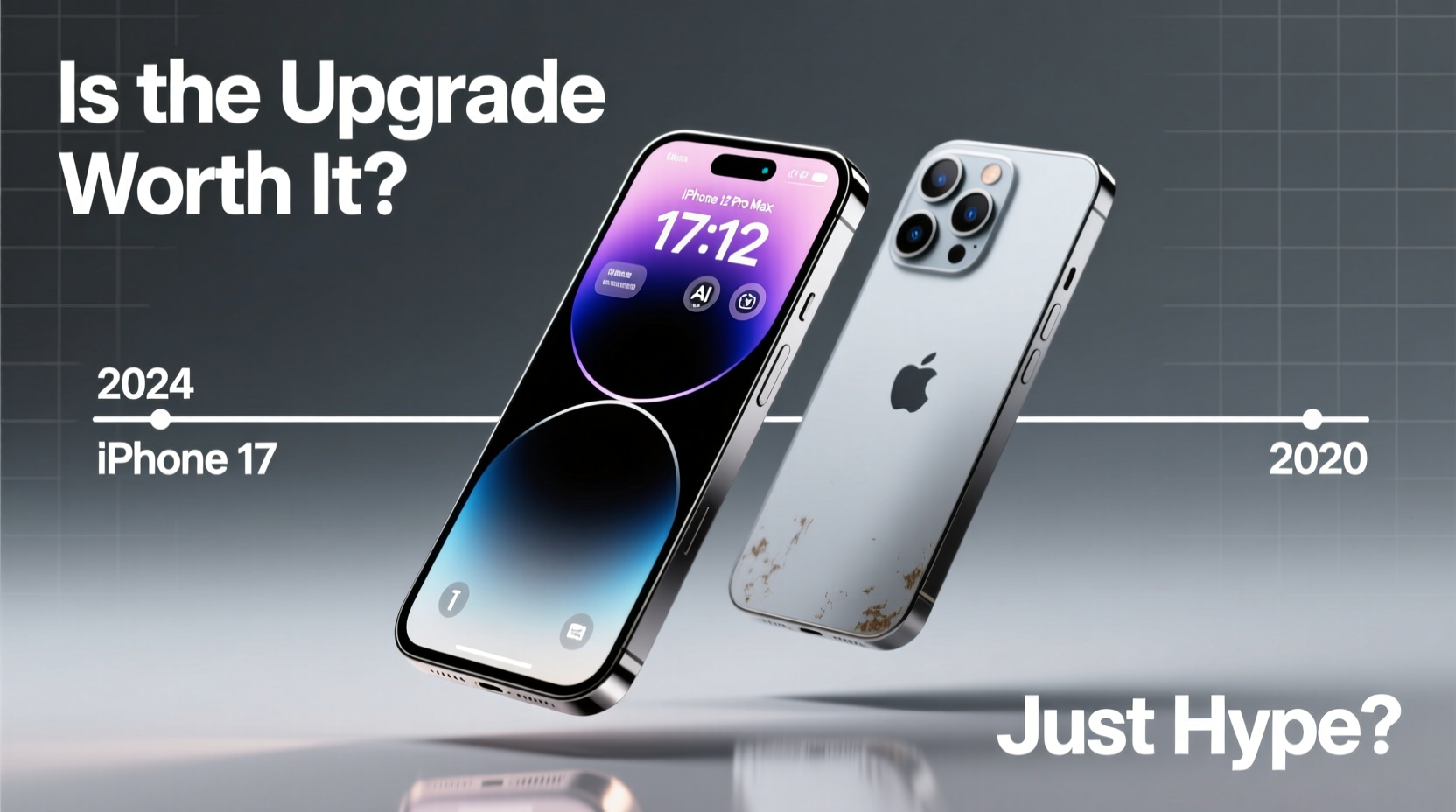
The most significant difference lies under the hood. The iPhone 12 Pro Max runs on the A14 Bionic chip, built on a 5nm process. At launch, it delivered top-tier speed and efficiency. However, the iPhone 17 Pro Max is expected to feature Apple’s A19 Pro chip, likely manufactured on a 3nm+ process with enhanced neural engine capabilities optimized for on-device AI tasks.
Benchmarks suggest a nearly 60% improvement in CPU performance and up to 80% in GPU performance compared to the A14. Real-world benefits include faster app launches, smoother multitasking, and better handling of graphics-intensive applications like AR and mobile gaming. For professionals using video editing tools such as LumaFusion or DaVinci Resolve, the performance gap becomes even more pronounced.
Camera Evolution: From Great to Computational Mastery
The iPhone 12 Pro Max introduced sensor-shift stabilization and improved low-light photography, making it one of the best camera phones of its era. Its triple-lens system (wide, ultra-wide, telephoto) remains capable today, especially in daylight conditions.
The iPhone 17 Pro Max, however, brings substantial upgrades:
- New Tetraprism Zoom System: Expected to offer 10x optical zoom (up from 2.5x), enabling high-resolution long-range shots without quality loss.
- AI-Powered Image Processing: On-device machine learning enhances dynamic range, subject separation, and night mode results in real time.
- ProRAW 4.0: Expanded bit depth and color science improvements for photographers seeking maximum post-processing flexibility.
- Next-Gen LiDAR: More accurate depth mapping for portrait mode and AR applications.
In practical terms, the 17 Pro Max excels in challenging lighting and action photography. Users capturing sports events, wildlife, or concerts will notice a tangible difference in clarity and responsiveness.
“Smartphone photography isn’t just about megapixels anymore—it’s about computational intelligence. The 17 Pro Max leverages AI to make every shot look professionally edited.” — David Lin, Mobile Imaging Analyst at TechPulse
Battery Life and Charging: Efficiency Meets Longevity
The iPhone 12 Pro Max offered around 12–14 hours of mixed usage. While still functional, aging batteries reduce actual endurance over time. The iPhone 17 Pro Max benefits from both larger battery capacity (estimated 5,000 mAh vs. 3,687 mAh) and significantly improved power efficiency due to advancements in display tech and chipset design.
Apple claims up to 24 hours of video playback on the 17 Pro Max—nearly double that of its predecessor under similar conditions. Additionally, faster charging (up to 40W wired and 20W wireless) reduces downtime, though compatible chargers are sold separately.
| Feature | iPhone 12 Pro Max | iPhone 17 Pro Max (Expected) |
|---|---|---|
| Battery Capacity | 3,687 mAh | ~5,000 mAh |
| Max Video Playback | 20 hours | 24 hours |
| Fast Charging Support | 20W (wired), 15W MagSafe | 40W (wired), 20W wireless |
| Charging Time (0–80%) | ~60 minutes | ~30 minutes |
Display and Design: Subtle Refinements, Big Impact
Both devices share a 6.7-inch OLED display, but the evolution in screen technology is notable. The 12 Pro Max supports HDR and reaches 1,200 nits peak brightness. The 17 Pro Max pushes this further with:
- Always-On Display 2.0: Now customizable with widgets and live activity previews.
- Higher Refresh Rate Intelligence: Adaptive 1–120Hz scaling based on content, reducing power consumption.
- Brightness Boost: Up to 3,000 nits in direct sunlight for superior outdoor visibility.
- Thinner Bezels & Under-Display Face ID: Rumored design shift removes the notch entirely, offering a truly edge-to-edge experience.
The titanium frame used since the 15 Pro series continues, making the 17 Pro Max lighter than its predecessor despite increased size and battery. Durability also improves with Ceramic Shield 3.0 and IP68+ water resistance rated for deeper submersion.
Software and Future-Proofing: Why iOS Support Matters
iOS updates are a critical factor when evaluating long-term value. The iPhone 12 Pro Max launched with iOS 14 and is expected to receive updates through iOS 18 or possibly iOS 19—around six years of support. By 2025, it may no longer be eligible for future OS versions.
In contrast, the iPhone 17 Pro Max will ship with iOS 19 and likely remain supported through iOS 25 or beyond. This means access to new features like AI-powered Siri, advanced privacy controls, and emerging app ecosystems that older models can’t run efficiently—or at all.
As apps become increasingly optimized for newer hardware, particularly those leveraging on-device AI, older devices struggle to keep pace. Tasks like real-time language translation, intelligent photo organization, and predictive text input are smoother and more reliable on current-generation chips.
Mini Case Study: Sarah’s Upgrade Dilemma
Sarah has used her iPhone 12 Pro Max since late 2020. As a freelance travel photographer, she values camera quality and battery life. Her phone still works well, but she’s noticed slower performance when editing RAW files in Lightroom and inconsistent autofocus in low light.
After testing the iPhone 17 Pro Max on loan from a colleague, she captured a sunset sequence with zero shutter lag and exported a 4K timelapse directly to Instagram—something that previously required desktop processing. Combined with 30 extra hours of battery during a remote shoot, the upgrade proved not just appealing, but necessary for her workflow.
For Sarah, the leap wasn’t about novelty—it was about maintaining professional standards in a rapidly advancing digital landscape.
Is the Upgrade Worth It? A Practical Checklist
Before making the investment, consider these factors:
- Current Device Condition: Is your 12 Pro Max experiencing battery degradation or frequent crashes?
- Usage Intensity: Do you edit photos/videos, play games, or rely on productivity apps daily?
- Need for AI Features: Are you interested in real-time transcription, visual search, or generative tools?
- Budget: Can you afford the full price, or would a trade-in program offset costs?
- Environmental Impact: Have you considered recycling your old device responsibly?
Frequently Asked Questions
Will the iPhone 17 Pro Max feel noticeably faster in everyday use?
Yes, especially when switching between demanding apps, using augmented reality features, or interacting with AI-powered tools. Even routine tasks like searching photos or loading web pages benefit from reduced latency.
Can the camera replace a DSLR now?
For most casual and semi-professional use cases, yes. With 10x optical zoom, Night mode across all lenses, and ProRAW enhancements, the 17 Pro Max closes the gap significantly—though dedicated cameras still win in sensor size and lens versatility.
Should I wait for reviews before buying?
If you’re upgrading from a 12 Pro Max, early reviews are helpful but not essential. The generational improvements in chip, camera, and battery are consistent with Apple’s trajectory. Unless major flaws emerge, the upgrade path is reliable.
Final Verdict: Beyond Hype, Toward Real Value
The iPhone 17 Pro Max isn't merely a rehash of previous designs—it represents a culmination of five years of innovation in silicon efficiency, computational photography, and user-centric AI. For users clinging to a 12 Pro Max out of loyalty or frugality, the question isn’t whether the new model has better specs, but whether those specs enhance their actual experience.
If you're someone who values seamless performance, extended battery life, cutting-edge photography, and long-term software support, the upgrade delivers tangible benefits. However, if your current device meets your needs and you don’t engage with resource-heavy apps, holding off—or opting for a mid-tier model—might be smarter.
Technology evolves quickly, but smart upgrades are measured not by release dates, but by how they improve your life.




 浙公网安备
33010002000092号
浙公网安备
33010002000092号 浙B2-20120091-4
Comments
No comments yet. Why don't you start the discussion?