
In September 2013, Apple introduced two new iPhones: the flagship iPhone 5s and the more colorful, plastic-backed iPhone 5c. Positioned as a more affordable option, the 5c shared much of its internal hardware with the outgoing iPhone 5. For users already on the iPhone 5, the question wasn’t whether the 5c was a step up from older models—it was whether upgrading to the 5c made sense at all. Three years after the iPhone 4S and just one year after the sleek iPhone 5, many consumers were left wondering: Was moving from the iPhone 5 to the 5c actually an upgrade—or just a lateral move wrapped in brighter colors?
The Design Divide: Style Over Substance?
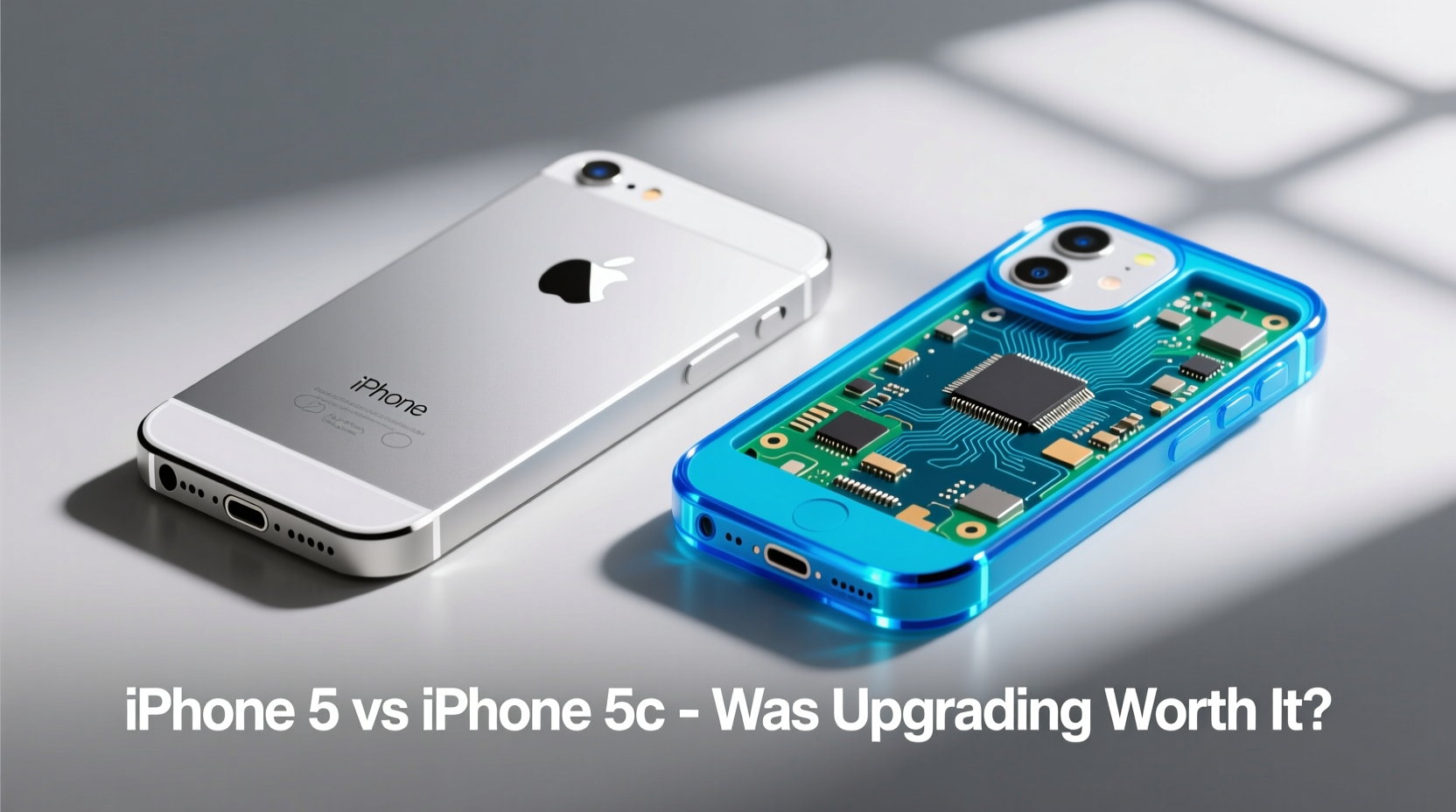
The most obvious difference between the iPhone 5 and 5c was their build and aesthetic. The iPhone 5 featured a premium aluminum unibody design with a glass front and chamfered edges that gave it a refined, minimalist look. It felt light but solid—engineered for elegance.
In contrast, the iPhone 5c used a polycarbonate (plastic) shell encasing a steel-reinforced frame. While Apple marketed the material as durable and precision-molded, consumers often perceived it as “cheap” compared to the metal construction of the 5. Despite being slightly thicker and heavier, the 5c offered vibrant color options: blue, green, pink, yellow, and white. This shift signaled Apple’s attempt to appeal to younger users and emerging markets where color and personality mattered more than industrial minimalism.
Yet, for existing iPhone 5 owners, the design change was more cosmetic than functional. You weren't gaining durability or water resistance—you were trading brushed aluminum for glossy plastic. Some users reported better grip with the 5c, while others missed the premium feel of the original.
Internal Hardware: Same Chip, Same Speed
Under the hood, both devices ran on the same Apple A6 chip, had 1GB of RAM, and shipped with iOS 7. There was no performance improvement when upgrading from the iPhone 5 to the 5c. Apps launched at the same speed, multitasking behaved identically, and gaming performance remained unchanged.
This lack of internal upgrades was critical. For users expecting faster processing, better battery life, or improved graphics, the 5c offered nothing new. In fact, due to slightly larger battery capacity (1508 mAh vs. 1440 mAh), the 5c had marginally better battery life—but not enough to justify the upgrade cost for most.
Storage options were also identical: 16GB and 32GB variants, with no expandable storage. Neither model supported external drives or SD cards, limiting long-term media growth.
“Apple positioned the 5c as a ‘fun’ alternative, but under the surface, it was the same phone we’d held a year earlier.” — David Kim, Mobile Tech Analyst at GigaDevice Insights
Camera and Display: No Meaningful Gains
The cameras on both phones were functionally identical: an 8MP rear sensor with backside illumination, 1080p video recording at 30fps, and a 1.2MP front-facing camera. Image quality, low-light performance, and autofocus speeds were indistinguishable in real-world use.
Likewise, the display specs were unchanged: a 4-inch Retina display with 1136x640 resolution and a 326 ppi pixel density. Colors, brightness, and viewing angles were consistent across both models. Any visual improvements came from iOS 7’s redesigned interface—not hardware changes.
For photographers or frequent video callers, there was zero incentive to switch. If anything, some users noted that the 5c’s plastic casing could interfere slightly with signal reception, though this was inconsistent across carriers.
Price and Value Proposition
When released, the iPhone 5c started at $549 off-contract—just $100 less than the iPhone 5s, which featured Touch ID and the new A7 chip. Meanwhile, the iPhone 5 dropped to $449 upon the 5c’s launch, making the price gap between old and “new” models uncomfortably narrow.
For current iPhone 5 owners considering an upgrade, the math didn’t add up. Paying hundreds of dollars (on contract) or $500+ (off-contract) for a phone with the same internals and a different shell felt like poor value. Worse, resale value for the iPhone 5 plummeted overnight, leaving early adopters frustrated.
Market response confirmed this skepticism. By early 2014, Apple had slashed production of the 5c due to weak sales. Analysts called it one of Apple’s rare missteps in product positioning.
iPhone 5 vs iPhone 5c: Key Comparison Table
| Feature | iPhone 5 | iPhone 5c |
|---|---|---|
| Release Date | September 2012 | September 2013 |
| Build Material | Aluminum & Glass | Polycarbonate (Plastic) |
| Weight | 112g | 132g |
| Processor | A6 Chip | A6 Chip |
| Rear Camera | 8MP, 1080p video | 8MP, 1080p video |
| Battery Capacity | 1440 mAh | 1508 mAh |
| Colors | Slate, Silver | Blue, Green, Pink, Yellow, White |
| Starting Price (Off-Contract) | $449 (at 5c launch) | $549 |
Real User Experience: A Case Study
Take the example of Sarah Lin, a graphic designer in Chicago who upgraded from her iPhone 5 to the 5c within weeks of its release. She loved the bright lime-green color and thought the sturdier casing might protect against drops. After six months, however, she admitted regret.
\"I paid full price thinking I was getting something new,\" she said. \"But my apps ran the same, my photos looked the same, and the plastic scratched way easier than I expected. When my friend got the 5s, I could see the difference in speed and features. I basically paid extra for a case-colored phone.\"
Her experience mirrored broader consumer sentiment. Many felt misled by Apple’s marketing, which emphasized vibrancy and lifestyle without clarifying that the 5c wasn’t a technological leap forward.
When Might the Upgrade Have Made Sense?
Despite its shortcomings, there were niche scenarios where upgrading to the 5c *could* be justified:
- You wanted longer battery life – The 5c’s slightly larger battery offered about 30–40 minutes more talk time.
- You prioritized durability – Though plastic isn’t premium, it’s less prone to dents than aluminum.
- You valued color personalization – For fashion-conscious users, the 5c stood out in a sea of black slabs.
- You were on a budget but wanted a 'new' iPhone – The 5c filled a mid-tier role before Apple officially embraced tiered pricing.
Checklist: Should You Have Upgraded from iPhone 5 to 5c?
- Are you primarily interested in color variety or fun design?
- Do you need slightly better battery endurance?
- Are you okay with no performance improvement?
- Is your current iPhone damaged or failing?
- Can you get the 5c at a significant discount?
If you answered “yes” to three or more, the upgrade might have made sense. Otherwise, waiting for the iPhone 5s or even the 6 would have been smarter.
Frequently Asked Questions
Did the iPhone 5c have better signal strength than the iPhone 5?
No. Both models used similar antenna designs. Some users reported minor differences based on casing material, but these were inconsistent and not statistically significant.
Was the iPhone 5c considered a failure?
By Apple’s standards, yes. Initial sales fell far below projections. The company eventually discontinued the model and shifted focus to lower-priced versions of flagship phones, like the iPhone SE series.
Could the iPhone 5c run the same apps as the iPhone 5?
Absolutely. Since both used the same A6 processor and iOS version, app compatibility and performance were identical. No app required the 5c specifically.
Conclusion: The Upgrade That Wasn’t
Looking back, upgrading from the iPhone 5 to the 5c was hard to justify. It offered no meaningful improvements in speed, camera, or software capability—only a new shell and marginal gains in battery life. For loyal Apple users hoping for innovation, the 5c felt like a rebrand rather than a revolution.
Its legacy, however, influenced future strategies. Apple learned that consumers wanted either true innovation (like the 5s) or genuine affordability (eventually delivered with the SE line). The 5c became a cautionary tale in product differentiation: changing the outside without improving the inside rarely satisfies tech-savvy buyers.
If you're evaluating upgrades today—whether for iPhones or other devices—remember the lesson of the 5c: real value lies beneath the surface. Don’t let color or marketing distract from core performance.




 浙公网安备
33010002000092号
浙公网安备
33010002000092号 浙B2-20120091-4
Comments
No comments yet. Why don't you start the discussion?