
The iPhone 5 was a landmark device in Apple’s history—sleek, fast for its time, and a symbol of early smartphone sophistication. Released in 2012, it set design trends and introduced users to a taller screen format. Fast forward to 2018, and Samsung released the Galaxy A7 (2018), a mid-range Android phone with modern features like triple cameras, water resistance, and a large AMOLED display. For users still clinging to an iPhone 5, the leap to the Galaxy A7 2018 isn’t just an upgrade—it’s a quantum shift. But is it actually worth making the switch?
This isn’t just about specs on paper. It’s about real usability, longevity, software support, and whether your daily experience improves enough to justify the change—especially if you're emotionally attached to iOS or hesitant about switching ecosystems.
Design and Build: From Glass to Glass, But Worlds Apart
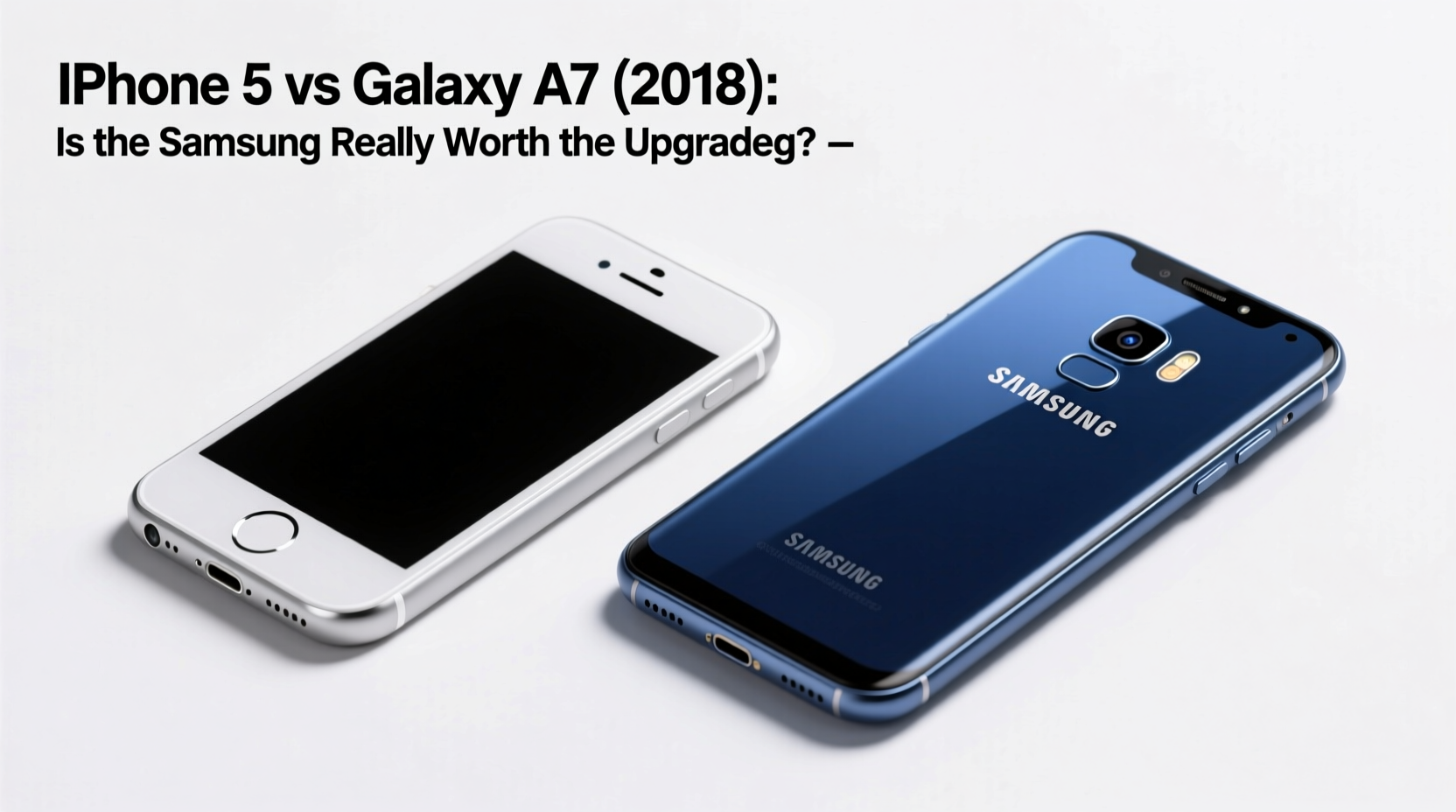
The iPhone 5 featured an aluminum unibody with glass front and back, measuring 4.87 x 2.31 inches. At the time, it felt premium and compact. The Galaxy A7 2018, by contrast, is significantly larger at 6.09 x 2.94 inches, with a full-frontal glass display and a sleek glass-and-metal hybrid design. It also includes IP68 water and dust resistance—a feature absent from the iPhone 5 and even many high-end iPhones until much later.
Size aside, the A7 feels more modern in hand. Its near-bezel-less 6.0-inch Super AMOLED display dominates the front, offering vibrant colors and deep blacks. The iPhone 5’s 4-inch Retina display, while sharp for its era, now feels cramped for web browsing, video, and multitasking.
Performance and Software: Night and Day Difference
Under the hood, the iPhone 5 ran Apple’s A6 chip with 1GB of RAM. In 2012, it delivered smooth performance, but today it struggles to run even basic apps. iOS updates stopped at iOS 10.3.4, cutting off access to modern app versions and security patches.
The Galaxy A7 2018, powered by an Exynos 7885 or Snapdragon 660 (depending on region), comes with 4GB or 6GB of RAM and 128GB storage expandable via microSD. It launched with Android 8.0 Oreo and received updates up to Android 10 with One UI. Even though it’s no longer supported, it runs most current apps efficiently and handles multitasking with ease.
Switching from iOS to Android may seem daunting, but Samsung’s One UI simplifies navigation, especially for new adopters. Features like split-screen mode, dark theme, and customizable home screens offer flexibility the iPhone 5 could never match.
“Moving from a legacy iPhone to a modern Android device isn’t just an upgrade—it’s gaining access to a decade of technological progress in one step.” — David Lin, Mobile Tech Analyst at GadgetInsight
Camera Comparison: From Decent to Competitive Mid-Range
The iPhone 5’s 8MP rear camera was excellent in its day, known for accurate color reproduction and solid low-light handling. However, it lacks features now considered standard: HDR automation, night mode, portrait mode, or even front-facing flash.
The Galaxy A7 2018 introduced Samsung’s first triple-camera setup: a 24MP main sensor, an 8MP ultra-wide lens, and a 5MP depth sensor. This allows for creative framing, better group shots, and adjustable bokeh effects. The front camera is 24MP with LED flash—ideal for selfies in dim lighting.
In real-world use, the A7 produces sharper, more detailed photos with better dynamic range. Low-light performance is vastly superior, and the ultra-wide lens adds versatility for landscapes and architecture.
| Feature | iPhone 5 | Galaxy A7 2018 |
|---|---|---|
| Display Size | 4.0 inches | 6.0 inches (AMOLED) |
| Processor | A6 chip | Exynos 7885 / Snapdragon 660 |
| RAM | 1GB | 4GB / 6GB |
| Rear Camera | 8MP (single) | 24MP + 8MP + 5MP (triple) |
| Front Camera | 1.2MP | 24MP with flash |
| Battery Capacity | 1440 mAh | 3300 mAh |
| Water Resistance | No | IP68 rated |
| Storage Expandable | No | Yes (up to 512GB) |
| Last OS Update | iOS 10 (2016) | Android 10 (2020) |
Battery Life and Charging: From All-Day Anxiety to Solid Endurance
The iPhone 5’s 1440 mAh battery barely lasted a full day with moderate use—even in 2012. By 2024 standards, it lasts a few hours at best, especially if attempting to use data-heavy apps.
The Galaxy A7 2018’s 3300 mAh battery easily lasts a full day with mixed usage. With adaptive brightness and power-saving modes, it can stretch into a second day under light use. It supports fast charging (though the charger included is standard speed), meaning you regain significant power in 30 minutes.
For someone used to charging their iPhone multiple times a day—or carrying a portable battery pack—the A7 offers genuine freedom from constant plug-ins.
Mini Case Study: Maria’s Upgrade Journey
Maria had been using her iPhone 5 since 2013. She loved its compact size and familiar interface but grew frustrated when her banking app stopped working and her camera failed to load in sunlight. After her phone died during a family trip, she decided to upgrade.
She chose the Galaxy A7 2018 secondhand for $120. Within days, she noticed the difference: clearer video calls, faster app loading, and the ability to take group photos without squeezing everyone into frame. The biggest win? Her phone lasted all day at her daughter’s soccer tournament without needing a charge.
“I didn’t realize how much I was missing until I had it,” she said. “It’s not just newer—it’s smarter.”
Checklist: Is the Galaxy A7 2018 Right for You?
- ✅ Need a phone that can run modern apps (WhatsApp, Google Maps, Instagram)
- ✅ Want a camera that works well in low light and takes wide-angle shots
- ✅ Tired of charging your phone twice a day
- ✅ Looking for water resistance and durable build
- ✅ Open to learning Android basics (app permissions, widgets, file management)
- ✅ Prefer expandable storage over cloud reliance
Frequently Asked Questions
Can I transfer my contacts and photos from iPhone 5 to Galaxy A7 2018?
Yes. Use Samsung’s Smart Switch app on the A7 to wirelessly transfer contacts, messages, photos, and calendar events from your old iPhone via Wi-Fi. Just make sure your iPhone 5 can connect to Wi-Fi and open Safari—some very old devices struggle with modern SSL protocols.
Will my iPhone accessories work with the Galaxy A7 2018?
Most won’t. The A7 uses USB-C, so Lightning cables and headphones are incompatible. You’ll need new chargers and adapters. However, Bluetooth accessories like speakers and headphones will pair seamlessly.
Is the Galaxy A7 2018 still secure in 2024?
Samsung ended official security updates in 2021. While the phone can still be used safely, avoid storing sensitive data or using outdated browsers. Install apps only from the Google Play Store, keep Google Play Services updated, and consider using a reputable mobile antivirus app.
Final Verdict: Yes, the Upgrade Is Worth It
Choosing between the iPhone 5 and Galaxy A7 2018 isn’t a close call. The A7 delivers a modern smartphone experience in nearly every category: display, performance, camera, battery, and durability. For less than the cost of a new case for a current flagship, you gain access to technology that remained out of reach on the iPhone 5—even when it was new.
The only real trade-off is ecosystem loyalty. If you’re deeply invested in iCloud, iTunes, or Apple Watch integration, the transition requires effort. But for most users, especially those whose needs center on communication, photography, and convenience, the benefits far outweigh the learning curve.
If you're still using an iPhone 5 in 2024, you're not just behind—you're missing out on a decade of innovation designed to make your life easier. The Galaxy A7 2018 may no longer be cutting-edge, but compared to the iPhone 5, it’s a revelation.




 浙公网安备
33010002000092号
浙公网安备
33010002000092号 浙B2-20120091-4
Comments
No comments yet. Why don't you start the discussion?