
When Apple launched the iPhone 5c and 5s side by side in September 2013, it marked a pivotal moment in the company’s strategy. For the first time, Apple offered two distinct models at different price points under the same generation. On paper, both phones shared a nearly identical form factor, but beneath the surface, the differences were far more significant than their slight variation in thickness might suggest. While early reviews often focused on the 5c’s colorful plastic shell and the 5s’s sleek aluminum build, the real divergence lay in performance, security, camera capabilities, and long-term software support. The question isn’t whether thickness mattered—it didn’t—but whether consumers understood what truly set these devices apart.
Design and Build: More Than Just Plastic vs Aluminum
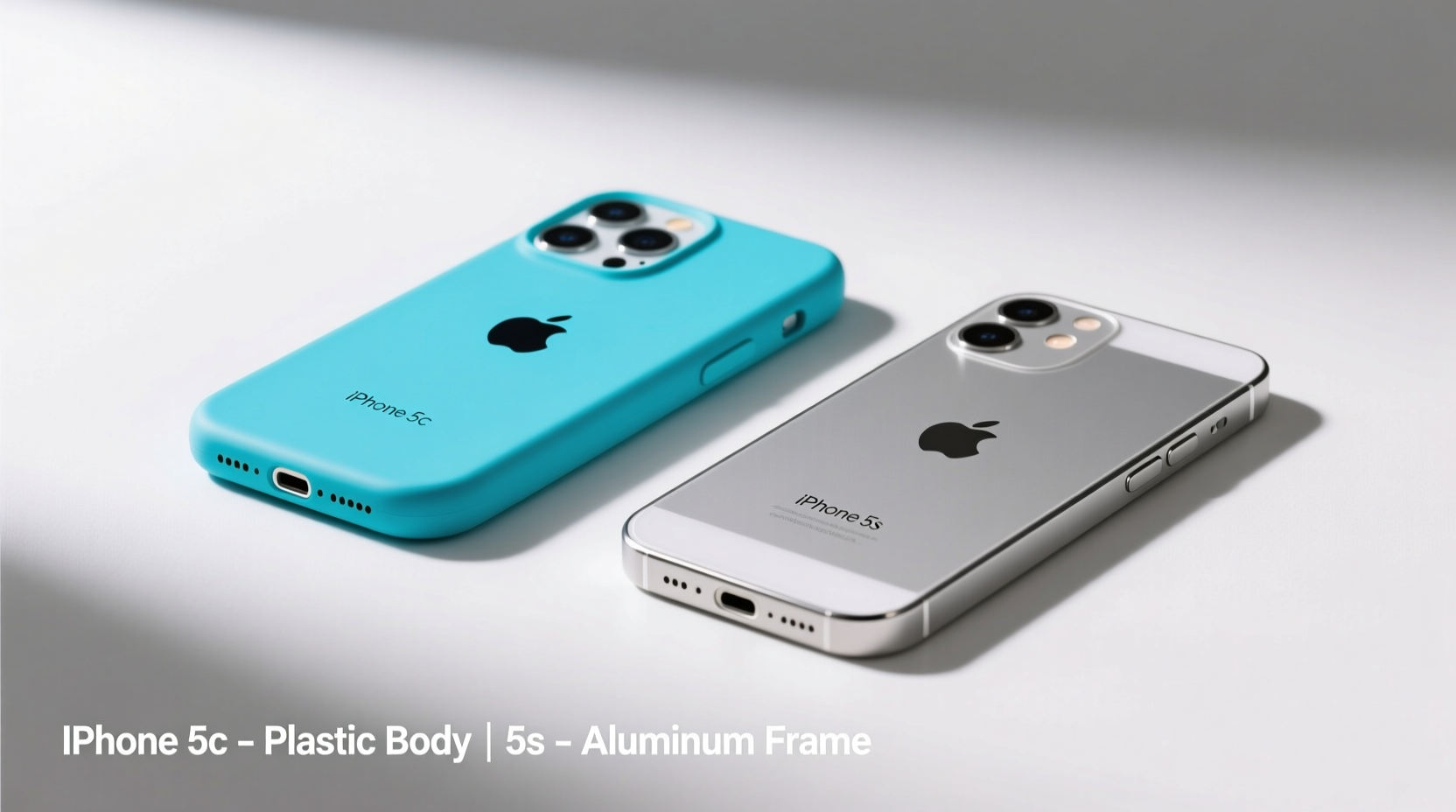
The iPhone 5c was marketed as a “new kind of cheap,” but Apple insisted it wasn’t a budget phone. Instead, it was a reimagined iPhone 5 encased in a polycarbonate shell available in five vibrant colors: white, pink, yellow, blue, and green. Despite its playful appearance, the 5c was slightly thicker (8.97 mm) and heavier (132 grams) than the iPhone 5s (7.6 mm, 112 grams). This minor increase in thickness was due to the reinforced plastic body designed to maintain structural integrity without metal.
In contrast, the iPhone 5s retained the premium feel of its predecessors with an aluminum unibody design. It came in three classic finishes: silver, space gray, and a new gold option that sparked widespread attention. While the 5c’s design appealed to younger users and those wanting personality in their devices, the 5s projected sophistication and durability.
Performance: A Divide That Grew Over Time
Beneath the surface, the most consequential difference between the 5c and 5s was the chipset. The iPhone 5c used the same Apple A6 processor found in the iPhone 5, while the 5s introduced the groundbreaking 64-bit Apple A7 chip—the first 64-bit processor in any smartphone. Paired with the M7 motion coprocessor, the A7 gave the 5s a substantial edge in speed, graphics rendering, and energy efficiency.
This performance gap became increasingly apparent over time. Apps launched faster on the 5s, multitasking was smoother, and games ran with fewer hiccups. More importantly, the A7’s architecture allowed iOS updates to be supported for years longer. The 5s received updates up to iOS 12, while the 5c topped out at iOS 10, limiting access to newer features and security patches.
“Hardware determines not just current performance, but future relevance. The A7 wasn’t just faster—it was forward-looking.” — David Kim, Mobile Hardware Analyst
Security and Innovation: Touch ID Changes Everything
One feature absent from the 5c but central to the 5s was Touch ID, Apple’s fingerprint recognition technology embedded in the home button. This wasn’t merely a convenience; it represented a shift toward biometric security in consumer devices. With Touch ID, users could unlock their phones, authorize iTunes and App Store purchases, and later, authenticate Apple Pay transactions—all with a touch.
The absence of Touch ID on the 5c wasn’t just a missing feature—it signaled Apple’s strategic decision to reserve cutting-edge innovations for its premium line. Even if users didn’t immediately appreciate fingerprint sensors in 2013, they soon became standard across the industry, underscoring how the 5s was ahead of its time.
Detailed Comparison: iPhone 5c vs 5s at a Glance
| Feature | iPhone 5c | iPhone 5s |
|---|---|---|
| Release Date | September 2013 | September 2013 |
| Processor | Apple A6 | Apple A7 + M7 Coprocessor |
| RAM | 1GB | 1GB |
| Fingerprint Sensor | No | Yes (Touch ID) |
| Rear Camera | 8MP, no True Tone flash | 8MP, dual-LED True Tone flash |
| Thickness | 8.97 mm | 7.6 mm |
| Weight | 132 g | 112 g |
| Max iOS Support | iOS 10 | iOS 12 |
Real-World Example: Two Users, Two Paths
Consider two friends, Alex and Jamie, who bought their iPhones in late 2013. Alex chose the bright yellow iPhone 5c for its fun look and lower price. Jamie opted for the space gray 5s, paying extra for what seemed like marginal upgrades. At first, both had similar experiences—same screen size, same camera resolution, same apps.
But by 2015, Jamie’s phone handled iOS 9 smoothly, while Alex struggled with lag after updating to iOS 10. When banking apps began requiring newer iOS versions in 2016, Alex’s 5c could no longer log in securely. Meanwhile, Jamie continued using mobile payments via Touch ID until retiring the device in 2017. What started as a small difference in cost evolved into a meaningful gap in functionality and longevity.
Long-Term Value and Market Reception
The iPhone 5c was intended to expand Apple’s reach into emerging markets and attract cost-conscious buyers. However, it failed to gain strong traction. Consumers saw it not as an affordable alternative but as an overpriced plastic phone. Analysts noted that pricing it too close to the older iPhone 5 undercut its value proposition.
In contrast, the iPhone 5s was hailed as a milestone. It set the template for future iPhones: secure authentication, powerful processors, and iterative yet impactful innovation. Its influence lasted years, with elements like Touch ID and 64-bit computing becoming standard.
Frequently Asked Questions
Was the iPhone 5c slower than the 5s?
Yes. While both had 1GB of RAM, the 5s’s A7 chip delivered significantly better CPU and GPU performance. Real-world tasks like app switching, gaming, and photo processing were noticeably faster on the 5s.
Could the iPhone 5c get Touch ID through an update?
No. Touch ID required dedicated hardware—the sensor and supporting circuitry—absent in the 5c. Software updates couldn’t add this feature retroactively.
Which phone lasted longer with iOS updates?
The iPhone 5s supported four major iOS updates beyond the 5c. It ran iOS 12 (released in 2018), while the 5c stopped at iOS 10 (2016), making the 5s relevant for nearly two additional years.
Conclusion: Look Beyond the Surface
The slight difference in thickness between the iPhone 5c and 5s was irrelevant in practice. What truly mattered were the unseen advancements: a superior processor, biometric security, better camera lighting, and longer software support. These weren’t flashy selling points in a store display, but they defined the user experience over time.
Choosing a smartphone isn’t just about how it feels in your hand today—it’s about how well it serves you months or years down the line. The iPhone 5s proved that innovation doesn’t always come in radical redesigns; sometimes, it’s in the chip, the sensor, or the flash. If you're evaluating devices based on long-term value, ask not how thin it is, but how smart, secure, and sustainable it can be.




 浙公网安备
33010002000092号
浙公网安备
33010002000092号 浙B2-20120091-4
Comments
No comments yet. Why don't you start the discussion?