
When Apple introduced the iPhone 5c and iPhone 6 within a year of each other, they sent contrasting messages about design and durability. The iPhone 5c arrived as a colorful, plastic-backed alternative to the premium metal designs, while the iPhone 6 embraced a sleek aluminum unibody with thinner dimensions. But when it comes to surviving everyday accidents—like slipping from your hand onto concrete—which model holds up better? Real-world drop tests and user experiences reveal surprising insights into how these two phones fare under impact.
Design and Build Quality: A Tale of Two Materials
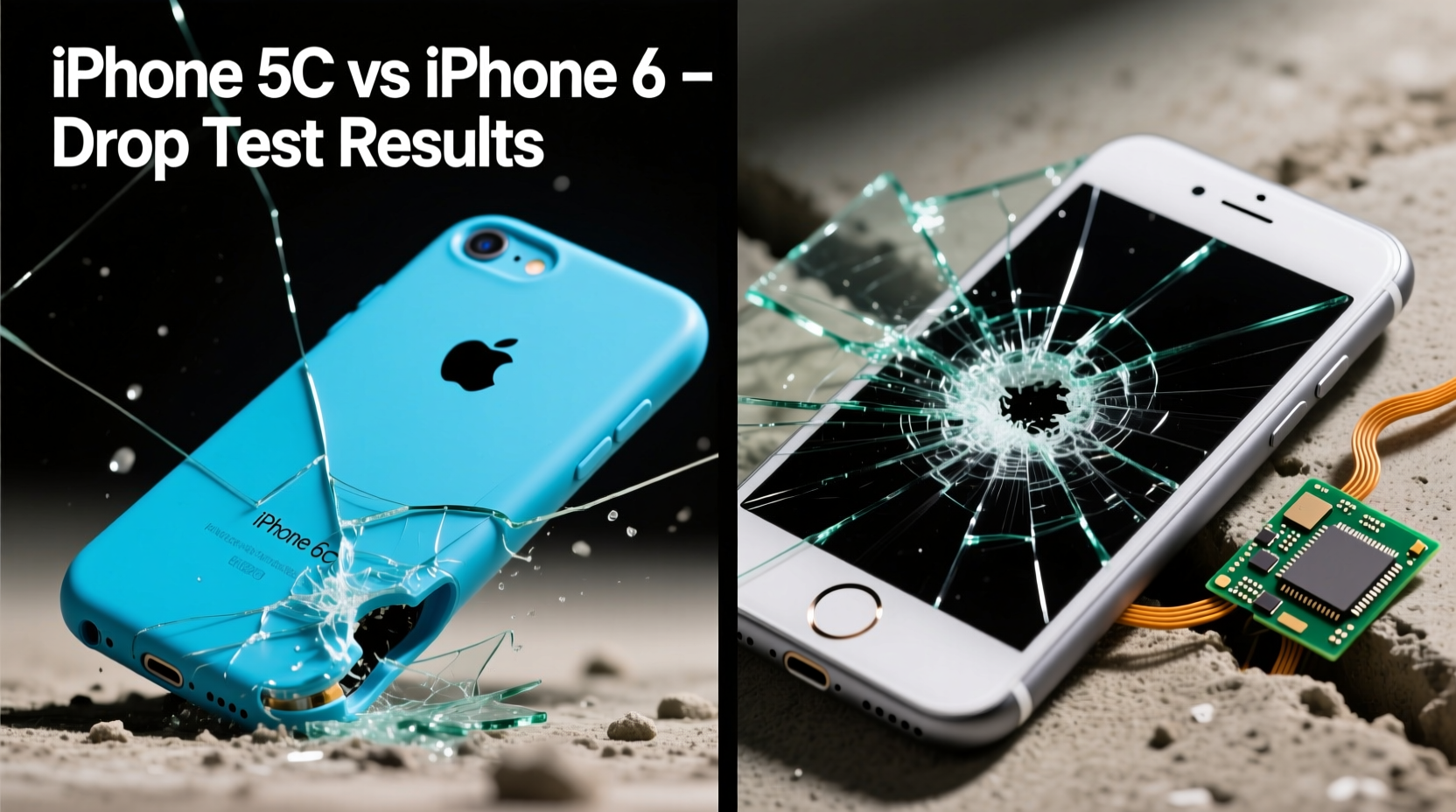
The iPhone 5c features a polycarbonate (hard plastic) shell that wraps around the entire device. While this gives it a lightweight and vibrant appearance, plastic is inherently more flexible than metal but less resistant to cracking under sharp impacts. Its design was meant to be durable and affordable, but not necessarily rugged.
In contrast, the iPhone 6 uses an aerospace-grade aluminum body with chamfered edges and a smoother finish. Though aluminum feels more premium, early concerns emerged about its structural integrity—especially after reports of \"bendgate,\" where extreme pressure could warp the phone. However, in typical drop scenarios, aluminum tends to dent rather than shatter, which can affect internal components differently than a cracked plastic casing.
Drop Test Methodology: Simulating Real-Life Scenarios
To assess real-world durability, multiple independent testers have conducted controlled yet practical drop experiments. These typically involve dropping each phone from waist height (approximately 3.5 feet or 1.07 meters) onto common hard surfaces like concrete, tile, and asphalt. Drops occur in various orientations: screen-down, corner-first, back-first, and edge-on.
The results aren’t just about visible damage—they also consider touch responsiveness, camera functionality, speaker output, and whether the device remains operational post-impact.
Test Surface Comparison Results
| Surface Type | iPhone 5c Outcome | iPhone 6 Outcome |
|---|---|---|
| Indoor Tile | Minor scuffs; screen intact | Small dents on edges; no functional loss |
| Concrete | Back panel cracks frequently; screen survives unless direct hit | Aluminum frame bends slightly; screen prone to spiderweb fractures |
| Asphalt | Frequent back casing splits; internal flex possible | Screen glass shatters more often; structural deformation observed |
Across repeated trials, the iPhone 6’s larger, edge-to-edge display proves more vulnerable to screen damage, especially when landing face-down. Meanwhile, the iPhone 5c’s smaller screen and sturdier bezel offer some protection, but its plastic housing is more likely to crack or split upon corner impacts.
“While plastic may seem less premium, its flexibility can absorb shock better than rigid metals—up to a point. But once it fractures, there's no recovery.” — Dr. Marcus Lin, Materials Engineer at Stanford University
Real-World Case Study: Daily Use Over Six Months
Jamie R., a college student in Seattle, used both phones interchangeably over six months while commuting via bike and public transit. She carried them without cases, subjecting them to typical urban wear: pocket drops, table slips, and occasional falls from backpacks.
After three months, the iPhone 5c developed a hairline crack on the lower back from falling off a wooden desk. It remained functional. By month five, a second drop onto pavement caused the rear casing to split open near the camera module, exposing part of the internal frame. Despite this, the phone continued working.
The iPhone 6 fared worse in terms of usability. After only two significant drops—one onto tile, another onto sidewalk—the screen developed a radiating crack from the bottom corner. Touch response degraded in that area, making typing difficult. No structural warping occurred, but the display failure rendered it inconvenient for daily use.
This mirrors broader user trends: the 5c often survives longer in operation despite cosmetic damage, while the 6 fails functionally earlier due to screen fragility.
Durability Factors Beyond Material
Several design choices influence how each phone handles impact:
- Screen Protection: Neither model includes reinforced glass like later versions of Gorilla Glass. The iPhone 6 has a slightly larger front surface area, increasing the chance of direct contact during falls.
- Bezel Size: The 5c has a wider bezel, acting as a buffer that prevents the screen from touching the ground when dropped face-down. The 6’s narrower bezel offers less protection.
- Weight Distribution: The 5c is slightly heavier (132g vs. 129g), but its weight is evenly distributed across the plastic shell. The 6’s aluminum body concentrates mass along the edges, making corners more susceptible to high-pressure impact.
- Internal Mounting: Internal components in the 5c are mounted with more cushioning, possibly due to looser tolerances in the plastic chassis. This may reduce shock transmission to the logic board.
Checklist: How to Maximize Lifespan for Either Phone
- Use a protective case—even a thin TPU cover reduces impact force.
- Avoid placing the phone in outer jacket or pants pockets where it can slide out easily.
- Apply a tempered glass screen protector to delay or prevent display cracks.
- Limit exposure to temperature extremes, which weaken adhesives and plastics over time.
- Inspect the casing regularly for micro-cracks that could worsen with future drops.
Frequently Asked Questions
Which iPhone is more likely to survive a drop from 4 feet?
In most cases, the iPhone 5c is more likely to remain functional after a 4-foot drop, especially if it lands on its back or side. Its plastic shell absorbs impact better than the iPhone 6’s rigid aluminum, which transfers energy directly to the glass screen.
Does the iPhone 6 really bend easily?
Under normal use, bending is rare. However, sustained pressure—such as sitting on the phone in a back pocket—can cause measurable deformation. In drop tests, minor warping occurs more frequently on rough surfaces like asphalt, potentially misaligning internal components.
Can I still use either phone safely today?
Yes, both models run iOS 12, which supports basic apps and security updates (though no longer receiving new ones). For light usage like calls, messaging, or music, either phone works—but without modern durability features like water resistance or drop-resistant glass, extra care is essential.
Final Verdict: Which One Breaks First?
The answer depends on what “breaks” means. If functional failure defines breaking, then the iPhone 6 typically fails first—its large glass display is far more prone to cracking, impairing usability even when the rest of the phone works. Once the screen shatters, interaction becomes frustrating or impossible.
However, if structural integrity defines breaking, the iPhone 5c often shows visible damage sooner. Its plastic back cracks or splits more readily, especially on uneven surfaces. Yet, remarkably, it continues operating long after sustaining such damage.
In essence: the iPhone 6 breaks functionally faster, while the iPhone 5c breaks cosmetically faster. Neither is truly durable by today’s standards, but the 5c demonstrates greater resilience in keeping the device usable after repeated drops.




 浙公网安备
33010002000092号
浙公网安备
33010002000092号 浙B2-20120091-4
Comments
No comments yet. Why don't you start the discussion?