
In 2013, smartphone buyers faced a pivotal choice: stick with Apple’s ecosystem or take a leap into Android with one of its most promising devices—the Google Nexus 5. The iPhone 5c, marketed as a colorful, affordable alternative to the flagship 5s, competed directly with the Nexus 5, which promised pure Android at a competitive price. For many users, switching from iOS to Android wasn’t just about hardware—it involved rethinking workflows, app ecosystems, and long-term support. Years later, some still wonder: was ditching the iPhone 5c for the Nexus 5 a mistake?
This article breaks down the key differences between the two phones, evaluates their real-world performance, and examines whether the switch made sense—then and now.
Design and Build Quality: Plastic vs Purpose
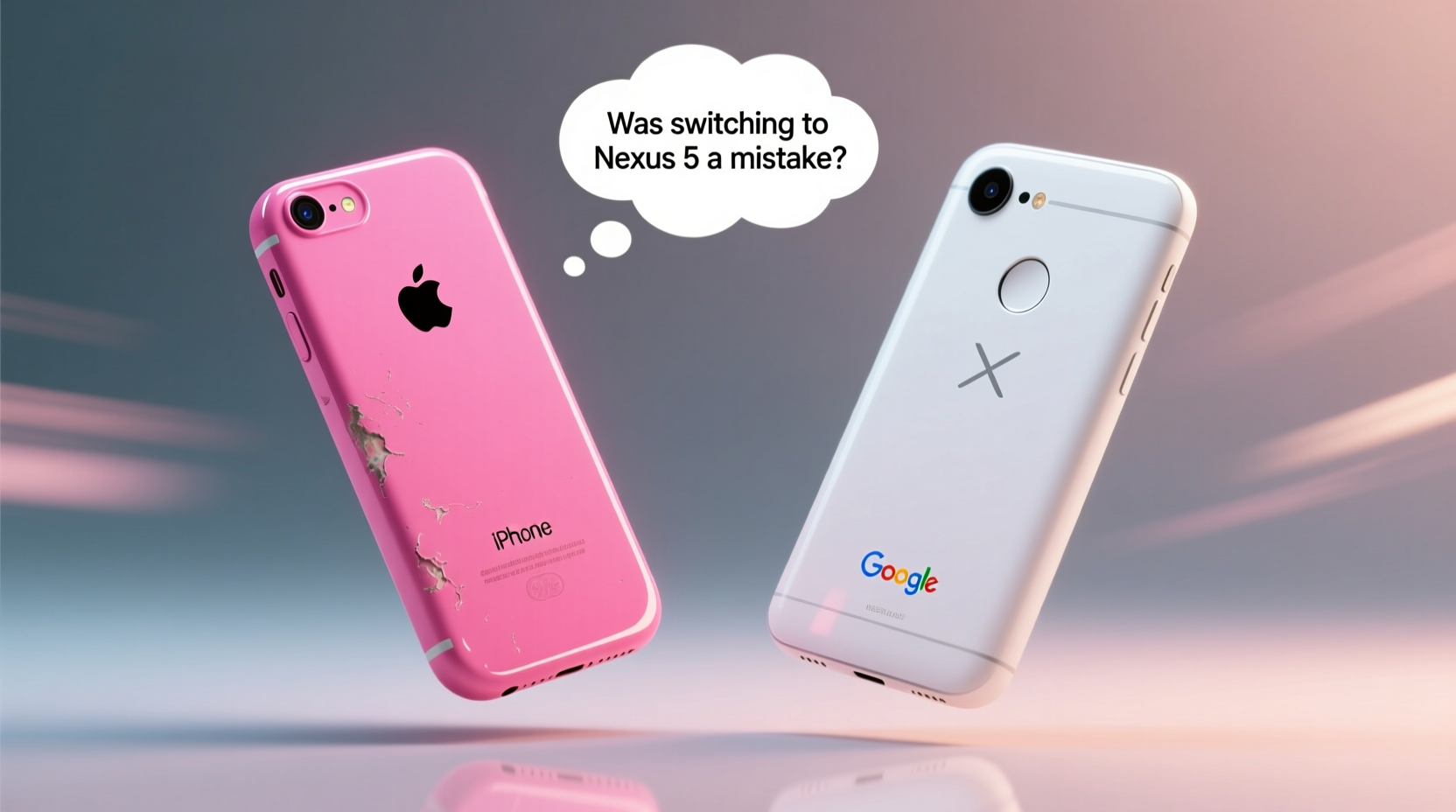
The iPhone 5c stood out with its polycarbonate unibody design, available in bright colors like blue, green, pink, and yellow. Despite the plastic shell, Apple maintained tight build tolerances and a premium feel. It inherited the same internal frame as the iPhone 5, giving it structural rigidity uncommon in similarly priced devices at the time.
In contrast, the Nexus 5, manufactured by LG, used a soft-touch plastic back with a matte finish. While functional and lightweight, it lacked the visual polish of the 5c. Its minimalist design appealed to Android purists, but everyday durability was a concern—especially as the back cover showed signs of wear quickly.
Performance and Software Experience
Under the hood, the Nexus 5 had a clear advantage. Powered by a Qualcomm Snapdragon 800 processor and 2GB of RAM, it delivered snappier multitasking and better gaming performance than the iPhone 5c’s A6 chip and 1GB of RAM. Benchmarks from 2013 consistently showed the Nexus 5 outperforming the 5c in CPU and GPU tests.
However, raw power isn’t everything. iOS on the iPhone 5c remained smooth and responsive thanks to Apple’s tight hardware-software integration. Apps launched quickly, animations were fluid, and background processes were efficiently managed—even with older hardware.
Where the Nexus 5 truly shined was in software updates. As a flagship Google device, it received timely Android upgrades, including KitKat (on launch), Lollipop, and Marshmallow. Meanwhile, the iPhone 5c got iOS updates through iOS 10—impressive for a budget model—but eventually lost support years before newer iPhones.
“Switching to Nexus meant getting updates faster, but you traded consistency for flexibility.” — David Lin, Mobile OS Analyst at TechPulse
Camera and Multimedia Capabilities
The iPhone 5c featured an 8MP rear camera with improved backside illumination and better low-light processing over its predecessor. While not groundbreaking, it delivered reliable point-and-shoot results with natural color reproduction—a hallmark of Apple’s imaging philosophy.
The Nexus 5 also had an 8MP sensor, but early firmware limited its potential. Initial versions of the camera app suffered from slow shutter response and inconsistent HDR. Google improved this with software updates, but even in 2014, photos often looked oversharpened or washed out compared to the iPhone’s output.
For video, the iPhone 5c recorded 1080p at 30fps with excellent stabilization and audio capture. The Nexus 5 matched resolution but struggled with wind noise and jitter in motion-heavy scenes.
Real-World Example: A Photographer’s Switch
Jessica Tran, a freelance travel blogger, switched from her iPhone 5c to a Nexus 5 in late 2013 seeking better battery life and expandable storage. “I loved the idea of using microSD cards,” she said. “But I quickly realized that most apps couldn’t use external storage, and the camera lag meant I missed spontaneous shots.” After nine months, she returned to iOS. “The Nexus felt powerful on paper, but for daily content creation, the iPhone just worked better.”
Platform Ecosystem: Staying Connected
One of the biggest hurdles for switchers was ecosystem lock-in. The iPhone 5c seamlessly integrated with iCloud, iTunes, AirPlay, and Mac computers. Contacts, calendars, messages, and photos synced effortlessly across devices. iMessage alone kept many users from leaving iOS.
The Nexus 5 offered deep Google integration—Gmail, Drive, Chrome, and Google Now—but syncing with non-Android devices was less intuitive. Users coming from Macs found missing features like native iTunes support or Handoff. Bluetooth file transfers were clunky, and third-party tools were often needed to bridge gaps.
App quality was another factor. In 2013, many popular apps launched first—or exclusively—on iOS. Instagram, Snapchat, and banking apps often arrived weeks later on Android, or with fewer features.
Checklist: Before You Switch Platforms
- Verify essential apps are available and fully functional on the target OS
- Test cloud sync across your existing devices (Mac, PC, tablet)
- Check messaging continuity—especially if you rely on iMessage
- Evaluate media transfer methods (music, photos, documents)
- Assess long-term update support for the new device
Comparison Table: iPhone 5c vs Nexus 5 (2013 Specs)
| Feature | iPhone 5c | Nexus 5 |
|---|---|---|
| Release Date | September 2013 | October 2013 |
| OS | iOS 7 | Android 4.4 KitKat |
| Processor | Apple A6 | Snapdragon 800 |
| RAM | 1GB | 2GB |
| Rear Camera | 8MP, f/2.4 | 8MP, f/2.4 with optical stabilization |
| Battery Capacity | 1510 mAh | 2300 mAh |
| Storage Options | 16GB / 32GB (non-expandable) | 16GB / 32GB (no expansion) |
| Updates Received | iOS 7 → iOS 10 (3 major versions) | KitKat → Marshmallow (3 major versions) |
| Starting Price (2013) | $549 (contract-free) | $349 (Google Play Store) |
Long-Term Support and Legacy
Both devices stopped receiving official OS updates by 2017. However, the Nexus 5 gained a second life through custom ROMs like LineageOS, allowing tech-savvy users to run modern Android versions. This extended usability far beyond Apple’s closed update model.
Yet, app compatibility became an issue. By 2018, major services like WhatsApp and banking apps began dropping support for devices running Android 6.0 or below. Similarly, iOS 10 blocked newer app features, rendering both phones functionally obsolete for daily use by 2020.
In terms of resale value, the iPhone 5c held up slightly better due to brand loyalty and global demand for used Apple devices. The Nexus 5, while praised by developers, never achieved broad consumer appeal.
Frequently Asked Questions
Was the Nexus 5 faster than the iPhone 5c?
Yes, in benchmark tests and multitasking scenarios, the Nexus 5’s Snapdragon 800 and 2GB RAM gave it a noticeable edge in raw speed. However, the iPhone 5c felt smoother in everyday UI navigation due to iOS optimization.
Could the Nexus 5 replace an iPhone for average users?
It could, but with caveats. Users deeply invested in Apple’s ecosystem—iMessage, FaceTime, iCloud—often found the transition frustrating. Android offered more customization, but required more setup and troubleshooting.
Is either phone usable today?
Only for basic tasks like calls, texts, or offline media. Neither supports current security standards, and most modern apps will not install or function properly. They serve best as retro collectibles or emergency backup phones.
Conclusion: Was the Switch a Mistake?
For early adopters seeking cutting-edge specs and developer-friendly features, the Nexus 5 was a smart move. It offered flagship-level performance at a mid-range price and became a favorite among Android enthusiasts. But for mainstream users prioritizing ease of use, app reliability, and ecosystem cohesion, the iPhone 5c provided a more consistent—and arguably smarter—experience.
The decision wasn’t purely technical. It hinged on lifestyle, digital habits, and tolerance for learning curves. Some who switched regretted losing iMessage and seamless Apple integration. Others celebrated newfound freedom and faster updates.
In hindsight, neither choice was objectively wrong. But if your goal was simplicity, longevity, and hassle-free daily use, staying with the iPhone 5c likely served you better. The Nexus 5 was powerful, but power alone doesn’t make a great phone.




 浙公网安备
33010002000092号
浙公网安备
33010002000092号 浙B2-20120091-4
Comments
No comments yet. Why don't you start the discussion?