
The evolution of smartphone screens has been one of the most noticeable shifts in mobile design over the past decade. Apple’s transition from compact devices to larger displays marked a turning point for user expectations. When comparing the iPhone 6 (4.7 inches) and later models with 5.8-inch OLED screens—like the iPhone X—the jump in display size isn’t just cosmetic. It affects how we interact with our phones daily. But does that extra screen real estate translate into meaningful benefits, or is it simply more device to carry around?
For many users, screen size influences everything from media consumption to typing comfort and even pocketability. Understanding whether the 5.8-inch display offers enough advantages over the 4.7-inch iPhone 6 can help you make a smarter decision when upgrading—or deciding not to.
Understanding the Screen Size Difference
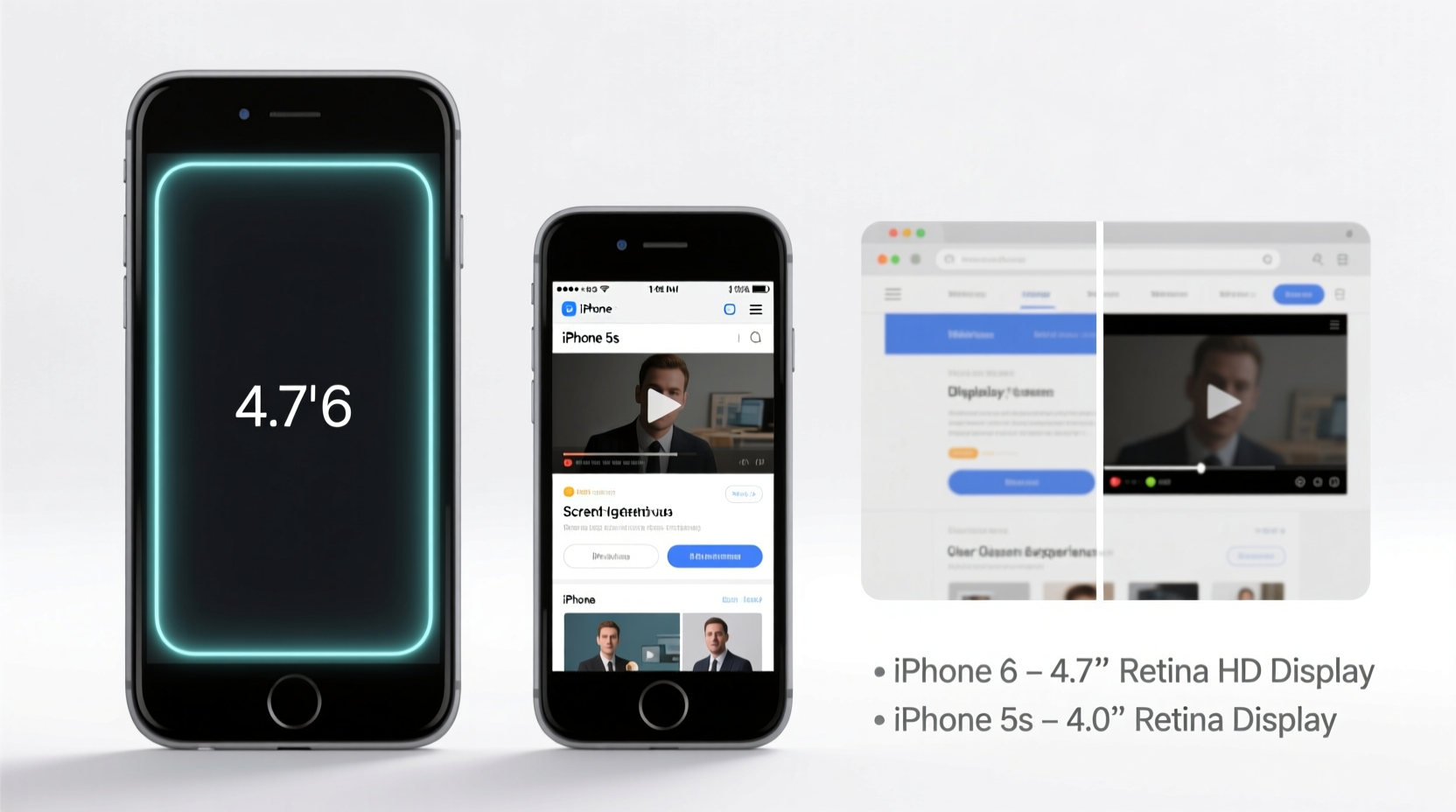
The numbers tell part of the story: the iPhone 6 features a 4.7-inch LCD display, while the 5.8-inch variants (such as the iPhone X, XS, or 11 Pro) use an edge-to-edge OLED panel. But raw inches don’t capture the full experience. The newer 5.8-inch phones eliminate the traditional home button, allowing for taller aspect ratios and slimmer bezels. This means more screen in a form factor that, despite being larger, is often only slightly taller than the iPhone 6 due to reduced top and bottom borders.
In practical terms, the 5.8-inch screen provides about 23% more viewing area. That extra space becomes immediately apparent when watching videos, browsing websites, or using multitasking features on iOS. However, this comes with trade-offs in one-handed usability and overall device weight.
Performance and Display Quality Comparison
Beyond physical dimensions, the technology behind the screens differs significantly. The iPhone 6 uses an LCD panel with lower contrast ratios and less accurate color reproduction compared to the Super Retina OLED displays found in 5.8-inch models. OLED brings true blacks, higher brightness, and better power efficiency—especially when displaying dark content.
Additionally, the 5.8-inch iPhones introduced Face ID, improved processors (A11 Bionic and later), and enhanced camera systems. These upgrades compound the advantage of a larger screen by enabling richer app experiences, faster performance, and better photo editing capabilities—all of which benefit from increased display space.
| Feature | iPhone 6 (4.7\") | iPhone X (5.8\") |
|---|---|---|
| Display Type | LCD | OLED (Super Retina) |
| Resolution | 1334 x 750 | 2436 x 1125 |
| Pixel Density | ~326 ppi | ~458 ppi |
| Contrast Ratio | 1400:1 | 1,000,000:1 |
| Face ID / Touch ID | Touch ID | Face ID |
| Processor | A8 Chip | A11 Bionic |
The leap in display quality alone makes the 5.8-inch screen feel sharper and more immersive. Text appears crisper, images pop with depth, and video content fills more of your field of view—especially important for streaming platforms and gaming.
User Experience: Real-World Trade-Offs
While specs matter, real-life usage determines whether a feature is truly valuable. Consider these scenarios:
- Media consumption: On a 5.8-inch screen, Netflix, YouTube, and reading apps provide a noticeably better experience. Subtitles are easier to read, sidebars in Safari are fully visible, and split-view multitasking works effectively.
- Typing comfort: Larger screens offer wider keyboards, reducing typos. However, some users find they must shift their grip or use two thumbs consistently, which can be tiring during long sessions.
- Pocketability: The iPhone 6 fits comfortably in front pockets, even tight jeans. The 5.8-inch models are narrower but taller, increasing the risk of catching on fabric or protruding awkwardly.
“Screen size isn’t just about visibility—it changes how people engage with their devices. Larger screens encourage longer sessions, which can be both a benefit and a distraction.” — Dr. Lena Torres, Human-Device Interaction Researcher, MIT Media Lab
Mini Case Study: Daily Commuter Usage
Take Mark, a graphic designer who commutes 45 minutes each way via subway. He upgraded from an iPhone 6 to an iPhone X primarily for the larger screen. His workflow includes reviewing client mockups, responding to emails, and sketching ideas in Procreate.
He noticed immediate improvements: he could see entire design layouts without constant zooming, and handwriting with an Apple Pencil (on compatible iPads aside) felt more natural when previewing on the bigger display. However, he also found the phone harder to manage during crowded rides. One-handed unlocking failed more often due to arm movement, and he occasionally dropped it trying to stow it quickly.
After six months, Mark concluded that the screen upgrade was worth it—but only because his job demanded visual precision. For casual users, the same trade-off might not justify the change.
Battery Life and Longevity Considerations
Larger screens typically consume more power, but advancements in OLED efficiency and battery management have mitigated this concern. The iPhone X, despite its bigger display, delivers up to 2 hours more video playback time than the iPhone 6 under controlled conditions.
Moreover, software optimization plays a critical role. iOS versions tailored for 5.8-inch devices leverage adaptive refresh rates (in later models), dark mode integration, and background app throttling to preserve energy. In contrast, the iPhone 6 runs modern iOS versions with increasing strain, leading to slower performance and reduced battery health over time.
Checklist: Is a 5.8-Inch iPhone Right for You?
- Do you watch videos, read e-books, or browse the web frequently on your phone?
- Are you comfortable using two hands regularly for navigation and typing?
- Do you prioritize image quality and color accuracy in photos and videos?
- Can you accommodate a taller phone in your pocket or bag?
- Are you planning to keep your phone for 3+ years, requiring stronger future-proofing?
If you answered “yes” to three or more, the 5.8-inch screen likely offers tangible benefits. Otherwise, the compact size and lighter weight of the iPhone 6-style form factor may still serve you better.
Frequently Asked Questions
Is the 5.8-inch iPhone harder to use one-handed?
Yes, especially for users with smaller hands. While Reachability (double-tap home bar) helps bring the top of the screen down, frequent switching between hands is common. Practice improves comfort, but it remains a limitation compared to the iPhone 6.
Does the larger screen drain the battery faster?
Not necessarily. Although the screen is larger, OLED technology uses less power when displaying dark colors. Combined with more efficient processors, 5.8-inch iPhones often outlast the iPhone 6 in real-world usage despite the size increase.
Can I still get good apps on the iPhone 6?
Most core apps still support the iPhone 6, but updates are becoming less frequent. Developers increasingly optimize for larger screens and newer iOS versions, so functionality and interface layout may degrade over time.
Conclusion: Balancing Size, Utility, and Lifestyle
The shift from a 4.7-inch to a 5.8-inch iPhone represents more than just screen growth—it reflects a fundamental change in how we use smartphones. For creatives, travelers, and heavy digital consumers, the larger display enhances productivity and enjoyment. The superior OLED panel, facial recognition, and processing power further tip the scale in favor of the bigger device.
Yet, there’s enduring value in compactness. The iPhone 6’s size remains ideal for quick checks, single-hand operation, and minimal pocket intrusion. There’s no universal answer to whether the bigger screen is “worth it”—only what aligns with your habits, needs, and physical comfort.
Rather than chasing specs, assess how you actually use your phone. Try holding both sizes in-store if possible. Pay attention to grip, reach, and visual comfort. Technology should serve you, not complicate your life. Choose the screen that fits your world—not just the trend.




 浙公网安备
33010002000092号
浙公网安备
33010002000092号 浙B2-20120091-4
Comments
No comments yet. Why don't you start the discussion?