
In an era where smartphones dominate photography, the idea of carrying a separate compact camera seems almost nostalgic. The iPhone 6, released in 2014, was once considered cutting-edge for mobile photography. Around the same time, Sony launched the RX100 series — a line of premium pocketable cameras designed to outperform phones with superior sensors and optics. But nearly a decade later, does the Sony RX100 still hold an edge over even aging smartphones like the iPhone 6? And more importantly, in 2024, is investing in a dedicated camera still justified?
The answer isn’t straightforward. While modern smartphones have closed the gap dramatically, older models like the iPhone 6 lack computational photography advancements that define today’s best phone images. Comparing it directly with a capable device like the Sony RX100 reveals how much hardware still matters — especially when light is low or detail is critical.
Sensor Size and Image Quality: The Core Difference
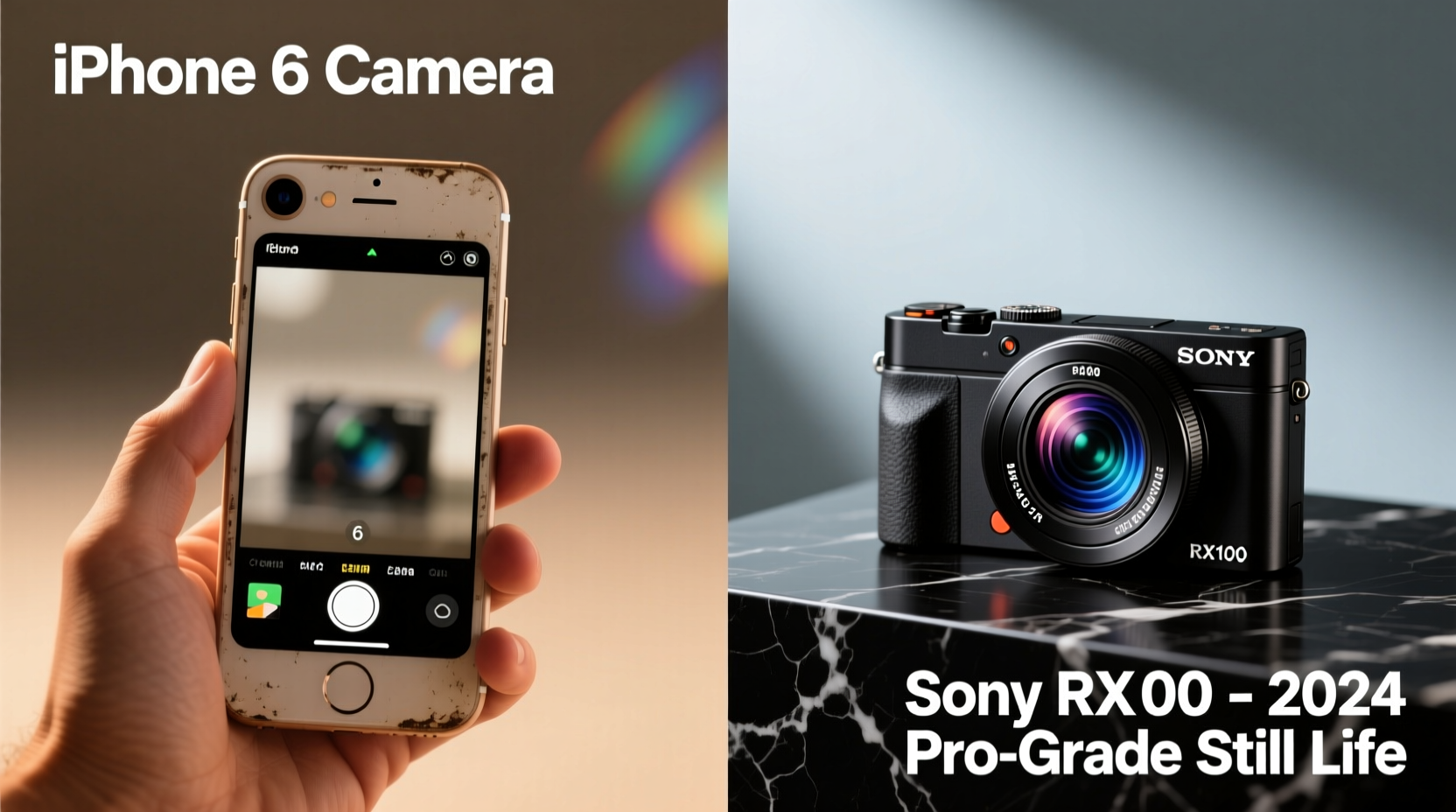
The most significant disparity between the iPhone 6 and the Sony RX100 lies beneath the lens: sensor size. The iPhone 6 uses a tiny 1/3-inch sensor, while the original RX100 (released the same year) features a 1-inch Exmor CMOS sensor — over eight times larger in surface area.
Larger sensors capture more light, produce less noise, and offer better dynamic range. This translates directly into real-world advantages:
- Sharper images in low-light environments
- More natural color gradation and shadow detail
- Better subject separation and background blur (bokeh), even at equivalent apertures
In daylight, both devices can produce acceptable results for social media or casual sharing. But as lighting deteriorates, the RX100 pulls ahead decisively. Grainy, oversharpened iPhone 6 photos contrast sharply with the cleaner, more detailed output from the Sony.
“Sensor physics hasn’t changed. No amount of software can fully compensate for a fundamentally limited light-gathering capability.” — David Park, Imaging Technologist at DPReview
Optical Performance: Fixed Lens vs Computational Zoom
The iPhone 6 relies on a single 4.15mm f/2.2 lens with no optical zoom — only digital cropping, which degrades quality. In contrast, the RX100 offers a 28-100mm equivalent f/1.8–4.9 Zeiss lens. That means true optical zoom and a significantly brighter aperture at the wide end.
The f/1.8 maximum aperture on the RX100 allows for faster shutter speeds in dim conditions and shallower depth of field. This gives photographers creative control that the iPhone 6 simply cannot match.
| Feature | iPhone 6 | Sony RX100 (Mark I) |
|---|---|---|
| Sensor Size | 1/3-inch | 1-inch |
| Aperture (Wide) | f/2.2 | f/1.8 |
| Zoom Range | Digital only (up to 5x) | Optical 3.6x (28–100mm equiv.) |
| Manual Controls | Limited (via third-party apps) | Full P/A/S/M modes |
| RAW Support | No | Yes (with firmware update) |
This table highlights not just technical superiority but also flexibility. The RX100 supports full manual shooting, exposure compensation, and RAW capture — essential tools for serious photographers.
Usability and Workflow in 2024
Despite its technical strengths, the Sony RX100 comes with trade-offs. It requires learning curves, additional charging, and deliberate use. Meanwhile, the iPhone 6 — even if outdated by current standards — integrates seamlessly into daily life. Photos upload instantly to iCloud, share via Messages, and tag automatically in Moments.
For many users, convenience outweighs image fidelity. If your goal is documenting moments rather than creating art, pulling out a phone remains easier. However, this ease has limits. The iPhone 6 lacks Night mode, Portrait mode, Smart HDR, or Deep Fusion — all now standard on newer iPhones. Without these enhancements, its camera feels archaic compared to even entry-level Android phones in 2024.
The RX100, though aging, benefits from a design philosophy focused on photography first. Its pop-up electronic viewfinder, hot shoe for external flash, and customizable buttons make it far more adaptable than any smartphone interface.
Real Example: Travel Photography in Lisbon
Consider Sarah, a hobbyist photographer visiting Lisbon in spring. She brings both her old iPhone 6 and a used Sony RX100 Mark II. During the day, she snaps quick shots of trams and tiled buildings with her phone — fast and easy. But when she explores Alfama’s narrow alleys at dusk, the iPhone struggles. Images are muddy, colors washed out, details lost in shadows.
Switching to the RX100, she adjusts ISO to 400, uses the f/1.8 aperture, and shoots handheld at 1/30s. The resulting images retain texture in cobblestones, clarity in wrought-iron balconies, and vibrant hues in sunset-lit facades. Later, editing RAW files gives her room to recover highlights and boost contrast without introducing artifacts.
In this scenario, the dedicated camera didn't just perform better — it enabled creativity the phone couldn't support.
Is a Dedicated Camera Worth It in 2024?
The broader question extends beyond this specific comparison. With flagship smartphones now featuring multiple lenses, AI-enhanced processing, and multi-frame stacking, do compact cameras still have a place?
Yes — but selectively. For casual users, smartphones are sufficient. For enthusiasts, travelers, or those pursuing visual storytelling, dedicated cameras offer tangible benefits:
- Better dynamic range – Capture scenes with bright skies and dark foregrounds without clipping.
- Faster focusing and shutter response – No lag, no guesswork about when the shot was taken.
- Higher-quality lenses – Minimal distortion, chromatic aberration, and softness.
- Future-proof files – RAW images allow non-destructive editing years later.
Moreover, using a standalone camera encourages intentionality. You frame carefully, consider composition, and engage with the moment — unlike rapid-fire phone snapping.
Checklist: When to Choose a Dedicated Camera Over a Smartphone
- You often shoot in low light (interiors, concerts, nightscapes)
- You want to print large or crop heavily
- You value manual control over exposure and focus
- You edit photos professionally or creatively
- You're frustrated by inconsistent phone camera performance
Frequently Asked Questions
Can the iPhone 6 compete with newer compact cameras?
No. Even basic modern compacts surpass the iPhone 6 due to improved sensors and processing. The gap widens further against advanced models like the RX100 series.
Is the original Sony RX100 still usable in 2024?
Yes, particularly for learning photography fundamentals. However, battery life, autofocus speed, and video capabilities (no 4K) show their age. Later RX100 models (Mark IV onward) remain excellent choices.
Do I need a dedicated camera if I own a recent iPhone?
Probably not — unless you're pushing creative boundaries. Modern iPhones (13 and later) rival mid-tier compacts thanks to computational photography. But for specialized needs (wildlife, astrophotography, studio work), dedicated gear still wins.
Final Thoughts: Value Beyond Pixels
The iPhone 6 versus Sony RX100 debate isn’t just about megapixels or file sizes. It reflects a deeper shift in how we approach photography. Phones prioritize immediacy; dedicated cameras emphasize craft.
In 2024, choosing a device like the RX100 isn’t about necessity — it’s about intention. It’s for those who see photography as expression, not just documentation. While the iPhone 6 may suffice for memories, the RX100 empowers creation.
If you’re considering stepping beyond your phone, even an older RX100 model offers a gateway to richer image-making. Used units are affordable, lenses are sharp, and the experience trains your eye in ways algorithms never can.




 浙公网安备
33010002000092号
浙公网安备
33010002000092号 浙B2-20120091-4
Comments
No comments yet. Why don't you start the discussion?