
In 2024, many iPhone users are still clinging to older models, especially those who adopted the iPhone 6 Plus during its peak popularity. As Apple’s ecosystem evolves and app developers optimize for newer hardware, the question arises: Is upgrading from an iPhone 6 Plus to a 7 Plus still worthwhile today? While both devices are now considered legacy models, understanding their differences—and how they perform in modern usage—can help determine whether this specific upgrade path makes sense.
The iPhone 6 Plus launched in 2014, introducing Apple’s first large-screen flagship. It was revolutionary at the time, but by today’s standards, its hardware struggles with even basic multitasking. The iPhone 7 Plus followed two years later in 2016, bringing significant internal upgrades and setting the stage for future dual-camera systems. Despite being nearly a decade old, some users still rely on these phones due to familiarity, durability, or budget constraints. But does the jump from one aging device to another deliver meaningful improvements?
Performance and Hardware: A Noticeable Leap
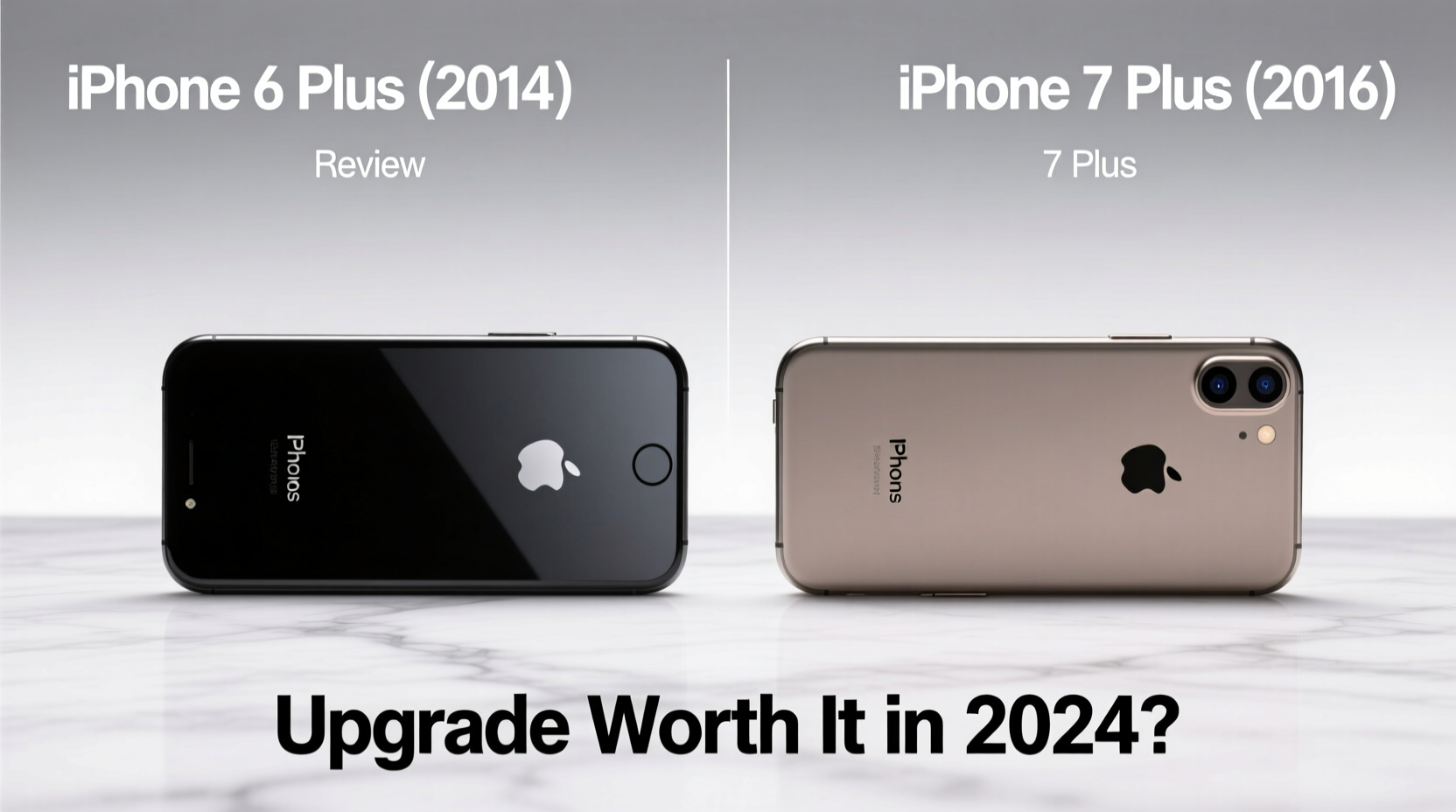
The most critical difference between the iPhone 6 Plus and 7 Plus lies under the hood. The 6 Plus runs on the Apple A8 chip with 1GB of RAM, while the 7 Plus features the more powerful A10 Fusion chip and 3GB of RAM. This may seem like ancient tech by 2024 standards, but the performance gap remains palpable.
On the 6 Plus, iOS updates stopped at iOS 12, limiting access to newer apps and security patches. In contrast, the 7 Plus supports up to iOS 16, meaning it can run a broader range of modern applications, including updated versions of banking apps, messaging platforms, and productivity tools. Apps that crash or lag on the 6 Plus often function smoothly on the 7 Plus, particularly those requiring background processing or higher memory allocation.
Battery life also improves significantly. The 7 Plus includes a slightly larger battery (2900mAh vs. 2915mAh), but more importantly, the A10 chip is far more power-efficient. Real-world testing shows the 7 Plus lasting up to 3 hours longer on mixed usage, which matters when you’re out all day without a charger.
Camera Comparison: Dual Lenses Make a Difference
Photography is where the 7 Plus truly pulls ahead. The 6 Plus features a single 8MP rear camera with basic autofocus and no optical image stabilization (OIS) for video. Low-light performance is poor, and photos often appear grainy or overexposed.
The 7 Plus introduced Apple’s first dual-camera system: a 12MP wide lens and a 12MP telephoto lens enabling 2x optical zoom. This allows for better portrait shots and improved detail when zooming. More importantly, both lenses include OIS, drastically improving photo sharpness and video stability.
Apple’s Portrait Mode, introduced with the 7 Plus, uses software and dual-lens data to simulate depth-of-field effects. While primitive compared to current models, it still outperforms anything the 6 Plus can produce. For social media, casual photography, or even documenting everyday moments, the upgrade in image quality is immediately noticeable.
“Even by 2016 standards, the 7 Plus camera was a game-changer. By 2024, it remains surprisingly capable for basic photography.” — David Lin, Mobile Photography Analyst
Build Quality and Water Resistance
Both phones feature aluminum bodies and glass fronts, but the 7 Plus adds a key feature: IP67 water and dust resistance. This means it can survive immersion in up to 1 meter of water for 30 minutes—something the 6 Plus cannot claim. While not a replacement for careful handling, this small addition increases longevity, especially in unpredictable environments.
The 7 Plus also replaced the traditional home button with a solid-state, pressure-sensitive version. It doesn’t physically move but provides haptic feedback. This design is more durable and less prone to mechanical failure—a common issue with aging 6 Plus units where the home button becomes unresponsive.
Detailed Feature Comparison
| Feature | iPhone 6 Plus | iPhone 7 Plus |
|---|---|---|
| Release Year | 2014 | 2016 |
| Chipset | A8 | A10 Fusion |
| RAM | 1GB | 3GB |
| Max iOS Support | iOS 12 | iOS 16 |
| Rear Camera | 8MP (Single) | 12MP + 12MP (Dual, 2x Zoom) |
| Water Resistance | No | IP67 (1m for 30 mins) |
| Battery Life (Video Playback) | Up to 14 hours | Up to 16 hours |
| Storage Options | 16/64/128GB | 32/128/256GB |
| Headphone Jack | Yes | No (Lightning or Bluetooth only) |
Note: The removal of the headphone jack on the 7 Plus may be a drawback for some, but it paved the way for better internal sealing and audio advancements via Lightning or wireless options.
Real-World Usage: A Mini Case Study
Consider Maria, a freelance photographer who used her iPhone 6 Plus for five years as a backup device. By 2023, she found herself unable to upload edited photos to Instagram—the app would freeze during export. Messaging apps like WhatsApp began crashing after receiving high-res images. Even opening PDFs in email became sluggish.
She upgraded to a refurbished iPhone 7 Plus for under $100. Immediately, app launches became faster, multitasking improved, and Instagram exports completed without freezing. The dual camera allowed her to capture client previews with better clarity and use digital zoom effectively. While not a professional tool, the 7 Plus restored functionality she had lost.
Maria’s experience reflects a broader trend: for users stuck on pre-A10 devices, the jump to the 7 Plus isn’t just about new features—it’s about reclaiming usability.
Is the Upgrade Worth It in 2024?
The answer depends on your expectations. If you're currently using an iPhone 6 Plus and need a phone that can reliably handle messaging, email, light browsing, and occasional photography, then yes—the 7 Plus is a worthwhile upgrade. It offers better performance, longer software support, improved cameras, and greater durability.
However, if you expect seamless performance with modern apps like TikTok, Google Maps with live transit, or AR experiences, even the 7 Plus will struggle. Battery degradation is common in units from this era, and replacements may be hard to source. Additionally, iOS 16 is the last supported version, meaning no future security updates beyond 2025.
Action Checklist Before Upgrading
- ✅ Back up your iPhone 6 Plus via iCloud or iTunes
- ✅ Verify compatibility of essential apps with iOS 16
- ✅ Test battery health on any used 7 Plus before purchase
- ✅ Prepare for the lack of headphone jack (get adapters or Bluetooth earbuds)
- ✅ Wipe and deactivate the old device after transferring data
Frequently Asked Questions
Can the iPhone 7 Plus still receive app updates in 2024?
Yes, but with limitations. Most major apps still support iOS 15 and 16, but some newer versions may drop support for 32-bit architectures or require newer chips. Banking and productivity apps generally remain compatible, but social media apps may reduce functionality over time.
Is it safe to buy a used iPhone 7 Plus now?
It can be, provided you verify the device’s condition. Look for signs of water damage, screen burns, or swollen batteries. Always check IMEI status to ensure it’s not blacklisted. Purchase from reputable refurbishers with return policies.
Will the iPhone 7 Plus get iOS 17?
No. Apple ended iOS 17 support at the iPhone 8 and iPhone X. The 7 Plus maxes out at iOS 16.4.1, meaning no new features or security patches beyond mid-2023 releases.
Final Thoughts: A Practical, Not Future-Proof, Upgrade
Upgrading from the iPhone 6 Plus to the 7 Plus in 2024 isn’t about embracing cutting-edge technology. It’s about escaping obsolescence. The 7 Plus delivers a tangible improvement in speed, reliability, and usability—especially for those whose current device can barely load web pages.
For under $100, a functional 7 Plus can extend your smartphone lifespan by another 1–2 years, particularly if you use it for basics: calls, texts, email, and light apps. It won’t replace a modern mid-tier Android or iPhone SE, but it closes the gap significantly compared to the 6 Plus.
If you’ve been holding onto your 6 Plus out of habit or hesitation, the 7 Plus represents the minimum viable upgrade to stay connected in today’s digital world. Just don’t expect miracles—this is a bridge, not a destination.




 浙公网安备
33010002000092号
浙公网安备
33010002000092号 浙B2-20120091-4
Comments
No comments yet. Why don't you start the discussion?