
For millions still using the iPhone 6 Plus, the question isn't just about desire—it's about necessity. Released in 2014, the 6 Plus was a landmark device that set new standards for screen size and usability. But over nine years later, its limitations are increasingly apparent. The iPhone 8 Plus, launched in 2017, represents a significant leap forward in hardware, software support, and daily performance. So, if you're holding onto a 6 Plus in 2024 or beyond, is making the jump to the 8 Plus still worthwhile? The answer depends on your needs, budget, and expectations.
Performance: A Generational Leap
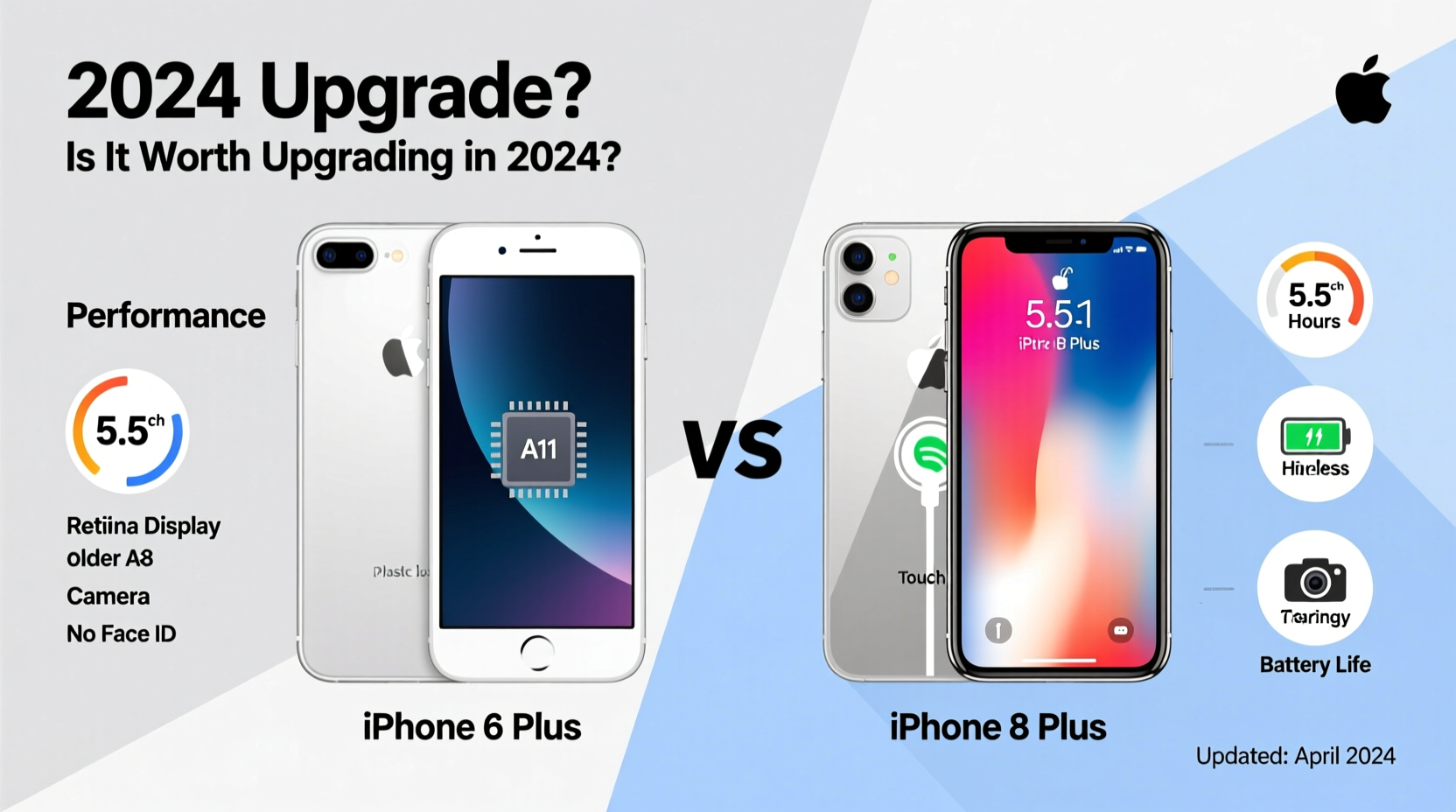
The core difference between these two devices lies in their processing power. The iPhone 6 Plus runs on Apple’s A8 chip with 1GB of RAM. By today’s standards, this setup struggles with multitasking, app loading times, and even basic animations in iOS 15 (the last version it supports). In contrast, the iPhone 8 Plus features the A11 Bionic chip—a 64-bit processor with six cores and 3GB of RAM. This architecture delivers nearly triple the CPU performance and quadruple the GPU speed of the A8.
Real-world implications are immediate. Apps launch faster, Safari handles multiple tabs without lag, and modern games run smoothly. More importantly, the A11 enables better background task management, meaning notifications arrive promptly and FaceTime calls don’t freeze during switching apps.
Camera Comparison: From Good to Great
Photography has evolved dramatically since 2014. While the iPhone 6 Plus featured a solid 8MP rear camera with basic autofocus and no optical image stabilization (OIS), the 8 Plus introduced a dual-lens system: a 12MP wide and a 12MP telephoto lens. This allows 2x optical zoom and, more critically, Portrait Mode—a feature that simulates DSLR-style depth-of-field blur.
In practical terms, photos taken on the 8 Plus are sharper, more detailed, and significantly better in low light thanks to improved sensors and OIS. The front-facing camera also jumps from 1.2MP to 7MP, making video calls and selfies far more usable.
| Feature | iPhone 6 Plus | iPhone 8 Plus |
|---|---|---|
| Rear Camera | 8MP, f/2.2, no OIS | 12MP+12MP dual, f/1.8 & f/2.8, OIS |
| Front Camera | 1.2MP | 7MP |
| Portrait Mode | No | Yes |
| Slow-Mo Video | 120fps at 720p | 240fps at 1080p |
| Smart HDR | No | No (introduced later), but better dynamic range |
“Even under identical lighting, the 8 Plus captures richer tones and retains detail in shadows—something the 6 Plus simply can’t match.” — David Lin, Mobile Photography Analyst
Battery Life and Charging: Subtle but Meaningful Gains
Both phones offer similar screen-on time—around 10–12 hours with moderate use. However, the 8 Plus benefits from a more efficient A11 chip and optimized power management, which translates to longer standby life and less heat generation during heavy tasks.
A major upgrade is support for fast charging (with a compatible adapter) and Qi wireless charging—neither available on the 6 Plus. While Apple doesn’t include the fast charger in the box, adding a $20 USB-C to Lightning cable and 18W adapter can charge the 8 Plus to 50% in about 30 minutes.
Real Example: Daily Use After Upgrade
Sarah, a freelance writer in Portland, used her iPhone 6 Plus for emails, calendar, and occasional photography until late 2023. She noticed increasing delays when opening Google Docs, frequent crashes in Zoom, and blurry images she couldn’t use for client pitches. After switching to a refurbished iPhone 8 Plus, she reported: “It feels like I’ve gone from dial-up to broadband. My meetings start on time because the phone doesn’t freeze. I actually enjoy taking pictures now.”
iOS Support and Security: The Hidden Cost of Staying Behind
This is perhaps the most compelling reason to upgrade. The iPhone 6 Plus stopped receiving official iOS updates after iOS 15. That means no security patches released after 2022, leaving the device vulnerable to emerging threats. Banking apps, messaging platforms, and even Apple’s own services are phasing out support for older operating systems.
In contrast, the iPhone 8 Plus received updates up to iOS 17, released in 2023. While it won’t get iOS 18, it benefited from four additional years of critical security fixes, performance improvements, and feature upgrades—including enhanced privacy controls, App Tracking Transparency, and better accessibility tools.
Checklist: Is It Time to Upgrade?
- Does your phone take more than 5 seconds to unlock or open apps?
- Have you been unable to install the latest version of WhatsApp, Instagram, or banking apps?
- Do photos come out blurry or dark, even in good lighting?
- Does the battery drain within 6 hours of use?
- Are you receiving warnings about outdated software?
If you answered yes to two or more, an upgrade is not just beneficial—it’s necessary for functionality and safety.
Resale Value and Cost Considerations
In 2024, unlocked iPhone 6 Plus units sell for $30–$60, depending on condition. Refurbished iPhone 8 Plus models (in good condition, 64GB) range from $120 to $180. This $100–$150 investment buys three extra years of reliable usage, assuming careful maintenance.
While newer iPhones offer better cameras and 5G, the 8 Plus remains compatible with essential services, supports modern accessories, and runs current versions of most productivity and social media apps efficiently. For users not interested in cutting-edge tech, it strikes a balance between affordability and capability.
Frequently Asked Questions
Can the iPhone 8 Plus still be used in 2024?
Yes. While it won’t receive iOS 18, the 8 Plus runs iOS 17 well and supports all major apps as of 2024. Performance remains solid for everyday tasks including web browsing, email, social media, and HD video streaming.
Will apps stop working on my iPhone 6 Plus?
Many already have. Developers are dropping support for iOS 15 and earlier. Apps like TikTok, Snapchat, and some banking platforms require iOS 16 or higher, effectively locking out the 6 Plus from full functionality.
Is the design too outdated?
The 8 Plus retains the classic home button and thick bezels, unlike newer edge-to-edge models. However, many users prefer the tactile feedback of the physical button and find the design more comfortable to hold. It’s a matter of preference, not obsolescence.
Final Verdict: Yes, It’s Worth Upgrading—But Know the Limits
Upgrading from the iPhone 6 Plus to the 8 Plus in the current year is absolutely worth it—if your goal is reliability, security, and restored functionality. You’ll gain faster performance, vastly improved photography, better battery efficiency, and crucially, recent software support that protects your data and keeps apps running.
However, recognize that the 8 Plus is itself a legacy device. It won’t get future iOS versions, lacks Face ID, and doesn’t support the latest accessories like AirPods Pro (2nd gen) spatial audio. But for users transitioning from a 6 Plus, it feels like a revelation.
Think of it not as chasing the newest trend, but as closing a technological gap that’s been slowing you down. The upgrade pays for itself in saved time, reduced frustration, and regained confidence in your device.




 浙公网安备
33010002000092号
浙公网安备
33010002000092号 浙B2-20120091-4
Comments
No comments yet. Why don't you start the discussion?