
In 2014, Apple’s iPhone 6 Plus marked a turning point—finally offering a large-screen smartphone to compete with Android flagships that had already embraced bigger displays for years. For longtime iPhone users, this model felt like catching up. For Android loyalists, it raised questions: was switching to iOS now worthwhile? And for those on the fence, the decision hinged on more than specs—it involved ecosystems, software philosophy, and long-term usability.
Fast forward to today, and the dynamics have shifted dramatically. What once felt like a clear divide in design and functionality has evolved into a nuanced competition where both platforms offer compelling strengths. Revisiting the iPhone 6 Plus era offers insight not just into past trade-offs, but how far both ecosystems have come—and whether switching between them ever truly “paid off.”
The State of the Smartphone Market in 2014
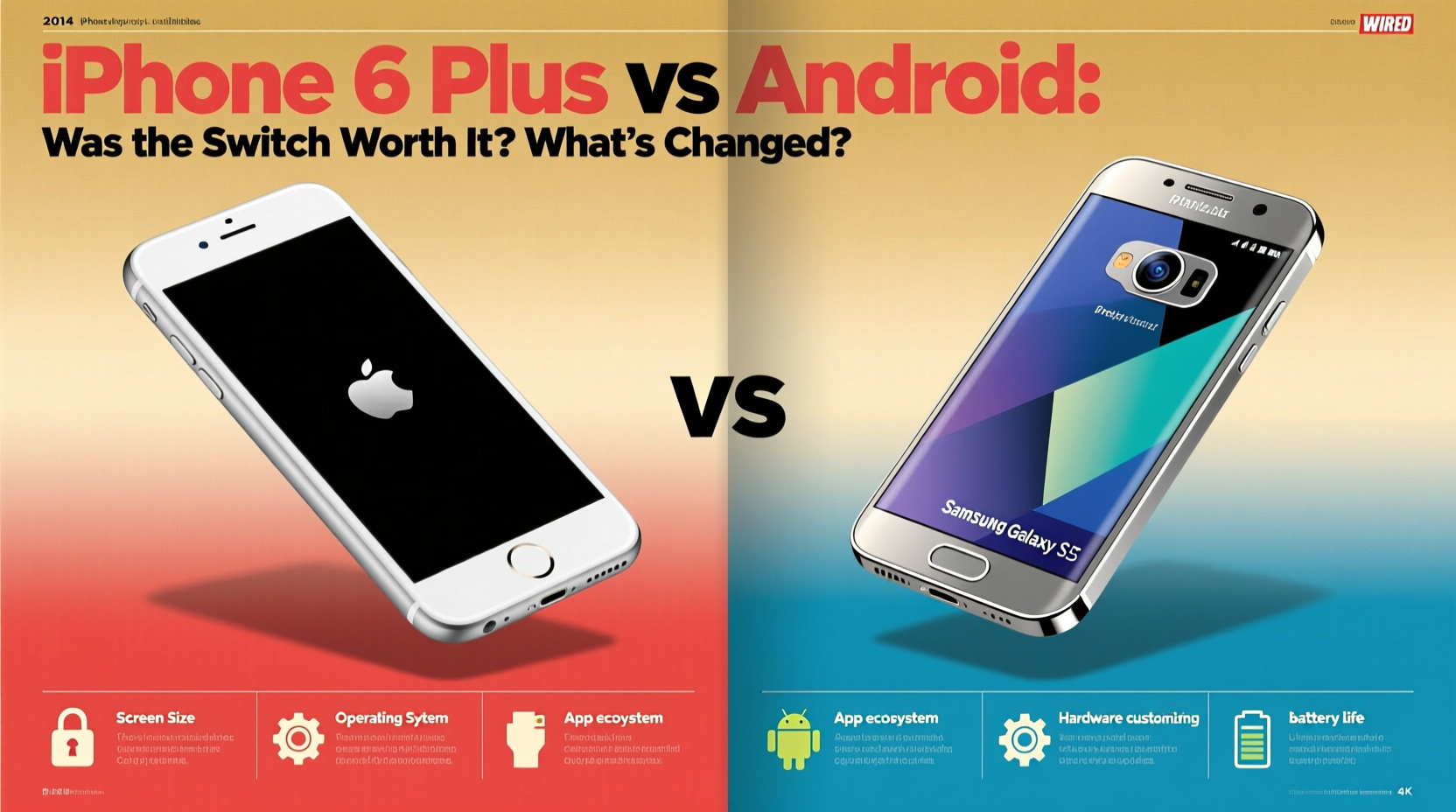
The release of the iPhone 6 Plus ended Apple’s long-standing resistance to phablets. With a 5.5-inch display, it entered a space dominated by Samsung’s Galaxy Note series and other high-end Android devices. At the time, Android offered greater hardware diversity—multiple screen sizes, expandable storage, customizable interfaces, and often superior battery life. Meanwhile, iOS provided consistency, smoother long-term software support, and tighter integration across Apple devices.
For users considering a switch from Android to iPhone 6 Plus, the appeal wasn’t raw power or flexibility—it was simplicity, app quality, and perceived longevity. However, many missed features they’d grown accustomed to: widgets, file system access, default app choices, and USB OTG support. Conversely, iPhone users switching to Android gained customization freedom but often struggled with inconsistent update schedules and app optimization.
“Apple entering the phablet market forced Android OEMs to innovate beyond screen size—into materials, camera tech, and ecosystem synergy.” — David Lin, Mobile Industry Analyst at TechTrend Insights
Was Switching Worth It Back Then?
For some, yes—especially if they valued seamless integration with Macs, iPads, or iCloud. The iPhone 6 Plus delivered excellent build quality, strong app performance, and reliable updates for five years. Its camera was among the best in class, particularly in low light, and FaceTime offered a stable video calling alternative to fragmented Android options.
But drawbacks were real. The 720p display resolution felt underwhelming next to 1080p or even 1440p Android rivals. Battery life, while decent, didn’t match devices like the Nexus 6 or LG G3. And early units suffered from “bendgate,” raising durability concerns.
On the flip side, Android users who switched to iPhone often praised the polish of iOS and the reliability of core apps. But many found the restrictions frustrating—no multitasking shortcuts, limited gesture navigation, and no SD card slot. App developers also prioritized iOS first, meaning popular services sometimes launched earlier or ran more smoothly on iPhone.
Key Differences: iPhone 6 Plus vs Top Android Phones (2014)
| Feature | iPhone 6 Plus | Top Android (e.g., Galaxy Note 4, Nexus 6) |
|---|---|---|
| Display | 5.5\" IPS LCD, 720p (326 PPI) | 5.7\" AMOLED / 6.0\" IPS, 1080p–1440p (489–515 PPI) |
| Processor | Apple A8 (dual-core) | Snapdragon 805 (quad-core) |
| RAM | 1GB | 3GB (Note 4), 3GB (Nexus 6) |
| Storage Options | 16/64/128GB, non-expandable | 32GB + microSD (up to 128GB) |
| Battery Capacity | 2915 mAh | 3220 mAh (Note 4), 3220 mAh (Nexus 6) |
| Software Updates | 5 years (iOS 8 → iOS 12) | 1–2 years (varies by OEM) |
| Customization | Limited (wallpapers, folders) | Launchers, widgets, themes, default apps |
How the Landscape Has Changed Since
A decade later, the battle lines have blurred. iPhones now feature OLED displays, advanced cameras, facial recognition, and robust multitasking. Android has matured with Project Treble improving update speed, Material Design unifying UI language, and Google’s Pixel line offering near-iOS-level software support.
Hardware parity is striking. Flagship phones from both camps use similar chipsets (A-series vs Snapdragon), offer 120Hz displays, multi-lens camera arrays, and wireless charging. Ecosystems now matter more than specs. Apple’s strength lies in continuity—Handoff, AirDrop, iMessage, and Find My create a sticky environment. Android counters with cross-device integration via Google Workspace, Nearby Share, and better smart home compatibility.
Software fragmentation on Android has improved, especially with Google’s push for faster security patches. Meanwhile, iOS has slowly adopted long-requested features: dark mode, widgets, app libraries, and third-party default apps (in EU). Yet fundamental philosophies remain: iOS emphasizes control and privacy; Android favors openness and flexibility.
Mini Case Study: Sarah’s Switch in 2015
Sarah, a freelance photographer, used a Galaxy Note 4 for its stylus and expandable storage. In 2015, she switched to iPhone 6 Plus for better photo editing apps and iCloud backup reliability. Initially frustrated by the lack of an SD card and fewer manual camera controls, she adapted over time. By 2017, she appreciated consistent iOS updates and seamless syncing with her MacBook. Today, she uses an iPhone 15 Pro—but admits she occasionally misses Android’s deeper file access when transferring RAW files directly from her camera via USB-C.
Actionable Checklist: Should You Switch Now?
- Evaluate your ecosystem: Are you using Mac, iPad, Apple Watch? Staying on iOS makes sense.
- Assess update needs: Do you want 5+ years of OS updates? iPhone still leads here.
- Check app dependencies: Some apps (e.g., iMessage, FaceTime) are iOS-only; others (Google Messages, Chrome) work better on Android.
- Consider privacy stance: Apple markets itself as privacy-first; Android offers more transparency but requires user diligence.
- Test real-world usage: Try borrowing a device for a week. Notice how gestures, notifications, and battery life feel.
FAQ
Did the iPhone 6 Plus get long-term software support?
Yes. It received updates from iOS 8 (2014) to iOS 12 (2019), totaling five major versions—longer than most Android phones of its era, which typically got 2–3 updates.
Can Android catch up to iOS in app quality?
It already has in many categories. While iOS historically had better-optimized apps, modern Android development tools and Google’s own polished apps (Photos, Messages, Wallet) have closed the gap significantly.
Is switching harder now than in 2014?
In some ways, yes. Both ecosystems are more integrated. Moving from iMessage to SMS/RCS can disrupt messaging continuity. Transferring health data, passwords, and app preferences requires planning. However, tools like Google’s Move to iOS (and Apple’s counterpart) make transitions smoother than before.
Conclusion: The Value of Choice in 2024
Back in 2014, switching from Android to iPhone 6 Plus—or vice versa—was a significant leap, often driven by lifestyle needs rather than pure specs. For professionals tied to Apple’s ecosystem, the iPhone offered stability. For tinkerers and power users, Android remained king.
Today, the question isn’t just about hardware or features—it’s about values. Do you prioritize privacy and long-term support? iOS excels. Do you want full control over your interface and hardware? Android delivers. The fact that both platforms now offer flagship experiences means the “worth” of switching depends less on technical gaps and more on personal workflow alignment.
Whether you stayed loyal or made the jump, the evolution of smartphones over the last decade proves one thing: competition benefits everyone. Devices are smarter, faster, and more capable than ever. And for users, that means real choice—not just compromise.




 浙公网安备
33010002000092号
浙公网安备
33010002000092号 浙B2-20120091-4
Comments
No comments yet. Why don't you start the discussion?