
When Apple launched the iPhone 6 and iPhone 6 Plus in September 2014, it marked a turning point in smartphone design. For the first time, Apple embraced larger screens, responding to consumer demand for more immersive viewing experiences. The iPhone 6 featured a 4.7-inch display, while the 6 Plus offered a 5.5-inch screen—significantly larger than any previous iPhone. But was that extra screen space truly worth the trade-offs? For many users, the answer depended on how they used their phones, their hand size, and their priorities in daily functionality.
Design and Build: Size Matters
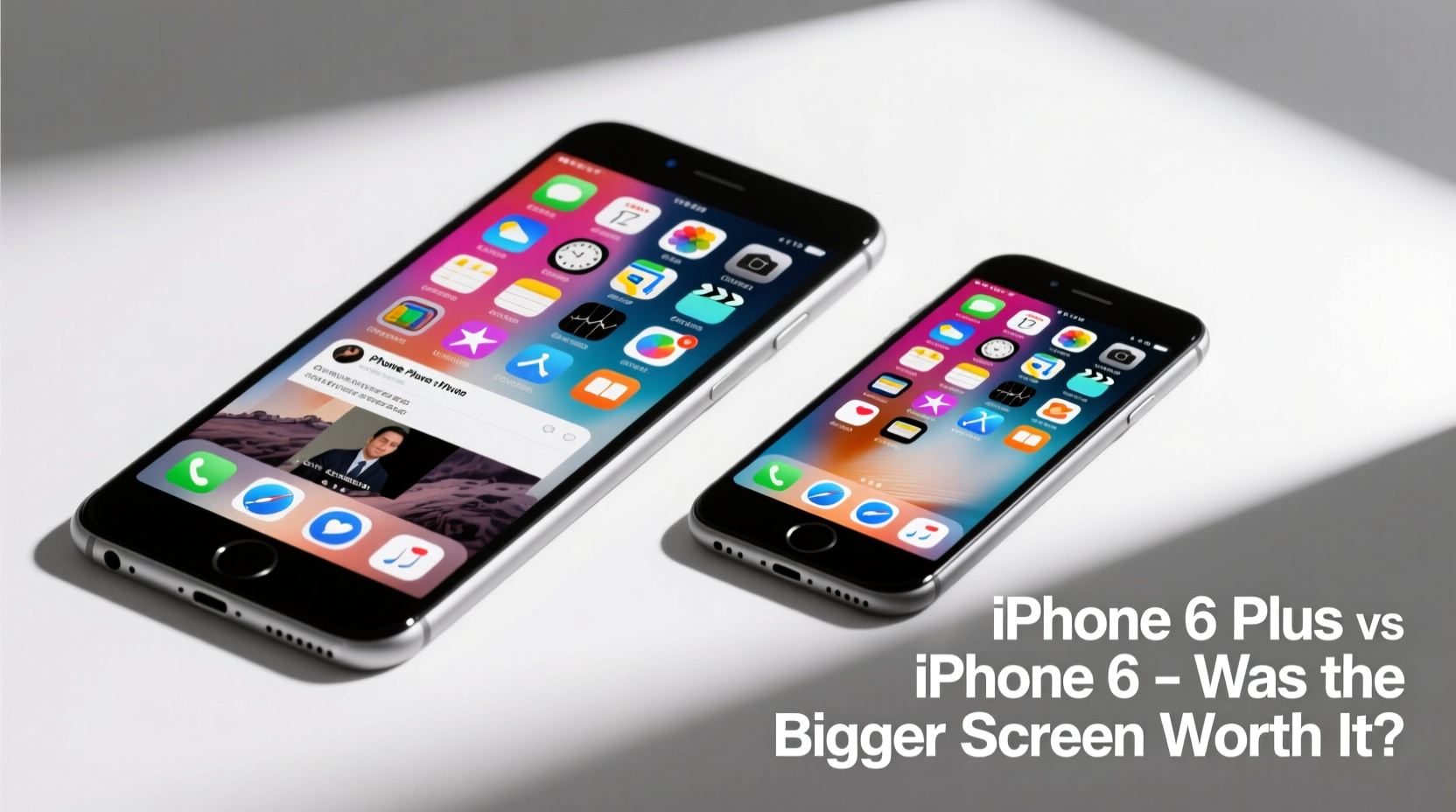
The most obvious difference between the iPhone 6 and 6 Plus was their physical dimensions. The iPhone 6 measured 138.1 x 67.0 x 6.9 mm and weighed 129 grams, making it comfortable to hold and operate with one hand for most users. In contrast, the iPhone 6 Plus was significantly larger at 158.1 x 77.8 x 7.1 mm and 172 grams. This made it harder to use single-handedly, especially for those with smaller hands.
Both models shared the same aluminum unibody design, chamfered edges, and curved back, giving them a sleek, modern look. However, the larger size of the 6 Plus introduced practical challenges. It didn’t fit comfortably in tight front pockets and often required two hands for navigation. That said, the larger footprint allowed for a bigger battery and, critically, optical image stabilization (OIS) on the rear camera—a feature absent on the standard iPhone 6.
Display Quality and Usability
The iPhone 6’s 4.7-inch Retina HD display had a resolution of 1334 x 750 pixels (326 ppi), delivering sharp text and vibrant colors. The iPhone 6 Plus, however, packed a 5.5-inch screen with a resolution of 1920 x 1080 pixels (401 ppi). While both were LCD panels, the 6 Plus offered noticeably crisper visuals and better pixel density.
More importantly, the larger screen enabled a software innovation: Zoomed Mode and Reachability. Reachability allowed users to double-tap the home button to shift the interface downward, making top-of-screen elements accessible. Zoomed Mode shrunk app layouts slightly to improve usability, though it reduced visible content.
For media consumption—watching videos, reading articles, browsing photos—the 6 Plus was clearly superior. Text was easier to read without zooming, and multitasking felt more natural. However, the increased size also meant higher power consumption and a greater risk of accidental touches along the edge.
Battery Life: A Clear Advantage
Battery performance was where the iPhone 6 Plus pulled decisively ahead. With a 2915 mAh battery compared to the iPhone 6’s 1810 mAh unit, the Plus model offered up to 24 hours of talk time and up to 12 hours of internet use on LTE. The standard iPhone 6 managed around 14 hours of talk time and 10 hours of internet use.
In real-world usage, this translated to the iPhone 6 Plus reliably lasting a full day—and often stretching into a second—with moderate to heavy use. The iPhone 6, while adequate, often required midday charging for power users. For travelers, commuters, or anyone away from outlets, the extended endurance of the 6 Plus was a significant benefit.
“Battery life can make or break a smartphone experience. The iPhone 6 Plus wasn’t just bigger—it was more dependable.” — David Kim, Mobile Tech Analyst at TechPulse Weekly
Camera Capabilities: More Than Megapixels
Both devices featured an 8MP rear camera with improved sensor technology over previous models. However, the iPhone 6 Plus included optical image stabilization (OIS), a critical upgrade that reduced blur in low-light conditions and during handheld video recording. The standard iPhone 6 relied solely on digital stabilization, which couldn't match the hardware-based results of its larger sibling.
The front-facing FaceTime camera was identical on both models (1.2MP), but the real difference emerged when shooting in motion or dim environments. Users of the 6 Plus consistently reported sharper night shots and smoother video footage. Additionally, the larger screen provided a better framing experience when using the viewfinder.
| Feature | iPhone 6 | iPhone 6 Plus |
|---|---|---|
| Screen Size | 4.7 inches | 5.5 inches |
| Resolution | 1334 x 750 | 1920 x 1080 |
| Battery Capacity | 1810 mAh | 2915 mAh |
| Camera OIS | No | Yes |
| Starting Storage | 16GB | 16GB |
| Weight | 129g | 172g |
Performance and Software Experience
Under the hood, both phones ran Apple’s A8 chip with 1GB of RAM. Performance was nearly identical in everyday tasks: app launches, web browsing, and gaming were smooth on both models. iOS 8 handled the larger display well, introducing landscape modes for certain apps like Messages and Calendar on the 6 Plus—a feature not available on the smaller model.
However, developers were slow to optimize apps for the larger screen initially. Many applications simply stretched or added borders, failing to take full advantage of the real estate. Over time, as iOS evolved and developers adapted, the 6 Plus became a more compelling platform for productivity and media creation.
Mini Case Study: Sarah, Freelance Photographer
Sarah upgraded from an iPhone 5s to the iPhone 6 Plus primarily for photography. As a freelance photographer who often shot candid street scenes, she valued the OIS for capturing stable images in low light. She also appreciated the larger screen for reviewing shots on-site without needing a tablet.
“At first, I worried the phone was too big,” she admitted. “But after a week, I got used to it. Editing photos in Lightroom Mobile was way better on the 6 Plus. And I didn’t have to charge it twice a day like my old phone.”
For Sarah, the trade-off in portability was justified by the gains in camera quality and screen utility.
Checklist: Is the iPhone 6 Plus Right for You?
- ✅ Prioritize long battery life over compact size
- ✅ Frequently watch videos, read e-books, or browse the web on your phone
- ✅ Want better photo and video quality with optical image stabilization
- ✅ Comfortable using two hands or carrying a larger device
- ✅ Don’t mind slightly slower one-handed navigation
Frequently Asked Questions
Was the iPhone 6 Plus prone to bending?
Yes. Both the iPhone 6 and 6 Plus were affected by the \"Bendgate\" controversy shortly after release. Some users reported cases of the phone bending in pockets under pressure, particularly the 6 Plus due to its larger frame. Apple maintained the issue was rare, but it sparked widespread discussion about structural durability.
Did the iPhone 6 Plus support split-view multitasking?
No. Despite its large screen, the iPhone 6 Plus did not support true split-view multitasking. That feature arrived later with the iPad Air 2 and iPhone 6s Plus through iOS 9. The 6 Plus only supported limited landscape enhancements, not full app pairing.
Can the iPhone 6 Plus still run modern apps today?
Limitedly. The iPhone 6 and 6 Plus max out at iOS 12, meaning they cannot run newer apps requiring iOS 13 or later. Most major services have dropped support, and performance with current web standards is sluggish. These devices are best suited for basic calling, messaging, and lightweight tasks today.
Final Verdict: Was the Bigger Screen Worth It?
The iPhone 6 Plus represented Apple’s bold entry into the phablet market. Its larger screen delivered tangible benefits: superior media consumption, longer battery life, and enhanced camera capabilities thanks to OIS. For users who valued these features, the jump from the iPhone 6 was absolutely worth it.
However, the decision wasn’t universal. Those who prioritized pocketability, one-handed use, or minimal weight found the iPhone 6 more practical. There was no definitive \"better\" phone—only the right choice based on lifestyle.
In hindsight, the iPhone 6 Plus set the blueprint for future flagship iPhones. Its success paved the way for the Pro Max line we see today, proving that many consumers were ready to embrace larger displays if the experience justified the size.




 浙公网安备
33010002000092号
浙公网安备
33010002000092号 浙B2-20120091-4
Comments
No comments yet. Why don't you start the discussion?