
When Apple introduced the iPhone 6 and iPhone 6 Plus in 2014, they marked a pivotal shift in smartphone design for the company. For years, Apple had resisted larger screens, but consumer demand for more viewing space finally won out. The iPhone 6 brought a modest increase in size over its predecessors, while the iPhone 6 Plus went further with a full 5.5-inch display. But for most users, the question wasn’t just about screen size—it was whether that extra bulk translated into real benefits. Was the bigger screen actually worth it?
This article dives deep into the practical differences between the iPhone 6 and iPhone 6 Plus, examining how screen size impacted everyday use, battery performance, portability, camera capabilities, and long-term satisfaction.
Design and Ergonomics: Comfort vs. Capability
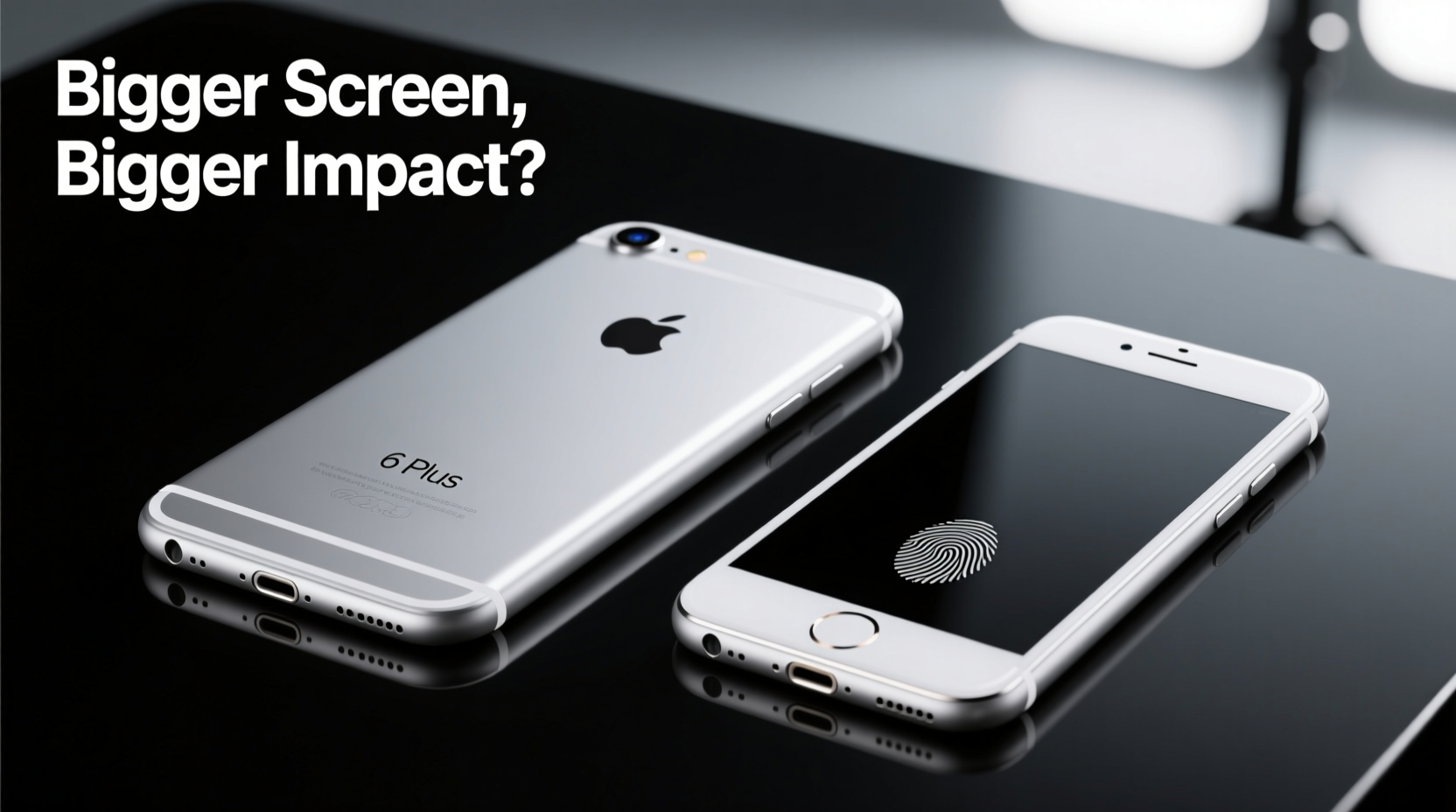
The most immediate difference between the two models is their physical footprint. The iPhone 6 measures 138.1 x 67.0 x 6.9 mm and weighs 129 grams, making it comfortable to hold and operate with one hand for most users. In contrast, the iPhone 6 Plus is significantly larger at 158.1 x 77.8 x 7.1 mm and 172 grams—nearly half an inch taller and wider.
This size jump made the 6 Plus less pocket-friendly, especially for those with smaller hands or slimmer clothing. Many users found themselves switching to two-handed operation for basic tasks like typing or scrolling. However, the trade-off was a much more immersive experience when consuming media, reading emails, or browsing web pages.
Apple also introduced a feature called Reachability on both devices to help mitigate the larger interface of the 6 Plus. By double-tapping the home button, the top half of the screen would shift downward temporarily. While helpful, it was still an extra step compared to the natural reach afforded by the iPhone 6.
Battery Life: Where the 6 Plus Shines
One area where the iPhone 6 Plus clearly outperformed its sibling was battery life. With a 2915 mAh battery compared to the iPhone 6’s 1810 mAh, the larger model offered nearly double the endurance under typical usage.
Real-world testing showed the iPhone 6 lasting around 8–10 hours of mixed use, including calls, browsing, and app usage. The iPhone 6 Plus, on the other hand, could stretch to 14–16 hours, often making it through a full day—even a heavy one—without needing a recharge.
| Feature | iPhone 6 | iPhone 6 Plus |
|---|---|---|
| Screen Size | 4.7 inches | 5.5 inches |
| Resolution | 1334 x 750 | 1920 x 1080 |
| Battery Capacity | 1810 mAh | 2915 mAh |
| Weight | 129 g | 172 g |
| Talk Time (3G) | Up to 14 hours | Up to 24 hours |
| Standby Time | Up to 250 hours | Up to 444 hours |
For travelers, commuters, or anyone who relied heavily on GPS navigation or streaming, the iPhone 6 Plus provided a level of confidence that the smaller model couldn’t match. It wasn’t uncommon for 6 Plus owners to charge every other day under moderate use.
“Battery life can make or break a user’s experience. The iPhone 6 Plus wasn’t just bigger—it was more dependable.” — David Lin, Mobile Tech Analyst at GadgetReview Weekly
Display Quality and Usability
Both phones used Retina HD displays, but the iPhone 6 Plus had a higher pixel density and sharper image due to its Full HD resolution. Text appeared crisper, videos were more cinematic, and multitasking felt more efficient thanks to the expanded screen real estate.
One standout feature exclusive to the 6 Plus was **Landscape Mode** in many native apps. When rotated horizontally, apps like Messages, Mail, and Calendar displayed dual-pane layouts—similar to what you’d see on an iPad. This made navigating conversations or composing emails significantly faster and more intuitive.
For readers and media consumers, the larger screen meant fewer page turns in e-books and less zooming in on articles. Video calls on FaceTime or third-party apps also benefited from the added width, offering a more engaging experience.
Camera Advantages: Optical Image Stabilization
While both models shared the same 8MP rear sensor and 1.2MP front camera, Apple reserved **Optical Image Stabilization (OIS)** for the iPhone 6 Plus. This subtle but meaningful upgrade improved photo quality in low-light conditions and reduced blur from hand movement during video recording.
In practice, this meant the 6 Plus consistently captured clearer images indoors or at dusk. Video footage was also smoother, with fewer jitters—especially useful for casual filmmakers or parents recording fast-moving kids.
The lack of OIS on the iPhone 6 wasn’t a dealbreaker, but it highlighted how Apple used hardware differentiation to justify the premium price and size of the Plus model.
Mini Case Study: Sarah, Freelance Photographer
Sarah upgraded from an iPhone 5s to the iPhone 6 Plus primarily for its camera and screen. As someone who shot lifestyle content for clients, she needed a phone that could preview edits accurately and capture usable images without carrying extra gear.
She found the larger display invaluable for reviewing photos in the field, spotting focus issues or exposure problems immediately. The OIS allowed her to shoot in dimly lit cafes without a tripod, and the improved battery meant she could edit on-location without fear of shutdown.
“I was skeptical about the size at first,” she said, “but after a week, I didn’t want to go back. The screen and camera combo made my workflow faster and more reliable.”
Performance and Software Experience
Both devices ran the same A8 chip and M8 motion coprocessor, so raw performance was nearly identical. Apps launched at similar speeds, and multitasking was smooth on both. However, the iPhone 6 Plus handled graphically intensive games and large documents slightly better due to its higher-resolution display and larger thermal mass.
iOS updates were delivered simultaneously, and both phones supported features like Touch ID, Apple Pay, and AirDrop. Over time, however, the 6 Plus’s extra RAM (despite Apple not officially confirming it) seemed to help maintain responsiveness longer as iOS evolved.
Checklist: Is the iPhone 6 Plus Right for You?
- ✅ Do you consume a lot of video or read long articles on your phone?
- ✅ Do you travel frequently and need all-day battery life?
- ✅ Are you willing to sacrifice one-handed usability for a better camera and screen?
- ✅ Do you use your phone for navigation or productivity apps?
- ✅ Do you prefer fewer charges per day?
If you answered yes to three or more, the iPhone 6 Plus likely offered more value despite its size.
FAQ
Was the iPhone 6 Plus harder to repair?
Yes. Due to its larger, more fragile display and increased internal complexity, screen replacements and battery swaps were costlier and more involved than on the iPhone 6.
Could the iPhone 6 Plus fit in standard phone cases or pockets?
Many standard jeans pockets were too tight for the 6 Plus. Users often opted for jacket pockets, bags, or specially designed oversized cases.
Did the iPhone 6 Plus have better speakers?
No. Both models had similar mono speaker placement at the bottom. Audio quality was comparable, with neither offering true stereo sound.
Conclusion: Was the Bigger Screen Worth It?
For many users, the answer was a clear yes. The iPhone 6 Plus wasn’t just a larger version of the iPhone 6—it offered tangible improvements in battery life, display utility, camera stability, and overall usability for media and productivity.
However, it came with real compromises: reduced portability, greater strain on one-handed use, and higher susceptibility to damage from drops. Whether those trade-offs were acceptable depended entirely on individual habits and priorities.
Looking back, the iPhone 6 Plus played a crucial role in shaping Apple’s future. It proved there was strong demand for larger iPhones, paving the way for the Pro Max lineage we see today. For users in 2014 who valued screen space and endurance over compactness, the 6 Plus wasn’t just worth it—it was transformative.




 浙公网安备
33010002000092号
浙公网安备
33010002000092号 浙B2-20120091-4
Comments
No comments yet. Why don't you start the discussion?