
When Apple released the iPhone X in 2017, it marked a dramatic shift in smartphone design. Fans of the iPhone 6 Plus, one of the most popular iPhones ever made, were surprised to see that the newer flagship had a smaller physical footprint—despite packing more advanced technology. A common question emerged: Did Apple really shrink the screen on the iPhone X compared to the iPhone 6 Plus? The answer isn’t as straightforward as it seems. While the iPhone X has a slightly smaller diagonal measurement, its screen-to-body ratio and overall usability tell a different story. Let’s examine the facts behind the numbers.
Display Size: The Numbers Don’t Tell the Whole Story
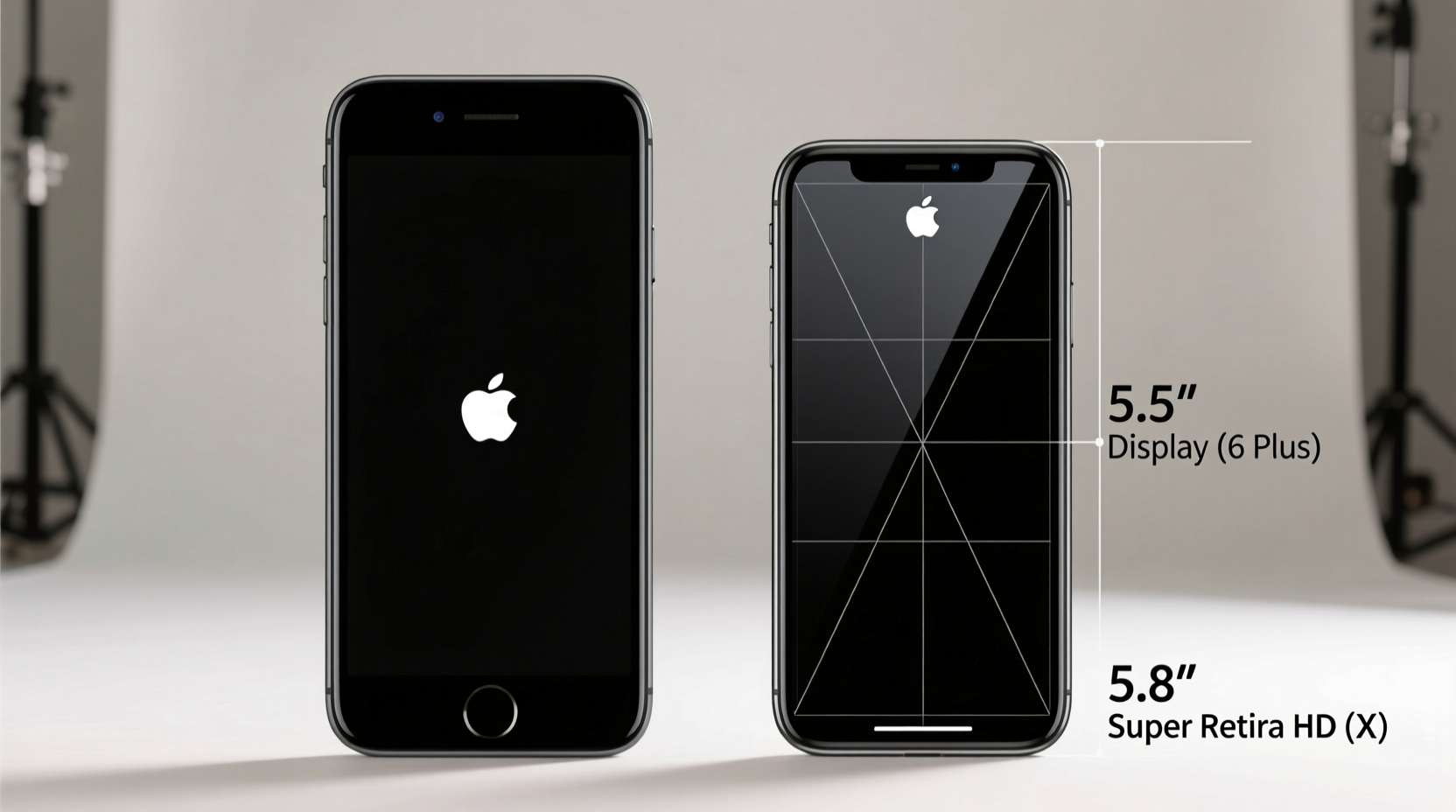
The iPhone 6 Plus features a 5.5-inch LCD display with a resolution of 1920x1080 pixels. The iPhone X, by contrast, has a 5.8-inch OLED display with a resolution of 2436x1125 pixels. At first glance, this suggests the iPhone X has a larger screen. But users quickly noticed that the actual viewable area didn’t feel significantly bigger—and in some ways, felt more compact.
The confusion arises from how screen size is measured. Diagonal screen size includes the full panel, but usable space depends on bezels, cutouts, and aspect ratio. The iPhone 6 Plus has thick top and bottom bezels, while the iPhone X eliminates those in favor of an edge-to-edge design with a notch for Face ID components.
“Screen size alone doesn’t define user experience. Bezel reduction and aspect ratio changes can make a smaller-diagonal screen feel just as spacious—or even more immersive.” — David Chen, Mobile UX Analyst at TechInsight Group
Physical Dimensions and Screen Real Estate
Despite having a larger nominal screen size, the iPhone X is actually shorter in height than the iPhone 6 Plus. This is due to its taller 19.5:9 aspect ratio versus the 6 Plus’s 16:9. The result? More vertical space for scrolling through messages or web pages, but less horizontal space for landscape video viewing.
To clarify the differences, here’s a direct comparison:
| Feature | iPhone 6 Plus | iPhone X |
|---|---|---|
| Display Size (diagonal) | 5.5 inches | 5.8 inches |
| Display Type | IPS LCD | Super Retina OLED |
| Resolution | 1920 × 1080 | 2436 × 1125 |
| Pixels Per Inch (PPI) | 401 | 458 |
| Aspect Ratio | 16:9 | 19.5:9 |
| Height | 158.1 mm | 143.6 mm |
| Width | 77.8 mm | 70.9 mm |
| Bezels | Large top/bottom | Narrow edges, notch |
| Screen-to-Body Ratio | ~67% | ~81% |
The iPhone X achieves more screen in a smaller body thanks to its nearly bezel-less design. Even though its diagonal measurement is only 0.3 inches larger, the way the screen is utilized makes a significant difference in daily use.
User Experience: Is the iPhone X Screen Actually Smaller?
Many iPhone 6 Plus users upgrading to the iPhone X report that the screen feels both more modern and surprisingly manageable. Although the iPhone X’s screen is technically larger diagonally, its narrower width (70.9 mm vs. 77.8 mm) makes it easier to grip and operate with one hand. The taller aspect ratio also means you see more content when browsing social media feeds or reading articles.
However, there are trade-offs. Landscape mode on the iPhone X is constrained by the notch and rounded corners, which can interfere with full-screen video playback. Some apps designed for traditional 16:9 displays show black bars or awkward cropping. In contrast, the iPhone 6 Plus delivers a consistent, predictable viewing experience for media consumption.
The OLED panel on the iPhone X offers deeper blacks, higher contrast, and better color accuracy—especially noticeable in dark environments. These improvements enhance perceived quality, making the screen feel more “present” even if the physical dimensions are tighter.
Mini Case Study: Sarah’s Upgrade Journey
Sarah had used her iPhone 6 Plus for over three years. She loved the large screen for watching YouTube and reading e-books but found the phone increasingly slow and bulky. When she upgraded to the iPhone X, she was initially skeptical. “I thought I’d miss the big screen,” she said. “But within a week, I realized I wasn’t losing screen space—I was gaining efficiency.”
She found that the taller interface allowed her to read more text without scrolling, and the improved brightness and contrast made outdoor visibility far better. Despite the smaller physical size, she didn’t feel cramped. “It’s like Apple gave me a bigger window in a smaller frame,” she noted.
Design Philosophy: Why Apple Chose This Path
The transition from the iPhone 6 Plus to the iPhone X reflects a broader industry shift toward maximizing screen real estate without increasing device size. Apple’s goal was not to deliver a physically larger screen, but a more immersive and functional one. By removing the home button and minimizing bezels, they could fit a 5.8-inch display into a chassis closer in size to the original iPhone 6.
This change also aligned with new interaction models. Gestures replaced the home button, and Face ID required the notch. These innovations demanded a redesign of the entire front face, prioritizing technology integration over traditional form factors.
As Phil Schiller once stated during the iPhone X launch event: “We set out to create a magical piece of glass where the device itself disappears into the experience.” That vision required rethinking what a screen should be—not just how big it is.
Frequently Asked Questions
Is the iPhone X screen smaller than the iPhone 6 Plus?
No, the iPhone X has a slightly larger diagonal screen (5.8” vs. 5.5”), but its design makes it feel more compact. Due to its taller aspect ratio and reduced bezels, it fits more screen into a smaller body.
Why does the iPhone X look smaller if it has a bigger screen?
The iPhone X eliminates large top and bottom bezels, allowing Apple to shrink the overall device while maintaining a larger or comparable screen area. Its narrower width also contributes to a more pocketable feel.
Which phone has better screen quality?
The iPhone X has superior screen quality. Its OLED display offers higher resolution, better contrast, true blacks, and improved color accuracy compared to the iPhone 6 Plus’s LCD panel.
Action Checklist: Evaluating Screen Upgrades
- Compare actual device dimensions, not just screen size
- Test one-handed usability in person if possible
- Check how your favorite apps render on newer aspect ratios
- Evaluate screen quality in different lighting conditions
- Consider long-term benefits of OLED: battery savings, clarity, durability
- Assess whether gesture navigation suits your usage style
Conclusion: Rethinking What “Bigger” Means
The idea that Apple “shrunk” the screen from the iPhone 6 Plus to the iPhone X is a misconception rooted in outdated assumptions about smartphone design. In reality, Apple redefined what screen size means by prioritizing efficiency, immersion, and innovation over raw inches. The iPhone X delivers a more advanced visual experience in a more compact, ergonomic package.
Technology progress isn’t always about going bigger—it’s about going smarter. The iPhone X may have a slightly taller screen in a smaller body, but its impact on mobile design has been enormous. For users considering an upgrade, the lesson is clear: look beyond the spec sheet. True value lies in how the screen enhances your daily life.




 浙公网安备
33010002000092号
浙公网安备
33010002000092号 浙B2-20120091-4
Comments
No comments yet. Why don't you start the discussion?