
In 2014, smartphone users faced a pivotal decision: stick with Android’s flagship phablet, the Samsung Galaxy Note 3, or make the leap to Apple’s newly released iPhone 6 Plus. At the time, both devices represented the peak of mobile technology in their respective ecosystems. For many Android loyalists, switching to iOS wasn’t just about hardware—it involved rethinking app ecosystems, cloud integration, and long-term usability. But from a pure device standpoint, was upgrading from the Note 3 to the iPhone 6 Plus actually worth it?
This article breaks down the key differences between these two iconic phones, evaluates real-world performance, and assesses whether the upgrade delivered tangible benefits—or if it was more about brand appeal than practical gains.
Design and Build: Premium Feel vs Functional Flexibility
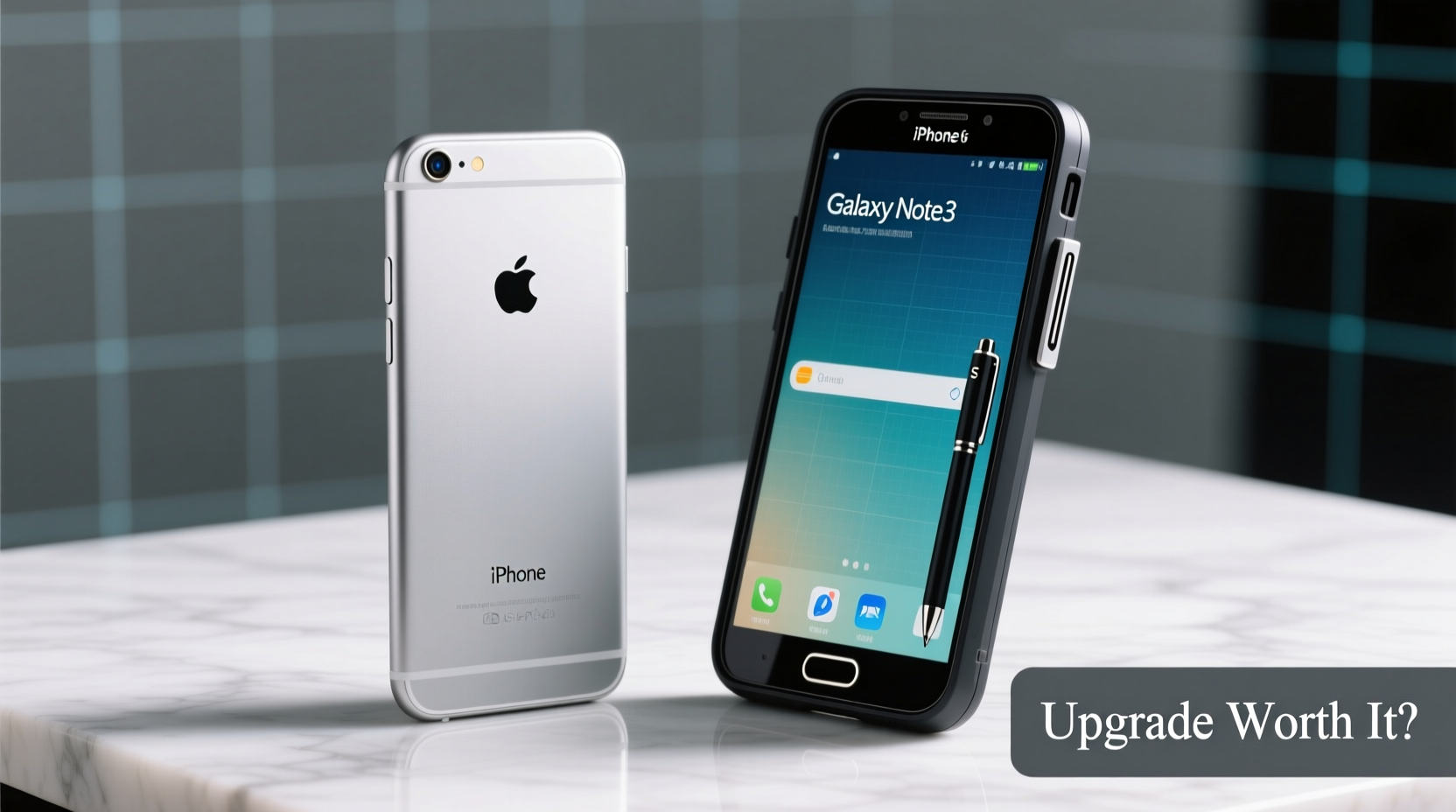
The iPhone 6 Plus marked a turning point in Apple’s design language. With its curved edges, aluminum unibody, and minimalist aesthetic, it felt significantly more premium than previous iPhones. Measuring 7.8mm thick and weighing 172g, it was sleeker and lighter than the Note 3 (8.3mm, 168g), despite having a slightly larger 5.5-inch display.
Samsung’s Galaxy Note 3, on the other hand, used a faux-leather back with metallic trim, giving it a business-like appearance. While not as elegant as the iPhone’s metal finish, it offered functional advantages: removable battery, expandable storage via microSD, and IP67 dust/water resistance—features Apple didn’t offer.
Display and Usability: Size Isn't Everything
Both phones featured 5.5-inch displays, but the technologies differed. The Note 3 used a Super AMOLED panel with a 1080p resolution (401 PPI), delivering deep blacks and vibrant colors. The iPhone 6 Plus used an LCD IPS panel at the same resolution but introduced “Retina HD” branding, emphasizing pixel density and color accuracy calibrated for iOS.
In practice, the Note 3’s AMOLED screen provided better contrast and consumed less power when displaying dark content. However, Apple’s color management and font rendering gave the iPhone sharper text and smoother UI animations, which many users found more comfortable for reading and web browsing.
One major usability difference: the Note 3 came with the S Pen, enabling quick notes, screen magnification, and gesture controls. This made it ideal for multitaskers, students, and professionals who valued input flexibility. The iPhone 6 Plus had no stylus support, relying solely on touch interaction.
Performance and Software: iOS Efficiency vs Android Customization
Under the hood, the Galaxy Note 3 ran on a Snapdragon 800 (or Exynos 5420 in some regions) with 3GB of RAM. The iPhone 6 Plus used Apple’s new A8 chip with only 1GB of RAM. On paper, the Note 3 appeared superior. However, real-world performance told a different story.
iOS 8 was highly optimized for Apple’s hardware. Despite lower RAM, the iPhone 6 Plus delivered buttery-smooth animations, faster app launches, and longer-term software support. Apps were generally more consistent in design and performance across the App Store.
The Note 3, while powerful, suffered from occasional stutters due to TouchWiz—the heavily customized Android skin that added visual clutter and background processes. Over time, Android fragmentation meant slower OS updates, leaving users on older versions longer.
“Apple’s tight control over hardware and software creates a more cohesive experience, even with lower specs.” — David Liu, Mobile Systems Analyst, TechInsight Weekly
Camera Comparison: Innovation vs Consistency
The iPhone 6 Plus featured an 8MP rear camera with optical image stabilization (OIS), a first for iPhones. It excelled in natural lighting, producing balanced colors and excellent dynamic range. Low-light performance was average but reliable thanks to smart noise reduction.
The Note 3 also had a 13MP sensor without OIS. While higher in megapixels, its photos often suffered from oversharpening and inconsistent white balance. In bright conditions, it could outresolve the iPhone, but in mixed or low light, the iPhone produced more usable images.
Video recording was another win for Apple. The iPhone 6 Plus supported 1080p at 60fps and had superior audio capture. The Note 3 maxed out at 1080p/30fps and lacked advanced stabilization features.
| Feature | iPhone 6 Plus | Note 3 |
|---|---|---|
| Processor | A8 (64-bit) | Snapdragon 800 / Exynos 5420 |
| RAM | 1GB | 3GB |
| Rear Camera | 8MP with OIS | 13MP, no OIS |
| Front Camera | 1.2MP | 2MP |
| Battery | 2915mAh (non-removable) | 3200mAh (removable) |
| Storage | 16/64/128GB (no microSD) | 32/64GB + microSD support |
| OS Update Support | 5 years (iOS 8 to iOS 12) | 2 major updates (Android 4.4 to 5.0) |
Real-World Example: A Power User's Switch
Consider Mark, a graphic designer who used the Note 3 for three years. He relied on the S Pen for sketching ideas and loved the expandable storage for keeping large project files on-device. When his phone began lagging in late 2014, he considered upgrading to the Note 4 but ultimately chose the iPhone 6 Plus after testing both.
His transition wasn’t seamless. He missed the microSD slot and had to rely on iCloud storage, which required a paid subscription. The lack of a stylus frustrated him initially. However, within weeks, he adapted. He discovered Apple Pencil-compatible apps and appreciated the iPhone’s consistent performance and cleaner interface. Most importantly, his phone stayed fast and received updates for years—something his Note 3 hadn’t done.
For Mark, the upgrade was worth it—not because the iPhone was objectively better in every way, but because it fit his evolving needs: reliability, longevity, and ecosystem integration.
Step-by-Step: Evaluating Your Upgrade Path (2014 Context)
If you were deciding between sticking with your Note 3 or upgrading to the iPhone 6 Plus, here’s how to evaluate your choice logically:
- Assess current device condition: Is your Note 3 still performing well? If yes, consider waiting.
- Identify your priorities: Do you need expandable storage, S Pen, or removable battery? These are lost on iPhone.
- Evaluate ecosystem lock-in: Are you invested in Google services or iCloud? Switching has data migration costs.
- Consider long-term support: iPhone typically gets 5+ years of updates; Android at the time offered 2–3.
- Test both devices: Use them in-store for typing, camera, and navigation to feel the differences firsthand.
Frequently Asked Questions
Did the iPhone 6 Plus fix the bending issue (“Bendgate”)?
No. Shortly after release, reports emerged of the iPhone 6 Plus bending in pockets under pressure. Apple acknowledged isolated cases but maintained it was rare. The Note 3’s polycarbonate frame was more flexible but less prone to permanent deformation.
Could the Note 3 match the iPhone 6 Plus in app quality?
Not consistently. While Android had more apps overall, many were poorly optimized or duplicated. The App Store offered fewer apps but higher average quality, especially for productivity and creative tools.
Was battery life better on one device?
The Note 3 had a slight edge in raw capacity (3200mAh vs 2915mAh), but the iPhone’s efficient processor and OS allowed comparable usage. Both lasted a full day with moderate use. However, the Note 3’s removable battery let users carry spares—a practical advantage.
Conclusion: Was the Upgrade Worth It?
For many users, upgrading from the Note 3 to the iPhone 6 Plus wasn’t about superior specs—it was about a shift in philosophy. Apple offered a tightly integrated, future-proof experience with strong privacy standards, consistent updates, and high resale value. Samsung provided openness, customization, and hardware versatility.
If your priority was long-term reliability, smooth performance, and access to a curated app ecosystem, the iPhone 6 Plus was worth the switch. But if you valued hardware flexibility, the S Pen, or expandable storage, staying with the Note 3—or upgrading to the Note 4—made more sense.
In the end, the “worth” of the upgrade depended not on benchmarks, but on how you used your phone and what you valued most in a mobile experience.




 浙公网安备
33010002000092号
浙公网安备
33010002000092号 浙B2-20120091-4
Comments
No comments yet. Why don't you start the discussion?