
When Apple launched the iPhone 6 and iPhone 6 Plus in September 2014, it marked a pivotal shift in smartphone design. For the first time, Apple embraced larger screens, responding to years of consumer demand for more display real estate. The iPhone 6 featured a 4.7-inch display, while the 6 Plus offered a much larger 5.5-inch screen—both significantly bigger than the 4-inch iPhone 5s. Despite the trend toward phablets, a surprising number of users still gravitated toward the smaller iPhone 6. But why? Was it just nostalgia or habit? Or were there legitimate reasons someone might genuinely prefer the compact model?
The answer lies not in specs alone, but in how people actually use their phones. While the 6 Plus introduced features like optical image stabilization and longer battery life, the original iPhone 6 delivered a more balanced experience for many. Size, comfort, usability, and even psychological factors played key roles in shaping user preference.
Ergonomics and One-Handed Use
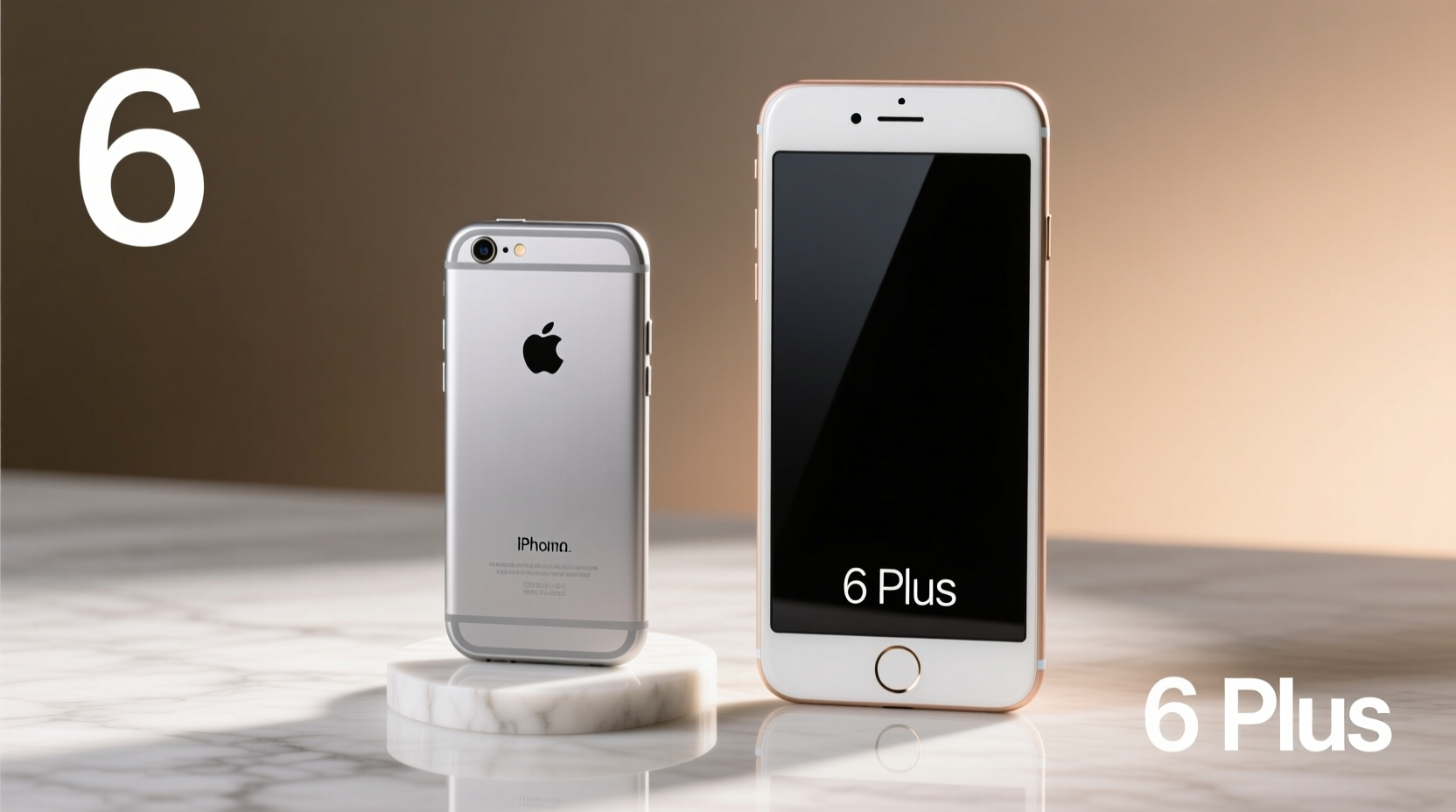
One of the most compelling arguments for the iPhone 6 over its larger sibling was usability with one hand. At 4.7 inches, the iPhone 6 remained within reach for thumb navigation across the entire screen for most users. In contrast, the 6 Plus, with its taller frame, made reaching the top corners difficult without shifting grip or using two hands.
A 2015 study by UI designer Steven Hoober found that 49% of smartphone interactions occur entirely with the thumb, especially when standing or walking. For these scenarios, the iPhone 6 had a clear advantage. Its width—just under 2.7 inches—meant it could be comfortably held and operated in tight spaces: pockets, crowded subways, or while multitasking.
The 6 Plus, while impressive for media consumption and typing, often required repositioning or palm-cradling to access notifications or browser tabs—a subtle but persistent friction point for daily use.
Battery Life vs. Portability Trade-Off
It’s true: the iPhone 6 Plus had better battery life. With a 2915 mAh battery compared to the 6’s 1810 mAh, the Plus could last well into a second day under moderate use. However, for many users, this came at too high a cost in portability.
Consider real-world carry scenarios:
- Fitting into front jeans pockets without bulging
- Slipping into small purses or jacket pockets
- Reducing hand fatigue during extended use
The iPhone 6 weighed 129 grams and measured 138.1 mm in height. The 6 Plus weighed 172 grams and stretched to 158.1 mm—closer to today’s max-size smartphones. For users who valued discretion and lightness, the smaller model felt less intrusive in everyday life.
“People don’t buy phones—they buy experiences. And sometimes, a lighter, more agile device delivers a better experience than raw power.” — David Limp, former SVP of Devices, Amazon
Display Quality and Usability Differences
The 6 Plus introduced a higher-resolution display (1920x1080) with a pixel density of 401 PPI, while the iPhone 6 ran at 1334x750 (326 PPI). On paper, the Plus wins. But in practice, the difference was less dramatic than expected.
Apple’s Retina display technology meant both phones appeared sharp at normal viewing distances. Most users couldn’t reliably distinguish between the two in blind tests unless examining fine text at close range. For general browsing, messaging, and social media, the 6’s screen was more than sufficient.
Where the 6 Plus shined was in video playback, gaming, and multitasking. Split-view wasn’t available yet, but the larger canvas made typing easier and improved readability in landscape mode. Still, for users focused on communication and efficiency—not media immersion—the 6’s screen struck a sweet spot.
User Preference Case Study: Sarah, Urban Professional
Sarah, a 34-year-old graphic designer in Chicago, upgraded from an iPhone 5s in 2014. She initially leaned toward the 6 Plus for its modern look and bigger screen. But after testing both models in-store, she chose the iPhone 6.
“I realized I was always pulling my phone out on the train, in meetings, or while holding coffee,” she said. “The Plus felt like a mini tablet. It didn’t fit in my blazer pocket, and I kept dropping it because I needed two hands to type. The 6 just… disappeared into my routine.”
Over two years, Sarah appreciated the balance: long enough battery for her commute, small enough to avoid constant awareness of its presence. She never missed the extra screen space for editing emails or reviewing mockups. Her choice wasn’t about resisting change—it was about optimizing for actual use.
Performance and Software Experience
Both devices shared the same A8 chip and M8 motion coprocessor, meaning core performance was identical. Apps launched at the same speed, multitasking behaved similarly, and iOS updates were delivered uniformly. This parity meant that choosing between them wasn’t about power—it was about form factor and secondary features.
The 6 Plus did offer exclusive advantages:
- Optical image stabilization (OIS) for steadier photos
- Landscape keyboard with dedicated number row
- Longer talk time (up to 24 hours vs. 14)
- Support for Reachability in both orientations
Yet for many, these perks weren’t game-changers. Casual photographers didn’t notice OIS in daylight. Most users rarely typed in landscape. And while battery life mattered, it wasn’t decisive for those charging nightly.
Comparison Table: iPhone 6 vs iPhone 6 Plus
| Feature | iPhone 6 | iPhone 6 Plus |
|---|---|---|
| Screen Size | 4.7 inches | 5.5 inches |
| Resolution | 1334x750 (326 PPI) | 1920x1080 (401 PPI) |
| Battery Capacity | 1810 mAh | 2915 mAh |
| Talk Time (Up to) | 14 hours | 24 hours |
| Camera Stabilization | Digital only | Optical + Digital |
| Weight | 129 g | 172 g |
| Dimensions | 138.1 x 67.0 x 6.9 mm | 158.1 x 77.8 x 7.1 mm |
| Landscape Keyboard | No | Yes |
Why the Smaller iPhone 6 Still Made Sense
Despite the industry’s rush toward larger screens, the iPhone 6 represented a transitional sweet spot. It was large enough to feel modern, small enough to remain personal. For users upgrading from the 5s, it offered a meaningful screen boost without sacrificing familiarity.
Moreover, app design at the time hadn’t fully adapted to giant displays. Many interfaces were stretched versions of smaller layouts, making the extra space feel underutilized. The 6 provided a Goldilocks zone: more screen than before, but not so much that it altered behavior.
Checklist: Who Should Have Chosen the iPhone 6?
Here’s a quick guide to help determine if the smaller model was the better fit:
- ✅ You wear tight-fitting clothing or small pockets regularly
- ✅ You frequently use your phone one-handed (walking, commuting)
- ✅ You charge your phone daily and don’t need multi-day battery
- ✅ You prioritize comfort and ease of handling over multimedia immersion
- ✅ You’re upgrading from a 4–4.5 inch phone and want a moderate leap
- ✅ You don’t take many low-light photos where OIS matters
Frequently Asked Questions
Did the iPhone 6 feel outdated quickly compared to the 6 Plus?
Not necessarily. Both phones received iOS updates for five years, up to iOS 12. Performance degradation was similar. The 6 Plus’s larger screen aged slightly better with evolving app designs, but the 6 remained functional and relevant through 2019 for most users.
Was the iPhone 6 harder to see in sunlight due to lower brightness?
No significant difference existed in peak brightness between models. Both used similar display technology, so outdoor visibility was comparable. The 6 Plus benefited from higher resolution in direct sunlight for text clarity, but the difference was marginal for most.
Could the iPhone 6 handle games and video apps adequately?
Absolutely. The A8 chip handled popular titles like *Infinity Blade III*, *Monument Valley*, and streaming via Netflix without issue. While the 6 Plus offered a more cinematic experience, the 6 delivered smooth performance for all mainstream apps.
Conclusion: Yes, People Really Did Prefer the iPhone 6
The narrative around the iPhone 6 and 6 Plus often centers on the inevitability of bigger screens. But real-world usage tells a different story. Thousands of users—commuters, professionals, minimalists, and casual users—genuinely preferred the smaller iPhone 6. Not out of resistance to change, but because it better served their lifestyles.
Technology isn’t just about advancement; it’s about fit. The iPhone 6 offered a harmonious blend of upgrade and continuity. It respected the physical limits of human hands and pockets while delivering a modern smartphone experience. In hindsight, it may have been the last truly pocketable iPhone before the era of unwieldy slabs began.




 浙公网安备
33010002000092号
浙公网安备
33010002000092号 浙B2-20120091-4
Comments
No comments yet. Why don't you start the discussion?