
When Apple introduced the iPhone 6 and iPhone 6 Plus in 2014, it marked a turning point in smartphone design for the company. For the first time, Apple offered two distinct screen sizes—4.7 inches and 5.5 inches—catering to users who had long demanded larger displays. The decision sparked debate: was the extra size and cost of the 6 Plus justified by meaningful improvements in usability, media consumption, and productivity? More than a decade later, the answer still holds relevance for understanding how screen size impacts user experience.
The iPhone 6 brought incremental upgrades over its predecessor—the 5S—including a faster A8 chip, improved camera, and a more comfortable form factor. But the iPhone 6 Plus wasn’t just bigger; it introduced features exclusive to its size, such as optical image stabilization and landscape-oriented apps. These differences made the 6 Plus more than just a scaled-up version—it was positioned as a premium alternative. But did that translate into real-world value?
Design and Ergonomics: Comfort vs. Capability
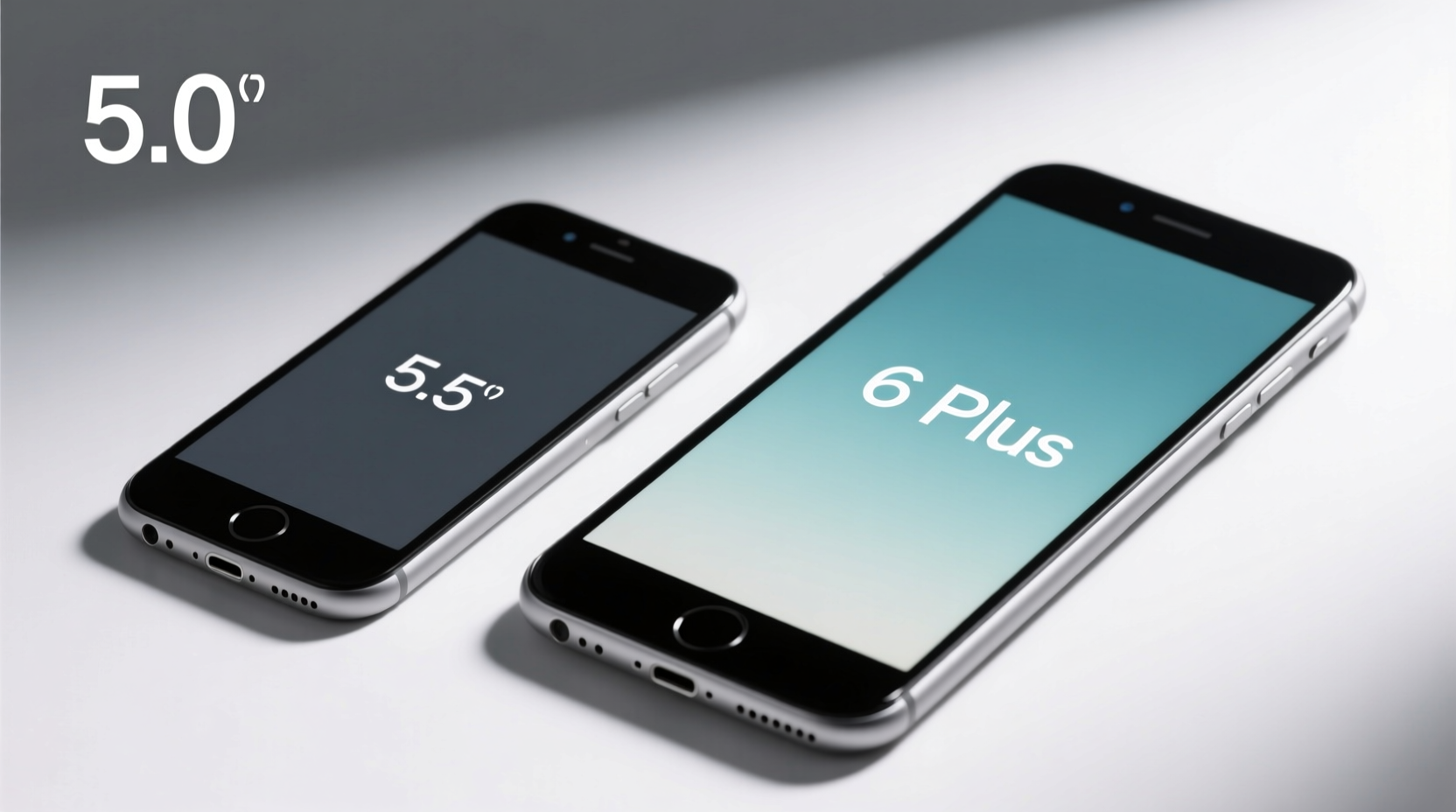
The most immediate difference between the iPhone 6 and 6 Plus is physical. At 4.7 inches, the iPhone 6 fits comfortably in one hand for most users, allowing for easy thumb navigation across the screen. Its weight (129g) and dimensions make it ideal for pockets and daily handling without strain.
In contrast, the iPhone 6 Plus measures 5.5 inches diagonally and weighs 172g. While this added size enhances visibility and multitasking, it also introduces ergonomic challenges. Many users found it difficult to operate with one hand, especially when reaching the top corners of the screen. Features like Reachability—activated by double-tapping the home button—helped mitigate this, but they were a workaround rather than a seamless solution.
From a build quality standpoint, both devices shared the same aluminum unibody design and glass front. However, early reports of “bendgate” raised concerns about durability under pressure, particularly with the longer chassis of the 6 Plus being more prone to flexing. While not widespread, these issues highlighted a trade-off: larger phones may offer more screen real estate but can compromise structural rigidity.
Display and Media Experience
The screen is where the 6 Plus truly diverged from its smaller sibling. Despite both having the same pixel density (326 ppi), the 6 Plus delivered a significantly better viewing experience for video, gaming, and reading. With 1920x1080 resolution compared to the 6’s 1334x750, content appeared sharper and more immersive.
Watching movies or browsing websites on the 6 Plus felt closer to tablet territory. Pages loaded with more visible content, reducing the need for constant scrolling. This was particularly beneficial for email users and those managing documents or spreadsheets on the go. The larger display also enabled split-view functionality in certain apps when rotated to landscape—a feature absent on the iPhone 6.
| Feature | iPhone 6 | iPhone 6 Plus |
|---|---|---|
| Screen Size | 4.7 inches | 5.5 inches |
| Resolution | 1334 x 750 | 1920 x 1080 |
| PPI | 326 | 401 (effective) |
| Landscape App Support | Limited | Yes (Mail, Calendar, etc.) |
| Optical Image Stabilization | No | Yes |
“Larger screens aren’t just about watching videos—they change how people interact with information. The 6 Plus wasn’t just bigger; it was smarter in context.” — David Liu, Mobile UX Designer
Battery Life and Performance
Both phones ran on the same A8 processor and M8 motion coprocessor, ensuring identical app performance and responsiveness. However, the 6 Plus held a decisive advantage in battery capacity: 2915 mAh versus 1810 mAh. This translated into noticeably longer usage times.
In real-world testing, the iPhone 6 typically lasted a full day with moderate use, while the 6 Plus could stretch into a second day under similar conditions. For travelers, commuters, or heavy users, this extended endurance eliminated the anxiety of midday charging. It also supported longer GPS navigation sessions and uninterrupted streaming during flights or road trips.
That said, the larger battery came at the cost of increased charging time. Without fast charging support (which Apple wouldn’t introduce until later models), fully recharging the 6 Plus could take close to three hours using the standard 5W adapter.
Camera Capabilities and Unique Features
While both iPhones featured 8MP rear cameras, only the 6 Plus included optical image stabilization (OIS). This subtle hardware addition made a tangible difference in low-light photography and video recording. OIS reduced blur caused by hand movement, resulting in sharper images and smoother footage—especially valuable in dim environments like restaurants or concerts.
The front-facing camera was identical on both models (1.2MP), limiting selfie quality by today’s standards. However, the 6 Plus’s ability to shoot 1080p video with stabilized output gave it an edge for vloggers or casual videographers.
Another often-overlooked benefit of the larger device was its speaker placement. Though both phones used bottom-firing speakers, the 6 Plus’s elongated body allowed for slightly better stereo separation during media playback, enhancing audio immersion.
Real-World Usage: A Mini Case Study
Consider Sarah, a freelance graphic designer who purchased the iPhone 6 Plus shortly after launch. Her workflow involved reviewing client mockups, annotating PDFs, and responding to emails on the go. She quickly appreciated the ability to view entire web layouts without constant zooming and panning. In landscape mode, she could use Notes with a keyboard on one side and her sketchpad on the other—a small but impactful productivity boost.
However, she also faced drawbacks. The phone didn’t fit in her jeans pockets, forcing her to carry a small bag. One winter, she dropped it on ice, and the larger glass surface cracked more extensively than her previous iPhone 5 would have. Repairs were costly, and replacement parts remained scarce for months.
Despite these inconveniences, Sarah concluded that the enhanced display and battery life outweighed the downsides. For her, the 6 Plus wasn’t just a phone—it was a mobile workstation.
Frequently Asked Questions
Was the iPhone 6 Plus worth the extra cost?
For users prioritizing media, multitasking, and battery life, yes. The $100 price difference at launch bought tangible benefits: better display, OIS, and longer usage between charges. Casual users who preferred portability might have found the iPhone 6 sufficient.
Could the iPhone 6 Plus be used one-handed?
It was challenging for most adults. Apple’s Reachability feature helped bring the top of the screen within thumb range, but frequent use required adaptation. Those with smaller hands often resorted to two-handed operation or protective cases with grips.
Did the 6 Plus influence future iPhone designs?
Absolutely. Its success paved the way for the iPhone 6s Plus, iPhone 7 Plus, and eventually the Pro Max line. The demand for larger screens became clear, leading Apple to phase out smaller models in later years.
Checklist: Is a Larger iPhone Right for You?
- ✅ Do you consume a lot of video or read long articles on your phone?
- ✅ Do you rely on your phone for work tasks like email, document review, or note-taking?
- ✅ Is battery life a major concern due to travel or limited access to charging?
- ✅ Are you comfortable carrying a larger device and potentially using two hands regularly?
- ❌ Do you prioritize pocketability and lightweight design above all else?
If most of your answers are “yes” to the first four and “no” to the last, a larger phone like the 6 Plus—or its modern equivalents—likely offers real advantages.
Final Verdict: Was the Bigger Screen Worth It?
The iPhone 6 Plus wasn’t merely a larger iPhone 6—it was a different kind of device altogether. It catered to a growing segment of users who saw smartphones as primary computing tools, not just communication devices. The bigger screen enabled richer interactions, improved productivity, and superior media experiences that the 4.7-inch model couldn’t match.
Yet, it wasn’t for everyone. The trade-offs in size, weight, and pocket fit were real. For some, the convenience of a compact phone outweighed any gains in screen real estate.
In hindsight, the iPhone 6 Plus represented a pivotal shift in Apple’s philosophy. It acknowledged that user needs were diversifying and that one size no longer fit all. Today’s iPhone lineup—with mini, standard, and Pro Max options—owes much to the risks Apple took with the 6 Plus.




 浙公网安备
33010002000092号
浙公网安备
33010002000092号 浙B2-20120091-4
Comments
No comments yet. Why don't you start the discussion?