
When Apple released the iPhone 6s in 2015, one of its headline features was a significantly upgraded camera. The company claimed better image quality, improved low-light performance, and new capabilities like Live Photos. But for owners of the iPhone 6, the question remained: is the camera upgrade from the iPhone 6 to the 6s actually meaningful in everyday use, or is it mostly marketing spin?
This article cuts through the noise with a direct, technical, and practical comparison between the two cameras. We’ll examine hardware differences, real-world photo performance, software enhancements, and whether the jump justifies an upgrade—especially if you’re still satisfied with your iPhone 6.
Hardware Differences: More Than Just Megapixels
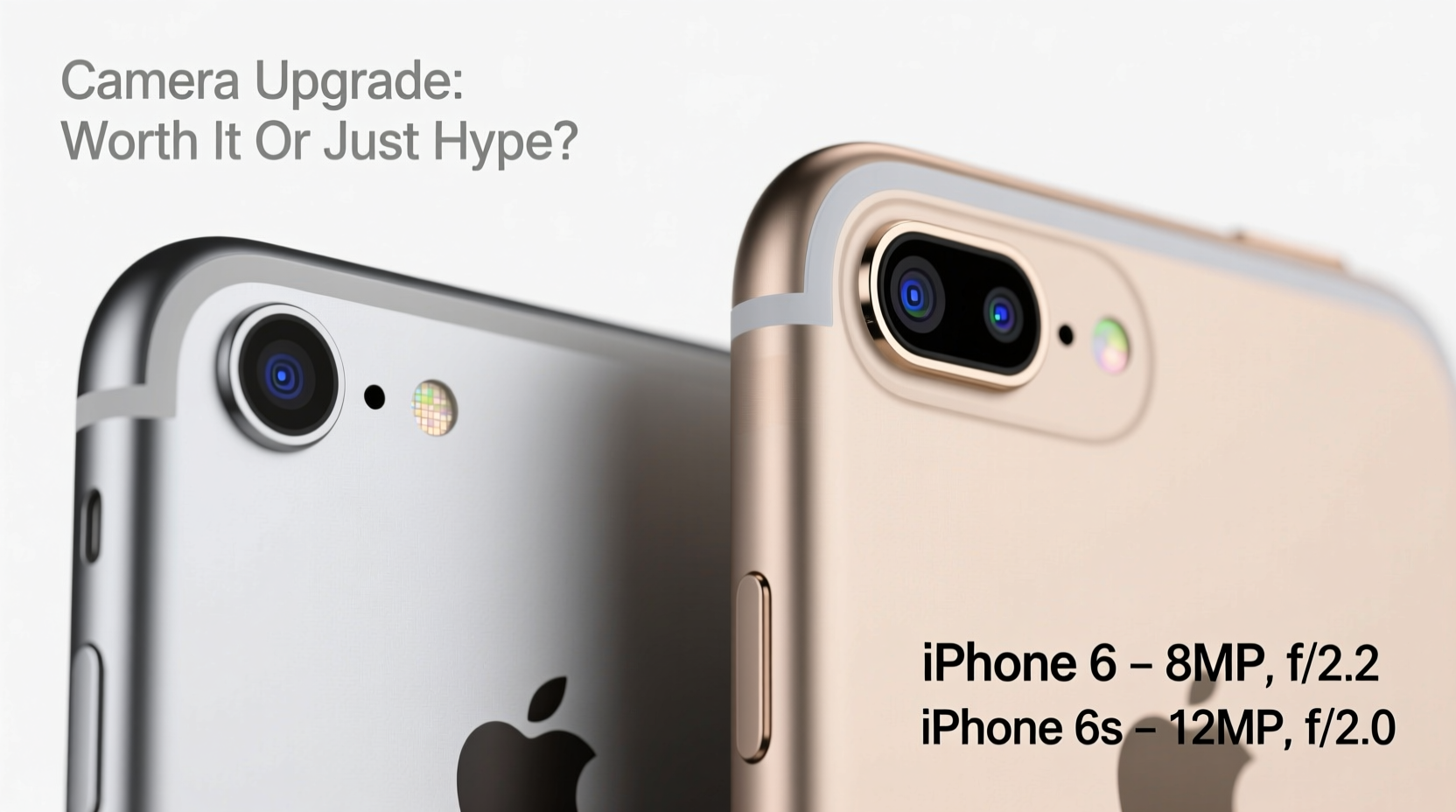
The most noticeable change on paper is the jump from an 8-megapixel sensor in the iPhone 6 to a 12-megapixel sensor in the iPhone 6s. On the surface, that’s a 50% increase in resolution. But megapixels alone don’t tell the full story.
The iPhone 6s also introduced several behind-the-scenes improvements:
- Larger pixels (1.22µm): Despite more megapixels, Apple managed to maintain or slightly improve pixel size, which helps with light capture.
- Improved sensor technology: The 6s uses a newer-generation sensor with better dynamic range and reduced noise.
- Faster autofocus: Thanks to Focus Pixels, the 6s locks focus more quickly, especially in mixed lighting.
- 4K video recording: A major leap—while the iPhone 6 maxes out at 1080p HD, the 6s can shoot 4K video at 30fps.
- Live Photos: A new feature that captures 1.5 seconds of motion and sound before and after a photo.
These upgrades weren’t just incremental—they represented a shift in how Apple positioned the iPhone as a serious photography device.
Real-World Photo Quality Comparison
To assess whether the upgrade matters, we need to look beyond specs and into actual photo output under common conditions.
Daylight Performance
In well-lit environments, both phones produce clean, vibrant images. However, the iPhone 6s shows better detail retention in high-contrast scenes. Shadows are less crushed, and highlights are more controlled thanks to improved dynamic range. Textures in fabrics, foliage, and architecture appear crisper in 6s shots.
Low-Light Photography
This is where the 6s pulls ahead. The combination of a more advanced sensor, better image signal processor, and noise reduction algorithms results in cleaner night shots. While neither phone has Night Mode (that came years later), the 6s manages grain and color accuracy far better in dim settings.
For example, indoor restaurant photos taken with the iPhone 6 often show visible noise, slight blur from slower shutter speeds, and inaccurate white balance. The 6s handles the same scene with more natural colors and less digital smudging.
Video Recording
The addition of 4K video on the 6s is a game-changer for content creators. Even if you don’t edit in 4K, shooting at that resolution allows for high-quality cropping and stabilization in post. The iPhone 6, limited to 1080p, simply can’t match that flexibility.
“While the iPhone 6 was competent, the 6s marked the point where iPhone cameras started rivaling dedicated compact cameras.” — David Kim, Mobile Photographer & Tech Analyst
Side-by-Side Feature Comparison
| Feature | iPhone 6 | iPhone 6s |
|---|---|---|
| Rear Camera Resolution | 8 MP | 12 MP |
| Aperture | f/2.2 | f/2.2 |
| Video Recording | 1080p HD at 30/60fps | 4K at 30fps, 1080p at 60/120fps |
| Slo-Mo Video | 720p at 120fps | 1080p at 120fps, 720p at 240fps |
| Front Camera | 1.2 MP, 720p video | 5 MP, 1080p video, Retina Flash |
| Live Photos | No | Yes |
| Digital Zoom | 3x | 5x (with better processing) |
A Real-World Example: Weekend Family Outing
Consider Sarah, a parent who uses her phone to document family moments. She owns an iPhone 6 and is considering upgrading to the 6s after seeing friends’ clearer photos.
During a weekend picnic, she takes photos of her kids playing near trees. In bright sunlight, both phones perform well. But when the kids run into a shaded area, the iPhone 6 struggles with focus and produces slightly muddy colors. The 6s, however, maintains sharpness and accurate skin tones.
Later, indoors at a dimly lit café, she tries capturing a quiet moment over coffee. The iPhone 6 shot is grainy and slightly orange-tinted. The 6s version is smoother, with balanced exposure and truer colors—no editing needed.
She also records a short birthday message in 4K on the 6s, then crops in during editing for a tighter frame. The result remains crisp. With the iPhone 6, such aggressive cropping would reveal pixelation.
In this scenario, the upgrade delivers tangible benefits—not just in specs, but in usability and emotional value.
Is the Upgrade Worth It? A Practical Checklist
If you're deciding whether to upgrade from iPhone 6 to 6s solely for the camera, consider this checklist:
- ✅ Do you regularly take photos in low light? → 6s performs significantly better.
- ✅ Do you record videos, especially for social media or family memories? → 4K and improved slo-mo on 6s add real value.
- ✅ Do you crop or zoom your photos often? → 12MP gives you more editing headroom.
- ✅ Do you care about front-facing camera quality for selfies or video calls? → 5MP front camera on 6s is a massive leap.
- ✅ Are you still happy with your iPhone 6’s speed and battery life? → Upgrading only for the camera may not be cost-effective if the rest works fine.
Frequently Asked Questions
Can the iPhone 6 camera be improved with software updates?
Apple did push camera software improvements through iOS updates, but hardware limitations remain. The iPhone 6 lacks the processing power and sensor capabilities to match the 6s, even with the same OS version. You might see minor gains in color balance or stability, but not in resolution or low-light clarity.
Is Live Photos worth the upgrade?
Live Photos adds a subtle but meaningful layer to photo-taking. It captures context—a laugh, a breeze, a pet jumping—that a static image misses. While not essential, many users find it enhances memory preservation. If you value storytelling over pure image quality, this feature could tip the scale.
How much longer will iPhone 6 and 6s be supported?
Both devices stopped receiving major iOS updates after iOS 12 and 13, respectively. They no longer get security patches or app compatibility guarantees. If you rely on modern apps or care about privacy, upgrading to a newer model may be necessary regardless of camera quality.
Final Verdict: Beyond the Hype
The iPhone 6 to 6s camera upgrade is not just hype—it’s a legitimate step forward in mobile photography. While casual users might not notice dramatic differences in perfect daylight, those who shoot in varied conditions, record video, or value higher-resolution outputs will benefit meaningfully from the 6s.
The 12MP sensor, 4K video, superior low-light handling, and enhanced front camera collectively make the 6s a more capable and future-proof device. For photographers, parents, travelers, or social media users, the upgrade pays off in daily usability.
However, if your iPhone 6 still meets your needs and you rarely push the camera beyond basic snapshots, the upgrade may feel unnecessary. The real value depends on how much you rely on your phone as a creative tool.




 浙公网安备
33010002000092号
浙公网安备
33010002000092号 浙B2-20120091-4
Comments
No comments yet. Why don't you start the discussion?