
For years, the iPhone 6 has been a reliable workhorse for millions. Its sleek design, solid performance, and iOS integration made it a favorite at launch—and many users still rely on it daily. When the iPhone 7 arrived, Apple touted improvements in speed, water resistance, and camera quality. But for someone still using an iPhone 6, is the upgrade truly transformative, or is it merely incremental with a heavy dose of marketing hype?
This isn’t just about specs on a datasheet. It’s about real-world usability, longevity, cost-effectiveness, and whether the changes matter in your daily routine. Let’s break down the differences where they actually count.
Performance and Hardware: A Noticeable Leap?
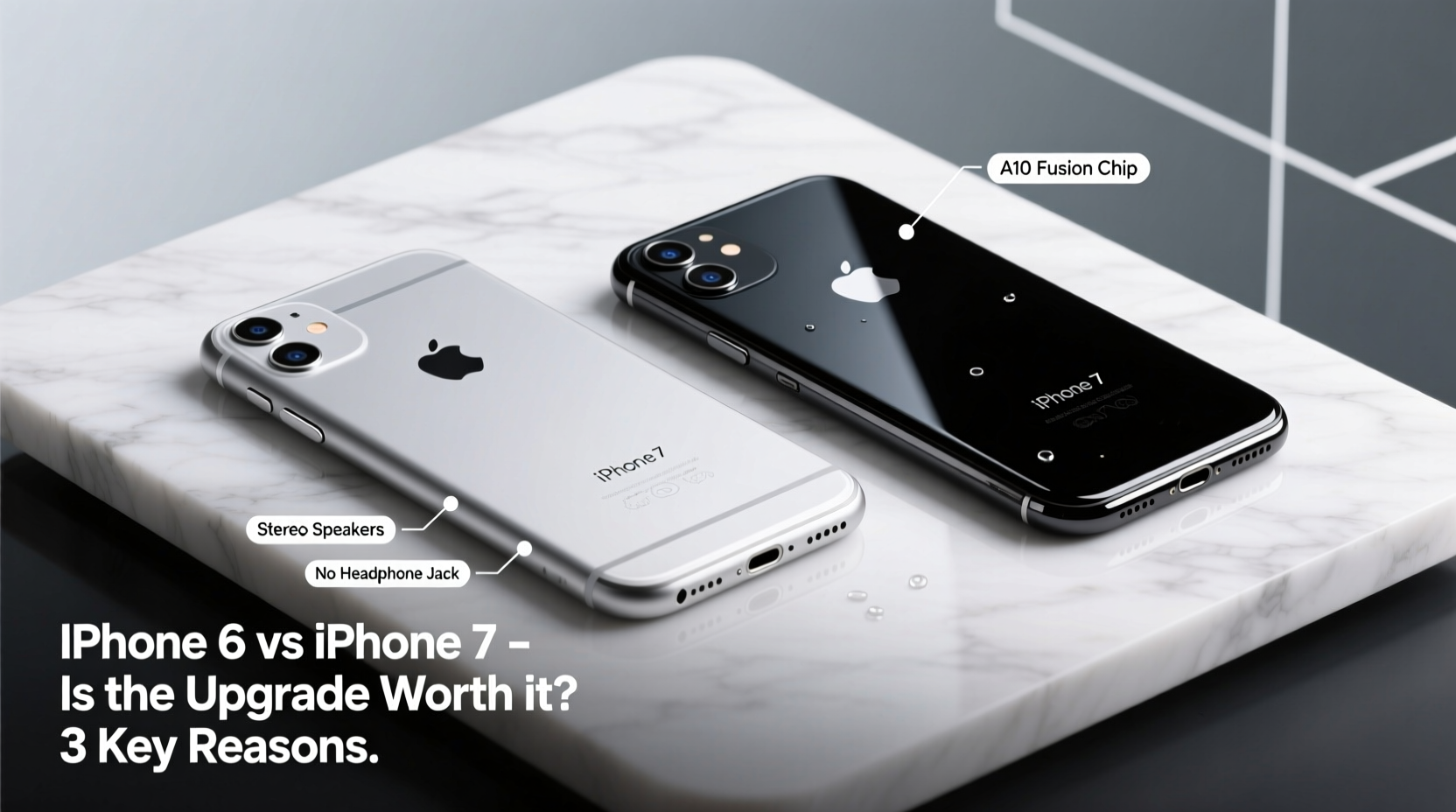
The iPhone 6 runs on Apple’s A8 chip with 1GB of RAM. At its peak, it handled iOS 8 and 9 smoothly. But as iOS evolved, particularly with iOS 10 and beyond, performance began to lag—especially in multitasking and app loading times.
The iPhone 7 introduced the A10 Fusion chip, a 64-bit quad-core processor that was roughly 40% faster in CPU tasks and up to 50% faster in graphics than the A8. Combined with 2GB of RAM, this translates to snappier app launches, smoother animations, and better handling of modern apps like Instagram, TikTok, and mobile gaming titles such as Genshin Impact.
In practical terms, the difference is most noticeable when opening large files, editing photos, or using augmented reality features. The iPhone 7 also supports longer software updates—Apple typically provides five years of iOS support, meaning the iPhone 7 received updates up to iOS 16, while the iPhone 6 topped out at iOS 12 (with limited feature support).
Camera Quality: More Than Just Megapixels
The iPhone 6 features an 8MP rear camera with basic autofocus and no optical image stabilization (OIS) on the standard model. Low-light performance is mediocre, and video tops out at 1080p at 30fps.
The iPhone 7 bumps the rear camera to 12MP and adds OIS—a game-changer for photo clarity, especially in dim lighting. The sensor captures more light, resulting in cleaner images with less noise. The front-facing camera also improves from 1.2MP to 7MP, making selfies and FaceTime calls noticeably sharper.
Video recording jumps to 4K at 30fps, offering four times the resolution of 1080p. For anyone who regularly shares videos or wants higher-quality family recordings, this is a substantial upgrade.
“Even two extra megapixels don’t tell the full story—the real improvement in the iPhone 7 camera comes from better sensors, image processing, and stabilization.” — Mark Lin, Mobile Photography Analyst at TechPulse Weekly
Battery Life and Efficiency
Apple never published official battery life comparisons between the two models, but real-world testing tells a clear story. The iPhone 6 packs a 1,810 mAh battery, while the iPhone 7 uses a slightly larger 1,960 mAh unit. More importantly, the A10 chip is built on a more efficient 16nm process, which reduces power draw during everyday use.
Independent tests by GSMArena show the iPhone 7 lasts about 2–3 hours longer on a charge under mixed usage. That could mean the difference between needing a midday charge or making it through a travel day without a power bank.
| Feature | iPhone 6 | iPhone 7 |
|---|---|---|
| Battery Capacity | 1,810 mAh | 1,960 mAh |
| Talk Time (3G) | Up to 14 hours | Up to 14 hours |
| Internet Use (Wi-Fi) | ~10 hours | ~13 hours |
| Standby Time | Up to 250 hours | Up to 270 hours |
| Charging | 5W charger (no fast charging) | Same, but slightly faster due to efficiency |
If you're someone who constantly worries about battery by 3 PM, the iPhone 7 offers tangible relief—even if it doesn’t support fast charging officially.
Design and Durability: Subtle but Important Changes
At first glance, the iPhone 6 and 7 look nearly identical. Both have aluminum unibody designs, 4.7-inch displays, and similar button layouts. However, the iPhone 7 introduces critical durability upgrades.
It was Apple’s first iPhone with IP67 water and dust resistance, meaning it can survive immersion in up to 1 meter of water for 30 minutes. This is invaluable for accidental spills, rain, or bathroom drops—a common hazard.
Another controversial change: the removal of the 3.5mm headphone jack. Apple replaced it with Lightning port audio and promoted wireless EarPods. While divisive, this move pushed the industry toward Bluetooth audio. Adapters are included, but convenience suffers if you rely on wired headphones.
The home button also evolves from mechanical to solid-state (taptic feedback). It doesn’t physically press down but simulates the click via vibration. Over time, users report it feels more precise and less prone to wear.
Real-World Example: Sarah’s Upgrade Dilemma
Sarah has used her iPhone 6 since 2015. By 2020, she noticed her phone struggled to load messages, crashed during video calls, and died by noon. She hesitated to upgrade, thinking “it still turns on.”
After switching to a used iPhone 7, she immediately noticed faster app responses, clearer photos of her kids, and finally being able to record birthday parties in 4K. Most importantly, her phone lasted all day—even with GPS navigation during her delivery job.
She later said, “I didn’t realize how much I was limiting myself until I had a phone that kept up.” Her experience reflects a broader truth: older devices don’t just slow down—they restrict what you can do.
Is the Upgrade Worth It? A Practical Checklist
Before deciding, ask yourself the following. Check off any that apply:
- Do apps frequently crash or freeze on your iPhone 6?
- Does your battery die before the end of the day?
- Are you unable to update to the latest iOS version?
- Do photos come out blurry or grainy in low light?
- Have you avoided downloading new apps because of storage or speed concerns?
- Do you worry about damage from spills or rain?
If three or more apply, the iPhone 7 represents a meaningful upgrade—not hype, but functional improvement.
Frequently Asked Questions
Can the iPhone 6 still run modern apps in 2024?
Technically, yes—but poorly. Most newer apps require iOS 13 or later, which the iPhone 6 doesn’t support. Even compatible apps run slowly due to hardware limitations. Safari, social media, and streaming services may lag or fail to load.
Is the iPhone 7 still supported by Apple?
Officially, the iPhone 7 stopped receiving major iOS updates with iOS 16 (released in 2022). It continues to get occasional security patches, but no new features. It remains functional but is nearing end-of-life.
Should I upgrade from iPhone 6 to iPhone 7 in 2024?
If you’re still using an iPhone 6, yes—but consider going further. The iPhone 8 or SE (2nd/3rd gen) offer better long-term value with support for iOS 17+ and modern features like True Tone and better cameras. The iPhone 7 is a step up, but not a future-proof one.
Final Verdict: Beyond the Hype
The iPhone 7 wasn’t a revolutionary redesign. It was an evolution—one designed to refine rather than reinvent. For iPhone 6 users, that refinement brings real benefits: faster performance, better photos, improved battery, and greater durability.
Was it hype? In part. Apple marketed the iPhone 7 aggressively, emphasizing small changes. But beneath the surface, the improvements solve actual pain points experienced by aging iPhone 6 owners.
If you’re clinging to an iPhone 6 because “it still works,” consider what you’re sacrificing: slower communication, missed photo moments, constant charging anxiety, and security risks from outdated software. The iPhone 7 addresses all of these.




 浙公网安备
33010002000092号
浙公网安备
33010002000092号 浙B2-20120091-4
Comments
No comments yet. Why don't you start the discussion?