
The iPhone 6, released in 2014, once defined smartphone elegance. With its sleek aluminum body and pioneering design, it was a cultural milestone. But we’re now a decade into the future—2024 has arrived, and the mobile landscape has transformed beyond recognition. Meanwhile, Android has evolved from a fragmented alternative to a dominant ecosystem with devices spanning every price point and capability. So, if you're still clinging to an iPhone 6 or considering switching from legacy iOS to modern Android, the real question emerges: is the grass actually greener on the other side?
This isn’t just about nostalgia versus novelty. It’s about functionality, security, app compatibility, and day-to-day usability. The answer isn’t binary, but understanding where each platform stands today can help you make an informed decision—especially if your iPhone 6 is barely holding on.
Performance and Usability in 2024
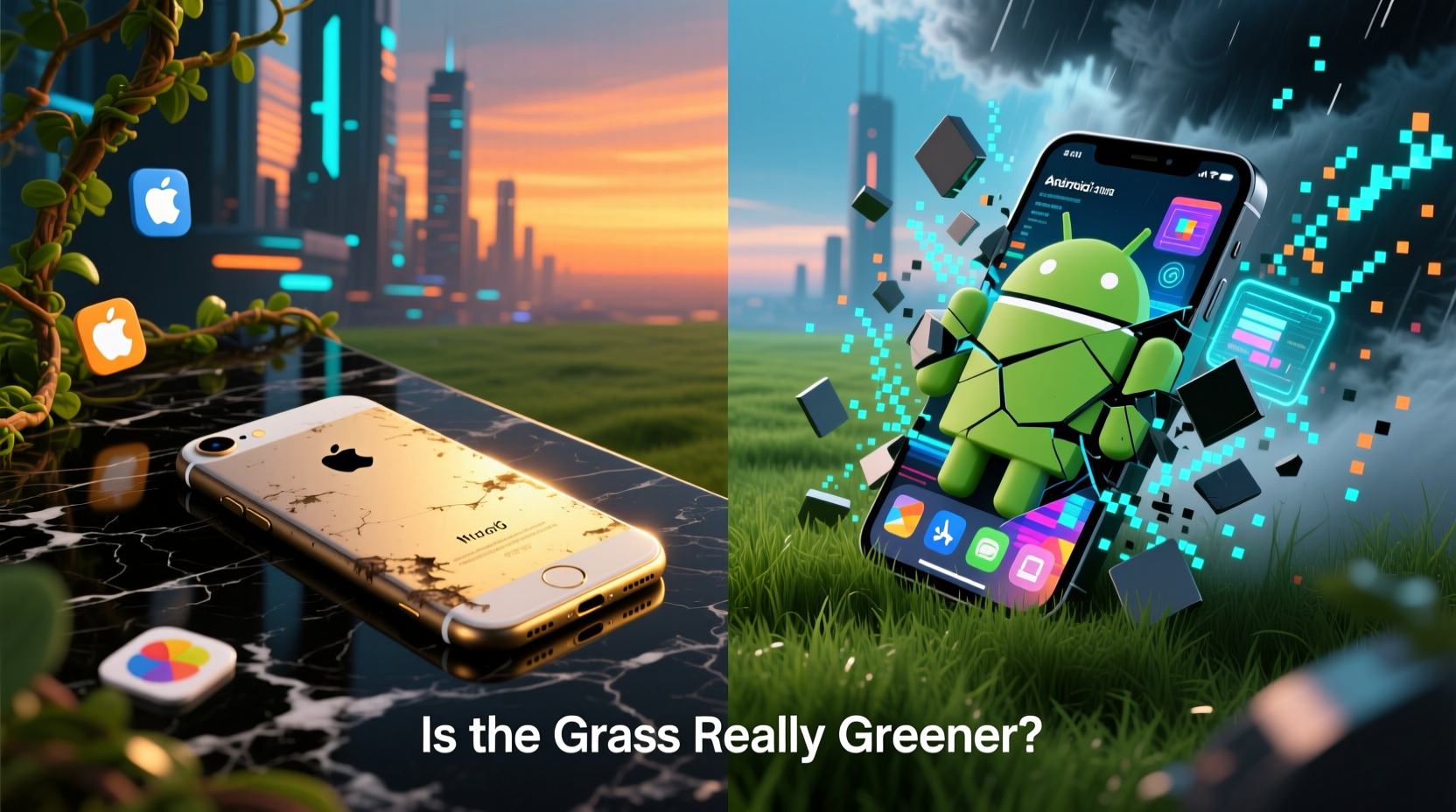
The iPhone 6 runs iOS 12 at maximum—a version released in 2018. Apple officially dropped support for the device with the release of iOS 13. That means no security patches, no feature updates, and increasingly limited app compatibility. Major services like banking apps, social media platforms, and even Google’s own suite have begun dropping support for older operating systems. As of 2024, many apps either won't install or crash frequently on iOS 12.
In contrast, modern Android phones—even budget models—run Android 13 or 14 with guaranteed security updates for at least two to four years. Devices like the Pixel series or Samsung Galaxy A-line offer smooth multitasking, near-instant app launches, and AI-powered features that were science fiction in 2014. Even mid-tier chips like the Snapdragon 6 or 7 series outperform the iPhone 6’s A8 chip by orders of magnitude.
Security: The Hidden Cost of Staying Behind
Security is perhaps the most overlooked consequence of clinging to obsolete hardware. Since 2019, Apple has ceased issuing security patches for the iPhone 6. This leaves the device vulnerable to known exploits, including zero-click attacks that don’t require user interaction. In 2024, using such a phone for email, messaging, or online shopping is akin to leaving your front door unlocked.
Android, while historically criticized for fragmentation, has improved dramatically. Google Play Protect scans apps in real time, and manufacturers now deliver monthly security updates more reliably. On top of that, modern Android includes built-in protections like sandboxing, verified boot, and hardware-backed keystores. For users concerned about privacy, Android 14 introduces granular app permissions and enhanced data sharing controls.
“Running unsupported software in 2024 is not just inconvenient—it's a liability.” — Dr. Lena Patel, Cybersecurity Analyst at MobileTrust Labs
iOS Ecosystem Lock-In vs. Android Flexibility
One reason people hold onto aging iPhones is ecosystem dependency. If you’ve invested in iCloud storage, AirPods, Apple Watch, or a MacBook, switching feels disruptive. Apple’s ecosystem creates seamless handoffs between devices—messages sync instantly, notes update across platforms, and FaceTime remains a staple for families.
But Android has closed the gap. With services like Microsoft Outlook, Google Drive, WhatsApp, and cross-platform apps like Slack and Zoom, much of the friction has disappeared. Samsung’s ecosystem, for instance, offers Smart Switch, DeX desktop mode, and tight integration with Windows PCs. Google’s ecosystem—Gmail, Photos, Assistant, and Wear OS—is equally cohesive.
Moreover, Android offers something iOS doesn’t: choice. You can sideload apps, customize your home screen, use third-party launchers, and even run Linux environments. For tinkerers and power users, this flexibility is invaluable.
Real-World Example: Maria’s Transition from iPhone 6 to Android
Maria, a freelance photographer based in Portland, used her iPhone 6 for nearly eight years. She loved the camera quality “back in the day” and resisted upgrading due to cost and familiarity. By early 2023, however, she noticed her Instagram app wouldn’t load stories, her banking app timed out constantly, and iMessage began failing during client communications.
She switched to a mid-range Pixel 7a. Initially hesitant, she found the transition smoother than expected. Google Photos automatically backed up her entire library via Wi-Fi, and Smart Switch migrated her contacts, messages, and calendar. Within a week, she was using Google Lens to extract text from business cards and leveraging Night Sight for low-light shots—features unimaginable on her old device.
“I thought I was saving money by holding on,” Maria said. “But I was actually losing opportunities. My old phone couldn’t handle client Zoom calls without freezing. Now, everything just works.”
Comparison Table: iPhone 6 vs. Modern Android (2024)
| Feature | iPhone 6 (iOS 12) | Modern Android (e.g., Pixel 7a) |
|---|---|---|
| Operating System Support | No updates since 2019 | Security updates until 2026, OS updates until 2025 |
| App Compatibility | Limited; many apps no longer supported | Full access to latest Google Play Store apps |
| Camera Capabilities | 8MP rear, no night mode, poor low-light | 48MP main sensor, computational photography, astrophotography mode |
| Battery Life | ~6 hours screen-on time (degraded) | ~12–15 hours screen-on time |
| Security Features | Basic passcode, no ongoing patching | Biometric auth, encrypted storage, regular security patches |
| Price (Current) | $0 (if already owned), but functionally obsolete | $400–$500 new, or $250 refurbished |
Checklist: Should You Upgrade from iPhone 6 in 2024?
- ❌ Does your phone fail to receive critical app updates?
- ❌ Have you experienced frequent crashes or freezes?
- ❌ Is your battery life less than 4 hours under normal use?
- ❌ Are you unable to use essential services (banking, messaging, maps)?
- ✅ Would better camera quality improve your daily life?
- ✅ Do you value security and privacy in communications?
- ✅ Are you open to exploring new features like voice assistants or smart home control?
If three or more of the first four apply, upgrading isn’t optional—it’s necessary. If any of the last three resonate, Android offers compelling advantages.
Frequently Asked Questions
Can I still use my iPhone 6 as a media player or backup device?
Yes, but only in limited capacity. You can use it offline for music, photos, or as a dedicated e-reader. However, connecting it to unsecured networks or using it for any web browsing poses significant risks due to lack of security patches.
Will my iPhone accessories work with Android?
Most wired headphones and chargers will work via adapters (Lightning to USB-C). However, wireless accessories like AirPods will pair via Bluetooth but lose features like automatic switching and spatial audio. Consider upgrading to Android-compatible earbuds for full functionality.
Is Android harder to learn for long-time iPhone users?
There’s a learning curve, but it’s minimal. Core functions—calls, texts, apps, cameras—are intuitive. Tools like Google’s “Switch to Android” app guide users through transferring data. Most users adapt fully within one to two weeks.
Conclusion: The Grass Isn’t Greener—It’s Just Different
The idea that Android is inherently “better” than iOS—or vice versa—is outdated. The truth is, both platforms serve different needs. But when comparing a decade-old iPhone 6 to any current Android device, the choice isn’t about preference—it’s about practicality.
The iPhone 6 had its moment. But in 2024, continuing to rely on it means sacrificing security, performance, and access to modern digital life. Android today offers affordability, innovation, and robust support that simply doesn’t exist on unsupported iOS hardware.
If you’ve been hesitating to let go, consider this your nudge. The grass isn’t magically greener on the other side—it’s just alive. And in the fast-moving world of technology, staying relevant means moving forward.




 浙公网安备
33010002000092号
浙公网安备
33010002000092号 浙B2-20120091-4
Comments
No comments yet. Why don't you start the discussion?