
In 2014, smartphone users faced a pivotal decision: upgrade to Apple’s newly released iPhone 6 or stick with—or switch to—Samsung’s compact offering, the Galaxy S5 Mini. Both devices targeted mid-to-high-tier consumers, but with vastly different philosophies. The iPhone 6 represented Apple’s first major leap into larger screens, while the S5 Mini offered a scaled-down version of Samsung’s flagship. For many, the choice wasn’t just about specs—it was about ecosystem loyalty, usability, and long-term value. So, nearly a decade later, was upgrading from older devices to either of these phones truly worthwhile?
Design and Build: Form Meets Function
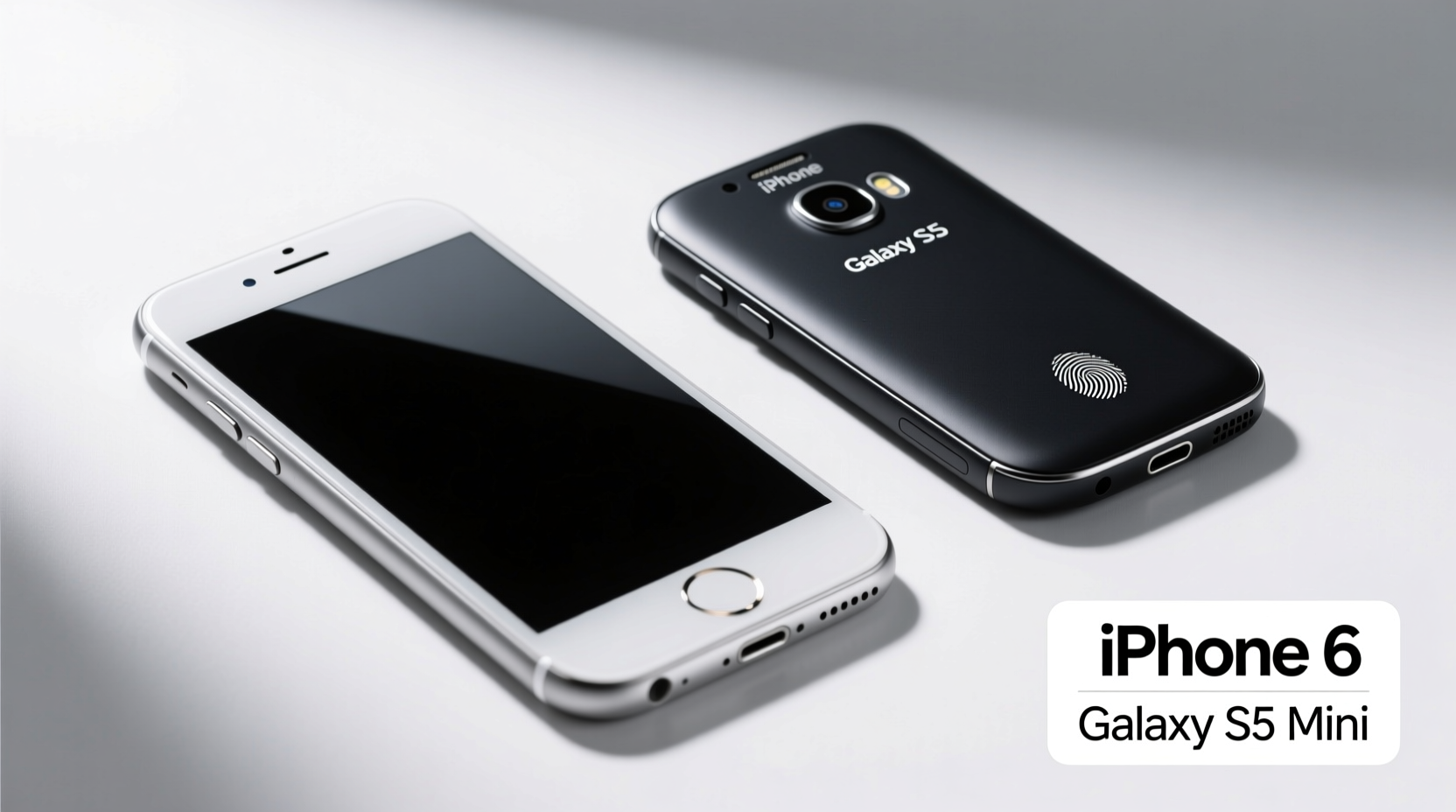
The iPhone 6 introduced a radical departure from Apple’s previous design language. With its curved edges, aluminum unibody, and 4.7-inch display, it felt modern and sleek in hand. The chamfered edges added a touch of elegance, and despite early “bendgate” concerns, most users found it durable enough for daily use.
In contrast, the Galaxy S5 Mini used a polycarbonate plastic body with a textured back panel. While less premium than the iPhone 6’s metal frame, the plastic made it lighter and more grippy. At 4.0 inches, its screen was noticeably smaller, appealing to those who preferred one-handed operation. However, the overall aesthetic leaned utilitarian rather than luxurious.
Performance and Software Experience
Under the hood, the iPhone 6 featured Apple’s A8 chip with 1GB of RAM—a modest spec on paper, but iOS 8 was optimized to run efficiently even with limited memory. Apps launched quickly, multitasking was smooth, and the transition to the 64-bit architecture ensured better longevity in app support.
The Galaxy S5 Mini, meanwhile, came with a dual-core Snapdragon 400 processor and 1.5GB of RAM. While adequate for basic tasks like calling, texting, and light browsing, it struggled with heavier apps and multitasking. Android 4.4 KitKat ran decently, but bloatware from Samsung slowed things down over time.
iOS offered a cleaner interface, faster updates, and tighter integration across Apple devices. Android provided customization and expandable storage (the S5 Mini supported microSD cards up to 64GB), but inconsistent update policies meant security patches and OS upgrades were rare.
“Apple’s hardware-software synergy gave the iPhone 6 an edge in responsiveness—even years after launch.” — David Lin, Mobile Systems Analyst
Camera Comparison: Photos That Matter
The iPhone 6 featured an 8MP rear camera with improved sensor technology, True Tone flash, and enhanced low-light performance. More importantly, Apple focused on image processing: colors were natural, white balance was consistent, and video recording jumped to 1080p at 60fps, a significant upgrade over prior models.
The S5 Mini also had an 8MP shooter, but without optical image stabilization or advanced software tuning. In direct comparisons, photos often appeared oversharpened or washed out. Low-light performance lagged, and video was capped at 30fps, making motion appear less fluid.
Front-facing cameras told a similar story. The iPhone 6’s 1.2MP FaceTime camera supported better exposure control, while the S5 Mini’s 2.1MP front cam had higher resolution on paper but delivered inconsistent results due to poor noise reduction.
Real-World Example: Daily Use Photography
Sarah, a freelance blogger upgrading from an iPhone 5, switched to the S5 Mini hoping for better battery life and expandable storage. She quickly grew frustrated with blurry indoor shots and slow camera startup times. After six months, she traded it for an iPhone 6. “The difference was night and day,” she said. “I could actually post photos without editing them first.”
Battery Life and Charging
The iPhone 6 packed a 1,810mAh battery—small by today’s standards, but sufficient for moderate use. With iOS optimization, most users got through a full day. However, there was no fast charging or replaceable battery, so degradation over time became a real issue.
The S5 Mini had a slightly larger 2,100mAh battery and removable design, allowing users to swap in a fresh cell when needed. Still, inefficient hardware and background processes drained power faster than expected. Real-world usage showed mixed results: some reported lasting a full day, others needed midday top-ups.
| Feature | iPhone 6 | Galaxy S5 Mini |
|---|---|---|
| Display Size | 4.7 inches | 4.0 inches |
| Processor | Apple A8 (64-bit) | Snapdragon 400 (dual-core) |
| Rear Camera | 8MP, OIS, 1080p@60fps | 8MP, no OIS, 1080p@30fps |
| Battery Capacity | 1,810 mAh | 2,100 mAh |
| Storage Options | 16/64/128GB (no expansion) | 8/16GB + microSD support |
| Operating System | iOS 8 (upgradable to iOS 12) | Android 4.4 (limited updates) |
| Weight | 129g | 123g |
Longevity and Ecosystem Value
One of the most overlooked aspects when comparing these phones is long-term usability. The iPhone 6 received software updates for four years, supporting iOS 12—the last version compatible with the device. This meant access to new features, security patches, and continued app compatibility well into 2019.
The S5 Mini, however, stopped receiving major updates shortly after release. By 2016, it was largely abandoned by Samsung, leaving users vulnerable to security flaws and incompatible with newer apps. Even third-party custom ROMs couldn’t fully compensate for aging hardware.
Ecosystem lock-in played a role too. iPhone users benefited from seamless iCloud syncing, iMessage, AirDrop, and future compatibility with services like Apple Pay (introduced with the iPhone 6). Samsung offered Samsung Cloud and Knox security, but lacked the same level of cross-device integration.
Was Upgrading Worth It?
For owners of older iPhones (like the 4S or 5), moving to the iPhone 6 was a transformative experience. The larger screen, faster processor, and modern iOS interface justified the upgrade cost. App developers quickly optimized for the new form factor, ensuring relevance for years.
For Android users coming from budget devices, the S5 Mini offered incremental improvements—better camera, IP67 water resistance, and fitness tracking via built-in sensors—but failed to deliver flagship-level performance. Many found themselves wanting to upgrade again within 18 months.
Frequently Asked Questions
Could the Galaxy S5 Mini run modern apps smoothly in 2017?
No. By 2017, most mainstream apps required more processing power and RAM than the S5 Mini could provide. Users experienced frequent crashes, slow loading times, and degraded performance.
Did the iPhone 6 hold resale value better?
Yes. Due to longer software support and strong brand demand, the iPhone 6 retained significantly higher resale value than the S5 Mini, which depreciated rapidly after 2015.
Which phone had better customer support?
Apple’s global support network and standardized hardware made troubleshooting easier. Samsung’s support varied by region, and carrier-specific models complicated repairs and warranty claims.
Action Checklist: Evaluating Your Upgrade Path
- ✅ Assess your current phone’s pain points: Is it speed, screen size, or battery?
- ✅ Compare software update policies—longer support means better security and functionality.
- ✅ Test real-world performance, not just benchmark scores.
- ✅ Consider ecosystem benefits: cloud sync, messaging, wearables compatibility.
- ✅ Check resale value and repair costs before committing.
Final Verdict: Looking Back with Clarity
In hindsight, upgrading to the iPhone 6 was clearly the more future-proof decision. It delivered a cohesive user experience, reliable performance, and meaningful software support that extended its usefulness far beyond expectations. The Galaxy S5 Mini, while functional, felt like a compromise—underpowered hardware wrapped in a dated design philosophy.
That doesn’t mean the S5 Mini was a bad phone. For users needing a compact, affordable Android option with expandable storage, it served its niche. But as smartphones evolved toward larger screens, smarter software, and stronger ecosystems, the iPhone 6 positioned itself as a gateway to the modern mobile era.
If you were choosing between the two in 2014, the answer depends on your priorities. But if the question is whether the upgrade was *worth it* in the long run, the iPhone 6 stands out as the smarter investment.




 浙公网安备
33010002000092号
浙公网安备
33010002000092号 浙B2-20120091-4
Comments
No comments yet. Why don't you start the discussion?