
In 2015, two smartphones defined a generation of mobile design: Apple’s iPhone 6 and Samsung’s Galaxy S6 Edge. The former refined minimalism with its sleek aluminum body and intuitive iOS experience. The latter pushed boundaries—literally—with dual-edge curved displays that bent reality as much as glass. Today, nearly a decade later, we can assess not just their specs or sales numbers, but something more meaningful: did Samsung’s gamble on curvature deliver lasting value, or was it a flashy distraction?
This isn’t merely a nostalgia trip. Understanding these devices helps clarify how innovation evolves—from bold experiments to practical refinement. And for users still weighing form against function in modern smartphones, this comparison remains surprisingly relevant.
The Design Divide: Minimalism vs. Spectacle
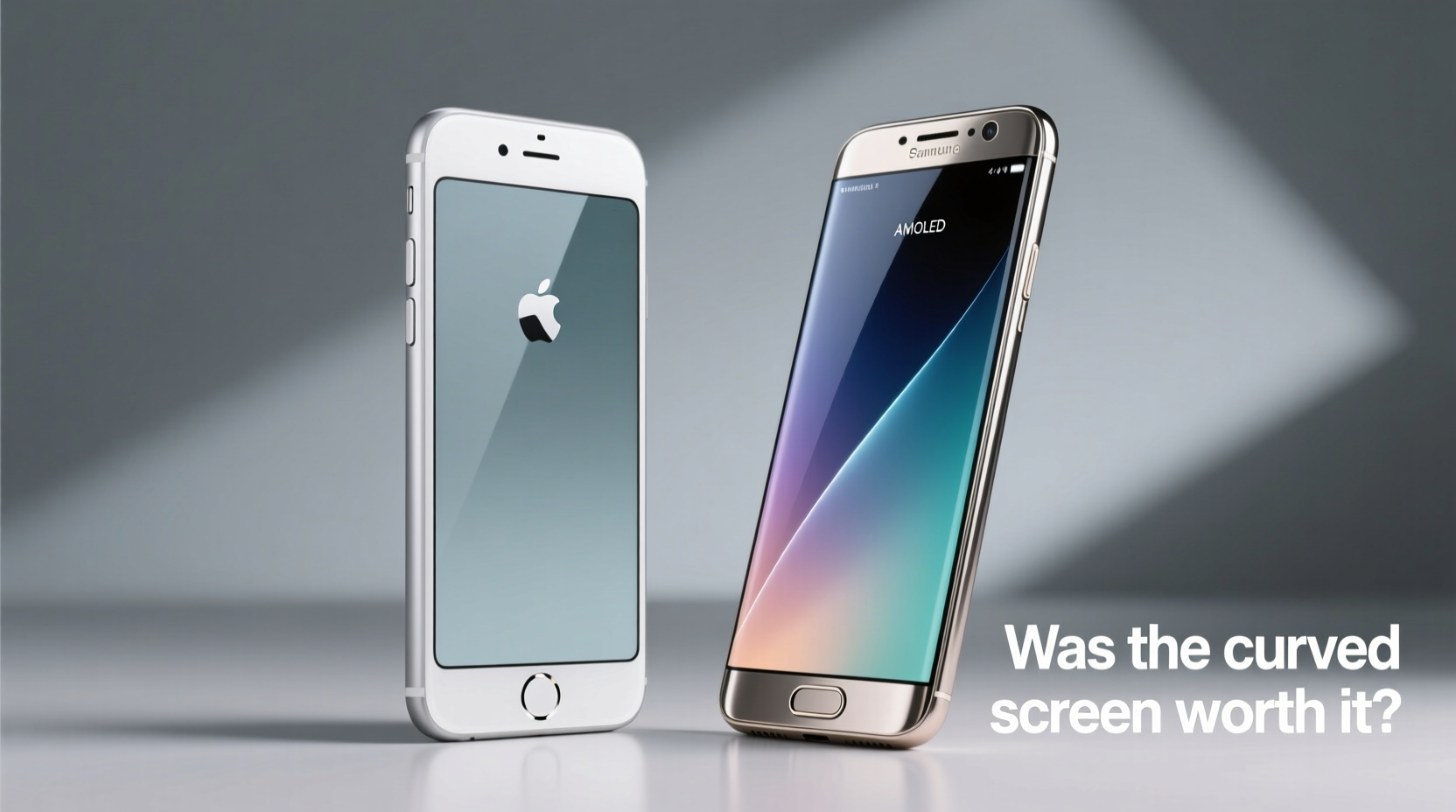
The iPhone 6 represented Apple’s mastery of restraint. Its rounded edges, chamfered buttons, and clean lines made it instantly recognizable. It felt good in hand—not because it was revolutionary, but because it was predictable. The 4.7-inch display offered ample space without sacrificing one-handed use, a key selling point at the time.
In contrast, the Galaxy S6 Edge was a statement piece. With screens curving dramatically along both sides, it looked like something from the future. The effect wasn’t just visual; swiping inward from the edge activated customizable “Edge Panels,” offering shortcuts, contacts, or news feeds. Samsung marketed this as both functional and luxurious—the phone equivalent of a concept car.
Performance and Ecosystem Realities
Under the hood, both phones were top-tier for 2015. The iPhone 6 used Apple’s A8 chip with 1GB RAM, while the S6 Edge featured Samsung’s Exynos 7420 (or Snapdragon 810 in some regions) with 3GB RAM. On paper, Samsung had an advantage. In practice, iOS optimization often made the iPhone feel snappier despite lower specs.
Battery life told a similar story. The iPhone 6 lasted about a day under moderate use. The S6 Edge, with its higher-resolution display and curved glass consuming extra power, often required midday charging. This became especially noticeable when using Edge features constantly—a tempting novelty that drained energy quickly.
Ecosystem loyalty also played a role. iPhone users benefited from seamless integration with iCloud, iTunes, and emerging services like Apple Pay. Samsung offered Samsung Pay (launched later), but lacked the same depth of cross-device harmony. For many consumers, familiarity outweighed flashiness.
Was the Curved Screen Worth It? A Feature-by-Feature Breakdown
| Feature | iPhone 6 | Galaxy S6 Edge | Winner? |
|---|---|---|---|
| Display Quality | 4.7\" IPS LCD, 750x1334 | 5.1\" Quad HD AMOLED, 1440x2560 + curves | S6 Edge – sharper, richer colors |
| Ease of Use | Natural one-hand operation | Curves caused accidental touches | iPhone 6 – simpler, fewer errors |
| Innovative Features | Fingerprint sensor, Apple Pay | Edge Panels, heart rate monitor | S6 Edge – more experimental |
| Durability | Metal body, prone to bending (\"Bendgate\") | Glass front/back, fragile curves | Tie – both had structural risks |
| Long-Term Software Support | 5+ years of iOS updates | About 2 major Android upgrades | iPhone 6 – far superior longevity |
The data shows a clear pattern: Samsung prioritized innovation, Apple focused on reliability. While the S6 Edge dazzled at launch, its cutting-edge elements came with trade-offs—fragility, inconsistent performance, and limited software support.
“Features should serve the user, not the press release.” — David Pierce, Former Editor-in-Chief, The Verge
A Real-World Example: Two Users, Two Choices
Consider Sarah and James, colleagues who bought their phones in spring 2015. Sarah chose the iPhone 6. She appreciated the simplicity, didn’t want to learn new gestures, and valued app consistency. Her phone remained her daily driver until 2019, receiving updates all the way to iOS 12.
James opted for the S6 Edge. He loved showing off the glowing side panels and customized Edge lighting for different contacts. But by late 2016, he noticed slowdowns. Apps stopped optimizing for his device. Worse, the curved screen cracked during a minor fall—repair costs exceeded half the phone’s original price. He switched to an iPhone the next year.
Their stories reflect broader trends. According to Counterpoint Research, while the S6 series sold over 20 million units, retention rates dropped faster than Apple’s. Many users admired the design but returned to iOS within two years.
Lessons Learned: Innovation vs. Usability Over Time
The S6 Edge wasn’t a failure—it won numerous design awards and influenced future flagships, including the Note Edge and eventually the Galaxy Fold line. But its legacy is nuanced. The curved screen introduced ideas that are now standard: ambient notifications, contextual side menus, and bezel-free aesthetics. However, executing those ideas in 2015 was premature.
Touch sensitivity on curved edges led to false inputs. Content rarely extended meaningfully into the curved zones. Third-party developers largely ignored Edge Panel integrations. What started as futuristic felt gimmicky within months.
Meanwhile, the iPhone 6 succeeded by doing less—but doing it better. Its camera improved low-light photography significantly over the 5S. Touch ID became reliable enough to replace passwords in many apps. These weren't headline-grabbing innovations, but they built trust.
FAQ: Looking Back at the iPhone 6 and S6 Edge
Did the Galaxy S6 Edge inspire future smartphones?
Yes. Though Samsung scaled back full-edge designs after mixed feedback, the concept evolved into Dynamic Island-style interactions and foldable phones. The S6 Edge proved that alternative input surfaces could exist—even if the execution needed refinement.
Which phone held its value better?
The iPhone 6 retained resale value significantly longer. After three years, used models fetched up to 40% of original price, compared to under 15% for the S6 Edge. Longevity, brand perception, and ecosystem lock-in contributed to this gap.
Can you still use either phone today?
Possibly, but not practically. Neither supports modern banking apps, messaging platforms, or security standards. Chrome ended support for both around 2020. They’re best suited for offline tasks or as retro collectibles.
Final Verdict: Curiosity vs. Longevity
So, was the curved screen worth it? For early adopters seeking bragging rights, yes. For most users wanting a dependable, long-lasting device, no.
The Galaxy S6 Edge was a beautiful experiment—an artistic leap that expanded what a smartphone could look like. But beauty alone doesn’t sustain utility. The iPhone 6, though less dramatic, delivered where it mattered: daily usability, ecosystem strength, and update longevity.
Today’s market reflects this balance. Most Android flagships have abandoned extreme curves in favor of flat OLED displays with subtle bends. Even Samsung shifted focus toward foldables, where curvature serves a mechanical purpose, not just aesthetic flair.
“The best technology disappears into your life. It doesn’t demand your attention.” — Jony Ive, Former Chief Design Officer, Apple
Conclusion: Learn From the Past, Choose Smarter Now
Revisiting the iPhone 6 and Galaxy S6 Edge isn’t about picking winners. It’s about understanding the rhythm of innovation—how daring ideas emerge, face real-world testing, and either evolve or fade. The S6 Edge’s curve inspired future designs but failed as a mainstream solution. The iPhone 6 reinforced that thoughtful iteration often beats radical change.
As new technologies emerge—AI assistants, augmented reality glasses, rollable displays—remember this moment. Ask not just “Is it cool?” but “Will I still need it in two years?” Value isn’t always measured in pixels or curves. Sometimes, it’s found in silence—the quiet confidence of a tool that works, day after day.




 浙公网安备
33010002000092号
浙公网安备
33010002000092号 浙B2-20120091-4
Comments
No comments yet. Why don't you start the discussion?