
In 2014, smartphone buyers faced a pivotal decision: stick with Android or make the leap to iOS. Two flagship devices defined that year—Apple’s iPhone 6 and HTC’s One M8. Both were highly anticipated, packed with premium features, and represented their manufacturers at peak innovation. But for users considering an upgrade from older models—or switching platforms—the critical question remained: was moving to either device truly worth it? More specifically, for those choosing between them, which offered better long-term value, usability, and satisfaction?
This article dives deep into the real-world differences between the iPhone 6 and HTC One M8—not just on paper, but in daily use, software longevity, ecosystem integration, and overall user experience.
Design and Build Quality: Premium Feel, Different Philosophies
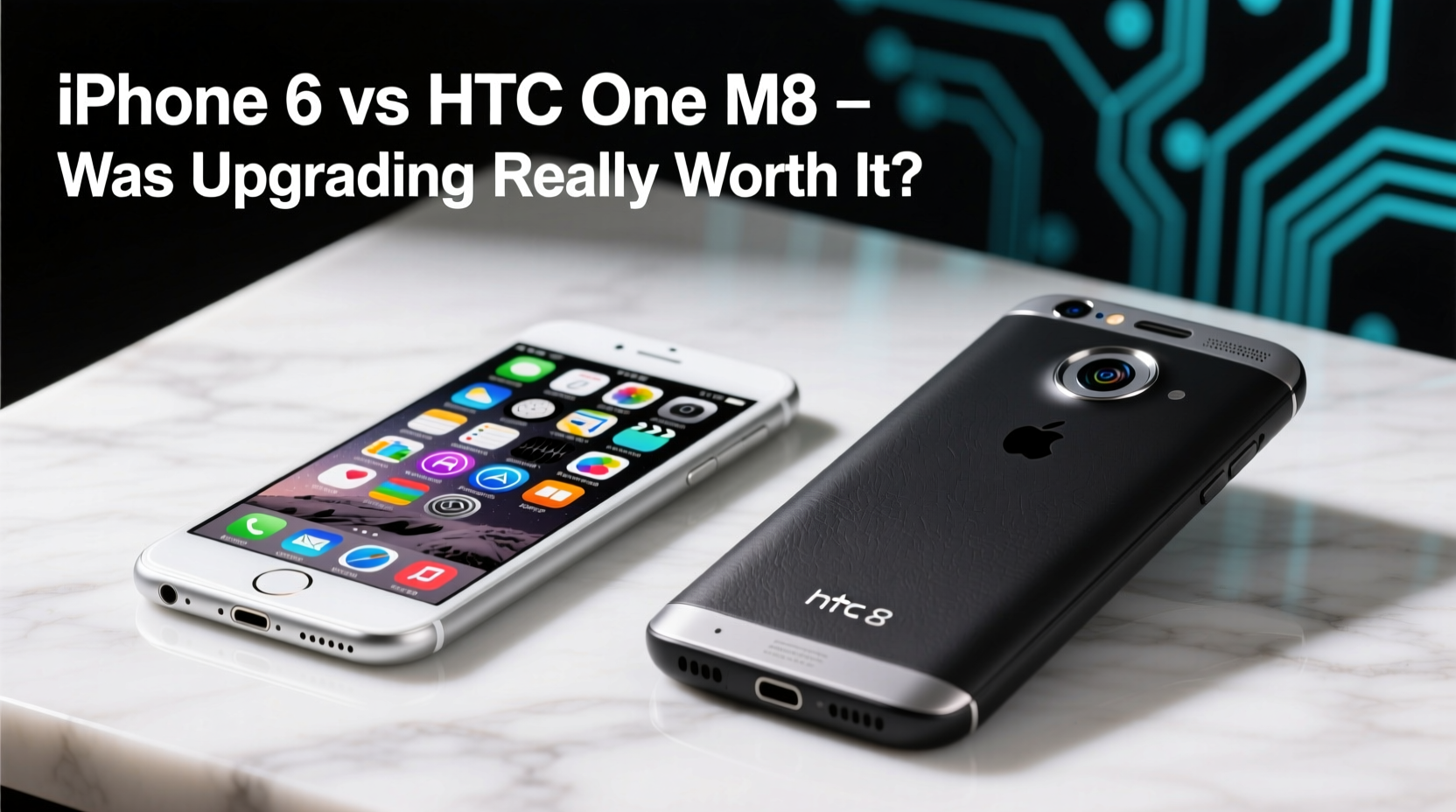
The iPhone 6 introduced a new era of Apple design language. With its curved edges, thinner profile (6.9mm), and aluminum unibody construction, it marked a significant departure from the boxier iPhone 5s. The larger 4.7-inch display was Apple’s response to the growing trend of phablets, though still modest compared to many Android rivals.
In contrast, the HTC One M8 doubled down on metal craftsmanship. Its full aluminum body gave it a noticeably heavier, more substantial feel. At 9.35mm thick and weighing 160g, it felt like a luxury item in hand—something few phones have matched since. The dual-tone finish and chamfered edges added elegance, while the front-facing stereo speakers (BoomSound) delivered superior audio quality over the iPhone’s single earpiece speaker.
However, Apple’s minimalist aesthetic had mass appeal. The iPhone 6 felt smoother in pockets and easier to operate one-handed despite having nearly the same footprint as the taller, bulkier M8. Ultimately, this came down to preference: refined minimalism versus bold engineering.
Performance and Software Experience
Under the hood, both devices used top-tier components for their time. The HTC One M8 ran on Qualcomm’s Snapdragon 801 processor with 2GB of RAM, paired with HTC’s Sense UI layered over Android 4.4 KitKat. Meanwhile, the iPhone 6 featured Apple’s custom A8 chip with 1GB of RAM and shipped with iOS 8.
On benchmarks alone, the M8 held an edge in raw specs. However, real-world responsiveness favored the iPhone 6 due to iOS’s tight hardware-software integration. Apps launched faster, animations stayed smooth, and multitasking felt snappier—even with less RAM.
iOS also brought consistency. Updates arrived directly from Apple, ensuring timely security patches and feature upgrades. In contrast, Android updates depended on carrier approvals and manufacturer customization, often delaying major OS releases by months—if they arrived at all.
“iOS may not offer as much customization as Android, but its reliability and update cadence made it a smarter long-term investment.” — James Lin, Mobile Analyst at TechTrends Weekly
By 2017, iPhone 6 users could still run iOS 10 and even iOS 11 with acceptable performance. The M8 officially stopped receiving updates after Android 6.0 Marshmallow in late 2015, leaving it vulnerable and incompatible with newer apps within three years.
Camera Comparison: Innovation vs Consistency
The HTC One M8 featured a unique dual-camera setup on the rear—one primary sensor and one depth-sensing secondary lens. This enabled effects like UFocus (refocusing after capture) and enhanced bokeh simulation. While innovative, the execution was inconsistent. Image sharpness lagged behind competitors, and low-light performance suffered due to smaller pixel size (2.0 µm).
The iPhone 6, meanwhile, stuck with a single 8MP rear camera but optimized every aspect of image processing. Larger 1.5µm pixels, improved autofocus, True Tone flash, and advanced noise reduction algorithms resulted in more natural colors, accurate white balance, and reliable low-light shots. Video recording hit 1080p at 60fps—a standout feature at the time.
| Feature | iPhone 6 | HTC One M8 |
|---|---|---|
| Rear Camera | 8MP, f/2.2, Focus Pixels | Dual 4MP UltraPixel + Depth |
| Front Camera | 1.2MP, 720p video | 5MP, 1080p video |
| Video Recording | 1080p @ 60fps | 1080p @ 30fps |
| Low-Light Performance | Strong, balanced exposure | Grainy, inconsistent |
| Innovative Features | Slo-Mo video, HDR | UFocus, Dimensional Photos |
For most users, the iPhone delivered more predictable results. The M8’s novelty wore off quickly when photos didn’t meet expectations. Apple’s focus on software-driven improvements laid the foundation for future computational photography dominance.
User Ecosystem and Long-Term Value
One of the most overlooked factors in the iPhone 6 vs M8 debate is ecosystem lock-in. Switching to iPhone meant gaining access to iCloud, AirDrop, iMessage, FaceTime, and seamless integration with Macs and iPads. For families already using Apple products, this continuity was invaluable.
HTC offered little beyond Android’s standard Google suite—Gmail, Maps, Drive, and YouTube. While powerful, these services lacked the tight inter-device synergy Apple provided. Additionally, third-party app support began shifting toward iOS-first development by mid-2015, especially in productivity and creative tools.
Resale value told a similar story. One year after release, used iPhone 6 units retained about 60% of their original price, while the M8 dropped to around 35%. By 2018, functional second-hand iPhone 6s were still selling globally; the M8 had largely disappeared from marketplaces.
Mini Case Study: Sarah’s Platform Switch
Sarah, a graphic designer in Chicago, upgraded from a Samsung Galaxy S3 to the HTC One M8 in early 2014. She loved the design and sound quality but grew frustrated when Android Lollipop took six months to arrive. By 2016, her favorite design apps stopped supporting the aging OS. She switched to an iPhone 6s later that year and immediately noticed how much smoother workflow integration was with her MacBook and iPad. “I wish I’d gone iOS sooner,” she said. “The update delays killed my productivity.”
Was Upgrading Really Worth It?
For existing iPhone users upgrading from the 5 or 5s, the iPhone 6 was absolutely worth it. The larger screen, improved performance, and modernized design justified the cost. Plus, long-term software support ensured usability well into the late 2010s for basic tasks.
For Android loyalists eyeing the M8, the answer is more nuanced. Yes, it was a technological marvel—beautifully built, sonically rich, and visually striking. But unless you deeply valued hardware craftsmanship and immediate feature set over longevity, the iPhone 6 offered a better return on investment.
Consider this timeline:
- 2014: Both phones launch to strong reviews. M8 wins design awards; iPhone 6 breaks sales records.
- 2015: iPhone 6S introduces 3D Touch and better cameras. M8 receives minor updates but no successor matches its prestige.
- 2016: iOS 10 runs smoothly on iPhone 6. M8 users stuck on Android 6, missing out on Doze mode and Google Assistant.
- 2017–2018: iPhone 6 supports WhatsApp, banking apps, and social media. M8 begins failing compatibility checks.
Checklist: Was the Upgrade Right for You?
- ✅ Need seamless integration with other Apple devices?
- ✅ Prioritize consistent OS updates and security patches?
- ✅ Use your phone for more than two years before upgrading?
- ✅ Value app ecosystem breadth and developer priority?
- ✅ Prefer reliable camera performance over experimental features?
If you answered yes to most of these, the iPhone 6 was likely the smarter choice.
FAQ
Did the iPhone 6 have better battery life than the HTC One M8?
Battery life was comparable under normal use—around 10–12 hours screen-on time. However, the iPhone 6 managed power more efficiently during standby, giving it slightly better real-world endurance. Neither supported removable batteries or fast charging.
Why did the HTC One M8 fail to maintain momentum?
HTC struggled with marketing, inconsistent product strategy, and slow software updates. Despite critical acclaim for design, declining sales led to reduced R&D investment. The M9 and later models failed to innovate meaningfully, eroding brand trust.
Can either phone still be used today?
The iPhone 6 can perform basic functions like calling, texting, browsing, and running lightweight apps, though many newer apps no longer support iOS 12 (the last version available). The M8 struggles significantly with modern web standards and app compatibility, making it impractical for daily use.
Final Verdict
Looking back, upgrading to the iPhone 6 wasn’t just about getting a new phone—it was investing in a sustainable digital lifestyle. Its combination of polished design, robust software support, and ecosystem advantages made it a transformative device for millions.
The HTC One M8, while admirable in ambition and artistry, exemplified the challenges Android OEMs faced: hardware excellence undermined by fragmented software support and weak platform cohesion.
So was upgrading really worth it? If you chose the iPhone 6—yes, overwhelmingly so. It aged gracefully, maintained relevance, and helped define the modern smartphone era. The M8 remains a cult classic, but history favors longevity over fleeting brilliance.




 浙公网安备
33010002000092号
浙公网安备
33010002000092号 浙B2-20120091-4
Comments
No comments yet. Why don't you start the discussion?