
The iPhone 6, released in 2014, was a landmark device that introduced a larger screen and ushered in a new era of Apple design. The iPhone X, launched four years later in 2017, redefined the smartphone with its edge-to-edge OLED display and Face ID. Today, many users who have held onto their iPhone 6 devices wonder: is upgrading to an iPhone X — or even holding one now — still a worthwhile move in the current year?
With iOS updates becoming increasingly demanding and app performance expectations rising, the decision isn’t just about nostalgia or aesthetics. It’s about functionality, longevity, and value. Let’s break down the key differences and determine whether making the jump from iPhone 6 to iPhone X still makes sense in 2024.
Design and Build: A Leap Forward
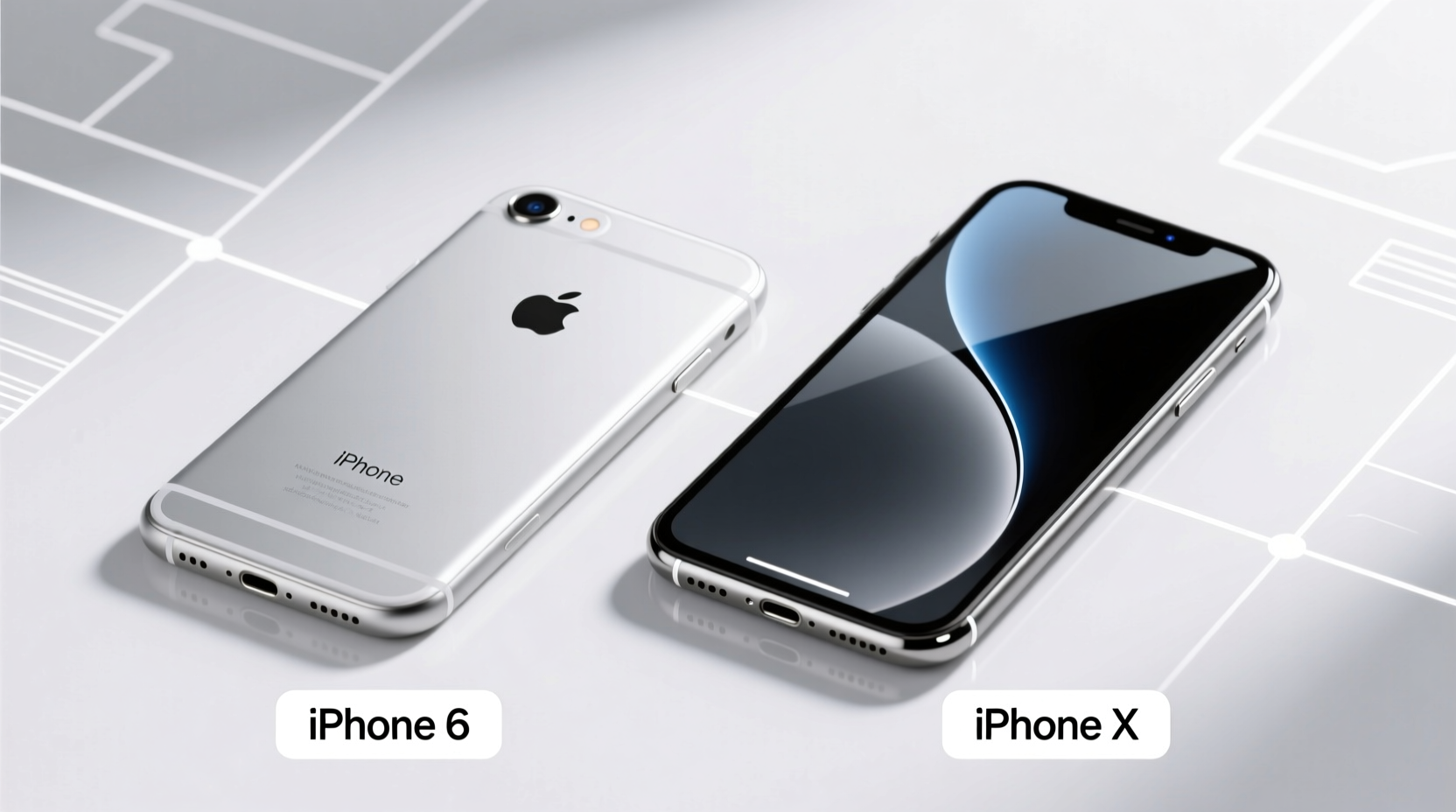
The iPhone 6 featured a classic aluminum unibody with curved edges and a home button equipped with Touch ID. Its 4.7-inch LCD screen was considered generous at the time but now feels compact by modern standards. In contrast, the iPhone X brought a radical redesign: a glass front and back, stainless steel frame, and a 5.8-inch Super Retina OLED display with minimal bezels and no home button.
The removal of the home button introduced Face ID, Apple’s facial recognition system, which remains functional and secure today. The taller aspect ratio also improved media consumption and web browsing, offering more vertical space than the iPhone 6.
Performance and Software Support
The iPhone 6 ran on the A8 chip with 1GB of RAM, which struggled even by 2017 standards. It officially supported iOS updates up to iOS 12, meaning it hasn’t received security patches or feature updates in over five years. This lack of support poses risks, especially when using banking apps, messaging platforms, or any service requiring modern encryption protocols.
The iPhone X, powered by the A11 Bionic chip and 3GB of RAM, was built for the future. It received updates all the way up to iOS 17, making it one of the longest-supported iPhones in history. Even in 2024, the iPhone X can handle most daily tasks—email, social media, video streaming, and light gaming—without major lag.
“Devices like the iPhone X represent a turning point where Apple prioritized long-term software support alongside hardware innovation.” — David Kim, Mobile Technology Analyst at TechInsight Group
Camera Comparison: Night and Day Difference
While both phones were impressive in their time, the gap in camera quality is substantial. The iPhone 6 came with an 8MP rear camera without optical image stabilization (OIS) and a basic front-facing shooter. Low-light performance was poor, and video topped out at 1080p.
The iPhone X upgraded to a dual 12MP rear system (wide and telephoto), OIS on the main sensor, Portrait Mode, and advanced HDR. The front-facing TrueDepth camera enabled Portrait Mode selfies and Animoji—features that still work reliably today. Video recording supports 4K at 60fps, a massive leap in capability.
In real-world use, the iPhone X produces sharper images, better dynamic range, and usable low-light shots thanks to computational photography enhancements introduced in later iOS versions.
Detailed Feature Comparison
| Feature | iPhone 6 | iPhone X |
|---|---|---|
| Release Year | 2014 | 2017 |
| Display | 4.7\" LCD, 750x1334 | 5.8\" OLED, 1125x2436 |
| Processor | A8 | A11 Bionic |
| Rear Camera | 8MP, no OIS | 12MP+12MP dual, OIS, 4K video |
| Front Camera | 1.2MP | 7MP TrueDepth |
| Biometric Security | Touch ID | Face ID |
| iOS Support | Up to iOS 12 | Up to iOS 17 |
| Battery Life (Video) | Up to 11 hours | Up to 13 hours |
| Water Resistance | None | IP67 (1m for 30 mins) |
Real-World Example: Sarah’s Upgrade Journey
Sarah, a freelance writer based in Portland, used her iPhone 6 for nearly seven years. By 2022, she noticed constant app crashes, slow Safari loading times, and inability to update essential tools like WhatsApp and Google Drive. Her phone wouldn’t even accept two-factor authentication codes reliably due to outdated TLS support.
She purchased a refurbished iPhone X for $180. Overnight, her experience changed. Apps launched instantly, Face ID made logging into banking apps seamless, and she could finally shoot clean video for client Zoom meetings. Most importantly, after updating to iOS 16, she regained compatibility with modern productivity and communication tools.
“It wasn’t just about having a newer phone,” Sarah said. “It was about staying connected without frustration. The upgrade paid for itself in saved time and reduced stress.”
Is Upgrading Still Worth It in 2024?
If you're still using an iPhone 6, the answer is almost certainly yes. Here’s why:
- Security: The iPhone 6 lacks critical security updates. Using it for email, shopping, or banking exposes you to vulnerabilities.
- App Compatibility: Many apps no longer support iOS 12 or earlier. You may already be unable to install or update key services.
- User Experience: Slow load times, frozen screens, and limited multitasking make the iPhone 6 frustrating in 2024.
- Resale Value & Trade-In: Even a non-functional iPhone 6 has minimal trade-in value. Upgrading now allows you to get more return before it becomes completely obsolete.
The iPhone X, while discontinued, remains a capable mid-tier device. Refurbished models are widely available under $200 and offer several more years of reliable use, especially if iOS 17 is the final update for this model.
Step-by-Step Guide to Upgrading Smartly
- Back Up Your iPhone 6: Use iCloud or iTunes to create a full backup before switching.
- Check App Requirements: Review your most-used apps to confirm they require iOS 13 or higher.
- Research Refurbished Options: Buy from reputable sellers like Apple Certified Refurbished, Best Buy, or Swappa.
- Transfer Data: Restore from backup during iPhone X setup or use Quick Start for direct transfer.
- Learn Gestures: Practice swipe-up home, swipe-down control center, and Face ID angles.
- Optimize Settings: Turn on Auto-Brightness, reduce motion, and enable Low Power Mode for better battery life.
Frequently Asked Questions
Can the iPhone X still receive iOS updates?
As of 2024, the iPhone X is likely at its final major update with iOS 17. Apple typically supports devices for 5–6 years after discontinuation, so no further major updates are expected. However, minor security patches may continue into early 2025.
Is the iPhone X waterproof?
The iPhone X has an IP67 rating, meaning it can survive submersion in up to 1 meter of water for 30 minutes. It’s not fully waterproof but offers solid protection against spills and rain.
How much does a used iPhone X cost today?
Refurbished models range from $150 to $220 depending on storage (64GB vs 256GB) and condition. Used units on marketplaces may be cheaper but carry higher risk.
Final Verdict: Make the Move
Holding onto an iPhone 6 in 2024 means accepting limitations that affect security, usability, and peace of mind. The iPhone X, despite being six years old, delivers a dramatically better experience with a modern interface, reliable biometrics, and continued software relevance.
For less than the cost of a single month of some subscription services, you can gain three or more years of dependable smartphone use. Whether you buy new, refurbished, or gently used, upgrading from the iPhone 6 to the iPhone X is not just worth it—it’s necessary for staying safely connected in today’s digital world.




 浙公网安备
33010002000092号
浙公网安备
33010002000092号 浙B2-20120091-4
Comments
No comments yet. Why don't you start the discussion?