
When Apple released the iPhone 6s Plus in 2015 as the successor to the iPhone 6 Plus, one of the most touted upgrades was the improved camera system. But for users already satisfied with the 6 Plus’s photography capabilities, the question remained: was the camera upgrade substantial enough to justify upgrading? More than eight years later, this comparison still holds value—especially for those considering secondhand devices or curious about Apple’s evolution in mobile imaging.
The differences between the two models go beyond megapixels. While both phones share nearly identical designs and screen sizes, their camera hardware, software processing, and real-world photo performance diverge in meaningful ways. This article breaks down every aspect of the camera upgrade—from sensor improvements to video stabilization—and evaluates whether the changes were transformative or merely incremental.
Hardware Upgrades: Inside the Camera Module
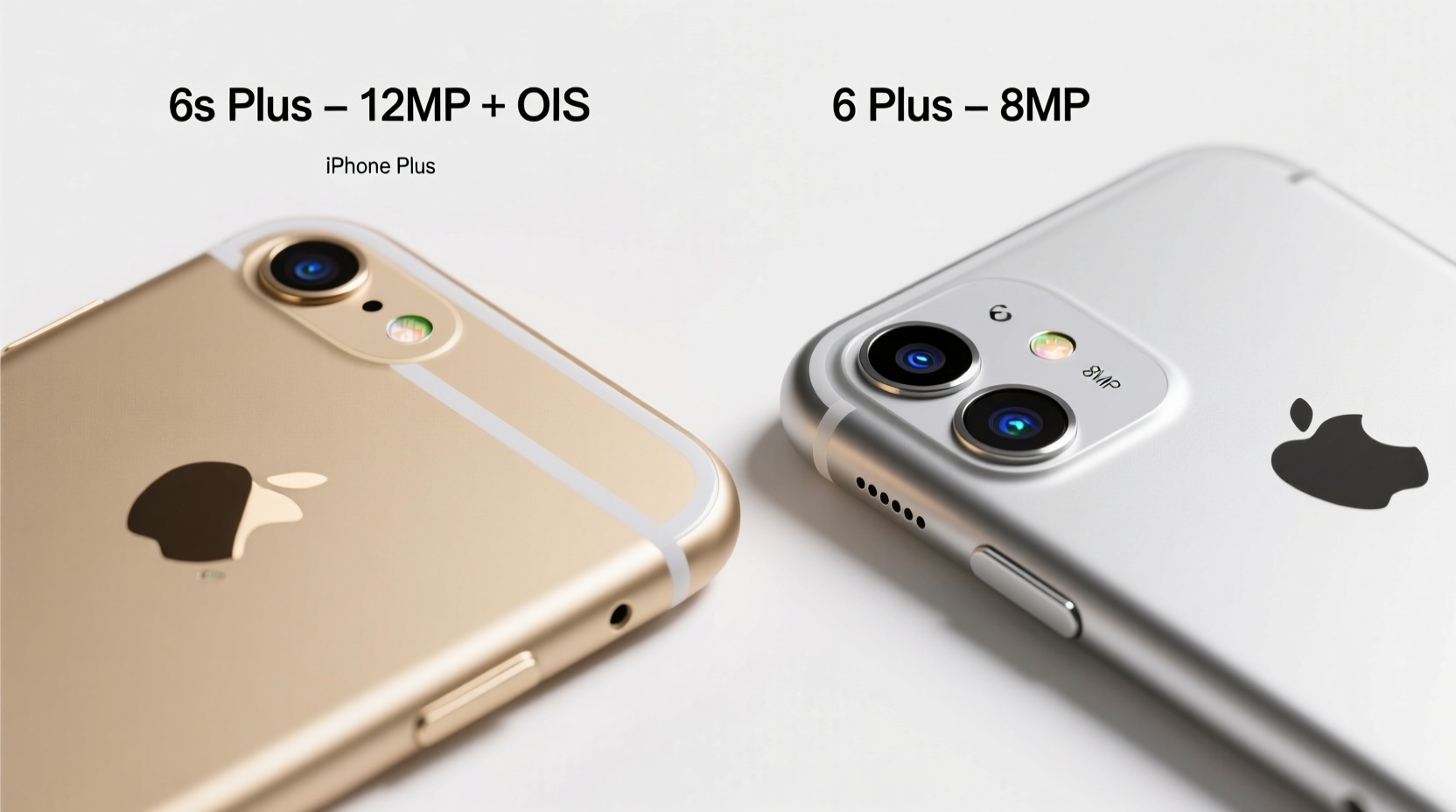
The most visible change Apple advertised was the jump from an 8-megapixel rear sensor on the iPhone 6 Plus to a 12-megapixel sensor on the 6s Plus. On paper, that’s a 50% increase in resolution. However, more megapixels don’t always mean better photos—especially if the pixel size shrinks or image processing lags behind.
In this case, Apple managed the transition carefully. The 6s Plus retained a similar sensor size while using more advanced pixel technology. It introduced Focus Pixels—a phase-detection autofocus system—that significantly improved focusing speed and accuracy, particularly in low light. This allowed the camera to lock onto subjects faster and reduce motion blur.
Another critical but less-discussed hardware improvement was the addition of optical image stabilization (OIS) to the 6s Plus’s rear camera. The original 6 Plus lacked OIS, relying solely on digital stabilization, which often resulted in softer images in dim lighting or when shooting handheld. With OIS, the 6s Plus could capture sharper stills and smoother video by physically countering hand movements.
Image Quality Comparison: Real-World Performance
To assess whether the upgrade was worthwhile, it's essential to examine actual photo output under various conditions. Here’s how the two cameras compare across key metrics:
| Metric | iPhone 6 Plus | iPhone 6s Plus |
|---|---|---|
| Resolution | 8 MP | 12 MP |
| Aperture | f/2.2 | f/2.2 |
| Autofocus | Contrast-detect only | Focus Pixels (phase detection) |
| Image Stabilization | Digital only | Optical + Digital |
| Video Recording | 1080p at 30/60fps | 4K at 30fps, 1080p at 60/120fps |
| Front Camera | 1.2 MP | 5 MP |
The 12MP sensor on the 6s Plus produces noticeably more detailed images, especially when zooming in or printing. Landscapes, group shots, and architectural photography benefit from the extra resolution. However, in ideal daylight conditions, the difference may appear subtle to casual viewers.
Low-light performance is where the gap widens. Thanks to OIS and improved noise reduction algorithms, the 6s Plus captures brighter, cleaner night shots with better color retention. The 6 Plus tends to produce grainier images and struggles more with dynamic range in high-contrast scenes.
“Apple’s integration of OIS in the 6s Plus marked a turning point in smartphone photography—finally giving users reliable handheld performance after dark.” — David Kim, Mobile Imaging Analyst at TechLens Review
Video Capabilities: A Game-Changing Leap
If still photography saw moderate gains, video recording received the most dramatic upgrade. The iPhone 6s Plus introduced 4K video recording—a feature previously reserved for professional cameras. While 4K wasn't widely consumed in 2015, its inclusion future-proofed the device and gave creators far greater flexibility in post-production.
Beyond 4K, the 6s Plus added 1080p slow-motion video at 120fps (up from 60fps on the 6 Plus), enabling smoother slow-mo effects. This made it far more viable for capturing fast-moving action like pets, sports, or children playing.
Additionally, the combination of OIS and enhanced electronic stabilization resulted in significantly steadier handheld footage. Users filming vlogs, travel clips, or family moments found the 6s Plus much easier to use without tripods or gimbals.
Mini Case Study: Family Vacation Footage
Sarah, a parent and amateur videographer, used her iPhone 6 Plus to film her family’s beach vacation in 2014. She loved the convenience but was frustrated by shaky clips and poor audio sync when walking while recording. In 2016, she upgraded to the 6s Plus and filmed a ski trip. Despite colder temperatures and motion-heavy scenarios, her videos were dramatically smoother, thanks to OIS and better gyro data. She also edited 4K clips down to 1080p for social media, preserving detail even after cropping.
For Sarah, the camera upgrade wasn’t just about specs—it changed how she documented life. “I stopped worrying about holding the phone perfectly still,” she said. “The footage actually looked like something I’d want to watch again.”
Front Camera and Selfie Improvements
Selfie quality took a major leap forward with the 6s Plus. The front-facing camera jumped from 1.2 megapixels to 5 megapixels—a fourfold increase. This meant selfies had more detail, better skin tone rendering, and less pixelation when viewed on larger screens.
Apple also introduced Retina Flash—an innovative feature that uses the entire display as a flash by briefly boosting brightness to 3x normal levels. This provided a more natural-looking illumination compared to the harsh LED flashes on earlier models.
While the 6 Plus could handle basic selfies in good light, the 6s Plus made self-portraits viable in a wider range of settings. Vloggers and social media users particularly appreciated the upgrade, as face clarity became crucial for platforms like Instagram and YouTube.
Software Enhancements and User Experience
Beyond hardware, iOS 9 (shipped with the 6s Plus) brought new camera features such as Live Photos, which captured 1.5 seconds of motion and sound before and after a shot. Though polarizing at first, Live Photos added emotional depth to static images—like catching a child’s laugh or a pet’s movement.
The faster A9 chip in the 6s Plus also reduced shutter lag and enabled quicker burst shooting. Users reported being able to capture decisive moments more reliably, especially with moving subjects. The camera app launched faster, processed HDR shots more efficiently, and handled back-to-back photos with less overheating.
Checklist: Is the 6s Plus Camera Worth the Upgrade?
- ✅ Need 4K video or 120fps slow motion? → Yes, upgrade.
- ✅ Frequently shoot in low light? → OIS makes a real difference.
- ✅ Care about selfie quality? → The 5MP front camera is a big step up.
- ✅ Already happy with 6 Plus photos in daylight? → The upgrade may feel minor.
- ✅ Want longer-term usability? → 6s Plus supports newer apps and iOS versions longer.
Frequently Asked Questions
Can the iPhone 6 Plus take good photos today?
Yes, in good lighting, the 6 Plus can still produce decent 8MP images suitable for social media or small prints. However, its lack of OIS and lower dynamic range limits performance in challenging conditions.
Is 4K video on the 6s Plus practical for everyday users?
Even in 2015, 4K offered benefits beyond playback. It allowed cropping and reframing in editing without losing HD quality. Today, many editing apps support 4K, making it a valuable feature for content creators.
Do both phones have the same flash?
No. The 6 Plus uses a standard dual-LED flash (white and amber). The 6s Plus retains this but adds the Retina Flash for selfies, leveraging the screen’s brightness to illuminate faces more naturally.
Conclusion: Was the Camera Upgrade Worth It?
The shift from the iPhone 6 Plus to the 6s Plus represented more than just a spec bump—it reflected Apple’s growing commitment to making the smartphone the primary camera for most users. The addition of OIS, 12MP resolution, 4K video, and a vastly improved front camera transformed the photography experience in tangible ways.
For photographers who valued sharpness, stability, and versatility, the upgrade was absolutely worth it. Casual users might not have noticed dramatic changes in daylight snapshots, but anyone shooting in low light, recording video, or taking selfies would immediately feel the difference.
Ultimately, the iPhone 6s Plus didn’t just improve the camera—it redefined what users could expect from a mobile device. If you're weighing the two models today—whether for purchase, nostalgia, or historical insight—the 6s Plus stands as the clear winner in imaging capability.




 浙公网安备
33010002000092号
浙公网安备
33010002000092号 浙B2-20120091-4
Comments
No comments yet. Why don't you start the discussion?