
More than seven years after its release, the iPhone 6s Plus remains a surprisingly capable device. For users still holding onto one, the question isn’t whether it works—but whether upgrading to an iPhone 7 Plus offers meaningful improvements in today’s mobile landscape. With both models now considered legacy devices, this decision hinges on practicality, longevity, and actual day-to-day benefits rather than raw specs alone.
The iPhone 7 Plus was released in 2016 as the natural successor to the 6s Plus, bringing incremental but impactful changes. But in 2024, when iOS updates are tightening support for older hardware and app demands continue rising, does that upgrade still hold value? Let’s break down the differences and determine whether moving from the 6s Plus to the 7 Plus makes sense today.
Performance and Longevity: A3 vs A10 Fusion
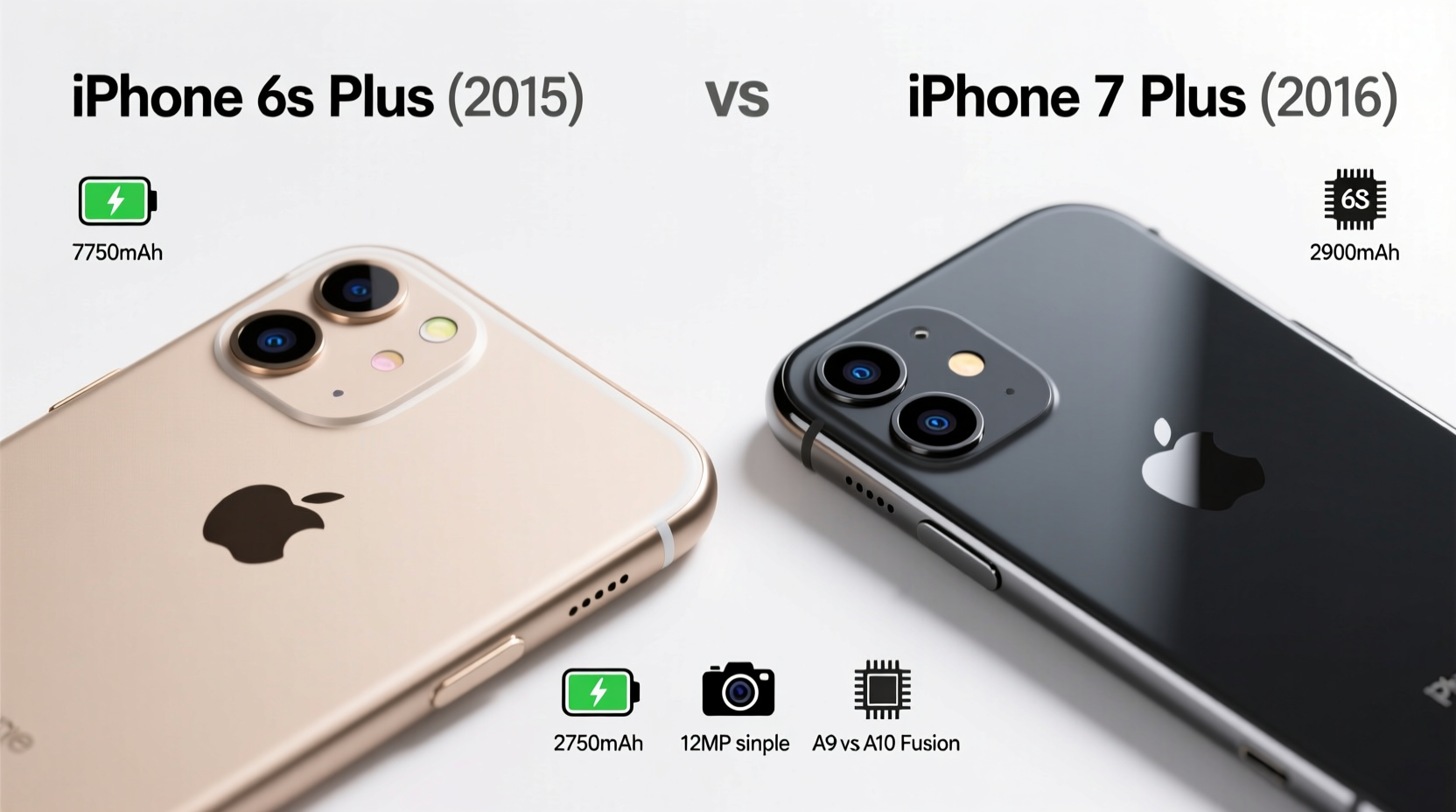
The most significant leap between these two phones lies under the hood. The iPhone 6s Plus runs on Apple’s A9 chip with 2GB of RAM, while the 7 Plus features the A10 Fusion chip and the same 2GB RAM. On paper, this may seem like a modest improvement, but in practice, the A10 delivers about 40% faster CPU performance and up to 50% better graphics efficiency.
This difference becomes noticeable in multitasking, app launch speed, and sustained performance during gaming or photo editing. More importantly, the A10 Fusion allows the iPhone 7 Plus to remain compatible with newer iOS versions longer. As of 2024, iOS 17 dropped support for the iPhone 6s series, meaning 6s Plus users are capped at iOS 16. The iPhone 7 Plus, however, supports iOS 17, granting access to security patches, modern features like StandBy mode, and improved app compatibility.
Camera Capabilities: Single vs Dual Lens Advantage
One of the standout upgrades in the iPhone 7 Plus is its dual-camera system—a first for the iPhone lineup. While the 6s Plus has a single 12MP rear sensor, the 7 Plus adds a second telephoto lens, enabling 2x optical zoom and Portrait Mode (introduced in software updates post-launch).
| Feature | iPhone 6s Plus | iPhone 7 Plus |
|---|---|---|
| Rear Camera | 12MP f/2.2, single lens | 12MP f/1.8 wide + 12MP f/2.8 telephoto |
| Zoom | Digital only | 2x optical, up to 10x digital |
| Portrait Mode | Not supported | Yes (via software update) |
| Front Camera | 5MP | 7MP |
| Low-Light Performance | Moderate | Improved due to larger aperture |
In real-world use, the 7 Plus captures sharper images in low light, handles backlit scenes better, and gives users creative flexibility with depth-of-field effects. For someone who values photography—even casually—the dual-lens system is a compelling reason to upgrade.
“Even among older iPhones, the 7 Plus stands out for delivering a near-Pro camera experience in a Plus-sized body.” — Mark Tran, Mobile Photographer & Tech Analyst
Battery Life and Charging: Small Gains, Big Impact
Battery degradation affects all aging smartphones, but original specs matter when comparing longevity. The iPhone 6s Plus has a 2,915mAh battery, while the 7 Plus packs a slightly larger 2,900mAh unit. Despite similar capacity, the 7 Plus typically lasts longer due to the A10 chip’s power efficiency.
Apple claimed the 7 Plus offered up to two additional hours of battery life over the 6s Plus. In daily usage—mixed browsing, messaging, and media—that translates to more consistent all-day performance, especially with modern app demands.
Another often-overlooked advantage: the iPhone 7 Plus supports faster charging with a USB-C to Lightning cable and 12W+ adapter (sold separately). While neither model includes wireless charging, the 7 Plus can be upgraded to charge quicker than its predecessor—a small but useful perk if you're frequently on the move.
Design, Durability, and Water Resistance
At first glance, the 6s Plus and 7 Plus look nearly identical. Both feature aluminum bodies, 5.5-inch displays, and physical Home buttons. However, the 7 Plus introduced a critical durability upgrade: IP67 water and dust resistance. This means it can survive submersion in up to 1 meter of water for 30 minutes—something the 6s Plus cannot do.
For users in humid climates, those prone to spills, or anyone using their phone near sinks or outdoors, this protection adds peace of mind. It also improves long-term reliability by reducing internal corrosion risks from moisture exposure.
The Taptic Engine in the 7 Plus was also redesigned, offering more precise haptic feedback during interactions like pressing the Home button or using 3D Touch. While subtle, this refinement enhances the overall user experience, making navigation feel more responsive and tactile.
Real-World Example: Sarah’s Upgrade Dilemma
Sarah had been using her iPhone 6s Plus since 2016. By 2023, she noticed apps took longer to load, her camera struggled in dim lighting, and her battery barely lasted half a day. She considered buying a new flagship but found prices too steep for her budget.
Instead, she purchased a refurbished iPhone 7 Plus for $120. Immediately, she noticed faster app switching, clearer video calls thanks to the improved front camera, and the ability to take zoomed-in photos of her kids’ soccer games without losing quality. Most importantly, her phone stayed updated with iOS 17, keeping her secure and compatible with school communication apps.
For Sarah, the upgrade wasn’t about chasing the latest tech—it was about regaining reliability and usability without overspending.
Checklist: Should You Upgrade?
Before deciding, ask yourself the following:
- ✅ Is your iPhone 6s Plus struggling with basic tasks like opening messages or browsers?
- ✅ Have you stopped receiving iOS updates (currently stuck on iOS 16)?
- ✅ Is your battery health below 80% and unable to last a full day?
- ✅ Do you want better photo quality, especially in low light or with zoom?
- ✅ Are you concerned about water damage or accidental spills?
- ✅ Can you find an iPhone 7 Plus at a reasonable price (under $150)?
If you answered “yes” to three or more, the upgrade is likely worthwhile.
Frequently Asked Questions
Can the iPhone 7 Plus still run modern apps smoothly?
Yes, for most everyday applications. Social media, email, banking, and streaming apps run well on the 7 Plus under iOS 17. However, intensive games or AR-heavy apps may lag or not be supported.
Is the iPhone 6s Plus obsolete in 2024?
Functionally, no—it still powers on, connects to networks, and performs basic tasks. But without iOS 17 support, it lacks critical security updates and modern features. Developers are gradually dropping support for 32-bit dependencies, which could affect future app availability.
Should I skip both and save for a newer iPhone?
If you can afford to wait, yes. Models like the iPhone SE (2022) or iPhone XR offer significantly better performance, longer software support (until at least 2027), and modern features like Face ID or all-day battery life. But if budget is tight, the 7 Plus remains the best immediate step up from the 6s Plus.
Final Verdict: Is the Upgrade Worth It?
For users clinging to an aging iPhone 6s Plus, the jump to the 7 Plus is more than just a minor refresh—it's a meaningful enhancement in performance, camera quality, battery efficiency, and software longevity. While neither phone qualifies as “future-proof,” the 7 Plus extends usable life by at least another 1–2 years, especially when sourced in good condition.
The introduction of water resistance, dual cameras, and continued iOS support transforms the 7 Plus from a cosmetic successor into a genuinely more durable and versatile device. At typical resale prices under $150, it represents one of the most cost-effective upgrades available in the used iPhone market.
If your current phone is slowing down, failing to update, or limiting your daily use, then yes—the upgrade is absolutely worth it in 2024. It won’t match today’s flagships, but it restores a level of reliability and functionality that many long-time 6s Plus users didn’t realize they’d lost.




 浙公网安备
33010002000092号
浙公网安备
33010002000092号 浙B2-20120091-4
Comments
No comments yet. Why don't you start the discussion?