
For millions still relying on the iPhone 6s Plus, the question of whether to upgrade has lingered for years. Apple’s iconic 2015 flagship was built to last, with many users continuing to use it well into 2024. But as software demands grow and app ecosystems evolve, even durable devices eventually show their age. One common upgrade path being considered is switching from iOS to Android—specifically, moving to a budget-friendly device like the Samsung Galaxy A10. But is this transition actually worthwhile?
The answer isn’t just about specs or brand loyalty. It’s about real-world usability, long-term support, security, and how your daily habits align with what each phone offers today. Let’s break down the key differences and practical implications of choosing the Galaxy A10 over a still-functioning iPhone 6s Plus in 2024.
Performance and Software: The Core Divide
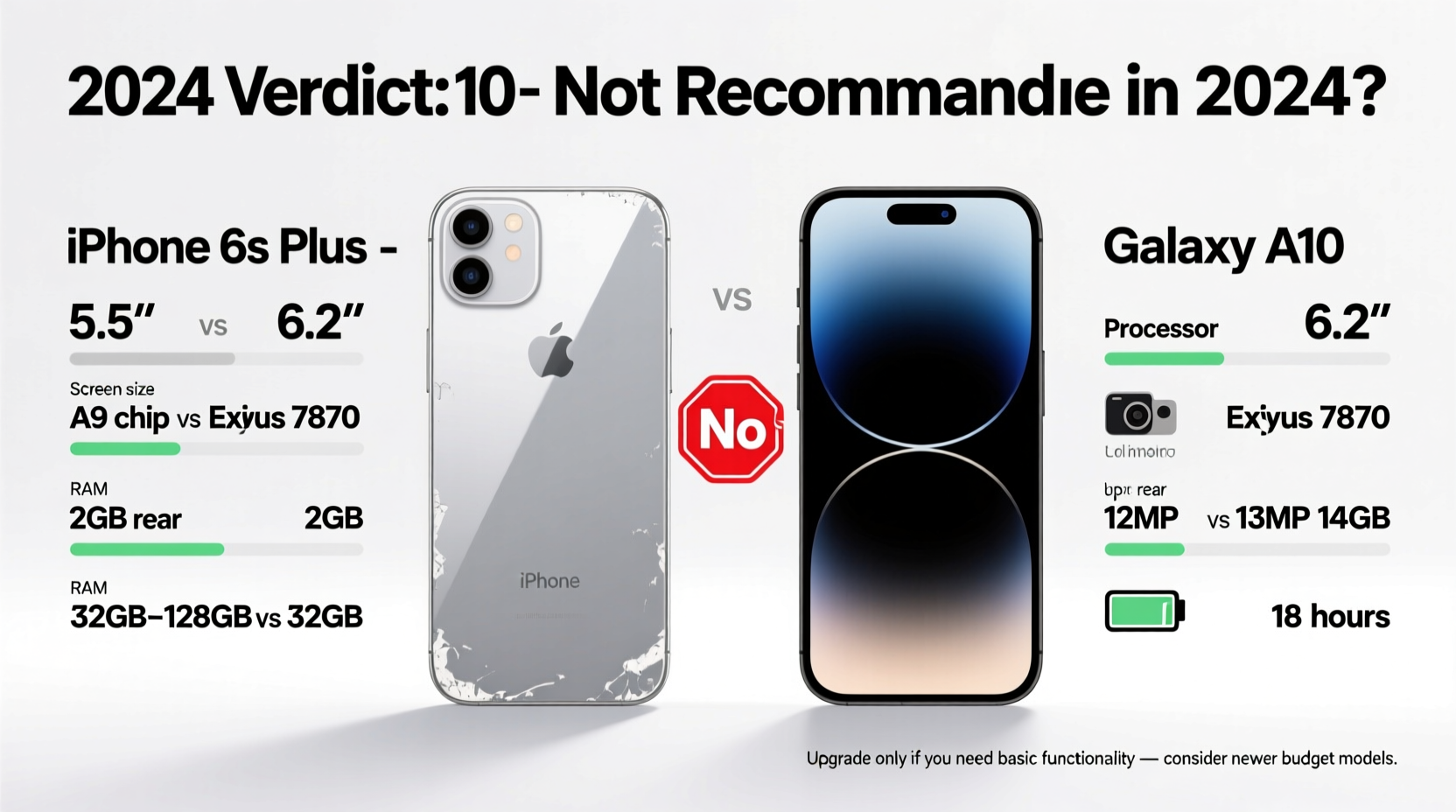
The iPhone 6s Plus ran iOS 15 as its final supported version, released in 2021. By 2024, it no longer receives security updates or compatibility with newer apps. Major services like banking apps, social media platforms, and productivity tools are phasing out support for older iOS versions, making the 6s Plus increasingly unreliable for secure, modern tasks.
In contrast, the Galaxy A10—released in 2019 with Android 9 (Pie)—received updates up to Android 11 and security patches until late 2022. While not current by today’s standards, it runs a more recent OS than the 6s Plus can support. More importantly, Android 11 allows access to updated versions of Google Play Services, ensuring broader app compatibility.
Under the hood, the iPhone 6s Plus featured Apple’s A9 chip—a 64-bit processor that was blazing fast in its time. However, even optimized iOS software struggles with multitasking and app loading speeds in 2024 due to memory constraints (only 2GB RAM). The Galaxy A10 uses Samsung’s Exynos 7884B, an octa-core processor paired with 2GB or 3GB RAM depending on region. While less powerful per core than the A9, Android’s lighter interface and better memory management for basic tasks often result in smoother day-to-day operation.
Camera Comparison: Legacy vs Modern Expectations
The iPhone 6s Plus sports a 12MP rear camera with optical image stabilization and 4K video recording. For its era, it delivered excellent dynamic range and color accuracy. In 2024, though, low-light performance and autofocus speed lag behind even entry-level smartphones.
The Galaxy A10 features an 13MP main sensor without OIS. Image quality is inconsistent—overexposed highlights, soft details, and poor night shots are common. However, it includes AI scene optimization and a front-facing 5MP camera with wider framing, which benefits casual selfie-takers and video callers.
Where the A10 wins isn’t in pure image fidelity but in software features: portrait mode, HDR, and faster processing for instant sharing on social media. The 6s Plus lacks native portrait mode and relies on third-party apps for similar effects, which often perform poorly.
“Even modest modern cameras outperform legacy flagships in convenience and consistency.” — Lena Tran, Mobile Photography Analyst at TechLens Weekly
Battery Life and Charging: Practical Daily Use
The iPhone 6s Plus came with a 2,915mAh battery. After years of charge cycles, most units now hold significantly less capacity—often below 70%. This translates to barely a full day of light use, frequent charging anxiety, and slow 5W wired charging.
The Galaxy A10 packs a larger 3,400mAh battery and typically retains better health in used models due to later release. It supports 15W fast charging (though shipped with a 10W charger), allowing quicker top-ups. With moderate usage—messaging, browsing, music—the A10 easily lasts a full day, sometimes stretching into a second.
Another advantage: the A10 uses a standard USB-C port, widely compatible with modern cables and power banks. The 6s Plus relies on Lightning, which is becoming less universal and more expensive to replace.
Detailed Feature Comparison
| Feature | iPhone 6s Plus | Galaxy A10 |
|---|---|---|
| Release Year | 2015 | 2019 |
| Operating System (2024) | iOS 15 (no updates) | Android 11 (security ended) |
| Processor | Apple A9 | Exynos 7884B |
| RAM | 2GB | 2GB / 3GB |
| Rear Camera | 12MP, 4K video | 13MP, 1080p video |
| Battery Capacity | 2,915mAh | 3,400mAh |
| Charging | 5W (Lightning) | 10–15W (USB-C) |
| Fingerprint Sensor | Touch ID (front) | No fingerprint (basic model) |
| Expandable Storage | No | Yes (microSD up to 512GB) |
| Current App Support | Limited | Moderate |
Real-World Upgrade Experience: A Mini Case Study
Consider Maria, a teacher in Austin who relied on her iPhone 6s Plus since 2016. By early 2023, she noticed increasing issues: her school’s learning app stopped launching, Google Meet crashed during parent calls, and iMessage delays became frequent. She hesitated to spend much on a new phone, so she bought a used Galaxy A10 for $80.
Her transition wasn’t seamless—she missed iOS integration with her Mac and iCloud photos—but the improvements were immediate. Apps loaded faster, her email client stayed stable, and she could finally join Zoom meetings without freezing. The ability to expand storage allowed her to download offline lesson materials, something impossible on her 64GB iPhone with 15GB free space.
After three months, Maria reported higher confidence in her device’s reliability. “It’s not glamorous,” she said, “but it works when I need it. That’s all I wanted.”
Step-by-Step: How to Decide If You Should Upgrade
- Evaluate current pain points: Does your iPhone 6s Plus fail to run essential apps? Are updates unavailable?
- Check battery health: Go to Settings > Battery > Battery Health. If maximum capacity is below 80%, replacement cost may exceed value.
- Assess connectivity needs: Do you rely on modern messaging, video calling, or cloud sync? These degrade on outdated systems.
- Compare upgrade costs: Refurbished Galaxy A10s sell for $70–$100; screen repairs for 6s Plus often exceed $100.
- Test Android briefly: Borrow or try a friend’s Android phone to gauge comfort with navigation and app layout.
- Back up data: Use iCloud to preserve contacts, photos, and messages before transitioning.
- Make the switch: Activate new device, restore essentials, and gradually re-download critical apps.
Is It Worth Upgrading in 2024? The Verdict
Yes—with caveats. If your iPhone 6s Plus still functions adequately for calls, texts, and light web browsing, and you're not dependent on modern apps, holding on might be fine. But if you use digital banking, social media, email, or any service requiring regular updates, the Galaxy A10 represents a meaningful step forward in functionality and reliability.
The A10 isn’t a high-performance device by today’s standards. It won’t handle gaming or multitasking efficiently. But for users seeking dependable access to WhatsApp, Gmail, YouTube, and basic photography, it delivers a more future-proof experience than a five-year-outdated iPhone.
Moreover, switching to Android opens doors to newer, affordable upgrades down the line. Samsung’s A-series continues to improve, and once you’re in the ecosystem, moving to a Galaxy A15 or A25 later becomes easier than clinging to obsolete iOS hardware.
Frequently Asked Questions
Can the Galaxy A10 replace an iPhone seamlessly?
Not perfectly. You’ll lose iMessage, FaceTime, and tight Apple ecosystem integration. However, Google Messages, WhatsApp, and cross-platform apps minimize the gap. Email and calendar sync smoothly across both systems.
Is the Galaxy A10 secure in 2024?
It no longer receives official security patches, which poses some risk. However, avoiding suspicious links, using trusted apps from Google Play, and installing a reputable mobile antivirus can mitigate threats significantly.
Should I consider other phones instead?
Absolutely. For slightly more ($120–$160), phones like the Galaxy A14 5G or Motorola Moto G Power offer better processors, longer support, and improved cameras. The A10 is a starting point, not the best option available.
Final Thoughts: Take Control of Your Digital Experience
Technology should serve you—not frustrate you. Holding onto a device out of loyalty or hesitation only limits your access to tools that make life easier. The jump from iPhone 6s Plus to Galaxy A10 isn’t about chasing specs; it’s about reclaiming reliability, security, and peace of mind.
If your current phone stutters, refuses updates, or dies by noon, it’s already costing you time and stress. For under $100, the Galaxy A10 offers a fresh start. Use it as a bridge to modern mobile life, and don’t underestimate the value of a phone that simply works.




 浙公网安备
33010002000092号
浙公网安备
33010002000092号 浙B2-20120091-4
Comments
No comments yet. Why don't you start the discussion?