
In 2016, two smartphones dominated headlines for very different reasons. The iPhone 6s Plus represented Apple’s reliable evolution—polished, predictable, and powerful. Meanwhile, the Samsung Galaxy Note 7 burst onto the scene with cutting-edge features and unprecedented performance, only to be pulled from shelves weeks later due to dangerous battery fires. But before the explosions, was the Note 7 actually a better phone than the 6s Plus? The answer isn’t just about specs—it’s about user experience, innovation, and trade-offs.
Design and Build: Premium Materials, Different Philosophies
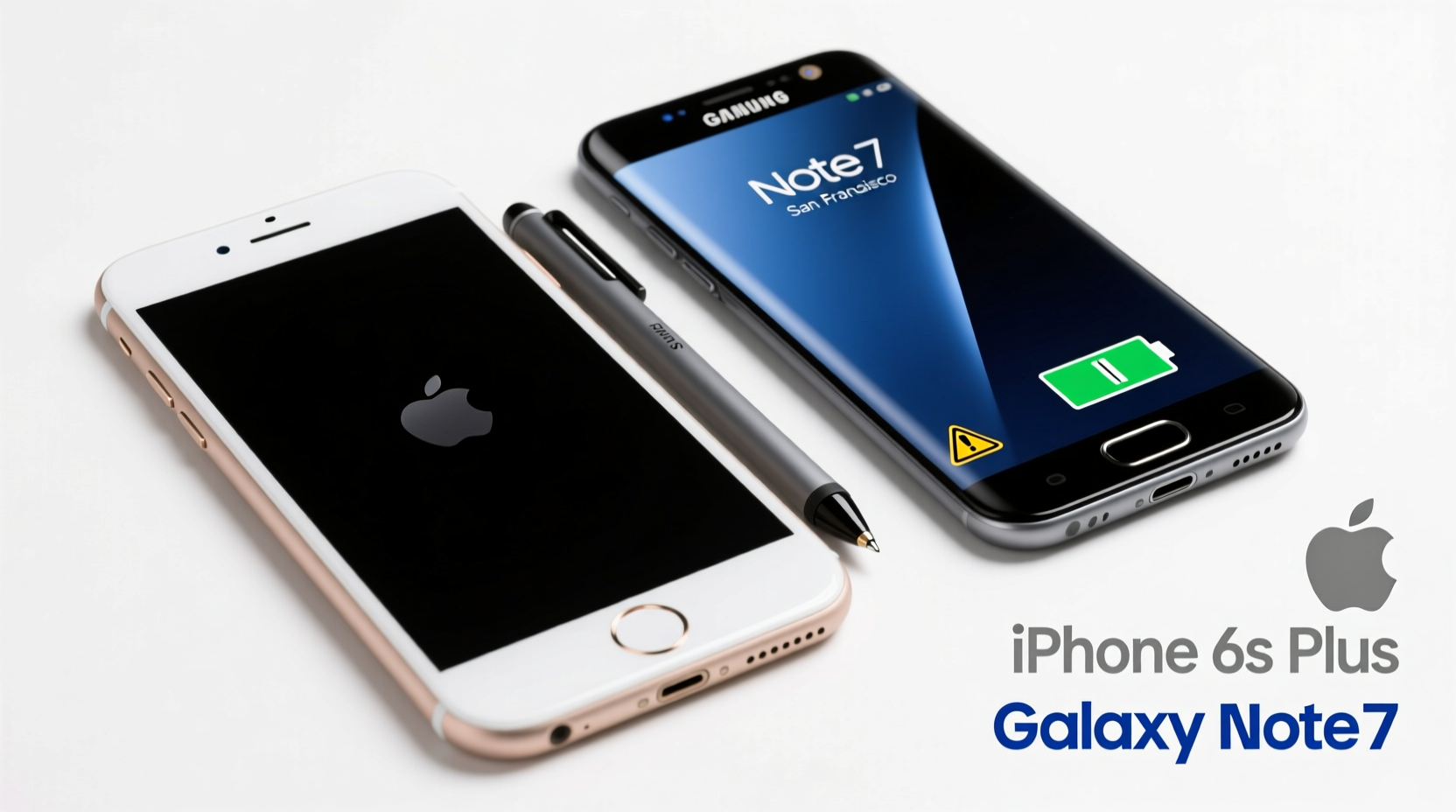
The iPhone 6s Plus continued Apple’s minimalist aluminum unibody design. At the time, it felt solid and familiar, with clean lines and a refined finish. Its 5.5-inch display sat within generous bezels, making one-handed use difficult but not impossible. It introduced 3D Touch—a pressure-sensitive screen layer that enabled contextual menus—and remained IP67 splash-resistant (though not officially marketed as such until later models).
Samsung took a bolder approach with the Note 7. For the first time in the Note series, it featured a curved dual-edge AMOLED display, glass front and back, and an elegant symmetrical design. Despite being slightly larger than the 6s Plus, the Note 7 felt more compact due to thinner bezels and curved edges. It also carried an IP68 rating, meaning it could survive deeper water submersion longer than Apple’s offering. Most notably, it supported iris scanning—a biometric security feature ahead of its time.
Display and Usability: AMOLED vs Retina Clarity
The Note 7’s 5.7-inch Quad HD (1440 x 2560) Super AMOLED panel delivered richer colors, deeper blacks, and higher brightness than the iPhone 6s Plus’s 1080p LCD Retina display. While Apple’s screen was still excellent for media consumption and readability in sunlight, Samsung’s technology offered a more immersive viewing experience, especially for videos and games.
But the real differentiator was the S Pen. Integrated seamlessly into the body, the stylus transformed the Note 7 into a productivity tool. Users could jot quick notes on the lock screen, translate text in real-time, or create animated GIFs from handwritten sketches—all without fully unlocking the phone. This functionality wasn’t just gimmicky; it appealed to students, artists, and professionals who valued precision input.
Apple, meanwhile, focused on ecosystem integration. Features like iMessage effects, Live Photos, and seamless Handoff with Mac devices provided subtle but meaningful advantages for users already invested in Apple’s world.
Performance and Software: iOS Efficiency vs Android Flexibility
Under the hood, both phones were powerhouses. The iPhone 6s Plus used Apple’s A9 chip with 2GB RAM, while the Note 7 ran on either the Snapdragon 820 or Exynos 8890 (depending on region), paired with 4GB RAM. On paper, Samsung had the edge in multitasking capability, but iOS’s memory management meant the 6s Plus rarely felt slower in day-to-day use.
Benchmarks showed the A9 processor outperforming even some newer mid-tier chips years later. Apps launched quickly, animations stayed smooth, and background processes were tightly controlled. However, iOS limited customization options—no default app switching, no file system access, and minimal widget flexibility.
Samsung’s TouchWiz interface, though heavily criticized in earlier years, had matured by 2016. With improved optimization and useful additions like multi-window mode and Secure Folder (a sandboxed space for sensitive apps), the Note 7 offered greater personalization and control. Power users appreciated being able to split the screen between two apps or assign double-tap actions to the home button.
“Samsung pushed boundaries with software features that made the Note 7 feel like a mini-computer. But Apple proved once again that raw specs don’t always win against intelligent optimization.” — David Lin, Mobile Tech Analyst at TechPulse Weekly
Camera Comparison: Still Great, But Different Strengths
Both phones featured 12MP rear cameras, but their approaches differed. The iPhone 6s Plus prioritized color accuracy, dynamic range, and video quality. Its camera produced natural-looking photos with excellent stabilization, particularly in low light. It also introduced 4K video recording—an upgrade from the iPhone 6—but lacked optical image stabilization (OIS) on the rear lens, which the smaller 6s included.
The Note 7 improved significantly over previous Galaxy models. Its f/1.7 aperture gathered more light than any flagship at the time, including the iPhone. Combined with OIS and faster autofocus, it consistently captured brighter, sharper images in dim environments. Selfie quality was also superior thanks to a 5MP front camera with wide-angle capability.
However, processing algorithms sometimes oversaturated skies or created halos around high-contrast edges. Apple’s conservative tuning avoided these artifacts but occasionally underexposed scenes.
| Feature | iPhone 6s Plus | Galaxy Note 7 |
|---|---|---|
| Processor | A9 chip | Snapdragon 820 / Exynos 8890 |
| RAM | 2GB | 4GB |
| Rear Camera | 12MP, f/2.2, no OIS | 12MP, f/1.7, OIS |
| Front Camera | 5MP, f/2.2 | 5MP, f/1.7, wide-angle |
| Battery | 2915 mAh | 3500 mAh (pre-recall) |
| Water Resistance | IP67 (unofficially) | IP68 certified |
| Unique Feature | 3D Touch, Live Photos | S Pen, Iris Scanner, Always-On Display |
Real-World Example: Two Users, Two Priorities
Consider Maria, a freelance graphic designer. She chose the Note 7 because she sketched mockups directly on her screen using the S Pen during client meetings. The ability to annotate PDFs, capture screenshots with smart select, and run two design apps side-by-side boosted her workflow. She valued the extra screen real estate and high-resolution display for reviewing color gradients.
On the other hand, James, a corporate lawyer, stuck with the iPhone 6s Plus. He relied on iCloud integration to sync documents across his iPad and MacBook. Siri helped him set reminders hands-free while driving, and he trusted Apple’s privacy stance more than Samsung’s data collection policies. Though he admired the Note 7’s specs, he didn’t need advanced multitasking or stylus input.
This contrast highlights a key truth: “better” depends entirely on what you do with your phone.
Frequently Asked Questions
Was the Galaxy Note 7 faster than the iPhone 6s Plus?
In multitasking and synthetic benchmarks, yes—the Note 7 often scored higher due to its 4GB RAM and newer chipset. However, in real-world usage like app launches and web browsing, the difference was barely noticeable thanks to iOS efficiency.
Could the Note 7 have succeeded if not for the battery issues?
Many experts believe so. The device received widespread critical acclaim upon release. Reviewers praised its display, camera, and innovative features. Had the battery flaw been caught earlier and corrected silently, it might have become one of Samsung’s most iconic releases.
Is it safe to use a repaired or replacement Note 7 today?
No. Even replacement units (labeled “safe editions”) were eventually recalled globally. Most carriers and retailers no longer support the device, and firmware updates ceased years ago. Using one now poses potential safety and security risks.
Final Verdict: Innovation vs Reliability
Technically speaking, the Galaxy Note 7 was the more advanced device. It packed more features, a superior display, better water resistance, and a more versatile input method with the S Pen. It represented the peak of Android ambition in 2016—pushing hardware and software boundaries in ways few competitors dared.
Yet the iPhone 6s Plus won in consistency, longevity, and ecosystem cohesion. It ran smoothly for years, received long-term iOS updates (up to iOS 15), and maintained strong resale value. For average users, it simply worked—without drama or danger.
The Note 7 wasn’t just better on paper; in many ways, it *was* better—for those who needed its capabilities. But greatness means nothing without reliability. One critical flaw erased all its achievements in months.
Conclusion: Learn From the Past, Choose Wisely Today
The battle between the iPhone 6s Plus and Galaxy Note 7 wasn’t just about specs—it was a clash of philosophies. Samsung pursued technological leadership, risking stability for breakthroughs. Apple refined proven ideas, favoring dependability over novelty. Both strategies have merit.
Today’s smartphone market still reflects this divide. Some brands chase folding screens and AI processors; others focus on durability and software support. The lesson from 2016 remains relevant: innovation must serve the user, not just impress reviewers.
If you're weighing similar decisions now, look beyond marketing claims. Test devices in person, evaluate long-term support, and consider how features fit your lifestyle. After all, the best phone isn’t the one with the highest score—it’s the one you can trust every single day.




 浙公网安备
33010002000092号
浙公网安备
33010002000092号 浙B2-20120091-4
Comments
No comments yet. Why don't you start the discussion?