
In 2016, two smartphones dominated the high-end market: the Apple iPhone 6s and the Samsung Galaxy S7. For many Android loyalists, particularly those using Samsung devices, the allure of iOS and Apple’s ecosystem prompted a switch. But years later, users still debate—was moving from the Galaxy S7 to the iPhone 6s actually a step forward, or did they lose more than they gained?
This article dives deep into the hardware, software, user experience, and long-term satisfaction of both phones—not with nostalgia, but with an objective lens. Whether you're considering a retro upgrade, revisiting your tech choices, or simply curious about one of the most pivotal smartphone rivalries of the mid-2010s, this breakdown will help clarify whether the switch made sense.
Hardware Comparison: Design and Build Quality
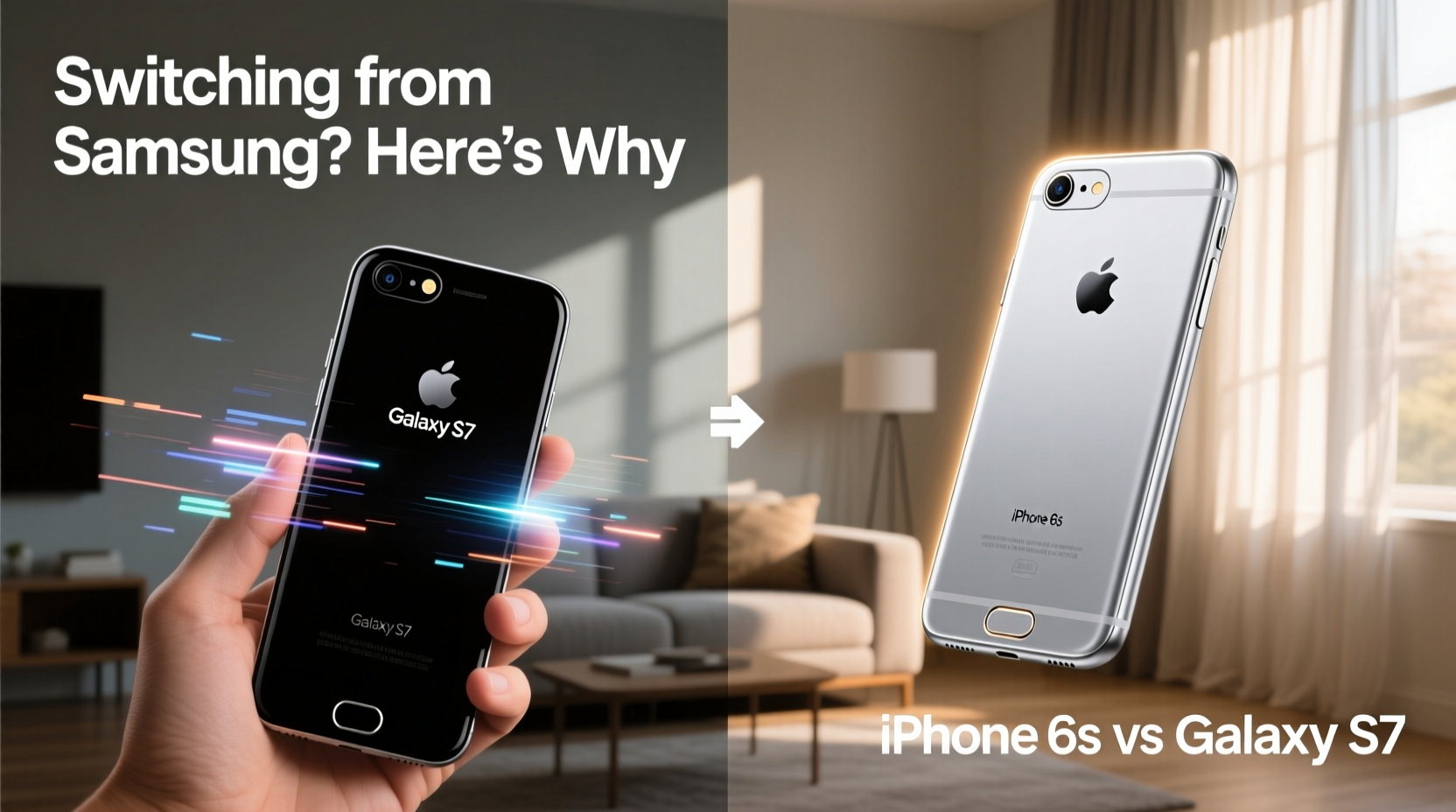
The Galaxy S7 and iPhone 6s took different approaches to design. The S7 embraced glass and metal with a curved back that felt premium and fit naturally in hand. Its IP68 water resistance was a standout feature—something Apple didn’t offer until the iPhone 7. The ability to submerge the phone briefly without damage gave Samsung users peace of mind in rainy commutes or accidental spills.
In contrast, the iPhone 6s featured a unibody aluminum design with a matte finish that resisted fingerprints. While solidly built, its flat edges and sharper corners made it slightly less comfortable for prolonged use. It lacked official water resistance, though some teardowns revealed minor incidental protection. However, Apple introduced 3D Touch—a pressure-sensitive display that enabled contextual menus—which was innovative at the time.
Performance and Longevity: Real-World Speed and Updates
Beneath the surface, both phones packed powerful chipsets for their era. The iPhone 6s used Apple’s A9 chip with 2GB of RAM, while the Galaxy S7 came with either the Snapdragon 820 or Exynos 8890 (depending on region), also with 4GB of RAM. On paper, Samsung had the advantage in memory, but iOS’s efficient memory management often leveled the playing field.
In daily use, the iPhone 6s delivered smooth animations and consistent app launches. iOS optimization meant fewer background hiccups, even after extended use. However, by 2018, Apple faced backlash when it admitted to throttling older iPhones—including the 6s—to prevent unexpected shutdowns due to aging batteries. This sparked controversy among users who felt misled.
The Galaxy S7, despite its stronger specs, suffered from heavier bloatware and UI layering via Samsung Experience (formerly TouchWiz). Over time, some users reported slowdowns and longer app reload times as cached data accumulated. Software updates were inconsistent—Samsung provided two major OS upgrades, ending support with Android 8.0 Oreo.
“Apple’s update policy is unmatched—iOS devices receive five or more years of updates, while most Android phones get two.” — David Kim, Mobile Analyst at TechPulse
Camera Showdown: Photos in Daylight and Low Light
Both phones offered capable cameras, but their philosophies differed. The iPhone 6s featured a 12MP rear sensor with improved dynamic range and 4K video recording—a first for iPhones. Apple prioritized color accuracy and consistency, producing natural-looking photos ideal for social media sharing.
The Galaxy S7 also had a 12MP rear camera but used larger pixels (1.4µm vs. 1.22µm) and an f/1.7 aperture, giving it superior low-light performance. In dim environments, the S7 captured brighter images with less noise. Its Dual Pixel autofocus ensured faster focusing, especially useful for action shots.
Front-facing cameras favored the S7 as well. With a 5MP front shooter compared to the 6s’s 5MP FaceTime camera, Samsung included features like wider-angle selfies and beauty modes—popular among selfie enthusiasts.
| Feature | iPhone 6s | Galaxy S7 |
|---|---|---|
| Rear Camera | 12MP, f/2.2, 4K video | 12MP, f/1.7, Dual Pixel AF |
| Front Camera | 5MP, Retina Flash | 5MP, Wide Angle, Beauty Mode |
| Low-Light Performance | Moderate improvement over 6 | Excellent; industry-leading at launch |
| Video Recording | 4K @ 30fps | 4K @ 30fps |
| Image Processing | Natural, balanced tones | Slightly warm, enhanced saturation |
User Experience: Ecosystem, Customization, and Daily Use
This is where personal preference plays the biggest role. Switching from Samsung to iPhone meant leaving behind deep customization options. Android allowed users to change launchers, widgets, default apps, and even system behaviors. The Galaxy S7 supported microSD cards (up to 200GB expansion) and removable batteries—features Apple never adopted.
On the other hand, iOS offered tighter integration across Apple devices. Users with MacBooks, iPads, or Apple Watches experienced seamless Handoff, iMessage syncing, and AirDrop file sharing. iCloud backups were automatic and reliable. For families invested in Apple’s ecosystem, the iPhone 6s wasn’t just a phone—it was a hub.
Meanwhile, Samsung’s ecosystem in 2016 was still developing. Smart Switch helped transfer data easily, but cross-device continuity wasn’t as polished as Apple’s. That said, the freedom to sideload apps, use alternative app stores, and customize nearly every interface element appealed to power users.
Mini Case Study: Sarah’s Switch from S7 to iPhone 6s
Sarah, a graphic designer based in Portland, used the Galaxy S7 for work and personal life. She appreciated its multitasking features, expandable storage, and screen flexibility. But after buying a MacBook Pro for freelance projects, she found herself constantly emailing files between devices. Frustrated, she switched to the iPhone 6s.
At first, she missed the microSD slot and the ability to quickly swap batteries. However, within weeks, she grew to love AirDrop and Continuity. “I can start an email on my phone and finish it on my laptop,” she said. “That alone saved me hours per week.” Still, she occasionally regrets giving up customization—especially when trying to organize her home screen.
Software Support and Security: The Hidden Factor
Long-term software support is often overlooked at purchase but becomes critical over time. The iPhone 6s received updates all the way to iOS 15, released in 2021—six years after the phone launched. This meant access to new features, security patches, and compatibility with modern apps far longer than expected.
The Galaxy S7, while updated to Android 8.0 Oreo, stopped receiving major updates in 2017 and security patches tapered off by 2019. By 2020, many apps no longer supported the device, limiting functionality. This shorter lifecycle frustrated users who expected flagship longevity.
FAQ
Did the iPhone 6s outlast the Galaxy S7 in terms of usability?
Yes. Due to extended iOS updates, the iPhone 6s remained functional and secure for longer. Many users continued using it well into 2020, whereas the Galaxy S7 struggled with newer apps by 2019.
Was the Galaxy S7 better for photography?
In low light and fast-action scenarios, yes. The S7’s larger aperture and advanced autofocus gave it an edge. However, the iPhone 6s produced more consistent, true-to-life colors preferred by professionals.
Can I still use either phone today?
As basic devices—yes. Both can make calls, send texts, and run lightweight apps. However, performance with modern web browsing, banking apps, or social media is sluggish. Neither supports current security standards fully, so daily driver use isn’t recommended.
Checklist: Before Switching Smartphone Platforms
- ✅ Evaluate your existing ecosystem (laptop, tablet, watch)
- ✅ Check software update policies for both brands
- ✅ Consider storage needs—expandable vs. fixed capacity
- ✅ Test data transfer tools (Smart Switch, iCloud, Google Sync)
- ✅ Assess long-term support timelines
- ✅ Try both operating systems in-store if possible
Conclusion: Was Switching from Samsung a Mistake?
There’s no universal answer. For users deeply embedded in Apple’s ecosystem or seeking long-term reliability, switching from the Galaxy S7 to the iPhone 6s was a smart move. The seamless integration, extended software support, and consistent performance justified the trade-offs.
But for those who valued customization, hardware flexibility, and superior low-light photography, staying with Samsung—or choosing another Android flagship—might have been the better path. The S7 was arguably Samsung’s last \"perfect\" Android flagship before design compromises crept in.
The real lesson isn’t which phone was better overall, but how well each aligns with individual needs. Technology choices aren’t one-size-fits-all. What matters is understanding your priorities—be it battery swaps, photo quality, ecosystem synergy, or update longevity.




 浙公网安备
33010002000092号
浙公网安备
33010002000092号 浙B2-20120091-4
Comments
No comments yet. Why don't you start the discussion?