
When the Samsung Galaxy S8 launched in 2017, it arrived as a bold redefinition of what a flagship smartphone could be. Sleek, edge-to-edge displays, facial recognition, and powerful internals made it an instant standout. Meanwhile, Apple’s iPhone 6s—released two years earlier in 2015—remained a surprisingly capable device for many users. For those still clinging to the 6s, the allure of the S8 was strong. But beneath the marketing gloss and spec sheets, a critical question emerged: was upgrading from the iPhone 6s to the Galaxy S8 actually worth it?
The answer isn’t just about megapixels or processor speeds. It hinges on user priorities: ecosystem loyalty, long-term software support, daily usability, and personal preferences in interface design. This article dives deep into that transition, comparing both devices across key dimensions and real-world use cases.
Design and Build: A Leap in Form Factor
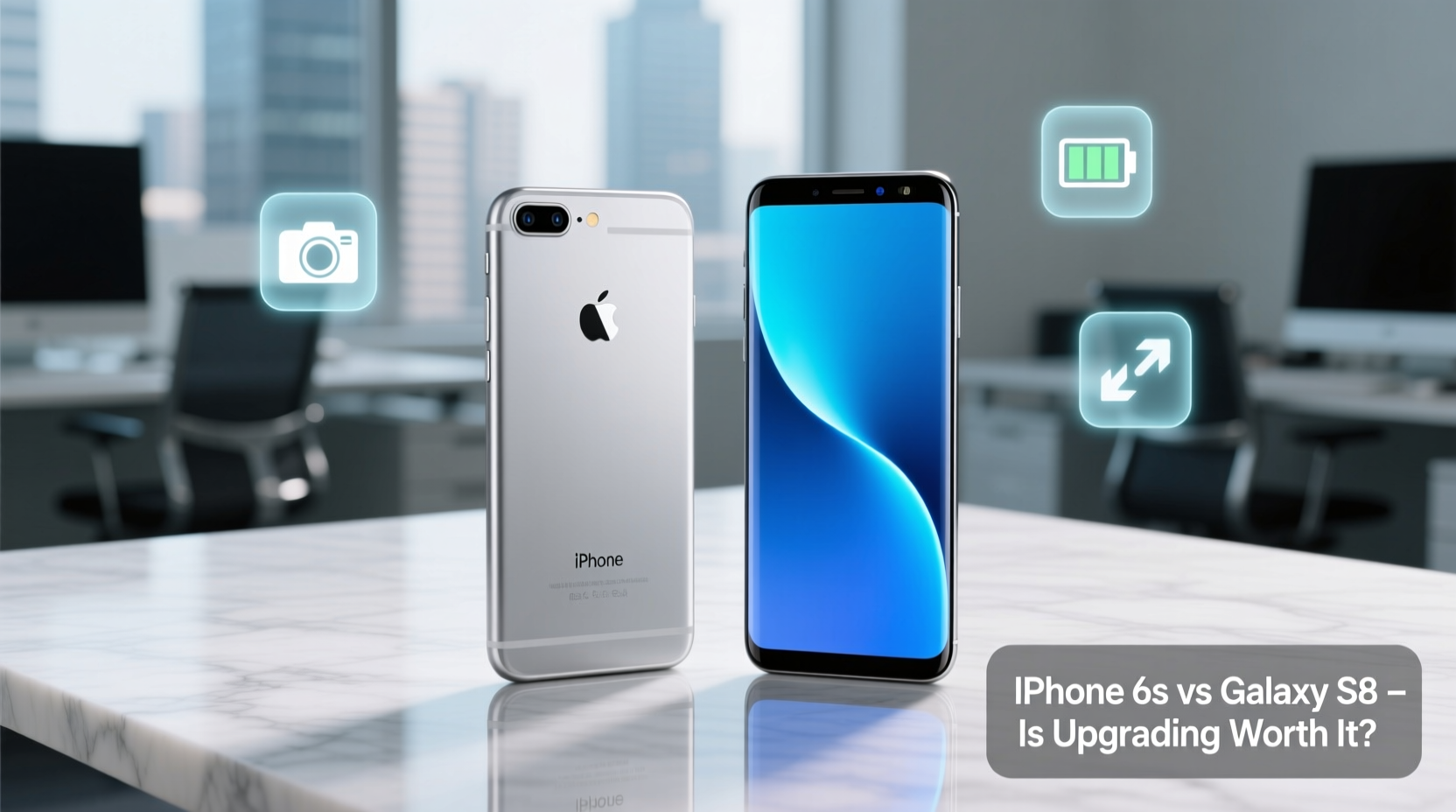
The most immediate difference between the iPhone 6s and Galaxy S8 is visual and tactile. The 6s features Apple’s classic aluminum unibody with physical home buttons and thick bezels—a design language that defined mid-2010s smartphones. In contrast, the S8 introduced Samsung’s Infinity Display: a curved, nearly bezel-less 5.8-inch Quad HD+ AMOLED screen that occupied over 83% of the front surface.
This wasn’t just cosmetic. The S8 delivered a significantly larger display in a footprint only slightly bigger than the 6s (148.9 x 68.1 mm vs. 138.3 x 67.1 mm), thanks to its taller 18.5:9 aspect ratio. Holding both side by side, the S8 feels more immersive, especially for media consumption and multitasking.
However, the S8’s glass back and curved edges, while elegant, made it more prone to slipping and required protective cases. The 6s, though less refined, offered better grip and durability in everyday handling. Both phones supported IP ratings—well, almost. The 6s lacked official water resistance, while the S8 boasted IP68 certification, surviving submersion up to 1.5 meters for 30 minutes.
Performance and Software Experience
Under the hood, the gap widened. The iPhone 6s ran Apple’s A9 chip with 2GB RAM—a solid performer in its time, capable of smooth iOS operation and efficient app switching. By 2017, however, iOS updates had begun to strain the hardware, particularly with newer apps optimized for faster processors.
The Galaxy S8, powered by the Snapdragon 835 (or Exynos 9810 in some regions) and 4GB of RAM, offered a noticeable leap in raw power. Multitasking was fluid, gaming performance superior, and background processes handled with ease. Android 7.0 Nougat at launch also introduced split-screen mode and improved notification management—features iOS wouldn’t fully embrace until later versions.
But performance isn’t just about specs. The user experience diverged sharply. iOS offered consistency, predictable navigation, and tighter app optimization. Android on the S8 provided greater customization, deeper integration with Google services, and features like Bixby and Samsung Pay. Yet, some users found TouchWiz (Samsung’s UI layer) bloated compared to iOS’s minimalism.
“Switching ecosystems is less about hardware and more about habit. Muscle memory matters.” — Lena Park, Mobile UX Analyst
Camera Comparison: Quality vs. Flexibility
The iPhone 6s featured a 12MP rear sensor with optical image stabilization—an upgrade from the 6—and a 5MP front camera. Its photos were consistently well-balanced, with accurate colors and reliable low-light performance for its era.
The Galaxy S8 stepped up with a 12MP dual-pixel rear camera, larger pixels (1.4µm), and advanced phase-detection autofocus. While megapixel count didn’t increase dramatically, the improvements in dynamic range, detail retention, and low-light clarity were evident. Video recording hit 4K, matching the 6s, but with better stabilization and HDR support.
Front-facing, the S8’s 8MP selfie cam outclassed the 6s, especially in dim lighting. Features like auto-focus and wider field-of-view gave Samsung an edge for social media users.
| Feature | iPhone 6s | Galaxy S8 |
|---|---|---|
| Rear Camera | 12MP, OIS | 12MP, Dual Pixel, f/1.7 |
| Front Camera | 5MP, fixed focus | 8MP, auto-focus |
| Video Recording | 4K@30fps | 4K@30fps, HDR |
| Low-Light Performance | Good for 2015 | Excellent, larger pixels |
| Software Enhancements | Natural tone processing | Scene optimizer, live focus (later update) |
Longevity and Ecosystem Considerations
One often overlooked factor in upgrades is long-term support. The iPhone 6s received iOS updates until 2022—seven years of software support, including security patches and feature upgrades. This meant users could run modern apps and services far longer than typical Android devices of the same era.
In contrast, the Galaxy S8 officially received three major Android updates (up to Android 10) and security patches until 2020. After that, performance degraded noticeably with newer apps, and compatibility dwindled. While rooted or custom ROM options extended life for tech-savvy users, mainstream consumers faced obsolescence sooner.
For iPhone loyalists, staying within Apple’s ecosystem meant seamless integration with iCloud, AirPods, Apple Watch, and Macs. Switching to Android disrupted this continuity. Migrating messages, notes, and app data was possible via tools like Move to iOS, but nuances—like iMessage blue bubbles or FaceTime availability—were lost.
Real-World Upgrade Scenario: Sarah’s Transition
Sarah had used her iPhone 6s since 2016. By early 2018, she noticed slowdowns in Safari, occasional app crashes, and diminishing battery life (down to 72% health). She considered upgrading to the iPhone 8 but was drawn to the S8’s display and price drop after the S9 release.
She made the switch. Initially thrilled by the vibrant screen and fast performance, she struggled with replacing iMessage contacts who assumed she’d “disappeared.” Her photo library migration missed albums, and she missed Siri’s responsiveness compared to Bixby. However, she appreciated Always-On Display, expandable storage via microSD, and the convenience of USB-C charging.
After six months, Sarah admitted the upgrade improved speed and visuals but came at a cost: relearning workflows and losing ecosystem cohesion. For her, the trade-off was mixed—worth it for the hardware, less so for the daily friction.
Was Upgrading Really Worth It? A Balanced Verdict
The answer depends on individual needs:
- If you valued design innovation and multimedia immersion, the S8 was a clear step forward.
- If you prioritized long-term software support and ecosystem integration, sticking with iOS—or upgrading within Apple’s lineup—made more sense.
- If budget was a concern, the S8 often dropped below $500 post-S9 launch, offering flagship specs at a discount.
Technically, the Galaxy S8 outperformed the iPhone 6s in nearly every measurable category: screen quality, processing power, camera versatility, and modern features like facial recognition and water resistance. But real-world satisfaction involves more than benchmarks.
Checklist: Is Switching from iPhone 6s to Galaxy S8 Right for You?
- ✅ Do you want a significantly larger, more immersive display?
- ✅ Are you comfortable adapting to Android’s interface and Google-centric services?
- ✅ Do you need longer software support (favor iPhone)?
- ✅ Will you miss iMessage, FaceTime, or AirPlay?
- ✅ Is expandable storage or USB-C important to your workflow?
- ✅ Are you upgrading primarily for future-proofing or current performance?
Frequently Asked Questions
Could the iPhone 6s still perform well in 2018?
Yes. Despite its age, the 6s handled iOS 11 and 12 adequately for basic tasks—calls, messaging, web browsing, and light apps. Heavy multitasking or newer games caused lag, but for moderate users, it remained functional.
Did the Galaxy S8 have any major drawbacks?
Yes. The virtual home button took time to adjust to, the curved screen caused accidental touches, and Bixby’s early version was underdeveloped. Additionally, post-support performance declined faster than Apple devices.
Was battery life better on the S8?
The S8 packed a 3000mAh battery versus the 6s’s 1715mAh, but the larger, higher-resolution screen consumed more power. Real-world usage showed comparable endurance—about one full day—with the S8 edging ahead due to adaptive battery features.
Conclusion: Weighing Progress Against Practicality
Upgrading from the iPhone 6s to the Galaxy S8 represented a shift not just in hardware, but in philosophy. The S8 embraced futurism—curved glass, edgeless screens, AI assistants—while the 6s symbolized reliability, simplicity, and enduring support. For tech enthusiasts craving innovation, the S8 was exhilarating. For pragmatic users invested in Apple’s ecosystem, the transition introduced friction that outweighed the benefits.
Ultimately, \"worth it\" isn't measured solely in specs. It’s shaped by how a device fits into your life. If you sought a dramatic visual and functional leap and were ready to leave iOS behind, the Galaxy S8 delivered. But if consistency, longevity, and seamless integration mattered more, staying put—or moving to a newer iPhone—was the smarter choice.




 浙公网安备
33010002000092号
浙公网安备
33010002000092号 浙B2-20120091-4
Comments
No comments yet. Why don't you start the discussion?