
When Apple offered a free upgrade program from the iPhone 6s to the iPhone 7 for users affected by a faulty power button issue, many welcomed the news. But beyond the convenience of a no-cost replacement, a critical question remains: is moving from the iPhone 6s to the iPhone 7 actually an improvement worth embracing? For users still clinging to their 6s or considering whether to accept the swap, the answer isn’t just about hardware—it’s about real-world usability, longevity, and how much difference one generation truly makes.
Performance: A Noticeable Leap in Speed
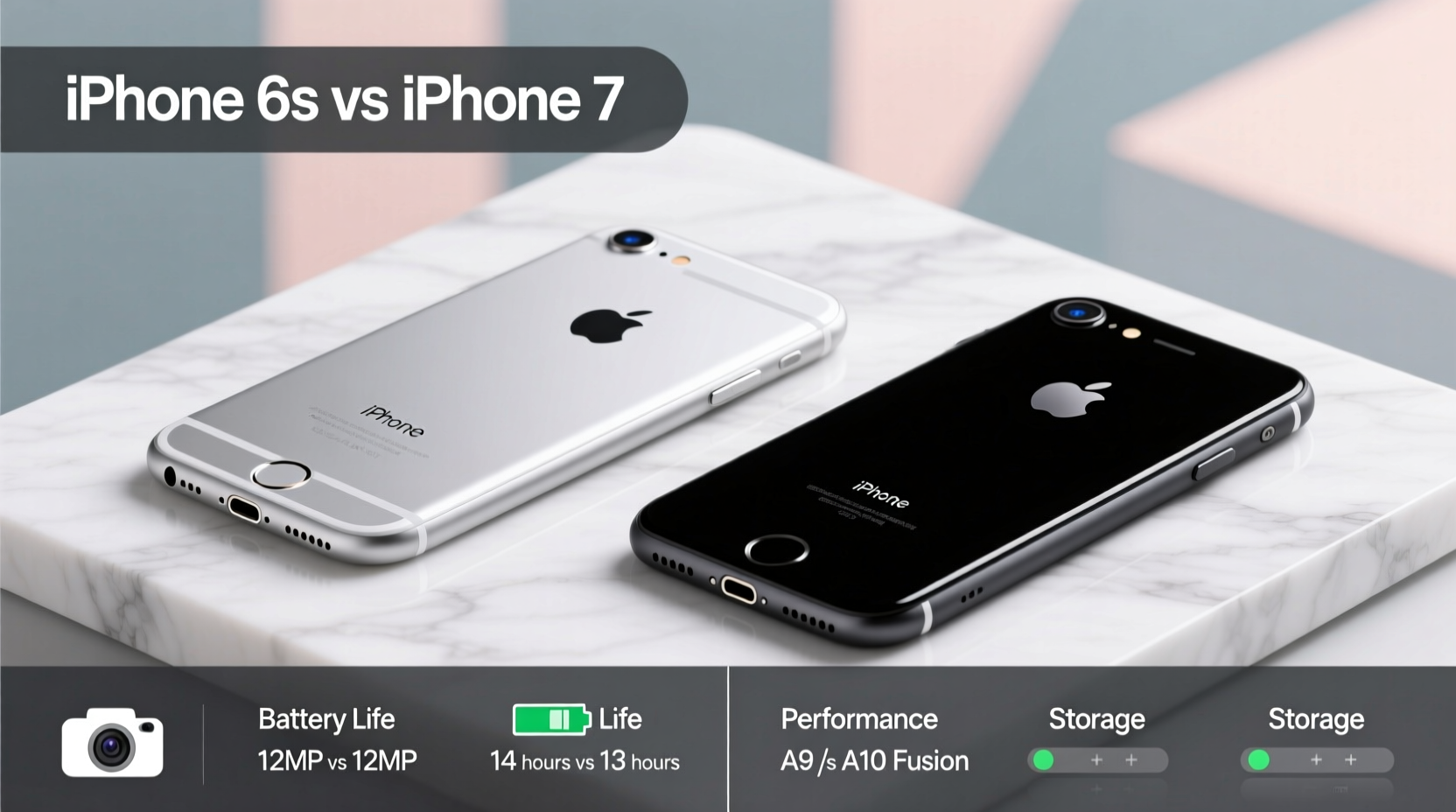
The most significant upgrade between the iPhone 6s and iPhone 7 lies under the hood. The iPhone 6s was powered by the A9 chip with 2GB of RAM, which was impressive at launch in 2015. By 2016, however, Apple introduced the A10 Fusion chip in the iPhone 7—its first quad-core processor and a major leap forward in both CPU and GPU performance.
Benchmarks show the A10 delivers around 40% faster CPU performance and up to 50% better graphics efficiency than the A9. In daily use, this translates to smoother multitasking, faster app launches, and improved responsiveness when switching between apps or using graphics-intensive tools like AR applications or mobile games.
While the iPhone 6s still handles iOS updates reasonably well (it supports up to iOS 15), the iPhone 7 continues to support newer versions, including iOS 16, giving it a longer software lifespan. This extended support means better security updates, compatibility with modern apps, and access to new features like Focus modes and enhanced privacy controls.
Camera Improvements That Matter
Photography is where the iPhone 7 pulls ahead in a way that casual users can appreciate immediately. Both phones feature 12MP rear cameras, but the iPhone 7 introduces key optical upgrades: a wider f/1.8 aperture and optical image stabilization (OIS).
The wider aperture allows more light into the sensor, making low-light photos noticeably clearer and less grainy. OIS reduces blur caused by hand movement, especially in dim environments or when shooting video. Combined, these improvements result in sharper, brighter images—even after dark.
The front-facing camera also gets a boost, jumping from 5MP on the 6s to 7MP on the 7, offering better detail in selfies and FaceTime calls. Additionally, the iPhone 7 supports Live Photos with stabilization, reducing jittery playback.
“Even incremental camera upgrades in iPhones often deliver real-world benefits, especially in challenging lighting.” — David Kim, Mobile Photography Analyst at TechLens Review
Battery Life and Efficiency Gains
Battery life is a common pain point for aging smartphones, and here the iPhone 7 holds a clear advantage. Despite having a modestly larger battery (1960 mAh vs. 1715 mAh), the real gains come from the A10 chip’s improved energy efficiency.
Apple advertised up to two additional hours of battery life on the iPhone 7 compared to the 6s. Real-world testing confirms this: streaming video lasts around 13 hours on the 7 versus 11 on the 6s, and standby time improves significantly due to smarter background processing.
This may not sound dramatic, but for users who rely on their phone throughout the day without easy access to charging, those extra hours reduce anxiety and extend usability. It also means the iPhone 7 is more likely to last through a full travel day or work shift without needing a top-up.
Design and Durability Upgrades
At a glance, the iPhone 6s and 7 look nearly identical. Same dimensions, same aluminum body, same overall aesthetic. However, subtle but meaningful changes improve durability and user experience.
The iPhone 7 introduced IP67 water and dust resistance—a first for the iPhone line. While not fully waterproof, it can survive brief submersion in up to 1 meter of water for 30 minutes. This protection offers peace of mind against spills, rain, or accidental drops in sinks.
Another change is the removal of the headphone jack. While controversial at the time, this allowed Apple to seal the device more effectively and create space for internal improvements. The stereo speaker system replaced the single bottom-firing speaker, delivering richer audio with greater volume and clarity.
The home button also evolved. Gone is the mechanical press; instead, the iPhone 7 uses a solid-state, Taptic Engine-powered button that simulates a click. It’s more durable and consistent over time, though some users miss the physical feedback.
Comparison Table: iPhone 6s vs iPhone 7
| Feature | iPhone 6s | iPhone 7 |
|---|---|---|
| Processor | A9 chip | A10 Fusion chip |
| Rear Camera | 12MP, f/2.2, no OIS | 12MP, f/1.8, with OIS |
| Front Camera | 5MP | 7MP |
| Battery Life (Video) | Up to 11 hours | Up to 13 hours |
| Water Resistance | No | IP67 rated |
| Speakers | Single, bottom-firing | Stereo (bottom + earpiece) |
| Headphone Jack | Yes | No |
| Storage Options | 16GB, 64GB, 128GB | 32GB, 128GB, 256GB |
| iOS Support | Up to iOS 15 | Up to iOS 16 |
Real-World Example: Sarah’s Upgrade Experience
Sarah had been using her iPhone 6s since 2016. By 2020, she noticed apps took longer to open, the camera struggled in indoor lighting, and the battery barely lasted a full workday. When she learned she qualified for the free iPhone 7 upgrade due to a failing power button, she hesitated—was it worth changing?
After switching, she immediately noticed the difference. Maps loaded faster, her social media feeds scrolled smoothly, and nighttime photos of her kids were dramatically clearer. The extra hour of battery life meant she no longer scrambled for a charger at 4 p.m. “It felt like getting a new phone,” she said. “Not revolutionary, but definitely a breath of fresh air.”
For Sarah, the upgrade wasn’t just about fixing a broken button—it restored confidence in her device’s reliability.
Checklist: Should You Accept the Free iPhone 7 Upgrade?
- ✅ Is your iPhone 6s experiencing slow performance or frequent app crashes?
- ✅ Do you struggle with poor photo quality in low light?
- ✅ Are you frustrated by short battery life?
- ✅ Does your phone lack water resistance and you’d benefit from added protection?
- ✅ Can you adapt to using wireless headphones or a Lightning-to-3.5mm adapter?
- ✅ Are you still using iOS 14 or earlier and want longer software support?
If you answered yes to three or more, the iPhone 7 upgrade is likely worthwhile—even if it’s just extending the life of your current setup.
Frequently Asked Questions
Can I keep my data when upgrading from iPhone 6s to iPhone 7?
Yes. Using iCloud or iTunes backup, you can seamlessly transfer all your apps, photos, messages, and settings. Make sure to back up before swapping devices to avoid data loss.
Is the lack of a headphone jack a big issue?
It depends on your habits. If you rely on wired headphones, you’ll need a Lightning adapter (included with the iPhone 7) or Bluetooth earbuds. Many users adapt quickly, but it’s an adjustment worth considering.
Is the iPhone 7 still usable in 2024?
Yes, but with limitations. It runs iOS 16, which is secure and functional, but won’t receive future iOS updates. Most apps still support it, though newer, resource-heavy apps may run slowly over time.
Final Verdict: Yes, the Upgrade Is Worth It—With Caveats
The free upgrade from iPhone 6s to iPhone 7 is absolutely worth it for most eligible users. You’re not just replacing a faulty device—you’re gaining tangible improvements in speed, camera quality, battery life, and durability. These aren’t minor tweaks; they represent a meaningful step forward in daily usability.
However, it’s important to be realistic. The iPhone 7 is not a modern flagship. It lacks Face ID, a high-refresh-rate screen, and advanced computational photography. If you're hoping this upgrade will last another five years, you may be disappointed. But as a bridge to a newer device or a way to extend the life of your current ecosystem for another 12–18 months, it’s a smart move.




 浙公网安备
33010002000092号
浙公网安备
33010002000092号 浙B2-20120091-4
Comments
No comments yet. Why don't you start the discussion?