
If you're still using an iPhone 6s in 2024 or beyond, you're not alone. Many users continue to rely on this durable device years after its release. However, as app demands grow and software updates evolve, the limitations of older hardware become more apparent. The iPhone 8, released just two years later, offers meaningful improvements. But is the upgrade truly worthwhile today — especially when newer models exist? This article evaluates the key differences between the iPhone 6s and iPhone 8 to help you make an informed decision.
Performance and Hardware: A Noticeable Leap
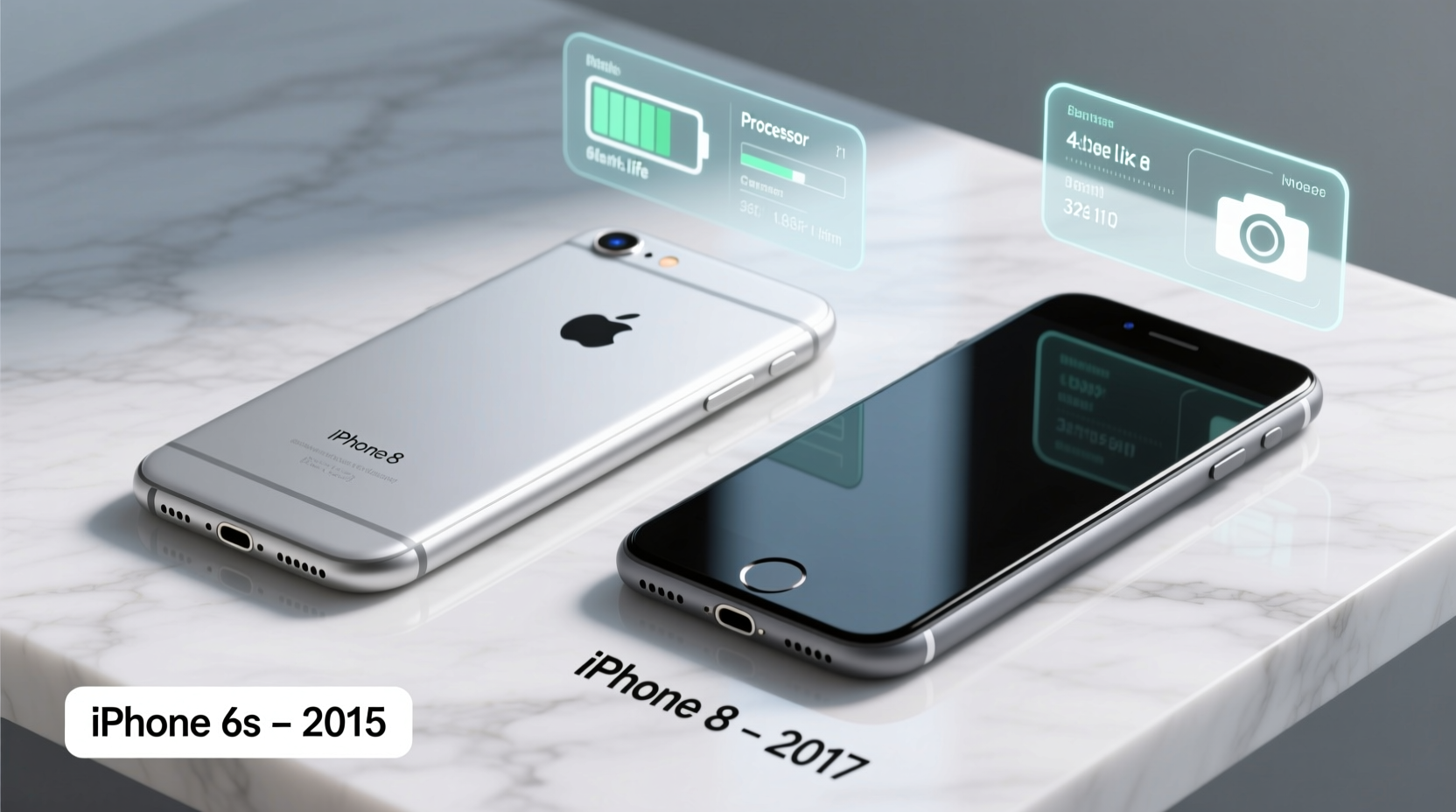
The most significant difference between the iPhone 6s and iPhone 8 lies under the hood. Both devices feature Apple’s A-series chips, but the gap in processing power is substantial.
The iPhone 6s runs on the A9 chip with 2GB of RAM, while the iPhone 8 is powered by the A11 Bionic chip with 3GB of RAM. The A11 Bionic was Apple’s first chip with a neural engine, enabling faster machine learning tasks and improved efficiency across apps and multitasking.
In real-world usage, this translates to smoother animations, quicker app launches, and better performance in graphics-intensive applications like mobile games or photo editing tools. Users upgrading from the 6s often report that the iPhone 8 feels “snappier” and less prone to freezing or crashing under load.
Camera Quality: Sharper Photos, Better Low-Light Performance
While both phones have 12MP rear cameras, the iPhone 8 captures noticeably better images thanks to hardware and software enhancements. The sensor is larger and more advanced, allowing for improved dynamic range and reduced noise, especially in low-light conditions.
The iPhone 8 also supports Portrait Mode via software algorithms (though only for certain subjects), whereas the 6s lacks this capability entirely. Front-facing video quality improves too — the iPhone 8 records 1080p HD video at 60fps compared to the 6s’s 720p at 30fps.
| Feature | iPhone 6s | iPhone 8 |
|---|---|---|
| Rear Camera | 12MP, f/2.2 aperture | 12MP, f/1.8 aperture |
| Front Camera Video | 720p at 30fps | 1080p at 60fps |
| Portrait Mode | No | Limited (via software) |
| Optical Image Stabilization | No | Yes |
The addition of optical image stabilization (OIS) on the iPhone 8 makes a tangible difference in photo clarity when shooting handheld or in motion. Videos are also steadier and more professional-looking without third-party stabilization tools.
“Even though both phones have similar megapixel counts, the iPhone 8 delivers a generation-ahead photography experience due to sensor upgrades and smarter processing.” — David Lin, Mobile Photography Analyst
Battery Life and Charging: Small Gains, Big Convenience
Battery degradation is common in aging iPhones, and if you’re holding onto a six-year-old 6s, chances are its battery health has declined significantly. Even when new, the iPhone 6s offered modest endurance — typically lasting one full day with light use.
The iPhone 8 provides slightly better battery life — about 2 hours more talk time and improved standby efficiency. But the real advantage comes with support for fast charging and wireless charging, features absent on the 6s.
You can charge the iPhone 8 up to 50% in around 30 minutes with a compatible charger (sold separately), which adds convenience for busy users. Wireless charging also simplifies daily routines, especially if you use Qi-compatible pads at home or in the car.
Checklist: Should You Upgrade Based on Battery Needs?
- Are you charging your iPhone 6s multiple times per day?
- Has Apple flagged your battery as \"Service Recommended\"?
- Do you value quick top-ups during short breaks?
- Would wireless charging fit into your lifestyle?
If you answered yes to two or more, the iPhone 8’s battery advantages may justify the switch.
Durability and Design: Glass Back, Same Size
Externally, the iPhone 6s and 8 look nearly identical — same 4.7-inch display size, aluminum frame (6s) versus glass back (8), and Home button with Touch ID. However, the design change on the 8 isn’t just aesthetic.
The glass back enables wireless charging and gives the phone a more premium feel. It's also more resistant to scratches than the 6s’s aluminum, though it’s more prone to cracking if dropped. Both models have IP67 water resistance, but only the iPhone 8 officially carries that rating — the 6s lacks formal certification despite some anecdotal splash resistance.
For users attached to the compact form factor, the similarity in size is a plus. You get modern internals in a familiar, pocket-friendly shape — something many newer iPhones abandoned in favor of larger screens.
Software Support and Longevity in 2024+
As of 2024, neither the iPhone 6s nor the iPhone 8 receives major iOS updates. Apple ended iOS feature updates for the 6s with iOS 15, and the 8 was supported through iOS 17. Security patches may continue for a short period, but full compatibility with future apps is declining.
Many developers now optimize apps for devices with at least A12 chips or later. This means even the iPhone 8 may struggle with upcoming AR experiences, AI-powered tools, or high-end games within the next 1–2 years.
So while upgrading from 6s to 8 buys you extra longevity, it’s not a long-term solution. Think of it as a bridge — perhaps extending usable life by 12 to 18 months, rather than a permanent fix.
Mini Case Study: Maria’s Upgrade Decision
Maria had used her iPhone 6s since 2016. By 2023, she noticed her Maps app took 10 seconds to load, her WhatsApp frequently crashed, and her battery died by noon. She considered jumping to an iPhone 14 but found it too large and expensive.
She opted for a refurbished iPhone 8 at half the price. The improvement was immediate: apps opened faster, photos looked sharper, and she could finally use wireless charging at her office desk. While she knows another upgrade looms within two years, she gained peace of mind and reliable performance for less than $200.
Frequently Asked Questions
Can the iPhone 8 still run modern apps smoothly in 2024?
Most everyday apps — messaging, email, social media, banking — run well on the iPhone 8. However, resource-heavy apps like advanced photo editors, 3D games, or emerging AI tools may lag or not be supported. For light to moderate use, it remains functional.
Is the iPhone 6s too old to use safely in 2024?
The iPhone 6s no longer receives security updates from Apple, making it potentially vulnerable to unpatched exploits. Using it for sensitive tasks like online banking or storing personal data increases risk. Consider retiring it from primary use or limiting access to critical accounts.
Should I skip the iPhone 8 and save for a newer model?
If budget allows, yes. Models like the iPhone SE (3rd gen) or iPhone 11 offer better performance, longer software support, and modern features like Face ID or improved cameras — often at competitive prices. The iPhone 8 is best suited for those needing an affordable, incremental upgrade.
Final Verdict: When the Upgrade Makes Sense
Upgrading from iPhone 6s to iPhone 8 in the current year isn’t about chasing cutting-edge tech — it’s about reclaiming reliability. If your 6s is slowing down, overheating, or failing to keep up with essential apps, the 8 delivers a tangible boost in speed, camera quality, and charging convenience.
However, recognize its limits. You’re investing in about 1–2 more years of practical use, not a future-proof device. For under $200 (refurbished), it can serve as a cost-effective stopgap. But if you plan to keep your phone for three years or more, consider stretching your budget toward a newer model with longer iOS support.
The iPhone 8 honors the legacy of the 6s — same compact size, upgraded intelligence — making it one of the most logical small-step upgrades Apple has ever offered.




 浙公网安备
33010002000092号
浙公网安备
33010002000092号 浙B2-20120091-4
Comments
No comments yet. Why don't you start the discussion?