
For many long-time iPhone 7 Plus users, the decision to upgrade to a newer model isn’t just about features—it’s also about comfort. The iPhone 7 Plus, released in 2016, remains a favorite for its compact form factor, solid build, and physical Home button. But as software evolves and hardware advances, even loyal users begin to wonder: is it time to move on? The iPhone 11, launched in 2019, offers significant upgrades—but comes with a noticeably different size and design. So, is making the jump truly worth it?
This article breaks down the real-world differences between these two models, focusing not only on specs but on daily usability, user experience, and whether the benefits of the iPhone 11 outweigh the trade-offs in size and handling.
Performance Leap: From A10 Fusion to A13 Bionic
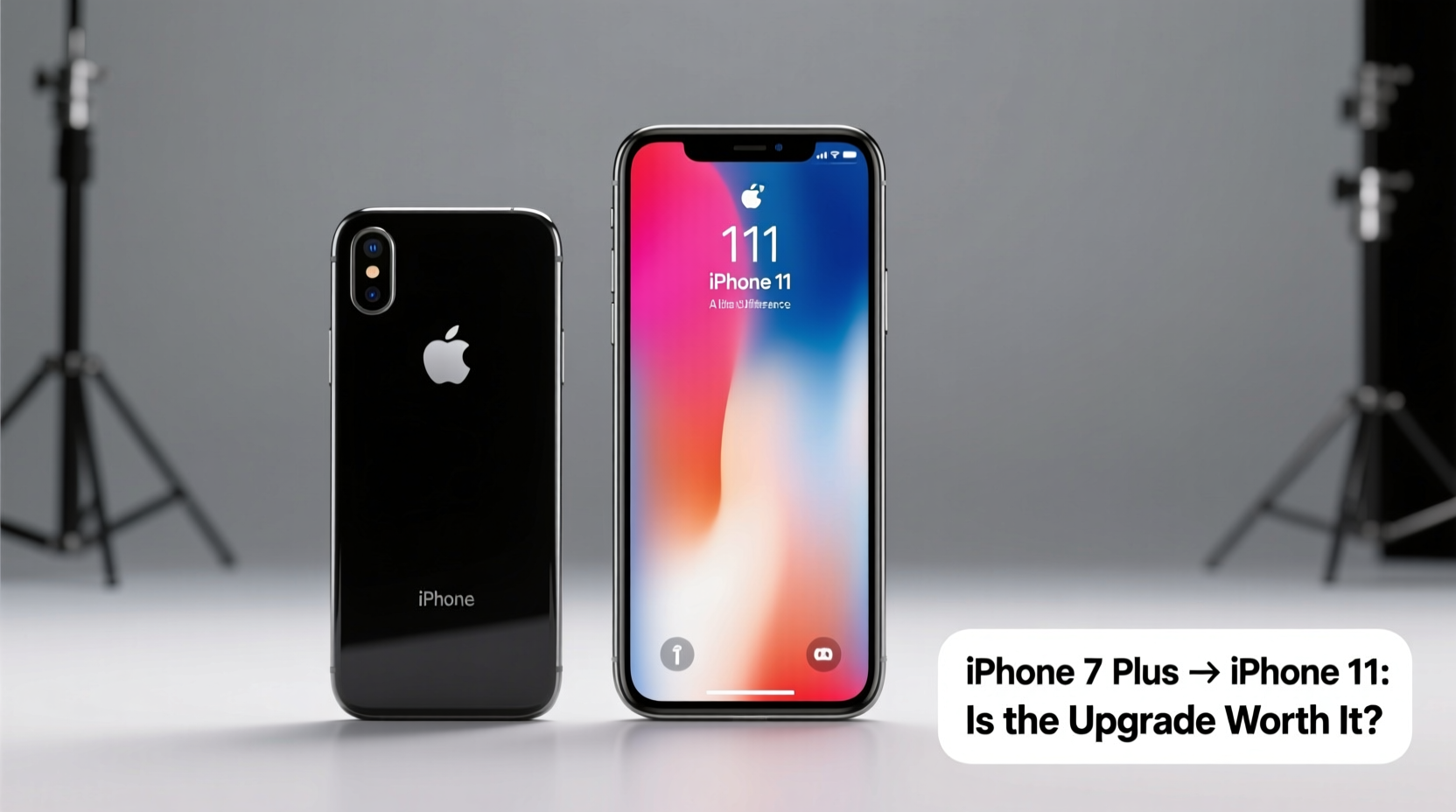
The most dramatic improvement when moving from the iPhone 7 Plus to the iPhone 11 lies under the hood. The 7 Plus runs on Apple’s A10 Fusion chip, a capable processor for its time but now over seven years old. In contrast, the iPhone 11 features the A13 Bionic chip—one of Apple’s most efficient and powerful processors, still competitive in 2024 for everyday tasks and moderate gaming.
Benchmarks tell the story clearly: the A13 delivers roughly **twice the CPU performance** and **three times the GPU power** of the A10. This means faster app launches, smoother multitasking, and better responsiveness in photo and video editing apps. For users who rely on productivity tools, augmented reality apps, or mobile gaming, this leap is transformative.
Additionally, iOS updates are increasingly optimized for newer hardware. While the iPhone 7 Plus still receives security patches, future major iOS versions may drop support entirely. Upgrading ensures you’ll continue receiving feature updates and security improvements for several more years.
Camera Comparison: Night Mode, Dual Lenses, and Real-World Use
The camera system is where the iPhone 11 pulls far ahead. The iPhone 7 Plus was among the first iPhones to offer a dual-lens setup (wide and telephoto), enabling 2x optical zoom and Portrait mode. However, its low-light performance was limited, and video maxed out at 1080p at 60fps.
The iPhone 11 introduces a modern dual-camera system: a 12MP wide lens and a 12MP ultra-wide lens. This allows for greater creative flexibility—capturing landscapes, architecture, or group shots without stepping back. More importantly, the iPhone 11 brings **Night mode**, which dramatically improves low-light photography by automatically extending exposure time when lighting is poor.
| Feature | iPhone 7 Plus | iPhone 11 |
|---|---|---|
| Rear Cameras | Dual 12MP (Wide + Telephoto) | Dual 12MP (Wide + Ultra-Wide) |
| Front Camera | 7MP | 12MP TrueDepth |
| Video Recording | 1080p at 60fps | 4K at 60fps |
| Night Mode | No | Yes (rear and front) |
| Slofies | No | Yes (120fps slo-mo selfie video) |
In practical terms, iPhone 11 users benefit from sharper photos in dim environments, crisper video quality, and more versatile framing. For anyone who shares photos regularly or values high-quality visuals, this upgrade alone can justify the switch.
“Even three years after release, the iPhone 11’s camera system holds up remarkably well against mid-tier Android phones today.” — Mark Tran, Mobile Photography Analyst at TechLens Weekly
Size and Ergonomics: A Noticeable Shift
While performance and camera gains are clear, the physical change is where many users hesitate. The iPhone 7 Plus measures 158.2 x 77.9 x 7.3 mm and weighs 188 grams. The iPhone 11 is slightly shorter at 150.9 mm but wider at 75.7 mm and thicker at 8.3 mm, weighing 194 grams. Though the weight difference seems minor, the shift in design impacts one-handed use.
The iPhone 7 Plus, despite its size, has curved edges and a tapered aluminum body that fits comfortably in hand. It also includes a physical Home button with Touch ID, which many users still prefer for its tactile feedback and ease of unlocking while wearing gloves or using the phone one-handed.
The iPhone 11, in contrast, uses Face ID and a glass-and-aluminum sandwich design with flat edges. Its screen stretches edge-to-edge with no bezels below the display, reducing vertical space but increasing lateral width. Users with smaller hands often report needing to shift their grip or use both hands for typing and navigation.
Real-World Example: Sarah’s Upgrade Dilemma
Sarah, a freelance writer and long-time iPhone 7 Plus owner, resisted upgrading for years. She loved her phone’s durability, one-handed usability, and headphone jack (removed starting with iPhone 7). Her main pain point was slow app loading and degraded battery life—she needed a top-up by mid-afternoon.
After testing an iPhone 11 at a friend’s house, she was impressed by how quickly apps opened and how bright the OLED-like LCD display felt. However, during a week-long loaner trial, she struggled with accidental touches on the wider screen and missed the reassuring tap of Touch ID.
Ultimately, she upgraded—but paired the iPhone 11 with a snug-fitting case and enabled “Tap to Wake” and “Raise to Wake” to optimize Face ID. She also started using AirPods consistently, compensating for the lack of a headphone jack. For her, the improved battery life (up to 17 hours video playback vs. 13 on the 7 Plus) and seamless multitasking made the adjustment worthwhile.
Step-by-Step Guide: How to Decide If the Upgrade Is Right for You
Making a decision based on emotion or marketing alone can lead to buyer’s remorse. Follow this practical timeline to evaluate your needs:
- Assess current performance: Does your iPhone 7 Plus lag, crash apps, or take long to boot? If yes, hardware limitations are likely affecting your experience.
- Check battery health: Go to Settings > Battery > Battery Health. If maximum capacity is below 80%, you’re losing significant runtime.
- Test the iPhone 11 in person: Visit an Apple Store or authorized reseller. Hold it, open apps, simulate texting, and see how it feels.
- Evaluate your priorities: Rank what matters most—camera quality, speed, battery, one-handed use, Face ID vs. Touch ID.
- Try a temporary swap: Borrow an iPhone 11 for 48 hours. Use it as your daily driver. Note frustrations and delights.
- Make your decision: If the pros clearly outweigh the cons—and you can afford it—upgrade confidently.
Frequently Asked Questions
Can I use my iPhone 7 Plus accessories with the iPhone 11?
Most accessories are not interchangeable. The iPhone 11 is slightly smaller in height but wider, so cases won’t fit. Lightning cables, chargers, and AirPods are compatible. However, the iPhone 11 lacks a headphone jack, so you’ll need adapters or wireless headphones.
Is the battery life really better on the iPhone 11?
Yes. Apple rates the iPhone 11 for up to 17 hours of video playback compared to 13 hours on the iPhone 7 Plus. Real-world usage shows around 6–7 hours of screen-on time versus 4–5 on the older model, depending on settings and apps used.
Will the iPhone 11 feel too big if I’m used to the 7 Plus?
It depends on your hand size and usage habits. Many users find the iPhone 11 easier to manage due to its shorter height, despite the wider frame. Using Reachability (swipe down from the top of the screen) helps bring content within thumb reach.
Conclusion: Weighing Value Against Comfort
Upgrading from the iPhone 7 Plus to the iPhone 11 represents a generational leap in technology. You gain a faster processor, superior cameras, longer battery life, and years of future software support. These benefits are tangible and improve nearly every aspect of daily smartphone use.
However, the shift in size, the loss of the Home button, and reliance on Face ID represent real ergonomic changes. If one-handed operation is essential or you dislike facial recognition, the transition may feel jarring.
The answer ultimately depends on your priorities. If performance, photo quality, and longevity matter most, the iPhone 11 is a worthy upgrade—even with its larger footprint. But if comfort, familiarity, and compact handling are non-negotiable, consider the iPhone SE (3rd gen) as a middle ground: modern internals in a 7 Plus–like form.




 浙公网安备
33010002000092号
浙公网安备
33010002000092号 浙B2-20120091-4
Comments
No comments yet. Why don't you start the discussion?