
Moving from the iPhone 7 Plus to the iPhone 11 is more than a two-year leap—it's a generational shift in Apple’s smartphone strategy. For users clinging to their 7 Plus models, the decision to upgrade isn’t just about new features; it’s about whether those improvements translate into meaningful daily benefits. With Apple’s marketing machine pushing innovation at every turn, it’s easy to confuse real value with manufactured hype. This article cuts through the noise with a grounded, practical assessment of what changed between these two devices and whether the upgrade delivers tangible returns.
Performance Leap: From A10 Fusion to A13 Bionic
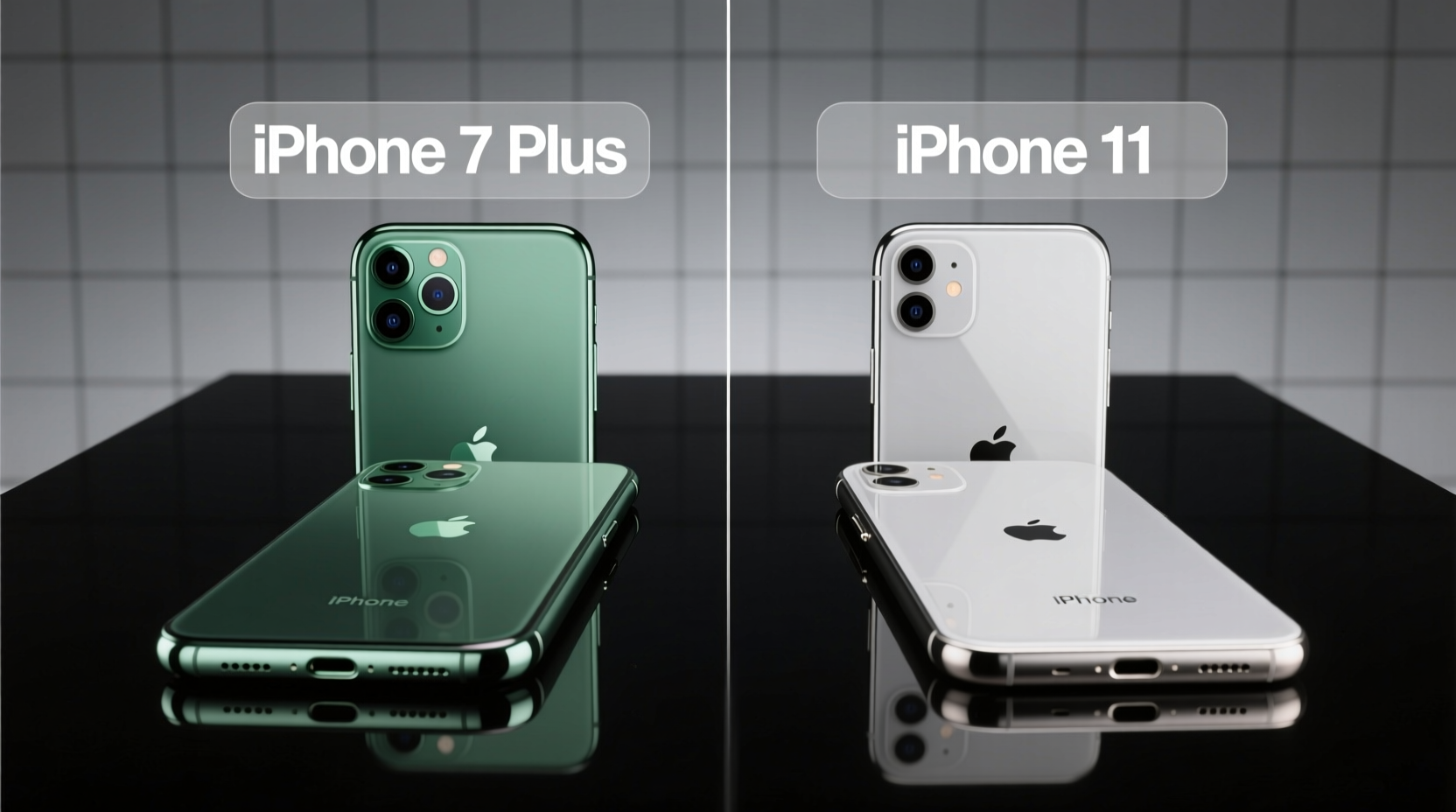
The jump from the A10 Fusion chip in the iPhone 7 Plus to the A13 Bionic in the iPhone 11 represents one of the most dramatic performance upgrades in recent iPhone history. The A13 wasn’t just faster—it was engineered for efficiency, longevity, and AI-driven tasks that older chips simply couldn’t handle.
In real-world use, this means apps launch nearly instantly, multitasking feels seamless, and games like Genshin Impact or Call of Duty Mobile run smoothly on high settings—something unthinkable on the 7 Plus even when it was new.
Benchmarks tell part of the story: the A13 delivered up to 2x the CPU and GPU performance of the A10. But beyond numbers, the experience is what matters. The iPhone 11 handles iOS updates more reliably and is expected to support future software versions longer—a critical factor for users who keep phones for three years or more.
Camera Evolution: Night Mode and Dual-Lens Flexibility
The camera system is where the iPhone 11 shines brightest compared to the 7 Plus. While both devices feature dual rear cameras, the capabilities are worlds apart.
The iPhone 7 Plus introduced portrait mode using its telephoto lens, but relied heavily on software simulation. The iPhone 11 improved this dramatically with a wider main sensor, better low-light processing, and—most notably—Night Mode. This feature automatically activates in dim environments, capturing brighter, clearer photos without a flash.
For example, taking a photo indoors during dinner or capturing city lights at night produces usable images on the iPhone 11, whereas the 7 Plus often delivers dark, noisy results.
“Night Mode didn’t just improve low-light photography—it redefined what users expect from smartphone cameras after dark.” — David Lin, Mobile Imaging Analyst at TechPulse
The ultra-wide lens on the iPhone 11 (absent on the 7 Plus) also opens creative possibilities. Landscapes, architecture, and group shots benefit from a 120-degree field of view, giving photographers more flexibility without moving backward.
Display and Design: Subtle but Meaningful Changes
Apple retained the 5.5-inch display size from the 7 Plus, but the iPhone 11 uses a more modern Liquid Retina LCD with True Tone and better color accuracy. While not OLED, the screen feels brighter, more responsive, and noticeably crisper.
The design shift is modest but functional. The iPhone 11 ditches the home button for Face ID, enabling edge-to-edge display usage and gesture navigation. Some longtime 7 Plus users initially resist this change, but most adapt within days. Face ID proves faster and more secure in everyday unlocking, especially when wearing masks isn’t required.
Durability also improves. The iPhone 11 features better water resistance (IP68 vs IP67), meaning it can survive submersion up to 2 meters for 30 minutes—double the depth of the 7 Plus.
Real-World Battery Life: A Mixed Upgrade
Battery life is one area where expectations don’t always match reality. Apple claimed the iPhone 11 offered “one day” of battery under normal use, while the 7 Plus was already known for solid endurance.
In practice, the iPhone 11 provides roughly 1–2 hours more screen-on time, depending on usage. Heavy users streaming video or playing games will still need a charge by evening, but casual users may make it through a full day without plugging in.
However, the iPhone 11 supports faster charging (up to 50% in 30 minutes with an 18W adapter), though Apple doesn’t include the charger in the box. Wireless charging is another new addition, absent on the 7 Plus.
Comparison Table: iPhone 7 Plus vs iPhone 11
| Feature | iPhone 7 Plus | iPhone 11 |
|---|---|---|
| Release Year | 2016 | 2019 |
| Chipset | A10 Fusion | A13 Bionic |
| Rear Cameras | Dual 12MP (Wide + Telephoto) | Dual 12MP (Wide + Ultra-Wide) |
| Night Mode | No | Yes |
| Front Camera | 7MP | 12MP with 4K video |
| Battery Life (Video Playback) | Up to 14 hours | Up to 17 hours |
| Water Resistance | IP67 (1m for 30 mins) | IP68 (2m for 30 mins) |
| Charging | Limited fast charging, no wireless | Faster charging, Qi wireless supported |
| Face ID / Touch ID | Touch ID | Face ID |
Mini Case Study: Sarah’s Upgrade Experience
Sarah had used her iPhone 7 Plus since 2017. By late 2019, she noticed apps taking longer to load, battery draining by noon, and photos looking grainy in restaurants. She hesitated to upgrade, fearing it was just cosmetic changes.
After switching to the iPhone 11, her experience transformed. Apps opened instantly, her social media videos looked sharper, and she started using Night Mode to capture moments she previously avoided. Most surprisingly, she found herself using the phone more creatively—filming short clips for Instagram, scanning documents with the improved camera, and relying on Face ID in daily routines.
“It wasn’t just a new phone,” she said. “It felt like getting access to tools I didn’t know I needed.”
Is the Upgrade Worth It? A Practical Checklist
Before making the move, consider these factors. Check off what applies to your situation:
- ✅ My current phone struggles with app performance or frequent crashes
- ✅ I want better photo quality, especially in low light
- ✅ I use my phone for video calls or content creation
- ✅ Battery life has become unreliable throughout the day
- ✅ I value newer security features like Face ID
- ✅ I plan to keep my next phone for 3+ years
If four or more apply, the iPhone 11 upgrade offers measurable improvements. If your 7 Plus still performs well and you only make calls and texts, the upgrade may lean more toward convenience than necessity.
FAQ: Common Questions About the Upgrade
Will my accessories work with the iPhone 11?
Most cases and cables won’t fit due to the redesigned camera layout and slightly larger body. Lightning cables are compatible, but you’ll need new cases and potentially a new car mount.
Can the iPhone 11 still get iOS updates?
As of 2024, the iPhone 11 supports iOS 17 and is expected to receive iOS 18. It remains a supported device, unlike the iPhone 7 Plus, which stopped at iOS 15.
Is the price difference justified?
If bought at launch, the $200–$300 premium over the 7 Plus resale value was steep. However, today the iPhone 11 can be found refurbished for under $300, making it a cost-effective long-term investment.
Conclusion: Value Over Hype
Upgrading from the iPhone 7 Plus to the iPhone 11 isn’t about chasing trends—it’s about gaining access to technology that enhances usability, creativity, and reliability. The A13 chip, Night Mode, improved battery, and modern iOS support collectively deliver a noticeably better experience.
While some changes are subtle, their cumulative effect transforms how you interact with your phone daily. For users holding onto aging devices, this upgrade proves that not all iPhone jumps are equal—and sometimes, the leap is absolutely worth it.




 浙公网安备
33010002000092号
浙公网安备
33010002000092号 浙B2-20120091-4
Comments
No comments yet. Why don't you start the discussion?