
For millions of iPhone 7 Plus owners still clinging to their reliable devices, the question isn’t just about desire—it’s about necessity. Released in 2016, the iPhone 7 Plus was a landmark device with its dual-camera system and robust build. Fast forward to today, and Apple’s ecosystem has evolved dramatically. The iPhone 12 mini, released in 2020, represents a different era—one defined by 5G, OLED displays, and advanced computational photography. So, is upgrading from the 7 Plus to the 12 mini still worthwhile in 2024? The answer depends on your usage, expectations, and how much modern iOS demands from aging hardware.
Performance and Software Experience
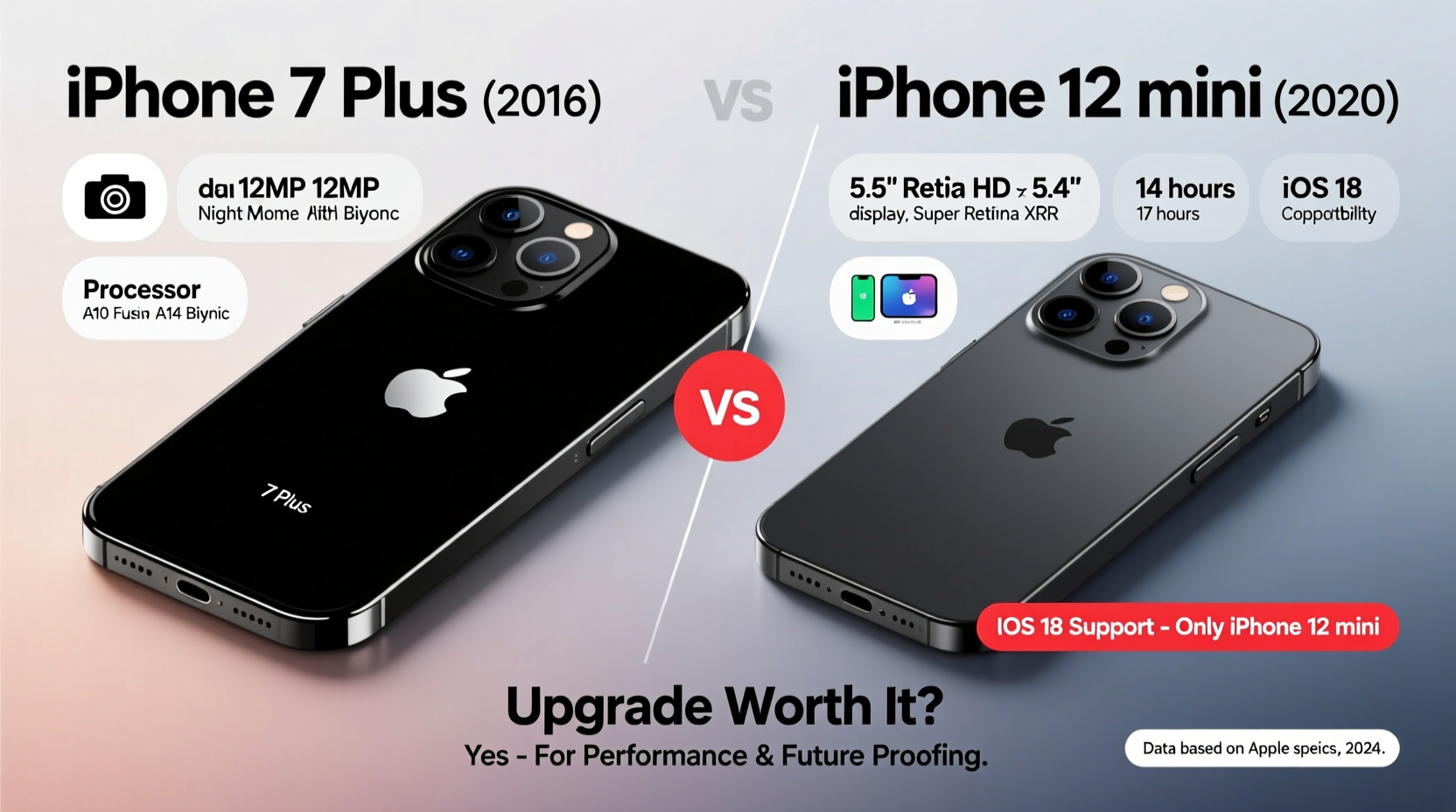
The most immediate difference between these two phones lies in processing power and long-term software support. The iPhone 7 Plus runs on the A10 Fusion chip—a solid performer in its time—but struggles with modern apps, multitasking, and even basic animations in iOS 17. Many users report delays when switching between apps, sluggish Safari performance, and frequent app reloads due to memory constraints.
In contrast, the iPhone 12 mini features the A14 Bionic chip, one of Apple’s first 5-nanometer processors. It delivers up to four times the CPU and GPU performance of the A10. This leap translates into smoother scrolling, faster app launches, and seamless handling of augmented reality, video editing, and high-end gaming.
Equally important is software longevity. The iPhone 7 Plus is expected to stop receiving major iOS updates after iOS 17, meaning no iOS 18 or beyond. The iPhone 12 mini, however, will likely receive updates through at least 2027. That’s an additional three to four years of security patches, feature improvements, and compatibility with future apps.
Display and Design Evolution
The physical design philosophies of these phones couldn't be more different. The iPhone 7 Plus features a 5.5-inch LCD display with thick bezels and a home button. While durable and comfortable for one-handed use by 2016 standards, it feels outdated next to the 12 mini’s 5.4-inch Super Retina XDR OLED display.
OLED brings deeper blacks, higher contrast ratios, better brightness, and improved outdoor visibility. Even though the 12 mini’s screen is smaller, the edge-to-edge design and lack of a home button make it feel more immersive and modern. The shift to Face ID also streamlines unlocking—once set up correctly—with fewer accidental touches than Touch ID.
| Feature | iPhone 7 Plus | iPhone 12 mini |
|---|---|---|
| Display Type | Retina HD LCD | Super Retina XDR OLED |
| Screen Size | 5.5 inches | 5.4 inches |
| Resolution | 1920 x 1080 | 2340 x 1080 |
| Biometric Security | Touch ID (home button) | Face ID |
| Water Resistance | IP67 (up to 1m for 30 min) | IP68 (up to 6m for 30 min) |
The 12 mini’s compact size is a standout. Despite having less physical screen area than the 7 Plus, its taller aspect ratio allows for more content visibility in messaging, web browsing, and social media feeds. For users who prefer small phones, the 12 mini is currently the only true \"mini\" option Apple has offered—and a rare gem in a market dominated by oversized slabs.
Camera Capabilities: Night Mode, Portrait, and Beyond
The camera gap between these models is perhaps the most dramatic. Both have dual rear cameras, but the technology behind them is worlds apart. The 7 Plus introduced portrait mode using software blending between its wide and telephoto lenses. The 12 mini enhances this with a larger sensor, night mode on all lenses, Deep Fusion image processing, and Smart HDR 3.
Night mode alone makes a tangible difference. Where the 7 Plus produces grainy, underexposed low-light photos, the 12 mini brightens scenes intelligently while preserving detail and color accuracy. Portrait mode now includes edge refinement and lighting controls that were unavailable in 2016.
“Computational photography has advanced so much since 2016 that even mid-tier phones now outperform flagships of that era.” — David Kim, Mobile Imaging Analyst at TechLens
Front-facing cameras have also improved significantly. The 7 Plus uses a 7MP FaceTime camera without portrait mode. The 12 mini’s 12MP TrueDepth camera supports Night mode, 4K video recording, and深度融合 (Deep Fusion), making selfies and video calls noticeably sharper and more natural-looking.
Battery Life and Charging Realities
One area where the 7 Plus holds an advantage is battery capacity. With a 2900mAh battery, it typically lasts a full day with moderate use. The 12 mini, despite newer efficiency gains from the A14 chip, has a smaller 2227mAh battery and often falls short of all-day endurance, especially with 5G enabled.
However, the 12 mini introduces modern charging options: MagSafe, Qi wireless charging, and faster wired charging (up to 50% in 30 minutes with a 20W adapter). The 7 Plus is limited to slow 5W charging and basic Qi support, with no magnetic alignment.
Realistically, the 12 mini suits users who charge multiple times a day or rely on wireless convenience. The 7 Plus may last longer per charge, but its battery health degrades over time, and replacement costs add up. The 12 mini’s optimized power management and software integration provide a more consistent experience over months of use.
Mini Case Study: Sarah’s Upgrade Journey
Sarah, a freelance photographer and longtime iPhone 7 Plus user, held onto her phone for nearly six years. By late 2023, she noticed her camera struggled in dim lighting, apps crashed during client Zoom calls, and Instagram Stories failed to upload reliably. She hesitated to upgrade, fearing the 12 mini would be too small or fragile.
After testing one in-store, she bought the 12 mini in blue. Within a week, she was capturing usable night shots without a tripod, editing RAW photos smoothly in Lightroom, and enjoying Face ID with her mask on (via Apple Watch pairing). Though she missed the slightly longer battery life, she gained confidence in her device’s responsiveness and future-proofing. “It felt like switching from a flip phone to a smartphone all over again,” she said.
Step-by-Step Guide to Deciding Your Upgrade
- Evaluate your current pain points: Does your 7 Plus freeze, crash, or take more than 10 seconds to boot apps?
- Check iOS version: If you’re on iOS 17 and noticing instability, further updates may worsen performance.
- Assess camera needs: Do you regularly take photos in low light or share content online?
- Consider size preference: Try holding a 12 mini in person—its compactness is a pro for some, a con for others.
- Calculate long-term value: The 12 mini starts around $400 used in 2024. Weigh that against repair costs for your aging 7 Plus.
- Test connectivity: If you want 5G, better Bluetooth (5.0), or NFC for transit cards, the 12 mini delivers.
- Back up and transfer: Use iCloud or Quick Start to move data seamlessly once decided.
Frequently Asked Questions
Will the iPhone 12 mini get iOS 18?
While not officially confirmed, historical patterns suggest yes. Apple typically supports iPhones for five to six years post-release. The 12 mini launched in 2020, making it likely eligible for iOS 18 in fall 2024.
Is the iPhone 7 Plus obsolete in 2024?
Not entirely. It can still handle calls, texts, emails, and basic apps. However, many newer apps either don’t support it or run poorly. Security risks increase as it nears end-of-life for updates.
Can I use my old accessories with the 12 mini?
Lightning cables and headphones work, but cases don’t fit due to different dimensions and camera layout. Wireless chargers compatible with MagSafe offer enhanced functionality.
Final Verdict: Yes, the Upgrade Is Worth It
Despite the iPhone 7 Plus’s legendary durability, the technological chasm between it and the 12 mini is too wide to ignore in 2024. You’re not just getting a new phone—you’re stepping into a modern mobile experience with faster performance, vastly superior photography, better security, and several more years of software support.
The 12 mini may not suit everyone—its battery life is modest, and the small size isn’t for large-handed users—but it remains one of the most capable compact smartphones ever made. For anyone still relying on a 2016 device, upgrading isn’t just beneficial; it’s necessary to stay connected, productive, and secure in today’s digital landscape.




 浙公网安备
33010002000092号
浙公网安备
33010002000092号 浙B2-20120091-4
Comments
No comments yet. Why don't you start the discussion?