
In 2024, many users still rely on older iPhones, especially those who value durability, simplicity, or budget-friendly options. Among them, a common question lingers: if you're still using an iPhone 6 Plus, is upgrading to the iPhone 7 Plus actually worthwhile—nearly a decade after its release? While both devices are now considered legacy models by Apple, the differences between them can significantly impact daily usability, app compatibility, and long-term reliability. This article dives deep into real-world performance, hardware improvements, software support, and user experience to help you decide whether the jump from the 6 Plus to the 7 Plus makes sense today.
Performance and Hardware: A Noticeable Leap
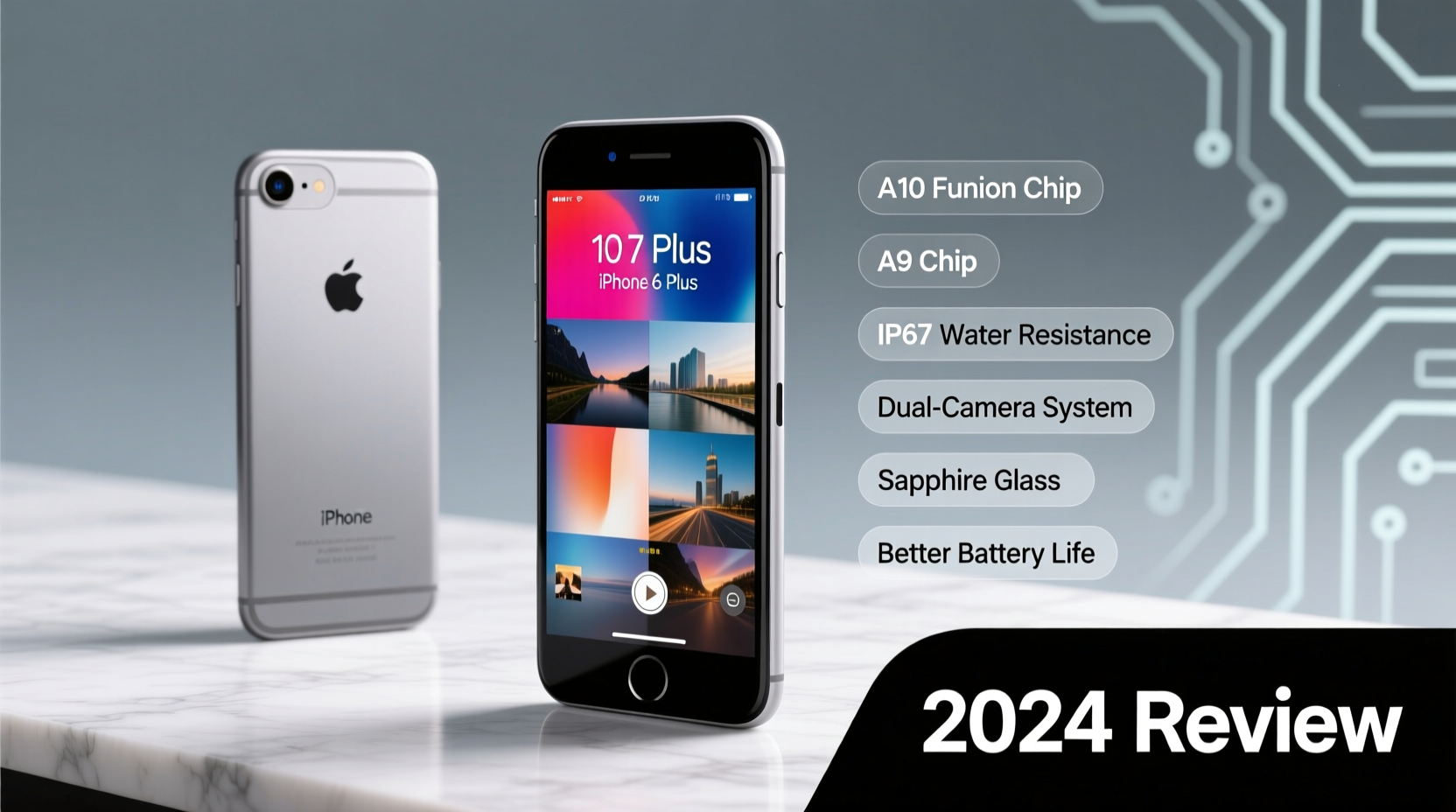
The most significant difference between the iPhone 6 Plus and 7 Plus lies under the hood. The iPhone 6 Plus runs on the Apple A8 chip with 1GB of RAM, while the 7 Plus features the more powerful A10 Fusion chip and 3GB of RAM. This might sound like a technical detail, but it translates into tangible improvements in everyday use.
On the 6 Plus, multitasking is sluggish. Switching between apps often results in reloads, and newer versions of iOS feel increasingly strained. In contrast, the 7 Plus handles iOS 15 (its final supported version) with noticeably better fluidity. Apps launch faster, background processes remain active longer, and overall responsiveness feels closer to modern standards—even in 2024.
Camera Improvements: Dual Lenses and Better Low Light
The camera upgrade from the 6 Plus to the 7 Plus is one of the most compelling reasons to make the switch. The iPhone 6 Plus has a single 8MP rear camera without optical image stabilization (OIS), while the 7 Plus introduces a dual-camera system: a 12MP wide lens and a 12MP telephoto lens. This enables 2x optical zoom and the introduction of Portrait Mode—a feature absent on the 6 Plus.
Beyond zoom capabilities, the 7 Plus also improves low-light performance thanks to larger pixels, better noise reduction, and OIS. Photos taken indoors or at night show clearer details and less blur. Video recording jumps from 1080p on the 6 Plus to 4K on the 7 Plus, offering four times the resolution for future-proof media capture.
“Even by today’s standards, the iPhone 7 Plus camera holds up surprisingly well for casual photography.” — David Lin, Mobile Photographer & Tech Reviewer
Design and Build: Subtle But Meaningful Changes
At first glance, the iPhone 6 Plus and 7 Plus look nearly identical. Both share the same 5.5-inch display size, aluminum unibody design, and overall dimensions. However, subtle refinements in the 7 Plus improve durability and usability.
- Water resistance: The 7 Plus has an IP67 rating, meaning it can survive submersion in up to 1 meter of water for 30 minutes. The 6 Plus has no official water resistance.
- Home button: The 7 Plus replaces the mechanical home button with a solid-state, pressure-sensitive version. It doesn’t move but provides haptic feedback, making it more reliable over time.
- Antenna lines: The 7 Plus features a cleaner antenna design with fewer visible bands, improving aesthetics.
These changes may seem minor, but they contribute to a more modern, durable feel—especially important for users who keep phones for years.
Detailed Comparison: iPhone 7 Plus vs 6 Plus
| Feature | iPhone 6 Plus | iPhone 7 Plus |
|---|---|---|
| Release Year | 2014 | 2016 |
| Chipset | A8 with 1GB RAM | A10 Fusion with 3GB RAM |
| Display | 5.5\" LCD, 1920x1080 | 5.5\" LCD, 1920x1080 (60% brighter) |
| Rear Camera | 8MP, no OIS, 1080p video | 12MP + 12MP dual cameras, OIS, 4K video |
| Front Camera | 1.2MP | 7MP |
| Water Resistance | None | IP67 (1m for 30 min) |
| Headphone Jack | Yes | Removed (first iPhone without it) |
| Last Supported iOS | iOS 12 | iOS 15 |
| Battery Life (Video Playback) | Up to 14 hours | Up to 14 hours (slightly improved efficiency) |
Note that while battery life specs are similar, real-world usage shows the 7 Plus lasts longer due to more efficient power management and software optimization.
Software Support and App Compatibility in 2024
This is where the decision becomes critical. As of 2024, neither device receives iOS updates. The iPhone 6 Plus was limited to iOS 12, while the 7 Plus supports up to iOS 15. This three-generation gap in software support has serious implications:
- Security: No new security patches mean increased vulnerability to exploits.
- App compatibility: Many modern apps require iOS 13 or higher. Banking apps, messaging platforms, and even some web browsers may no longer install or function properly on iOS 12.
- Feature access: Missing out on features like dark mode, improved Siri, enhanced privacy controls, and iCloud Keychain syncing limits usability.
If you rely on digital banking, food delivery, or ride-sharing apps, the 6 Plus may already be struggling. The 7 Plus, running iOS 15, remains functional for basic tasks but is approaching obsolescence.
Real-World Example: Sarah’s Upgrade Dilemma
Sarah, a freelance writer in her late 40s, had been using her iPhone 6 Plus since 2015. She liked its simplicity and long battery life. By early 2023, however, she noticed her banking app stopped working after an update. Her email client began crashing, and Safari struggled with modern websites. After researching, she bought a used iPhone 7 Plus for $80. The change was immediate: her apps worked again, photos looked sharper, and the phone felt snappier. “It’s not a new phone,” she said, “but it feels like I’ve regained two years of usability.”
Sarah’s story reflects a growing trend: users clinging to older devices until core functionality breaks. For her, the 7 Plus wasn’t about luxury—it was about staying connected.
Upgrade Checklist: Is the 7 Plus Right for You?
Before making the move, consider this checklist:
- ✅ Are you currently using an iPhone 6 Plus or earlier?
- ✅ Do your essential apps no longer work or frequently crash?
- ✅ Is your phone slow when opening messages, emails, or browsers?
- ✅ Have you experienced issues with camera quality or low-light photos?
- ✅ Are you on a tight budget and unable to afford a newer iPhone?
If you answered yes to three or more, the iPhone 7 Plus could extend your smartphone lifespan by another 1–2 years—at minimal cost.
Frequently Asked Questions
Can the iPhone 7 Plus still get security updates?
No. Apple ended major iOS updates for the 7 Plus with iOS 15.5 in 2022, and no further security patches are expected. Use caution when downloading apps or visiting untrusted websites.
Is the lack of a headphone jack a dealbreaker?
For some, yes. The 7 Plus removed the 3.5mm jack, requiring Bluetooth headphones or a Lightning-to-3.5mm adapter. If you rely heavily on wired earbuds, this change may be inconvenient.
How long will the iPhone 7 Plus last in 2024?
With moderate use, expect 1–2 more years of basic functionality. Battery degradation is the biggest limiting factor. Consider replacing the battery ($49 at Apple or third-party shops) to maximize lifespan.
Final Verdict: Is the Upgrade Worth It?
In the context of 2024, the iPhone 7 Plus is not a “great” phone by modern standards. It lacks Face ID, 5G, OLED displays, and multi-day battery life. But when compared directly to the iPhone 6 Plus, it represents a meaningful step forward in performance, camera quality, and software longevity.
For users still clinging to a 6 Plus, the upgrade to a 7 Plus is absolutely worth it—if your goal is to stay functional, secure, and compatible with essential apps for another year or two. The improved processor, dual cameras, water resistance, and extra iOS versions provide tangible benefits that enhance daily usability.
However, this should be viewed as a stopgap solution. If your budget allows, consider moving to an iPhone 8 or later for true future-proofing. But for those on a strict budget, the 7 Plus remains the best affordable upgrade path from the 6 Plus in 2024.




 浙公网安备
33010002000092号
浙公网安备
33010002000092号 浙B2-20120091-4
Comments
No comments yet. Why don't you start the discussion?