
For millions of iPhone users still clinging to their iPhone 7 Plus, the question isn’t whether they *can* upgrade—it’s whether they *should*. The iPhone 8 Plus arrived as a direct successor, promising refinements without radical redesigns. But when your current phone still works well, spending hundreds on an incremental update feels risky. Is the jump from iPhone 7 Plus to 8 Plus truly meaningful, or does it deliver little more than a higher price tag?
This isn’t about chasing the latest tech for its own sake. It’s about making smart decisions with real money. Let’s break down every key difference—performance, camera, design, battery, and long-term usability—to determine if the upgrade delivers tangible benefits or simply inflates your monthly bill.
Design and Build: Subtle Changes, Big Implications
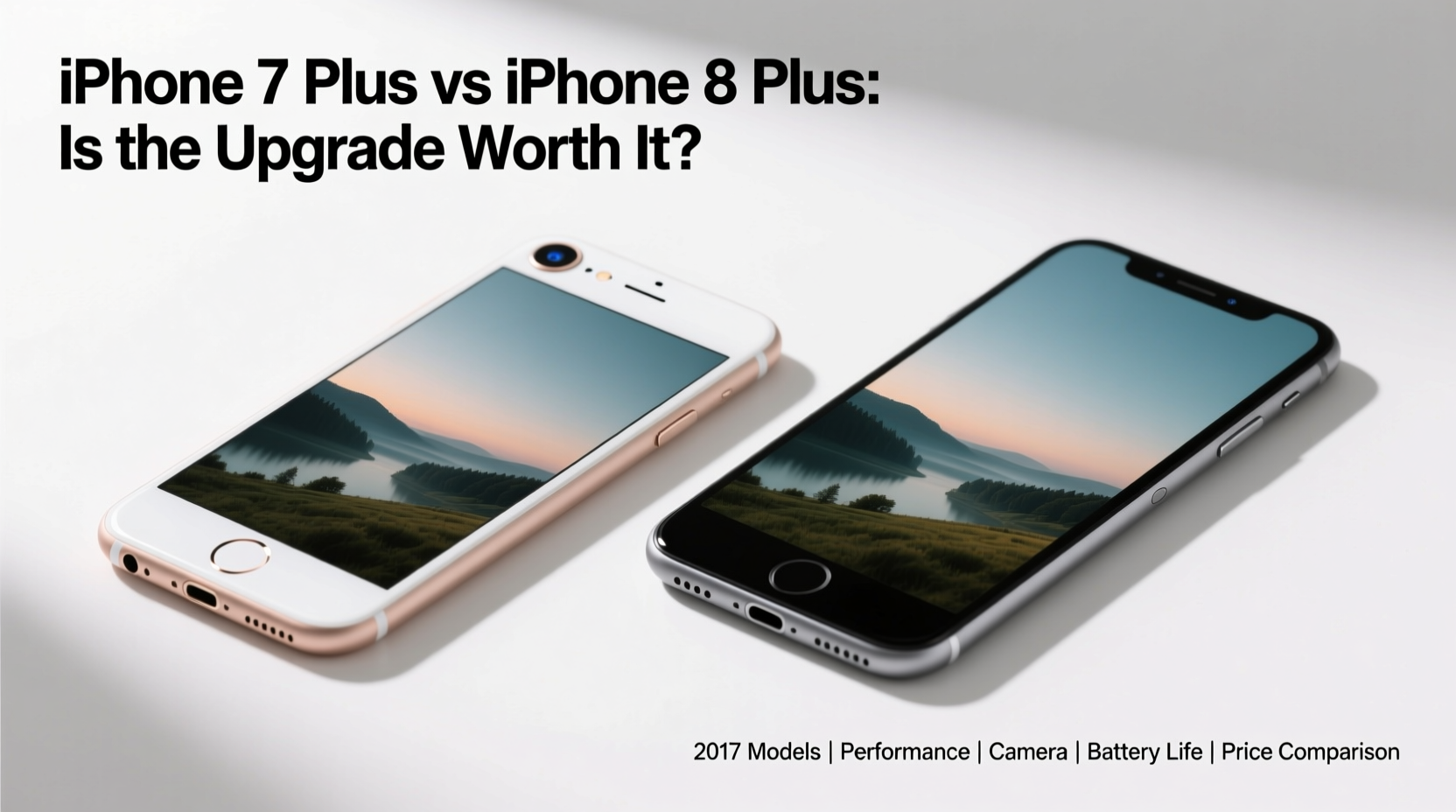
At first glance, the iPhone 7 Plus and 8 Plus look nearly identical. Both feature a 5.5-inch display, aluminum frame, and vertical dual-camera layout. However, Apple made one crucial change: material. The iPhone 8 Plus replaced the aluminum back of the 7 Plus with glass, enabling wireless charging—a feature absent in its predecessor.
This shift may seem minor, but it has ripple effects. The glass back makes the 8 Plus slightly heavier (200g vs 188g) and more prone to cracking if dropped. On the flip side, it allows compatibility with Qi wireless chargers, offering convenience that many users grow to appreciate.
The home button remains physical on both models, preserving the familiar Touch ID experience. There’s no Face ID, no edge-to-edge screen. What you gain in familiarity, you lose in modernity—but for users who prefer tactile feedback and hate learning new gestures, that’s a win.
Performance: A Noticeable Leap Under the Hood
The most significant upgrade lies beneath the surface. The iPhone 7 Plus runs on the A10 Fusion chip; the 8 Plus uses the A11 Bionic. While both processors were groundbreaking in their time, the A11 delivers roughly 25–30% faster CPU performance and a 70% improvement in GPU efficiency.
In practical terms, this means smoother multitasking, faster app launches, and better longevity. Apps like Adobe Lightroom, video editors, and 3D games run noticeably better on the 8 Plus. More importantly, iOS updates are optimized first for newer hardware. As of 2024, both phones max out at iOS 16, but the 8 Plus received support longer and handled later updates more gracefully.
“Hardware lifespan isn’t just about how long a phone turns on—it’s about how well it performs under modern software demands.” — David Lin, Mobile Systems Analyst
If you plan to keep your phone for three years or more, the A11 Bionic gives you breathing room. The 7 Plus, while capable, begins to show strain with background app refresh and complex animations by year three.
Camera Comparison: Refined, Not Revolutionized
Both phones feature dual 12MP rear cameras: wide-angle and telephoto, supporting 2x optical zoom and Portrait Mode. But the 8 Plus brings subtle yet meaningful improvements.
- Larger and faster sensors capture more light, improving low-light photos.
- Improved image signal processor enables better noise reduction and dynamic range.
- True Tone flash adjusts color temperature for more natural skin tones.
- Smarter autofocus locks onto subjects faster, especially in motion.
In daylight, the differences are minimal. But in dim environments—restaurants, evening walks, indoor events—the 8 Plus consistently produces clearer, sharper images with less grain. Portrait Mode also benefits from better edge detection and depth mapping.
Front-facing cameras remain unchanged at 7MP, so selfies and video calls won’t see upgrades.
Real-World Example: Night Photography Test
Sarah, a travel blogger using her 7 Plus for two years, upgraded to the 8 Plus before a trip to Tokyo. She noticed immediate improvements during night shoots in Shibuya and Shinjuku. “My 7 Plus struggled with street lights and motion blur,” she said. “The 8 Plus captured clean shots even in crowded, fast-moving scenes. It felt like I had a better camera without changing lenses.”
Battery Life and Charging: Efficiency Over Expansion
Battery capacity is nearly identical—2900mAh on the 7 Plus vs 2691mAh on the 8 Plus—yet Apple claims similar usage times. How? The A11 chip is more power-efficient, balancing performance and drain.
More importantly, the 8 Plus supports faster charging (with a compatible adapter) and wireless charging. With a 12W adapter and USB-C to Lightning cable, you can reach 50% charge in about 30 minutes—something the 7 Plus cannot do without third-party tweaks.
Wireless charging adds convenience, especially on desks or nightstands. Drop it on a pad, and it charges without plugging in. For users who value seamless routines, this small luxury pays off daily.
Detailed Feature Comparison
| Feature | iPhone 7 Plus | iPhone 8 Plus |
|---|---|---|
| Processor | A10 Fusion | A11 Bionic |
| Rear Camera | Dual 12MP (f/1.8 + f/2.8) | Dual 12MP (f/1.8 + f/2.8), improved sensor |
| Front Camera | 7MP | 7MP |
| Battery Capacity | 2900 mAh | 2691 mAh |
| Charging | Standard USB-Lighting | Wireless + Fast Charging (with adapter) |
| Back Material | Aluminum | Glass |
| Water Resistance | IP67 (up to 1m for 30 mins) | IP67 (same rating) |
| iOS Support Window | Ended with iOS 16 | Ended with iOS 16 (slightly longer rollout) |
| Storage Options | 32GB, 128GB, 256GB | 64GB, 256GB |
Is the Upgrade Worth It? A Practical Checklist
Before deciding, ask yourself these questions. Check all that apply:
- Do you want wireless charging capability? ✅
- Are you experiencing slowdowns or app crashes on your 7 Plus? ✅
- Do you take a lot of photos, especially in low light? ✅
- Do you plan to keep your phone for 2+ more years? ✅
- Are you frustrated by slow charging speeds? ✅
If you checked three or more, the 8 Plus offers real, measurable improvements. If not, the upgrade may feel underwhelming—especially considering the cost.
Frequently Asked Questions
Can the iPhone 8 Plus still run modern apps in 2024?
Most apps still work, but performance varies. Social media, email, and streaming apps run smoothly. However, newer AR apps, high-end games, and multitasking-heavy workflows may lag. iOS 16 is the last supported version, meaning no security updates beyond 2023.
Is the camera upgrade worth it for casual users?
If you mostly share photos on social media under good lighting, no. The differences are subtle. But if you print photos, shoot in varied conditions, or edit heavily, the 8 Plus delivers better results.
Should I upgrade or save for an iPhone 11 or newer?
If budget allows, skipping to an iPhone 11 or later is smarter. You gain Face ID, better batteries, improved cameras, and years of future iOS support. The 8 Plus is now outdated—upgrading today might mean upgrading again sooner than expected.
Final Verdict: Value Over Novelty
The iPhone 8 Plus isn’t a revolution. It’s a refinement—a polished version of the 7 Plus with smarter internals and modern conveniences. The upgrade makes sense if you’re hitting performance limits, crave wireless charging, or rely on photography.
But if your 7 Plus still runs smoothly and you don’t need the new features, the financial logic weakens. Spending $200–$300 on a used 8 Plus (current market price) could instead go toward a much newer model in 12–18 months.
Technology should serve you, not burden you. An upgrade is only worth it when it solves real problems—not just because a newer number exists.




 浙公网安备
33010002000092号
浙公网安备
33010002000092号 浙B2-20120091-4
Comments
No comments yet. Why don't you start the discussion?