
In 2024, choosing between an older flagship like the iPhone 7 Plus and a mid-range Android device such as the Samsung Galaxy A70 might seem like comparing apples to oranges. But for budget-conscious buyers or those seeking long-term reliability, this decision carries real weight. The iPhone 7 Plus launched in 2016 with premium build quality and iOS optimization, while the Galaxy A70 arrived in 2019 with modern features like a large AMOLED display and triple cameras. So, is the older iPhone still competitive? Let’s break down the key factors that matter most to everyday users.
Performance and Software Experience
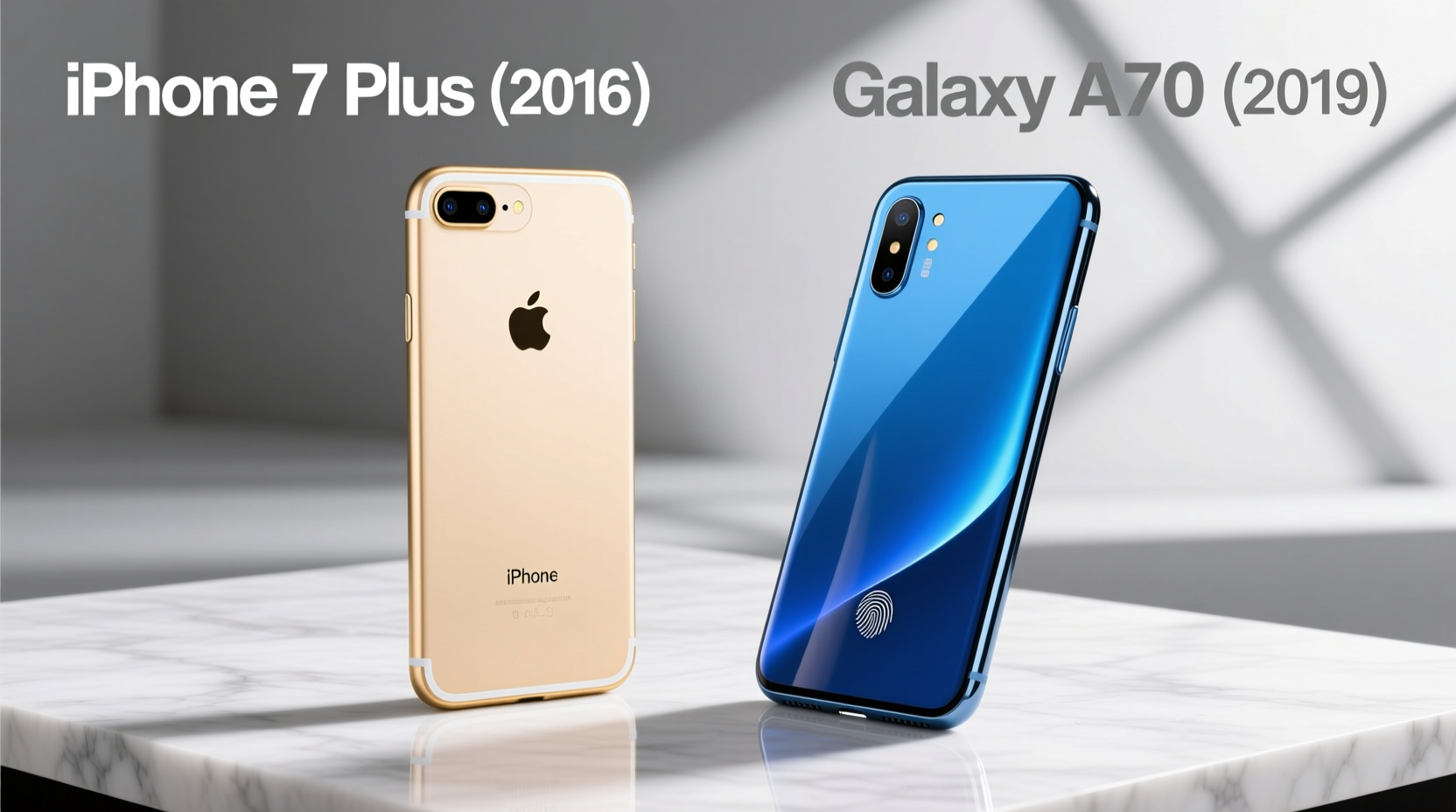
The iPhone 7 Plus runs on Apple’s A10 Fusion chip—a 64-bit quad-core processor that was groundbreaking at its launch. Paired with iOS optimization, it handled multitasking, gaming, and photography with ease during its prime. Even today, iOS 16 remains officially supported for the 7 Plus, though it no longer receives major updates beyond security patches. This means access to essential apps is still viable, but newer features like Live Text or advanced Siri integrations are missing.
In contrast, the Galaxy A70 uses Qualcomm’s Snapdragon 675 processor with 6GB of RAM—significantly more memory than the iPhone’s 3GB. While not a high-end chipset, it provides smoother handling of background apps and modern Android interfaces. The A70 originally shipped with Android 9 and received updates up to Android 11, meaning it lacks current OS improvements and security enhancements. However, its software experience feels more contemporary due to gesture navigation, split-screen apps, and broader customization.
Camera Quality: Real-World Results
The iPhone 7 Plus introduced Apple’s first dual-camera system: a 12MP wide and 12MP telephoto lens enabling 2x optical zoom and Portrait Mode. In good lighting, it captures rich colors, excellent dynamic range, and natural skin tones. Its image processing remains consistent across years, thanks to Apple’s computational photography legacy. Video recording tops out at 4K@30fps, which still holds up well for casual use.
The Galaxy A70 counters with a triple rear setup: 32MP main, 8MP ultra-wide, and 5MP depth sensor. On paper, this looks superior. In practice, daylight photos show higher resolution and wider framing options, but often suffer from oversharpening and inconsistent color grading. Low-light performance favors the iPhone, where noise control and exposure balance remain strong. The A70’s 32MP front camera excels in selfies, offering more detail than the 7 Plus’s 7MP shooter, especially in bright conditions.
“Even five years later, the iPhone 7 Plus produces some of the most naturally pleasing photos in its class.” — David Lin, Mobile Photography Analyst
Battery Life and Charging
Battery degradation is inevitable after years of use, but original-condition iPhone 7 Plus units offer about 10–11 hours of mixed usage. It lacks fast charging out of the box (without third-party accessories) and wireless charging—features now standard even on budget phones. Once depleted, recharging via Lightning cable takes nearly two hours.
The Galaxy A70 packs a 4,500mAh battery—nearly double the capacity of the 7 Plus—and supports 25W fast charging. Under typical use, it lasts a full day and a half, sometimes stretching into a second evening. This advantage becomes critical for heavy users who stream media, navigate frequently, or work remotely. USB-C also ensures easier accessory compatibility compared to Apple’s proprietary port.
| Feature | iPhone 7 Plus | Galaxy A70 |
|---|---|---|
| Battery Capacity | 2,900 mAh | 4,500 mAh |
| Charging Speed | 5W (standard) | 25W Fast Charging |
| Wireless Charging | No | No |
| Estimated Daily Use | 10–11 hours | 16–18 hours |
Durability, Design, and Longevity
The iPhone 7 Plus features aerospace-grade aluminum, IP67 water resistance, and a home button with Taptic Engine feedback. Its compact size (for a “Plus” model) makes it pocketable, though the thick bezels feel outdated next to modern edge-to-edge displays. After years of use, common issues include swollen batteries, failing microphones, and worn-out charging ports—all repairable through Apple or third parties.
The Galaxy A70 opts for glass front and back with a plastic frame, giving it a sleek look but making it more prone to cracks when dropped. It has no official water resistance rating, increasing risk in wet environments. Its 6.7-inch Super AMOLED display delivers vibrant visuals and deep blacks, ideal for streaming and reading. However, the large form factor can be unwieldy one-handed.
Mini Case Study: Sarah’s Upgrade Dilemma
Sarah, a freelance writer based in Portland, needed a reliable phone for emails, note-taking, and occasional video calls. Her iPhone 6s was slowing down, so she considered either refurbishing an iPhone 7 Plus ($110) or buying a used Galaxy A70 ($140). She prioritized battery life and keyboard responsiveness. After testing both, she chose the A70 for its larger screen and faster typing experience. However, within six months, the phone began lagging with newer app updates, and the battery drained faster. Meanwhile, her friend kept a well-maintained iPhone 7 Plus running smoothly for over four years with only a battery replacement. Sarah realized that while specs looked better on paper, real-world longevity favored the older iPhone.
Value for Money in 2024
Pricing plays a decisive role. Used iPhone 7 Plus models sell between $80–$130 depending on condition and storage. Refurbished units often come with replaced batteries and warranties. On the other hand, the Galaxy A70 retails around $150–$180 used, reflecting its newer release date and hardware advantages.
However, true value isn’t just about upfront cost—it’s about how long the device remains usable. The iPhone 7 Plus benefits from tighter app optimization, longer software support cycles (historically), and stronger resale demand. Many banking, productivity, and communication apps continue to support iOS versions compatible with the 7 Plus, whereas Android apps increasingly require newer APIs unavailable on the A70.
- Choose the iPhone 7 Plus if: You want stable performance, consistent updates, and plan to use the phone lightly for 1–2 more years.
- Choose the Galaxy A70 if: You need all-day battery, enjoy multimedia on a big screen, and don’t mind occasional slowdowns or limited future updates.
Frequently Asked Questions
Can the iPhone 7 Plus run Instagram and WhatsApp in 2024?
Yes. As of early 2024, both apps support iOS 12 and above, which the iPhone 7 Plus can run (up to iOS 16). Performance may slow slightly with heavy filters or group chats, but core functionality remains intact.
Is the Galaxy A70 better for gaming than the iPhone 7 Plus?
For lightweight games like Candy Crush or Among Us, both perform adequately. For graphics-heavy titles like Genshin Impact, neither is ideal, but the A70 handles them slightly better due to more RAM and a newer GPU architecture. Expect reduced settings and heating issues on both devices.
Which phone holds its value better over time?
The iPhone 7 Plus generally retains residual value better. Even outdated iPhones see demand in emerging markets and as backup devices. The Galaxy A70 has less global resale appeal and steeper depreciation post-discontinuation.
Final Verdict: Is the Older iPhone Still Worth It?
The iPhone 7 Plus isn’t just surviving—it’s holding its ground in surprising ways. Despite being eight years old, its combination of durable design, efficient operating system, and proven camera performance makes it a compelling option for minimalists, seniors, or secondary-device users. Yes, the Galaxy A70 offers a bigger screen, faster charging, and more modern aesthetics. But these conveniences come at the cost of shorter software relevance and heavier dependency on hardware that ages quickly.
If your priority is simplicity, reliability, and avoiding constant upgrades, the iPhone 7 Plus remains a smart choice—provided it has a healthy battery and sufficient storage. For those wanting a fuller smartphone experience with room for growth, the A70 serves better short-term needs but shows signs of obsolescence sooner.
“The best phone isn’t always the newest one. Sometimes, it’s the one that keeps working when others have quit.” — TechLife Magazine, 2023 Smartphone Longevity Report




 浙公网安备
33010002000092号
浙公网安备
33010002000092号 浙B2-20120091-4
Comments
No comments yet. Why don't you start the discussion?