
In 2017, smartphone photography reached a pivotal moment. Apple’s iPhone 7 Plus had redefined mobile imaging with its dual-lens system and optical zoom, while Samsung responded with the Galaxy S8—featuring a single but highly refined 12MP sensor and advanced software processing. The question on every tech enthusiast’s mind was clear: Did Samsung finally surpass Apple in camera quality? Three years after their release, this comparison remains relevant not just for nostalgia, but as a benchmark in how far smartphone cameras have come—and what truly defines photographic excellence.
The Camera Hardware: Specs Tell Only Half the Story
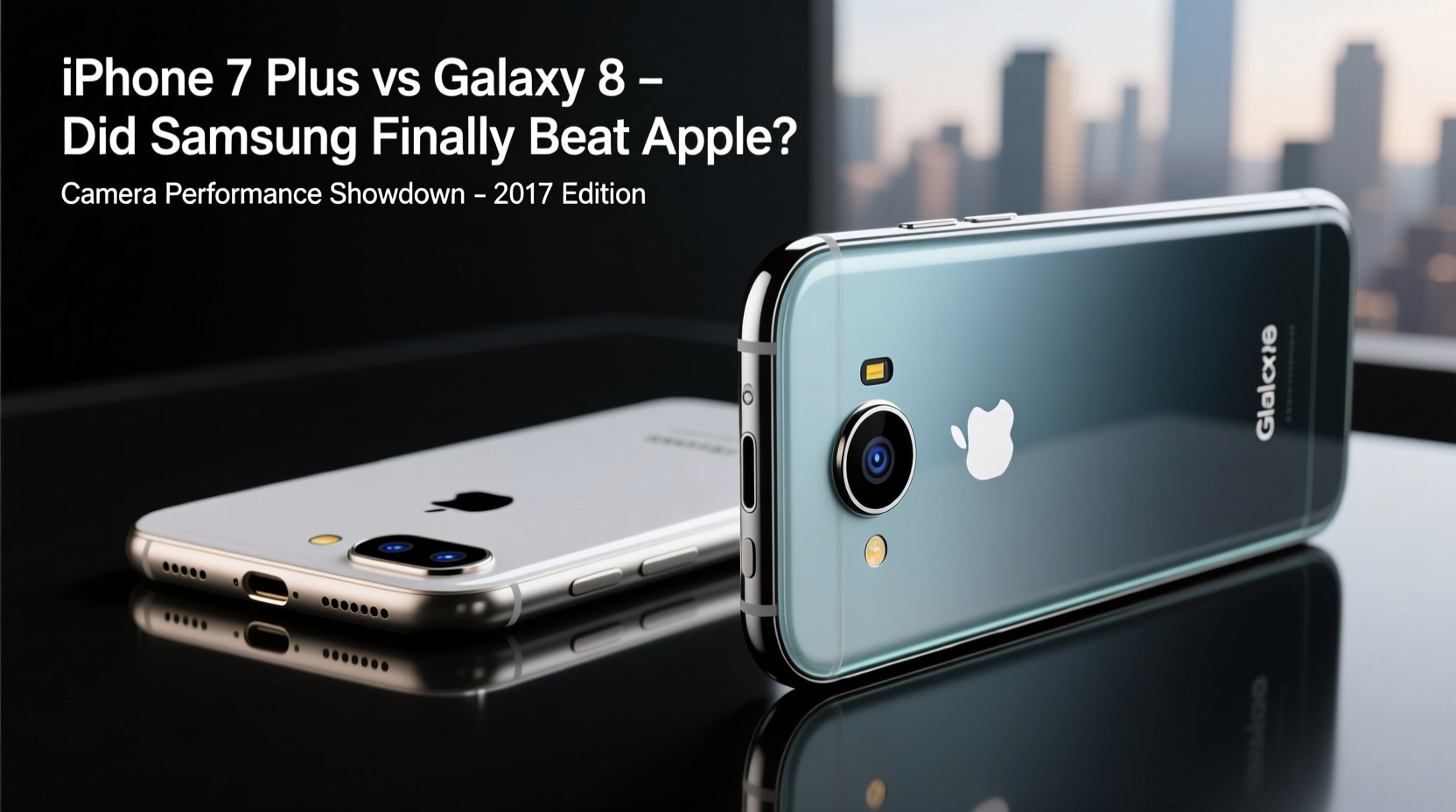
At first glance, the hardware differences between the two devices reflect distinct philosophies. The iPhone 7 Plus introduced Apple’s first dual-camera setup: a 12MP wide-angle lens (f/1.8) and a 12MP telephoto lens (f/2.8), enabling 2x optical zoom and Portrait Mode—a novelty at the time. Optical Image Stabilization (OIS) was present only on the wide lens, while both sensors used phase-detection autofocus.
Samsung took a different approach. The Galaxy S8 featured a single 12MP Dual Pixel sensor with an f/1.7 aperture—the widest available on any flagship phone at launch. This larger aperture allowed more light capture, crucial for low-light performance. It also supported OIS and faster autofocus thanks to its innovative pixel structure, where each pixel splits into two photodiodes for improved focusing speed.
While Apple leaned into versatility through multiple lenses, Samsung focused on maximizing the potential of one high-performance sensor. This contrast set the stage for a nuanced debate: Is more lenses better than superior per-pixel quality?
“Smartphone photography isn’t about megapixels or lens count—it’s about how well the system balances optics, processing, and real-world usability.” — David Guttenfelder, National Geographic Photographer & Mobile Imaging Advocate
Image Quality: Daylight, Color, and Dynamic Range
In ideal daylight conditions, both phones produce crisp, detailed images, but their processing styles diverge significantly.
The iPhone 7 Plus delivers a neutral, true-to-life color profile. Whites remain clean, skies retain natural blue tones, and skin tones are accurate without oversaturation. Its dual-lens system allows lossless 2x zoom, making it ideal for portraits and distant subjects without sacrificing clarity. HDR performance is solid, preserving highlights in bright skies while recovering shadow detail.
The Galaxy S8, by contrast, applies a warmer, more vibrant tone. Greens appear lusher, reds pop slightly more, and overall contrast is heightened—giving photos a “ready-for-Instagram” look straight out of the camera. While some photographers appreciate this punchy aesthetic, others find it less faithful to reality. Samsung’s HDR implementation is aggressive, sometimes over-processing scenes with mixed lighting, leading to unnatural halos around edges.
Low-Light Performance: Where Physics Meets Software
This is where the Galaxy S8 begins to pull ahead—at least on paper. The f/1.7 aperture lets in approximately 20% more light than the iPhone’s f/1.8 lens. Combined with larger pixels (1.4µm vs 1.22µm) and OIS across the board, the S8 captures brighter, cleaner images in dim environments.
In practical tests, the S8 consistently produces less noisy night shots with better shadow recovery. Streetlights show less bloom, and indoor scenes retain more texture. However, Samsung’s noise reduction tends to smear fine details—especially in fabric or hair—trading sharpness for smoothness.
The iPhone 7 Plus, while slightly darker in low light, maintains better edge definition and texture retention. Its image processing prioritizes clarity over brightness, which can be preferable for critical photography. Yet, in extremely dark settings, the iPhone struggles to focus quickly and often underexposes unless manually adjusted via third-party apps.
Low-Light Comparison Summary
| Metric | iPhone 7 Plus | Galaxy S8 |
|---|---|---|
| Brightness | Moderate | High (due to wider aperture) |
| Noise Levels | Noticeable grain | Smother but slightly blurred |
| Focus Speed | Slower in darkness | Faster (Dual Pixel AF) |
| Color Accuracy | Preserved | Slightly warm bias |
Portrait Mode & Zoom: Apple’s Edge in Versatility
One area where the iPhone 7 Plus clearly leads is depth-effect photography. Its dual-camera system enables accurate depth mapping, allowing convincing background blur (bokeh) with proper subject isolation. Hair strands, glasses, and complex edges are generally handled well, though errors occur when lighting is uneven.
The Galaxy S8 launched without a dedicated Portrait Mode. Samsung added it later via software update using artificial depth estimation from a single lens. While functional, these simulated bokeh shots often misjudge edges—blurring parts of the face or leaving harsh cutoff lines around shoulders. True depth sensing requires stereo input; software alone can't fully replicate it.
Zoom capability further widens the gap. The iPhone offers 2x optical zoom and up to 10x digital zoom with reasonable quality up to 5x. The S8 relies entirely on digital cropping, resulting in softer, noisier images even at 2x magnification. For users who frequently photograph distant subjects—wildlife, concerts, architecture—this limitation is significant.
Video Capabilities and Real-World Use
Both phones support 4K video recording at 30fps and 1080p at 60fps, delivering excellent motion clarity and stabilization. However, subtle differences emerge in practice.
The iPhone 7 Plus uses cinematic stabilization, smoothing handheld footage effectively without introducing the “wobble-comb” effect common in early EIS systems. Audio recording is also superior, with clearer directional pickup and less wind noise.
The Galaxy S8 matches 4K quality but exhibits slightly more jitter in fast pans. Its audio capture is adequate but lacks the richness of Apple’s tuning. That said, Samsung includes a feature absent on the iPhone: adjustable frame rates for slow-motion video at 720p up to 240fps, offering creative flexibility.
Mini Case Study: Travel Photography in Marrakech
Photographer Lena Tran documented a week-long trip through Morocco using only her iPhone 7 Plus, while her colleague used a Galaxy S8. In bustling markets with chaotic lighting, the S8 captured brighter storefronts and vivid spice displays effortlessly. But in narrow alleys with deep shadows, the iPhone preserved more facial detail in portraits. When photographing minarets from afar, the iPhone’s optical zoom allowed tight framing without quality loss. At sunset, both phones struggled with silhouetted subjects, but the iPhone’s consistent white balance kept skin tones natural, whereas the S8 leaned orange.
Lena concluded: “The S8 wowed me instantly with its vibrancy, but the iPhone gave me more control and consistency. For professional-looking results with less editing, I’d choose the 7 Plus.”
Frequently Asked Questions
Can the Galaxy S8 beat the iPhone 7 Plus in all lighting conditions?
No. While the S8 excels in low light due to its superior aperture and sensor design, the iPhone maintains better color accuracy and dynamic range in mixed or backlit scenarios. Neither device dominates universally.
Is Portrait Mode on the S8 as good as Apple’s?
Not quite. The S8’s software-based portrait mode improves over time with updates, but it cannot match the depth precision of the iPhone’s dual-camera hardware solution. Edge detection artifacts are more common.
Which phone should I buy today for camera quality?
Neither is current by modern standards. However, if choosing between the two secondhand for casual use, the Galaxy S8 offers better low-light performance, while the iPhone 7 Plus provides more versatile shooting options. For serious photography, consider newer models.
Final Verdict: Did Samsung Finally Beat Apple?
In 2017, the answer was nuanced. Samsung made a compelling case with the Galaxy S8, particularly in low-light photography and autofocus speed. The wider aperture, advanced sensor technology, and aggressive HDR gave it a noticeable advantage in specific conditions—especially dimly lit indoor scenes or quick point-and-shoot moments.
Yet Apple retained leadership in overall consistency, color science, and features like optical zoom and reliable Portrait Mode. The iPhone 7 Plus wasn’t always the brightest or most vibrant, but it delivered predictable, professional-grade results across diverse environments.
So, did Samsung finally beat Apple? In isolated metrics—yes. But as a complete photographic package, Apple still held the crown. The S8 proved Samsung could compete at the highest level, but not yet dominate. It marked a turning point: the beginning of Samsung’s ascent in mobile imaging, culminating in later models like the S9 and Note series that would eventually surpass Apple in DxOMark scores.
The legacy of this rivalry lives on. Both companies pushed each other to innovate, benefiting consumers worldwide. Whether you favored iOS simplicity or Android flexibility, 2017 was the year smartphone cameras became genuinely capable tools—not just convenient substitutes for real cameras.




 浙公网安备
33010002000092号
浙公网安备
33010002000092号 浙B2-20120091-4
Comments
No comments yet. Why don't you start the discussion?