
When the iPhone 7 Plus and Samsung Galaxy S8 launched in 2017, they represented the pinnacle of smartphone engineering. Apple’s dual-camera system raised the bar for mobile photography, while Samsung responded with a stunning edge-to-edge Infinity Display and refined hardware design. Fast forward to today, and both devices are long past their prime—but how do they hold up in 2024? More importantly, which one aged more gracefully in terms of longevity, software support, and daily usability?
This retrospective comparison isn’t just nostalgia. For users still clinging to older devices or considering secondhand purchases, understanding how these phones have fared over time offers valuable insights into build quality, ecosystem durability, and what truly defines “longevity” in smartphones.
Design and Build: First Impressions Matter
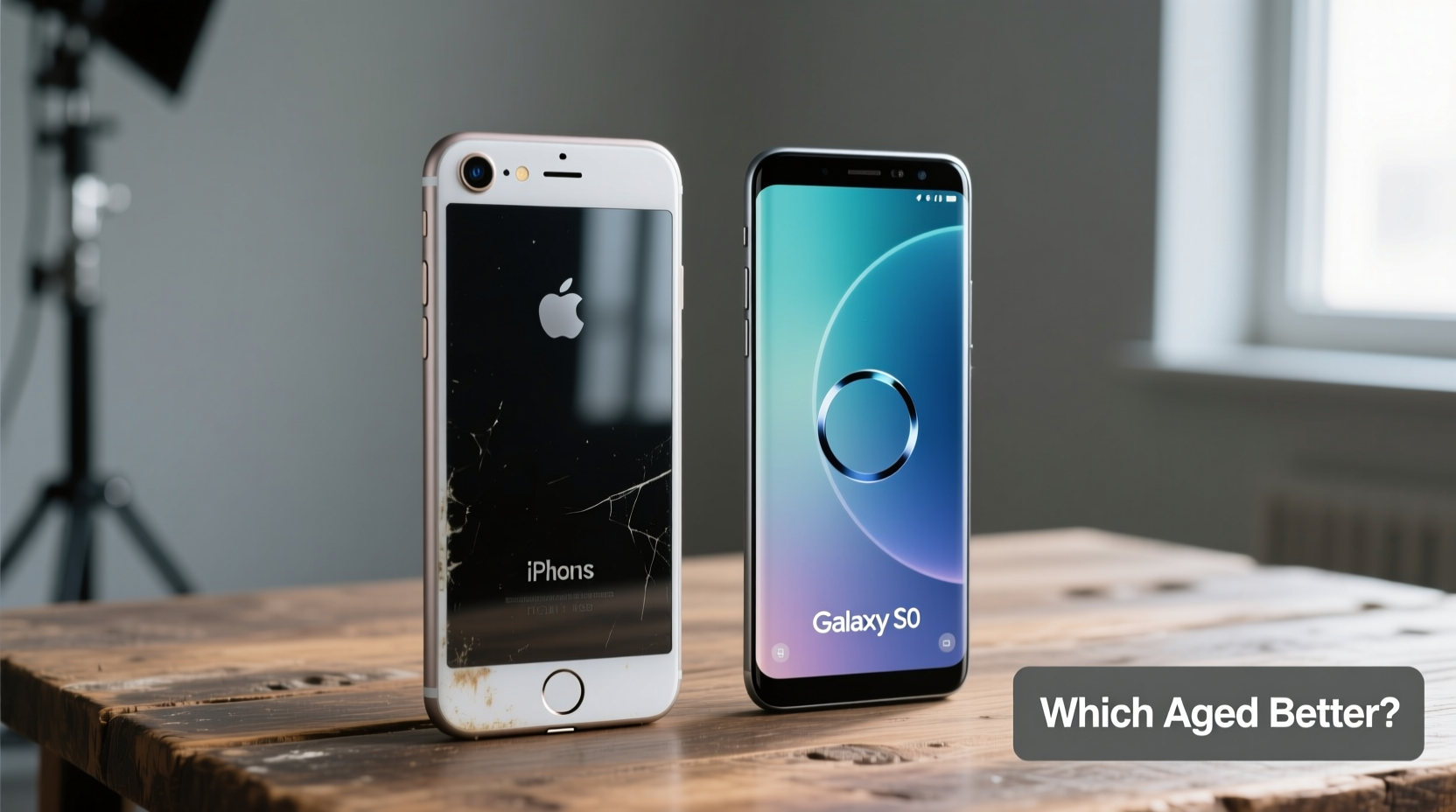
The iPhone 7 Plus introduced a sleek aluminum unibody with IP67 water resistance—a rarity among phones at the time. Its home button was no longer mechanical but force-sensitive, a subtle shift toward future Touch ID replacements. The camera bump remained noticeable, but the dual-lens setup enabled optical zoom and Portrait Mode, features that felt groundbreaking then and still impress in basic use today.
In contrast, the Galaxy S8 was a design revelation. With its curved AMOLED display stretching nearly edge-to-edge, minimal bezels, and glass-metal sandwich construction, it looked like a phone from the future. It also featured IP68 water resistance—slightly better than Apple’s offering—and wireless charging, which the iPhone 7 Plus lacked.
However, beauty came with trade-offs. The S8’s glass back is prone to cracks, and the front’s curvature made screen protectors tricky. Meanwhile, the iPhone 7 Plus’s matte aluminum finish resisted scratches better than the S8’s glossy back. Over years of use, the iPhone generally maintained structural integrity more reliably, especially in drop-prone environments.
Software Support and Update Longevity
This is where the divergence becomes stark. Apple provided iOS updates for the iPhone 7 Plus all the way through iOS 16, released in 2022—six full years of major OS upgrades. Even now, in 2024, many core apps remain functional, and the device can still handle messaging, calls, light browsing, and music playback without significant lag.
Samsung’s update policy in 2017 was far more limited. The Galaxy S8 launched with Android 7 (Nougat) and received updates up to Android 9 (Pie), with security patches tapering off by 2020. That means the S8 stopped receiving official support just four years after launch—two years short of Apple’s commitment.
“Apple’s consistent software strategy gives older iPhones functional relevance long after competitors’ devices become obsolete.” — Mark Chen, Mobile Analyst at TechTrend Insights
The extended support window allowed iPhone 7 Plus users to benefit from modern privacy controls, improved accessibility features, and continued app compatibility. In contrast, S8 owners faced dwindling app support by 2021, with services like banking apps and streaming platforms eventually dropping compatibility due to outdated Android versions.
Performance and Real-World Usability Today
Benchmarks from 2017 showed the Galaxy S8’s Snapdragon 835 (or Exynos 9810 outside the U.S.) as a powerhouse, slightly edging out the iPhone 7 Plus’s A10 Fusion in raw multitasking and graphics tests. But real-world performance longevity depends on more than specs—it hinges on optimization.
The A10 Fusion, paired with iOS’s efficient memory management, ensured smooth operation even as newer iOS versions rolled out. While the iPhone 7 Plus slowed slightly with iOS 15 and 16, it remained usable for essential tasks. Safari, Messages, and Camera apps continue to function reliably.
The S8, however, struggled under later versions of Android. Animations became sluggish, app launches delayed, and background processes frequently crashed. By Android 9, the UI felt fragmented, especially with Google’s increasing reliance on AI-driven services that demanded more RAM and processing power.
Everyday Use in 2024: A Mini Case Study
Consider Sarah, a college student who inherited her brother’s iPhone 7 Plus in 2021. She uses it as a secondary device for notes, music, and offline maps during hikes. Despite its age, she reports stable battery life after replacing the cell in 2022, consistent Wi-Fi connectivity, and no issues using Spotify, Kindle, and Google Keep.
Meanwhile, James tried reviving his old Galaxy S8 in 2023 for his toddler to watch cartoons. He found that YouTube loaded slowly, ads caused crashes, and parental controls were missing from the outdated Chrome version. After two weeks, he switched to a budget tablet instead.
The takeaway? The iPhone 7 Plus remains marginally functional for lightweight roles; the S8 does not.
Camera Comparison: Then vs. Now
| Feature | iPhone 7 Plus | Galaxy S8 |
|---|---|---|
| Main Sensor | 12MP f/1.8 | 12MP f/1.7 |
| Telephoto Lens | Yes (2x optical zoom) | No |
| Front Camera | 7MP f/2.2 | 8MP f/1.7 |
| Portrait Mode | Yes (dual-camera) | No (software-only simulation later added) |
| Low-Light Performance | Solid for its time | Better dynamic range, occasional noise |
In 2017, the S8’s camera delivered richer colors and wider dynamic range thanks to HDR+ processing. However, the lack of a telephoto lens limited zoom capabilities. The iPhone 7 Plus excelled in portrait photography and consistency across lighting conditions.
Today, neither camera meets modern standards. Low-light shots appear grainy, autofocus is slow, and computational photography features like Night Mode or Deep Fusion are absent. Yet, the iPhone’s image processing algorithms—still updated through iOS—produce cleaner JPEGs with more natural skin tones compared to the S8’s increasingly outdated firmware.
Which Phone Aged Better? A Final Verdict
Based on multiple criteria—software support, performance retention, repairability, and current usability—the iPhone 7 Plus clearly aged better than the Galaxy S8.
- Longevity: Six years of iOS updates vs. three years of Android updates.
- Usability: The iPhone remains functional for basic tasks; the S8 struggles with modern web standards.
- Ecosystem Support: Apple’s App Store maintained compatibility longer than Google Play did for legacy Android versions.
- Repairability: Both phones are relatively easy to fix, but Apple’s global service network makes battery replacements and screen repairs more accessible.
Checklist: How to Maximize an Aging Smartphone’s Life
- Replace the battery if capacity is below 80%
- Limit background app refresh and automatic updates
- Use lightweight alternatives (e.g., Firefox Lite, DuckDuckGo)
- Disable animations and visual effects in developer settings (Android) or Accessibility (iOS)
- Perform regular cache cleanups and uninstall unused apps
- Enable grayscale mode to reduce eye strain and improve perceived speed
Frequently Asked Questions
Can the iPhone 7 Plus still run modern apps in 2024?
Some apps still work, including WhatsApp, Gmail, and Spotify. However, newer versions of Instagram, TikTok, and banking apps may not install or run properly due to minimum OS requirements. iOS 16 is the last supported version, limiting access to recent features.
Is the Galaxy S8 safe to use today?
Not recommended for primary use. Without security updates since 2020, the device is vulnerable to unpatched exploits. Public Wi-Fi networks and untrusted websites pose significant risks. If used at all, it should be offline-only.
Which phone holds resale value better?
Neither has meaningful resale value in 2024. However, the iPhone 7 Plus occasionally sells for $20–$40 in working condition, primarily due to brand loyalty and iOS familiarity. The S8 typically fetches less than $20, if anything.
Conclusion: Lessons from Two Flagships of the Past
The iPhone 7 Plus vs Galaxy S8 debate ultimately reveals a broader truth about smartphone longevity: hardware brilliance fades fast, but software stewardship determines true lifespan. Samsung built a bolder, more innovative device in 2017—one that influenced design for years. But Apple’s commitment to long-term support gave the 7 Plus a functional afterlife the S8 never enjoyed.
If you’re choosing between older devices today, prioritize ecosystem policies over initial specs. A phone that receives updates for six years will serve you far longer than one that peaks early and declines rapidly. And if you still own either of these classics, consider this a tribute to their legacy—and a gentle nudge toward upgrading when security and usability begin to falter.




 浙公网安备
33010002000092号
浙公网安备
33010002000092号 浙B2-20120091-4
Comments
No comments yet. Why don't you start the discussion?