
In 2024—nearly a decade after their releases—the iPhone 7 Plus and Galaxy S8 continue to spark passionate debates online. On paper, both devices belong in tech history books. Yet, in forums, Reddit threads, and even casual conversations, users still argue over which was the better phone. Why does this rivalry persist when newer models dominate the market with advanced AI, 5G, and foldable screens?
The answer lies not just in nostalgia, but in real-world durability, software longevity, and how certain flagship designs set benchmarks that modern phones still struggle to surpass in everyday usability.
Legacy Devices That Refused to Fade
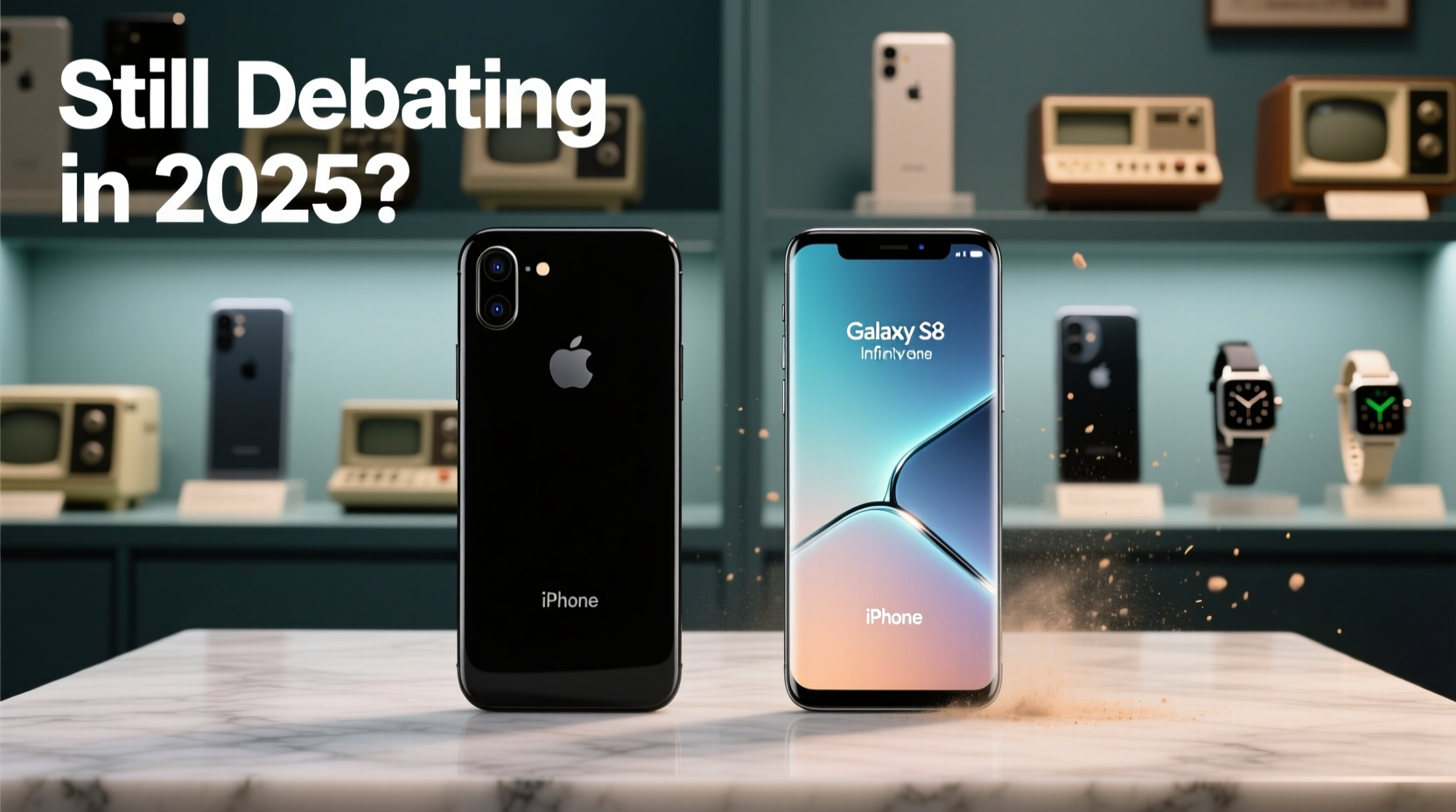
The iPhone 7 Plus launched in September 2016, introducing water resistance, stereo speakers, and Apple’s first dual-camera system. The Galaxy S8 followed in April 2017, redefining Android design with its edge-to-edge Infinity Display and iris scanner. Both were flagships of their era—and both exceeded expectations in lifespan.
What makes them stand out is not just their original specs, but how long they remained functional. Many iPhone 7 Plus units still run iOS 16 (the final supported version), while rooted or custom-ROM-powered Galaxy S8 devices operate daily with lightweight versions of modern Android.
“These weren’t just well-built phones—they were turning points,” says David Lin, a mobile historian and longtime editor at TechEra Digest.
“The 7 Plus proved Apple could innovate post-Steve Jobs, and the S8 showed Samsung could recover from crisis with visionary design.”
Performance Comparison: How Do They Stack Up Today?
By today’s standards, neither device qualifies as “fast.” But raw speed isn’t always the deciding factor for users holding onto them. Here's a detailed comparison of key aspects:
| Feature | iPhone 7 Plus | Galaxy S8 |
|---|---|---|
| Release Year | 2016 | 2017 |
| Processor | Apple A10 Fusion | Snapdragon 835 / Exynos 9810 |
| RAM | 3GB | 4GB |
| Storage Options | 32/128/256GB (non-expandable) | 64GB (expandable via microSD) |
| Display | 5.5\" LCD, 1920x1080 | 5.8\" AMOLED, 2960x1440 |
| Cameras | Dual 12MP rear, 7MP front | Single 12MP rear, 8MP front |
| Battery Capacity | 2900 mAh | 3000 mAh |
| Software Support Ended | iOS 16 (late 2023) | Android 9 (2020), Security updates until 2022 |
| Current Usability | Moderate: Basic apps, messaging, calls | Limited without custom ROMs |
Despite the S8’s superior display resolution and RAM advantage, the iPhone 7 Plus often feels more responsive in day-to-day use thanks to iOS optimization. Meanwhile, the S8’s high-resolution screen drains battery faster, and Android’s background processes taxed its hardware more aggressively over time.
The Psychology Behind the Debate
Why do people care so much about two outdated phones? Several factors explain the enduring fascination:
- Nostalgia Factor: For many, these were their first premium smartphones—the devices they used during pivotal life moments.
- Peak Design Era: The 7 Plus offered tactile home buttons and headphone jacks; the S8 delivered futuristic bezel-less aesthetics. Both represent transitional milestones before controversial changes like Face ID and punch-hole cameras.
- User Loyalty: Apple and Samsung fans often anchor their brand trust to experiences with these models.
- Longevity Benchmark: Few modern mid-range phones last four years. These did—and some still do.
A mini case study illustrates this well: Sarah Kim, a teacher in Portland, has used her iPhone 7 Plus since 2017. She replaced the battery twice and avoids app updates beyond iOS 15. “It does everything I need: email, calendar,拍照 for student projects, and WhatsApp. My school doesn’t require Zoom or heavy apps. Why spend $1,000 on a new phone?”
Real-World Longevity: Can Old Phones Still Function?
Yes—but with caveats. While neither phone supports the latest security patches or app versions, basic functionality remains viable for light users.
Here’s a step-by-step guide to extending life if you’re still using one:
- Replace the battery: After 5+ years, capacity drops below 60%. Official or reputable third-party replacements restore usability.
- Limit app installations: Stick to essential apps like Messages, Notes, Phone, and offline navigation.
- Use Lite versions: Facebook Lite, Twitter Lite, and Google Go consume fewer resources.
- Disable automatic updates: Prevent OS or app upgrades that may slow performance.
- Clear cache regularly: Use built-in tools or safe cleaners to free up storage.
For Galaxy S8 users, installing LineageOS or similar custom ROMs can bring Android 11–13-level functionality, though it voids warranties and requires technical skill.
Checklist: Is Your iPhone 7 Plus or Galaxy S8 Still Worth Using?
- ✅ Does it power on reliably every day?
- ✅ Can you complete core tasks (calls, texts, browsing) without freezing?
- ✅ Have you replaced the battery recently?
- ✅ Are critical apps (banking, messaging) still supported?
- ✅ Do you feel secure using it despite no security updates?
- ✅ Would upgrading cost more than the value gained?
If you answered “yes” to most, continuing usage is reasonable—for now.
Frequently Asked Questions
Can I still get software updates for iPhone 7 Plus or Galaxy S8?
No. Apple ended major updates with iOS 16 in late 2023. Samsung stopped official support for the S8 with Android 9 Pie and ceased security patches in 2022. No further updates will be released.
Is it safe to use these phones in 2024?
Potentially risky. Without security patches, both devices are vulnerable to emerging threats, especially when downloading files or visiting untrusted sites. Avoid entering passwords or financial data on public Wi-Fi.
Which phone holds value better today?
The iPhone 7 Plus generally retains higher resale value due to longer software support and consistent demand in emerging markets. Refurbished units sell for $30–$60, while Galaxy S8 units typically fetch $20–$40, depending on condition.
Conclusion: Why the Debate Matters Beyond Specs
The continued discussion around the iPhone 7 Plus and Galaxy S8 isn't really about which camera was sharper or which processor was faster. It’s a reflection of deeper consumer concerns: planned obsolescence, sustainability, and whether today’s rapid upgrade cycle delivers real improvements.
These phones remind us that thoughtful engineering and ecosystem support can create devices that last—not because they’re powerful by today’s standards, but because they were built to serve real human needs efficiently.
As newer phones pack in features few use, there’s growing appreciation for simplicity, repairability, and longevity. The debate endures because, in many ways, we haven’t matched what these phones achieved—not in innovation, but in lasting utility.




 浙公网安备
33010002000092号
浙公网安备
33010002000092号 浙B2-20120091-4
Comments
No comments yet. Why don't you start the discussion?