
When Apple released the iPhone 7 and iPhone 7 Plus in 2016, they didn’t just offer two versions of the same phone—they presented two distinct philosophies in smartphone design. One prioritized compact convenience; the other embraced expansive functionality. While both devices shared core features like water resistance, the A10 Fusion chip, and a major camera upgrade over their predecessors, the differences between them were substantial enough to spark a lasting debate: does size really matter when choosing a flagship iPhone?
The answer isn't as simple as screen inches or pocket fit. It’s about how each device fits into your daily routine, what kind of tasks you prioritize, and whether extra bulk translates into tangible benefits.
Design and Ergonomics: Comfort vs Capability
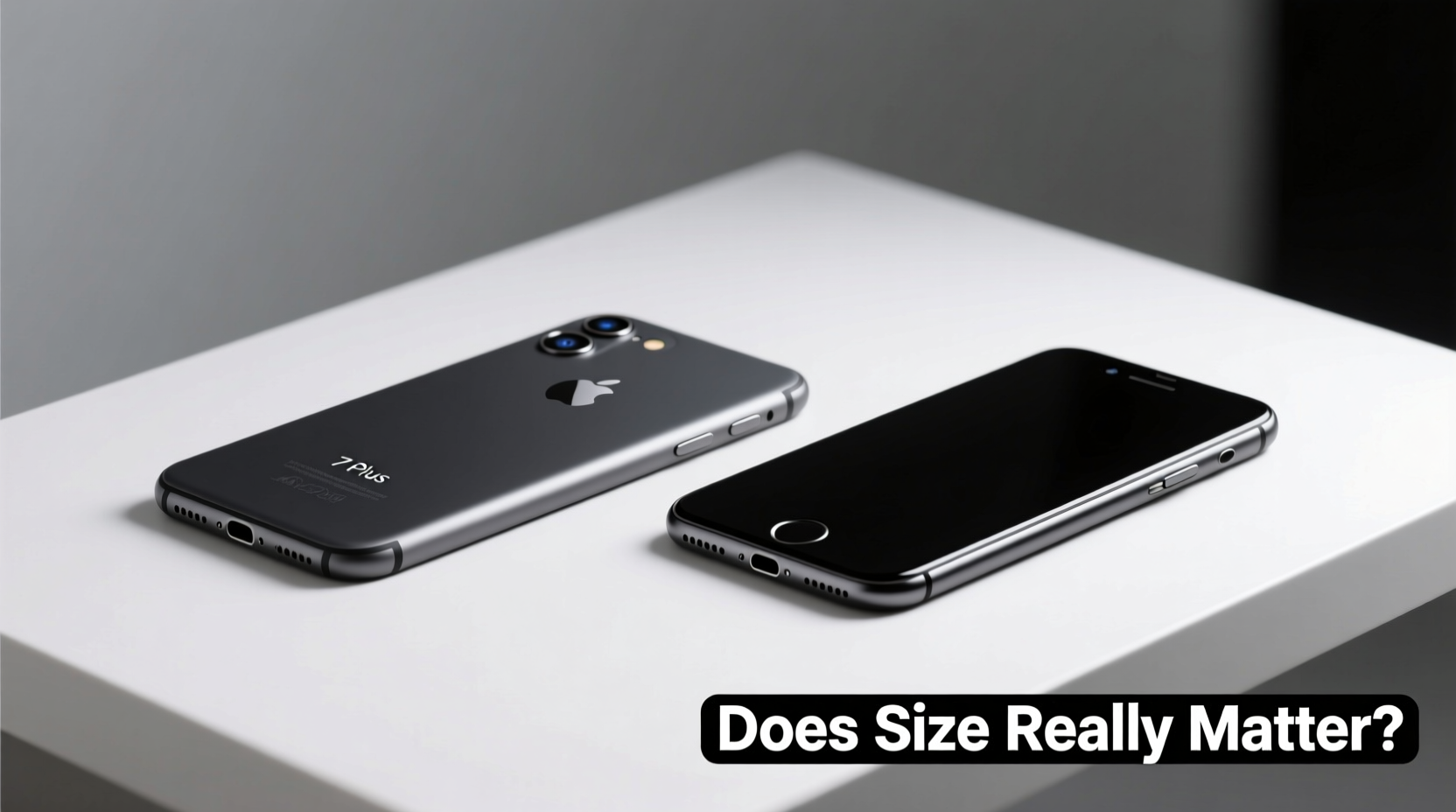
The most immediate difference between the iPhone 7 and iPhone 7 Plus is physical presence. The iPhone 7 measures 138.3 x 67.1 x 7.1 mm and weighs 138 grams, making it one of the last truly one-handed iPhones from Apple. In contrast, the iPhone 7 Plus stretches to 158.2 x 77.9 x 7.3 mm and tips the scales at 188 grams—significantly larger and heavier.
This disparity affects more than just pocket space. Holding the 7 Plus for extended periods can cause hand fatigue, especially for users with smaller hands. However, that added size allows for a larger display (5.5 inches vs 4.7 inches) with higher resolution (1920x1080 vs 1334x750), delivering sharper text and more immersive media viewing.
Both phones feature the same aluminum unibody design, IP67 water and dust resistance, and the removal of the headphone jack—a controversial move at the time. The placement of the Touch ID button, volume rocker, and mute switch remains consistent, ensuring familiarity across both models.
Camera Performance: Dual Lens Advantage
Where the iPhone 7 Plus pulls decisively ahead is in photography. While both devices sport a 12MP rear camera with optical image stabilization (OIS)—a first for the standard iPhone 7—the 7 Plus introduces a dual-camera system: a wide-angle lens (f/1.8) and a telephoto lens (f/2.8) that enables 2x optical zoom and up to 10x digital zoom.
This dual setup laid the foundation for Portrait Mode, introduced in iOS 10.1, which uses depth sensing to simulate DSLR-style background blur (bokeh). Though early versions required good lighting and cooperative subjects, it was a game-changer for mobile photography enthusiasts.
“Apple’s decision to go dual-lens with the 7 Plus wasn’t just about zoom—it was the beginning of computational photography dominance.” — David Pogue, Tech Journalist and Former NY Times Columnist
The iPhone 7, by comparison, relies solely on its single 12MP sensor. While excellent in daylight and improved low-light performance thanks to the f/1.8 aperture, it lacks optical zoom and Portrait Mode capabilities. For users who regularly shoot portraits or need flexibility in framing distant subjects, the 7 Plus offers meaningful advantages.
Battery Life and Usage Patterns
Size directly impacts battery capacity—and therefore longevity. The iPhone 7 houses a 1,960 mAh battery, while the 7 Plus packs a 2,900 mAh unit. This difference translates into real-world usage gains:
| Usage Type | iPhone 7 | iPhone 7 Plus |
|---|---|---|
| Talk Time (3G) | Up to 14 hours | Up to 21 hours |
| Internet Use (Wi-Fi) | Up to 12 hours | Up to 13 hours |
| Video Playback | Up to 14 hours | Up to 16 hours |
| Standby Time | Up to 240 hours | Up to 240 hours |
While Wi-Fi browsing shows only modest improvement, the jump in talk time and video playback is significant. Heavy users—those streaming music, using GPS navigation, or watching videos during commutes—will appreciate the 7 Plus’s ability to last through long travel days without needing a midday charge.
Real-World Example: Daily Commuter vs Content Creator
Consider Sarah, a city commuter who walks 30 minutes to work, listens to podcasts, checks messages, and occasionally takes quick snaps of street art. She values a lightweight phone that fits comfortably in her jacket pocket. For her, the iPhone 7’s size, adequate battery, and responsive performance meet all needs without unnecessary heft.
Now consider James, a freelance photographer who uses his phone for client previews, shoots event photos in mixed lighting, and edits images on the go. He benefits from the 7 Plus’s optical zoom for candid shots, Portrait Mode for professional-looking portraits, and longer battery life during shoots. Despite the larger size, the functional gains justify the trade-off.
Their experiences illustrate that “size matters” not in absolute terms, but in alignment with lifestyle demands.
Performance and Software Longevity
Under the hood, both phones are powered by Apple’s A10 Fusion chip—the first quad-core processor in an iPhone—with 64-bit architecture and embedded M10 motion coprocessor. In everyday use, this means snappy app launches, smooth multitasking, and efficient power management.
Because they share the same processor and software ecosystem, both devices received updates up to iOS 15, with some third-party apps continuing support even beyond. However, as newer iOS versions demand more resources, the iPhone 7 Plus’s slightly better thermal management due to larger internal spacing may have contributed to marginally smoother long-term performance under heavy loads.
- RAM: iPhone 7 has 2GB; iPhone 7 Plus also has 2GB
- Storage options: 32GB, 128GB, 256GB (replacing 16GB/64GB from prior models)
- Both support Lightning headphones and Bluetooth audio
For gaming or augmented reality apps, the difference in frame rates is negligible. But the 7 Plus’s larger screen provides a more engaging experience for games and video content.
Checklist: Choosing Between iPhone 7 and iPhone 7 Plus
Ask yourself these questions before deciding:
- Do I prefer a phone I can operate easily with one hand?
- Am I likely to use optical zoom or Portrait Mode features?
- Do I often run out of battery before the end of the day?
- Is screen real estate important for reading, browsing, or watching videos?
- Will I be carrying the phone in tight pockets or small bags?
- Do I take a lot of photos in varied environments?
If you answered “yes” to questions 1 and 5, lean toward the iPhone 7. If questions 2, 3, 4, and 6 resonate more, the iPhone 7 Plus is likely the better fit—even with its size.
Frequently Asked Questions
Can the iPhone 7 Plus fit in most pockets?
Yes, but not as comfortably as the iPhone 7. Front pants pockets may feel strained, especially with thicker denim. Many users opt for jacket or backpack storage instead.
Is the dual camera worth the extra size?
If you value photography, yes. The ability to optically zoom without quality loss and capture portrait-style images adds creative flexibility that the single-lens iPhone 7 cannot match.
Are accessories interchangeable between models?
No. Due to different dimensions and camera layouts, cases, screen protectors, and mounts are not cross-compatible. Always verify model-specific compatibility when purchasing accessories.
Conclusion: Size Matters When It Serves a Purpose
The iPhone 7 and iPhone 7 Plus represent two valid approaches to smartphone design. The iPhone 7 delivers precision, portability, and efficiency in a compact frame. The iPhone 7 Plus expands on that foundation with enhanced camera capabilities, superior battery life, and a more immersive display—all made possible by its larger footprint.
Ultimately, size doesn’t matter simply because something is bigger. It matters when that size enables features that improve your experience. For photographers, travelers, and power users, the 7 Plus justifies its dimensions. For those who prioritize agility and simplicity, the iPhone 7 remains a refined choice.




 浙公网安备
33010002000092号
浙公网安备
33010002000092号 浙B2-20120091-4
Comments
No comments yet. Why don't you start the discussion?