
If you're still using an iPhone 6s Plus and considering a jump to the iPhone 7, you're not alone. Millions of users are holding onto older iPhones longer than ever, thanks to Apple’s extended software support and surprisingly resilient hardware. But with both models now discontinued and surpassed by newer generations, the question arises: is upgrading from the 6s Plus to the iPhone 7 still a smart move in 2024—or has the window closed?
The answer isn’t as straightforward as “yes” or “no.” It depends on your usage patterns, expectations, budget, and how long you plan to keep your next device. Let’s break down the real differences, assess whether the upgrade delivers tangible benefits today, and help you decide if you’ve already missed your chance.
Performance and Hardware: What Changed?
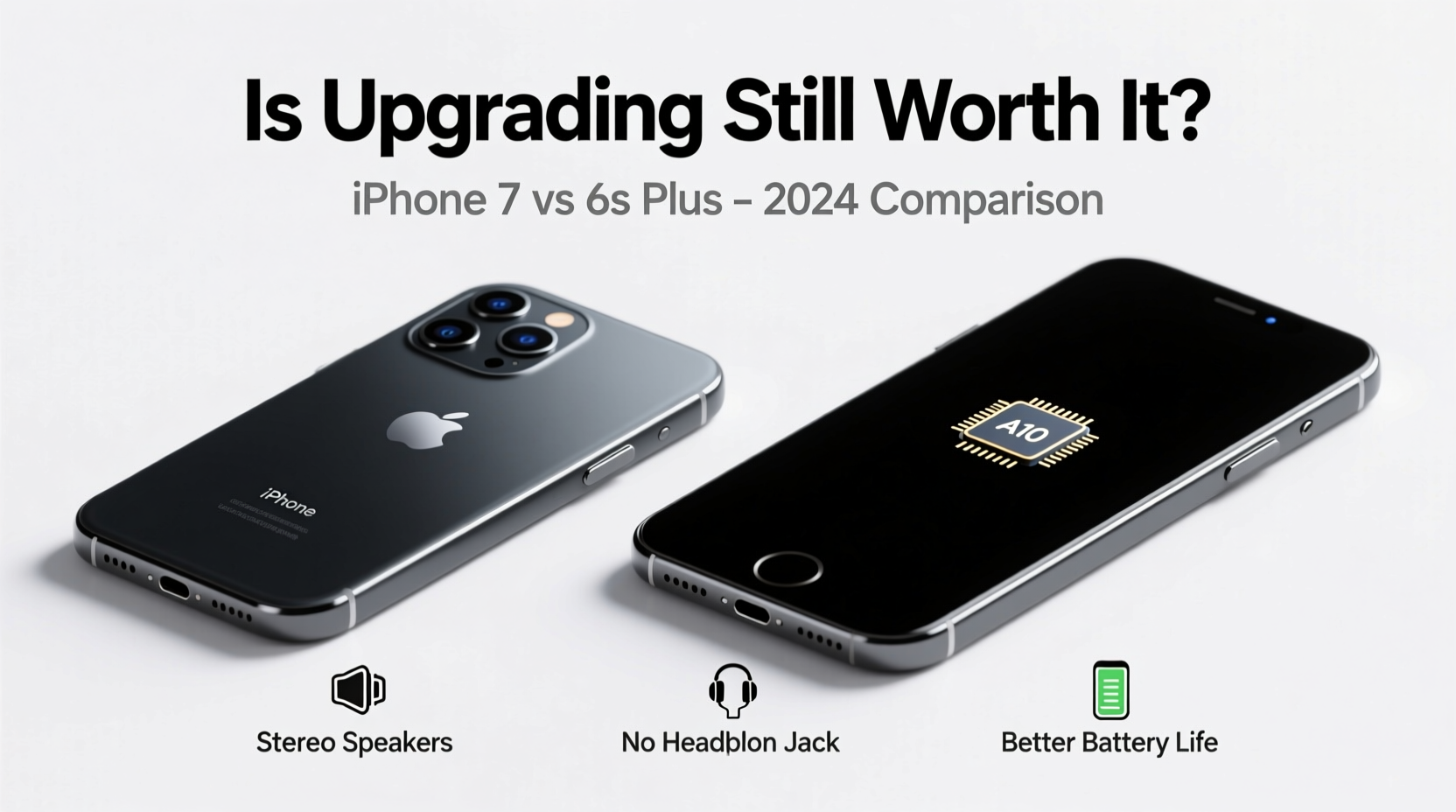
The leap from the iPhone 6s Plus (released in 2015) to the iPhone 7 (2016) wasn't revolutionary, but it was meaningful. The most notable improvements came under the hood:
- Processor: The iPhone 7 introduced the A10 Fusion chip, which delivered about 40% faster CPU performance and 50% better graphics than the A9 in the 6s Plus.
- RAM: Both devices have 2GB of RAM, so multitasking gains were minimal, but app launch speeds and overall responsiveness improved noticeably.
- Storage: The iPhone 7 eliminated the slow 16GB base model, starting at 32GB and going up to 256GB—addressing one of the biggest complaints about the 6s Plus.
- Water resistance: For the first time in an iPhone, the 7 added IP67 water and dust resistance—a practical upgrade for everyday durability.
Differences That Matter Today
In 2024, neither phone runs the latest iOS versions optimally. The iPhone 7 supports up to iOS 16, while the 6s Plus topped out at iOS 15. However, even within those limits, real-world usability differs.
The iPhone 7 handles background tasks, Safari tabs, and photo editing more smoothly. Its GPU improvements make streaming video and light gaming less taxing. Users upgrading from a worn-out 6s Plus often report that the 7 \"feels faster\" in daily use—even if the specs don’t scream next-gen.
“Even incremental upgrades can extend usability by 1–2 years when moving from a heavily used older device.” — David Lin, Mobile Tech Analyst at GadgetWatch
Camera Comparison: Small Gains, Big Impact?
The camera systems between these two phones are deceptively similar on paper—but the devil is in the details.
| Feature | iPhone 6s Plus | iPhone 7 |
|---|---|---|
| Rear Camera | 12MP, f/2.2 | 12MP, f/1.8 |
| Optical Image Stabilization | Yes (only on Plus model) | Yes |
| Front Camera | 5MP | 7MP |
| Low-Light Performance | Moderate | Noticeably better |
| Portrait Mode | No | No (requires dual cameras) |
The iPhone 7’s wider f/1.8 aperture allows 50% more light, making night shots clearer and reducing blur. The 7MP front camera also captures sharper selfies and performs better in FaceTime calls. While neither phone competes with modern standards, the 7 holds up slightly better in low-light conditions and social media sharing.
Battery Life and Long-Term Usability
Battery degradation is the silent killer of older iPhones. After five or six years, even well-cared-for batteries lose 20–30% of their original capacity. Apple's official replacement program helps, but it doesn't restore full peak performance.
The iPhone 7 has a modest edge in battery life—about 2 hours more talk time and 1 hour extra internet use—thanks to the more efficient A10 chip. In practice, this means fewer midday charges for moderate users.
However, if your 6s Plus battery has been replaced recently and iOS updates haven’t crippled its speed, the day-to-day difference may be negligible. On the other hand, if your current phone struggles through a half-day of use, the 7 could offer meaningful relief.
A Real-World Example: Sarah’s Upgrade Dilemma
Sarah, a freelance photographer assistant, held onto her iPhone 6s Plus for seven years. She relied on it for client communication, note-taking, and occasional photo previews. By 2023, she noticed delays opening large image files, sluggish iCloud syncing, and frequent app crashes.
She considered buying a used iPhone 7 for $120. After researching benchmarks and user reports, she made the switch. Her feedback? “It’s not magic, but it’s reliable again. I can open Lightroom without waiting 10 seconds. Video exports don’t freeze. It feels like a functional tool, not a liability.”
Sarah didn’t need cutting-edge features—just stability. For her, the upgrade was absolutely worth it, extending her mobile productivity by another 18 months.
Is It Too Late to Upgrade?
Technically, no—but context matters. The iPhone 7 was discontinued in 2019 and no longer receives iOS updates beyond version 16. Security patches are limited, and some newer apps already require iOS 17 or later.
If you’re upgrading solely for peace of mind or minor speed boosts, ask yourself: will this phone serve you reliably for the next 1–2 years? Or are you delaying a necessary leap to a modern iPhone?
Consider this timeline:
- Now: iPhone 7 runs iOS 16; most apps still compatible.
- 2024–2025: App developers begin dropping support for iOS 16.
- By 2026: Critical services (banks, messaging, transit) may stop functioning properly.
If you plan to upgrade again within 18 months, the iPhone 7 might still be a cost-effective bridge. But if you expect it to last three years or more, you’ll likely face compatibility issues sooner than expected.
Upgrade Checklist: Should You Make the Move?
Before deciding, run through this checklist:
- ✅ Is your current iPhone 6s Plus experiencing frequent freezes or reboots?
- ✅ Has battery life dropped below 4 hours of screen-on time?
- ✅ Are you unable to install the latest app updates due to storage or OS limits?
- ✅ Do you value water resistance or slightly better photo quality?
- ✅ Can you find a used iPhone 7 in good condition for under $130?
- ❌ Are you planning to keep your next phone for more than 2 years?
- ❌ Do you rely on apps that already require iOS 17+?
If most of your answers are “yes” to the positives and “no” to the negatives, the upgrade makes sense. Otherwise, skipping straight to an iPhone SE (3rd gen) or iPhone 12 mini would future-proof your investment.
Frequently Asked Questions
Can the iPhone 7 still receive security updates?
No. Apple ended major iOS updates for the iPhone 7 with iOS 16. While occasional backend patches may occur, there are no guaranteed security fixes moving forward. Use caution with sensitive accounts.
Is the lack of a headphone jack a dealbreaker?
It depends. The iPhone 7 removed the 3.5mm jack, requiring Bluetooth headphones or a Lightning adapter. If you own high-quality wired earbuds, this change adds friction. However, many users adapted quickly, and wireless audio has become standard.
Will apps stop working on the iPhone 7 soon?
Gradually, yes. Developers are increasingly optimizing for iOS 17 and newer. Popular apps like TikTok, Zoom, and banking platforms may drop support for iOS 16 within the next 12–18 months.
Final Verdict: Worth It Only Under Specific Conditions
Upgrading from the iPhone 6s Plus to the iPhone 7 in 2024 isn’t inherently wasteful—but it’s only justifiable under narrow circumstances. If you need a temporary, budget-friendly fix and plan to upgrade again within two years, the performance, camera, and build quality improvements add real value.
But if you’re looking for longevity, security, or modern features like 5G, Face ID, or advanced camera modes, you’ve already missed the sweet spot. The tech world has moved on, and better entry-level options exist at similar price points.




 浙公网安备
33010002000092号
浙公网安备
33010002000092号 浙B2-20120091-4
Comments
No comments yet. Why don't you start the discussion?