
The iPhone 7 and iPhone 7 Plus were released in September 2016, marking a pivotal shift in Apple’s smartphone design—introducing water resistance, removing the headphone jack, and upgrading the camera system. Over seven years later, many users still rely on these devices daily, especially in regions where newer models are cost-prohibitive. While no longer supported with iOS updates beyond iOS 15.8, both phones remain functional for basic tasks. But what exactly separates them today? And is it still practical to use either in 2024?
Are People Still Using iPhone 7 and 7 Plus in 2024?
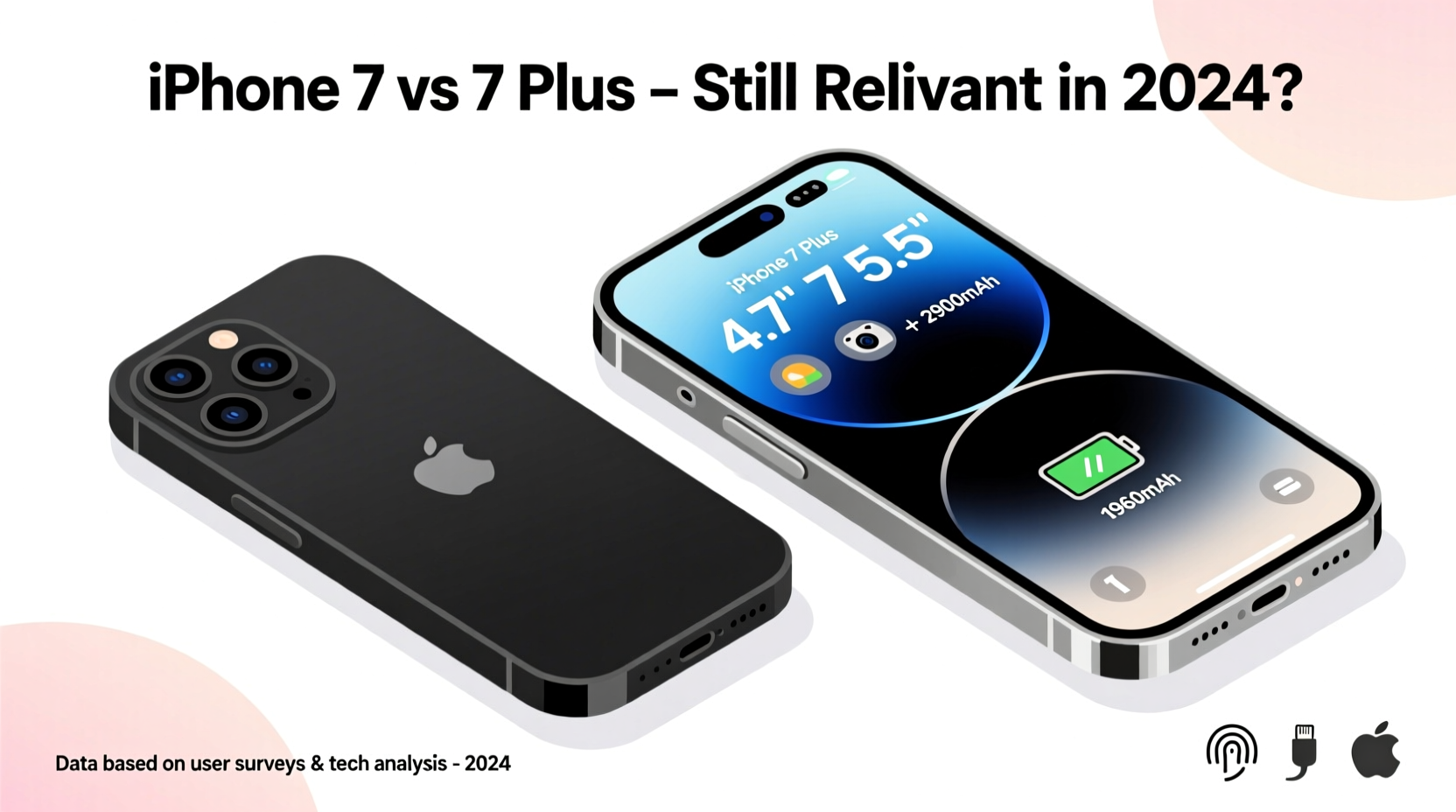
Surprisingly, yes—millions of people worldwide continue to use the iPhone 7 and 7 Plus. According to data from Apple and third-party analytics firms like Mixpanel, as of early 2024, around 3–5% of active iOS devices globally are still running on iPhone 7-series hardware. That translates to tens of millions of users.
This continued usage is driven by several factors:
- Affordability: Used units can be found for under $50, making them accessible in emerging markets and for budget-conscious buyers.
- Durability: The aluminum build and solid internal components have proven resilient over time.
- Simplicity: For users who only need calls, texts, email, and light app usage, these phones perform adequately.
- Reliability: Even without the latest features, iOS remains stable on A10 Fusion chips when not overloaded with modern apps.
However, limitations are becoming more apparent. App developers are increasingly optimizing for newer iOS versions and faster processors, leaving older devices behind. Apps like Instagram, TikTok, and even Google Maps now run slower or lack full functionality on iOS 15.
Key Differences Between iPhone 7 and iPhone 7 Plus Today
While both phones share the same processor, operating system ceiling, and core features, their differences significantly impact real-world usability—even in 2024.
| Feature | iPhone 7 | iPhone 7 Plus |
|---|---|---|
| Display Size | 4.7 inches | 5.5 inches |
| Resolution | 1334 x 750 (Retina HD) | 1920 x 1080 (Full HD) |
| Rear Camera | Single 12MP f/1.8 | Dual 12MP: Wide + Telephoto (2x optical zoom) |
| Portrait Mode | No (software-only simulation) | Yes (hardware-enabled) |
| Battery Life | ~14 hours video playback | ~21 hours video playback |
| RAM | 2GB | 3GB |
| Weight | 138g | 188g |
The most impactful distinction today is RAM and battery life. With 3GB of RAM, the iPhone 7 Plus handles multitasking better than the base model. This means fewer app reloads when switching between Safari, Messages, and Maps—a noticeable advantage in daily use.
Likewise, the larger battery in the 7 Plus makes it more viable as a primary device. Users report needing to charge the iPhone 7 twice a day with moderate use, while the 7 Plus often lasts a full 16-hour stretch.
“Even in 2024, the iPhone 7 Plus punches above its weight thanks to that extra RAM and dual-camera system. It’s the last ‘budget pro’ iPhone Apple made.” — David Lin, Mobile Tech Analyst at GadgetScope
Real-World Example: Maria’s Experience in Manila
Maria, a 68-year-old retiree in Manila, uses her iPhone 7 Plus daily to stay in touch with family abroad, manage prescriptions via a health app, and browse Facebook. She bought the phone secondhand in 2019 for ₱3,500 (~$60). Despite iOS updates stopping in 2023, she says, “It still works fine for what I need. Video calls with my grandchildren are clear, and the big screen helps me read messages.”
She recently tried upgrading to an iPhone SE (2022), but found the smaller screen and faster interface overwhelming. After two weeks, she switched back. “My 7 Plus knows me. It opens the apps I use most. Why fix what isn’t broken?”
Maria’s story reflects a broader trend: long-term user loyalty based on familiarity and sufficient performance for essential needs.
Is It Still Practical to Use an iPhone 7 or 7 Plus in 2024?
The answer depends on your usage patterns.
Still viable if you:
- Use only core apps (Phone, Messages, Mail, Safari, Notes)
- Don’t stream high-definition video regularly
- Prefer physical home button and Touch ID
- Need a secondary or backup device
Time to upgrade if you:
- Use social media apps heavily (Instagram, TikTok, YouTube)
- Need modern security features (Face ID, regular OS patches)
- Take frequent photos or use camera in low light
- Want access to new features like Live Text, AirDrop enhancements, or iMessage improvements
Step-by-Step: How to Maximize Performance on an Aging iPhone 7 or 7 Plus
- Free up storage: Delete unused apps and offload photos to iCloud or Google Photos. Aim to keep at least 2–3GB free.
- Turn off animations: Go to Settings > Accessibility > Motion > Reduce Motion. This reduces UI lag.
- Disable background app refresh: Settings > General > Background App Refresh > Off (or select only essential apps).
- Reset all settings: If the phone feels sluggish, go to Settings > General > Transfer or Reset iPhone > Reset All Settings (this won’t delete data).
- Use Safari instead of Chrome: Safari is optimized for older iOS versions and uses less memory.
Frequently Asked Questions
Can iPhone 7 and 7 Plus get iOS 16 or higher?
No. Apple ended support for both models with iOS 15.8.3, released in January 2023. They are not eligible for iOS 16, 17, or future updates due to hardware limitations.
Is the iPhone 7 Plus better than the iPhone 7 in 2024?
Yes, significantly. The 7 Plus offers better battery life, superior multitasking (3GB RAM), and true Portrait Mode photography. For long-term use on an older device, it remains the better choice.
Are these phones secure to use now?
They are functional but increasingly vulnerable. Without security patches since 2023, they’re exposed to newly discovered exploits. Avoid entering sensitive financial data or using untrusted networks if possible.
Final Thoughts: Legacy Devices with Lasting Appeal
The iPhone 7 and 7 Plus represent a turning point in smartphone evolution—devices that embraced change while maintaining accessibility. In 2024, they’re no longer cutting-edge, but they aren’t obsolete either. For light users, seniors, or those in developing economies, they offer a reliable gateway to digital life.
The real difference between the two comes down to scale: the 7 Plus delivers a more sustainable experience thanks to its larger battery, better camera, and extra RAM. If you’re still using either model, you’re part of a quiet minority proving that thoughtful design can outlive planned obsolescence.
Yet, the clock is ticking. App compatibility will continue to erode, and repair parts are becoming scarce. Now is the time to consider a transition—not because these phones have failed, but because the digital world has moved on.




 浙公网安备
33010002000092号
浙公网安备
33010002000092号 浙B2-20120091-4
Comments
No comments yet. Why don't you start the discussion?