
When Apple released the iPhone 7 and iPhone 7 Plus in 2016, they introduced a key divergence in their lineup: two distinct sizes with meaningful differences beyond just screen real estate. While both phones shared core features like water resistance, the A10 Fusion chip, and improved cameras, the decision between the compact iPhone 7 and the larger iPhone 7 Plus came down to personal priorities. The central question remains relevant even today for users considering secondhand or budget-friendly models: Is the bigger screen of the 7 Plus truly worth it?
This isn’t just about inches on a spec sheet. It’s about how size affects daily use—battery life, one-handed operation, media consumption, camera capabilities, and long-term comfort. Let’s break down the real-world implications of choosing one over the other.
Display and Usability: More Than Just Size
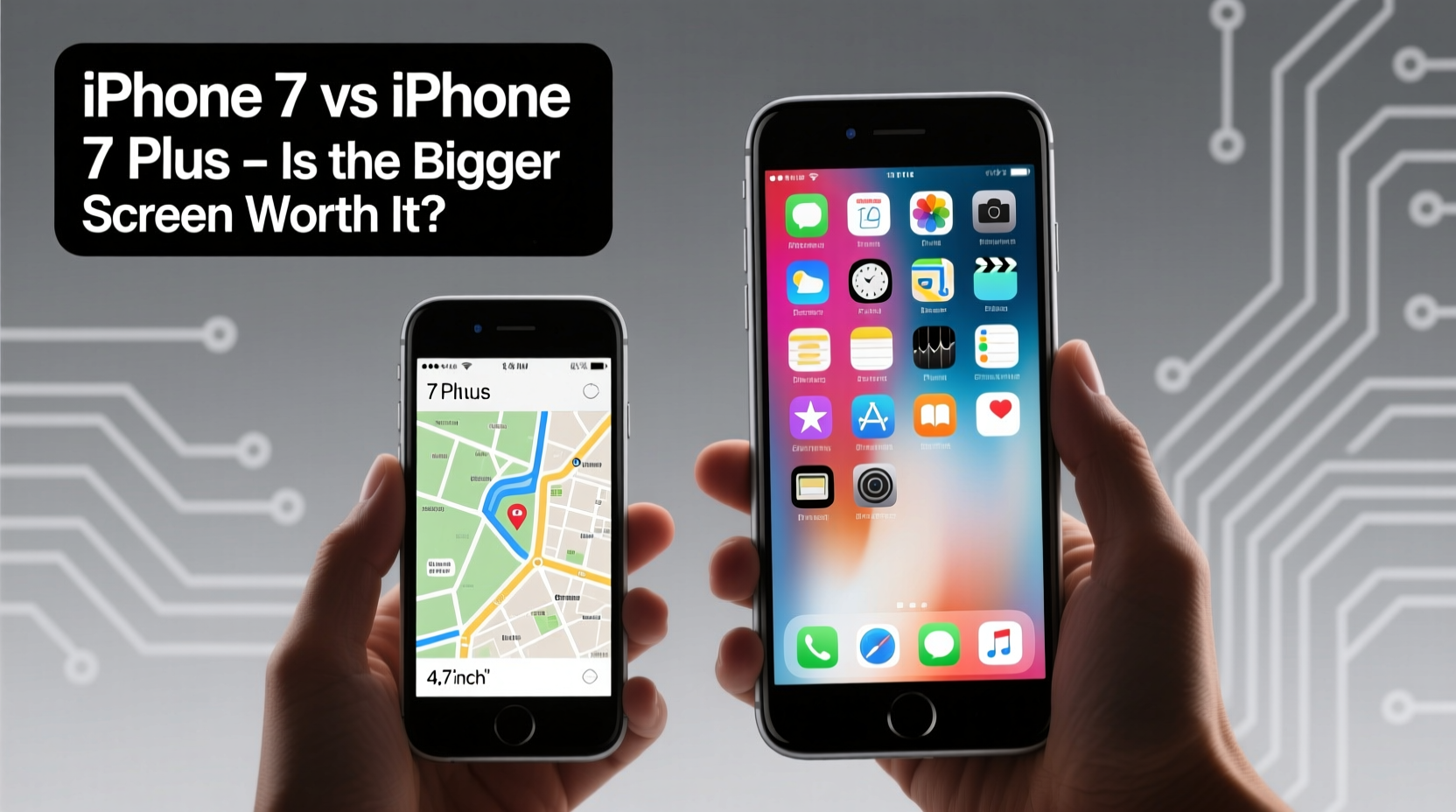
The most obvious difference lies in the display. The iPhone 7 has a 4.7-inch Retina HD display, while the iPhone 7 Plus boasts a 5.5-inch screen. That extra 0.8 inches translates to significantly more screen space—about 33% more pixels. For reading articles, browsing websites, or watching videos, the 7 Plus offers a noticeably more immersive experience.
However, increased screen size comes with trade-offs. The iPhone 7 fits comfortably in smaller hands and most pockets. It’s easier to operate with one hand, especially when navigating menus or typing. The 7 Plus, while not unwieldy by today’s standards, requires two hands for efficient use, particularly for reaching across the screen.
Apple addressed this partially with Reachability—a feature that temporarily shifts the top half of the screen downward when double-tapping the Home button. But relying on it adds an extra step, disrupting fluid interaction.
Battery Life: Where Size Makes a Real Difference
One area where the larger body of the 7 Plus pays clear dividends is battery performance. Apple rated the iPhone 7 for up to 14 hours of video playback, while the 7 Plus could last up to 16 hours. In real-world mixed usage—browsing, messaging, music, and occasional video—the 7 Plus consistently delivered an extra 2–3 hours of screen-on time.
This extended endurance means fewer midday charging sessions, which matters for travelers, commuters, or anyone without easy access to power outlets. For users who rely heavily on GPS navigation or streaming services, the 7 Plus provides greater peace of mind.
“Battery longevity often outweighs raw specs when evaluating older devices. A phone that dies by 3 PM limits functionality regardless of camera quality.” — David Lin, Mobile Tech Analyst at GadgetScope
Camera Capabilities: Dual Lens Advantage
Here’s where the 7 Plus pulls ahead in a way that wasn’t just about size—it was about innovation. The iPhone 7 Plus was the first iPhone to feature a dual-camera system: a standard 12MP wide-angle lens and a 12MP telephoto lens. This enabled 2x optical zoom and Portrait Mode (via software updates), allowing users to capture depth-effect photos that mimicked DSLR bokeh.
In contrast, the iPhone 7 had only the single wide-angle camera. Digital zooming resulted in lower-quality images, and Portrait Mode was unavailable. For photography enthusiasts—even casual ones—the 7 Plus offered tangible creative advantages.
If capturing high-quality portraits, distant subjects, or experimenting with depth-of-field effects matters to you, the 7 Plus delivers a feature set the smaller model simply can’t match.
Performance and Storage: Identical Under the Hood
Both devices are powered by Apple’s A10 Fusion chip—the fastest smartphone processor at the time—with 2GB of RAM. In everyday tasks like app switching, web browsing, and media playback, there’s no noticeable performance gap. Games and multitasking run smoothly on both.
Storage options were identical: 32GB, 128GB, and 256GB (replacing the previous 16GB/64GB tiers). Given iOS overhead and app bloat, 32GB fills up quickly. Users should prioritize 128GB or higher, especially on the 7 Plus if shooting Portrait Mode photos or 4K video.
Neither phone supports expandable storage, so choosing the right capacity upfront is crucial.
Detailed Comparison Table
| Feature | iPhone 7 | iPhone 7 Plus |
|---|---|---|
| Screen Size | 4.7 inches | 5.5 inches |
| Resolution | 1334 x 750 | 1920 x 1080 |
| Battery Life (Video) | Up to 14 hours | Up to 16 hours |
| Rear Cameras | Single 12MP (wide) | Dual 12MP (wide + telephoto) |
| Zoom | Digital only | 2x optical, 10x digital |
| Portrait Mode | No | Yes (iOS 10.1+) |
| Weight | 138 grams | 188 grams |
| Starting Price (2016) | $649 | $769 |
Real-World Usage: A Mini Case Study
Consider Sarah, a freelance photographer and urban commuter. She used the iPhone 7 daily for client communication, social media posting, and capturing quick shots during city walks. After six months, she upgraded to the 7 Plus. Her feedback? “The extra weight took some getting used to, but the ability to zoom without losing quality changed how I shoot. I’m taking more portrait-style photos for Instagram, and the battery lasts through full workdays without charging.”
Conversely, Mark, a teacher with small hands and minimal media consumption, found the 7 Plus too bulky. “I kept dropping it trying to text one-handed. The camera was nice, but I rarely used zoom. I switched back to the 7 and never looked back.”
Their experiences highlight a truth: value depends on use case, not just specs.
Checklist: Should You Choose the iPhone 7 Plus?
- ✅ Need longer battery life for all-day use without charging?
- ✅ Want to take advantage of optical zoom and Portrait Mode?
- ✅ Prefer larger screens for reading, videos, or gaming?
- ✅ Comfortable with a heavier, wider phone that may not fit all pockets?
- ✅ Use your phone as a primary camera replacement?
If you answered yes to three or more, the 7 Plus likely offers better value. If portability, one-handed use, and simplicity matter more, the iPhone 7 remains a solid choice.
Frequently Asked Questions
Can the iPhone 7 run the same apps as the 7 Plus?
Yes. Both devices support the same iOS versions (up to iOS 15.8) and have identical processors. App compatibility and performance are virtually indistinguishable outside of camera-specific features.
Is the 7 Plus too big for average users?
It depends on hand size and usage habits. Many users adapt to the larger form factor within a week. However, those with smaller hands or who prioritize pocketability may find it cumbersome. Try holding one in person if possible before purchasing.
Does screen size affect durability?
Not directly. Both models have the same IP67 water and dust resistance rating and similar build quality (aluminum unibody, glass front/back). However, the larger surface area of the 7 Plus makes screen damage slightly more likely upon impact.
Final Verdict: Is the Bigger Screen Worth It?
The answer hinges on what you value most. The iPhone 7 Plus isn’t just a bigger iPhone 7—it’s a subtly more capable device. The dual-camera system, superior battery, and enhanced viewing experience make it a worthwhile upgrade for users who consume media, travel, or care about photo quality.
But “worth it” doesn’t mean “better for everyone.” The iPhone 7 excels in ergonomics, ease of handling, and discreetness. For many, these qualities outweigh the benefits of extra screen space.
Ultimately, the 7 Plus justifies its size and original $120 price premium with tangible improvements. But if you don’t need optical zoom or marathon battery life, the smaller model delivers nearly all the core iPhone 7 experience in a more manageable package.




 浙公网安备
33010002000092号
浙公网安备
33010002000092号 浙B2-20120091-4
Comments
No comments yet. Why don't you start the discussion?