
When Apple released the iPhone 7 and iPhone 7 Plus in September 2016, it marked a turning point in smartphone design and functionality. While both devices shared core features like the A10 Fusion chip, water resistance, and the removal of the headphone jack, the decision between the standard iPhone 7 and the larger 7 Plus came down to more than just screen size. The price difference—typically $100–$130 more for the Plus—raised a practical question: Was it actually worth paying extra for the larger model?
This article breaks down the key differences between the iPhone 7 and 7 Plus, evaluates real-world performance, and helps determine whether the premium for the Plus delivered tangible benefits that justified the cost.
Design and Display Differences
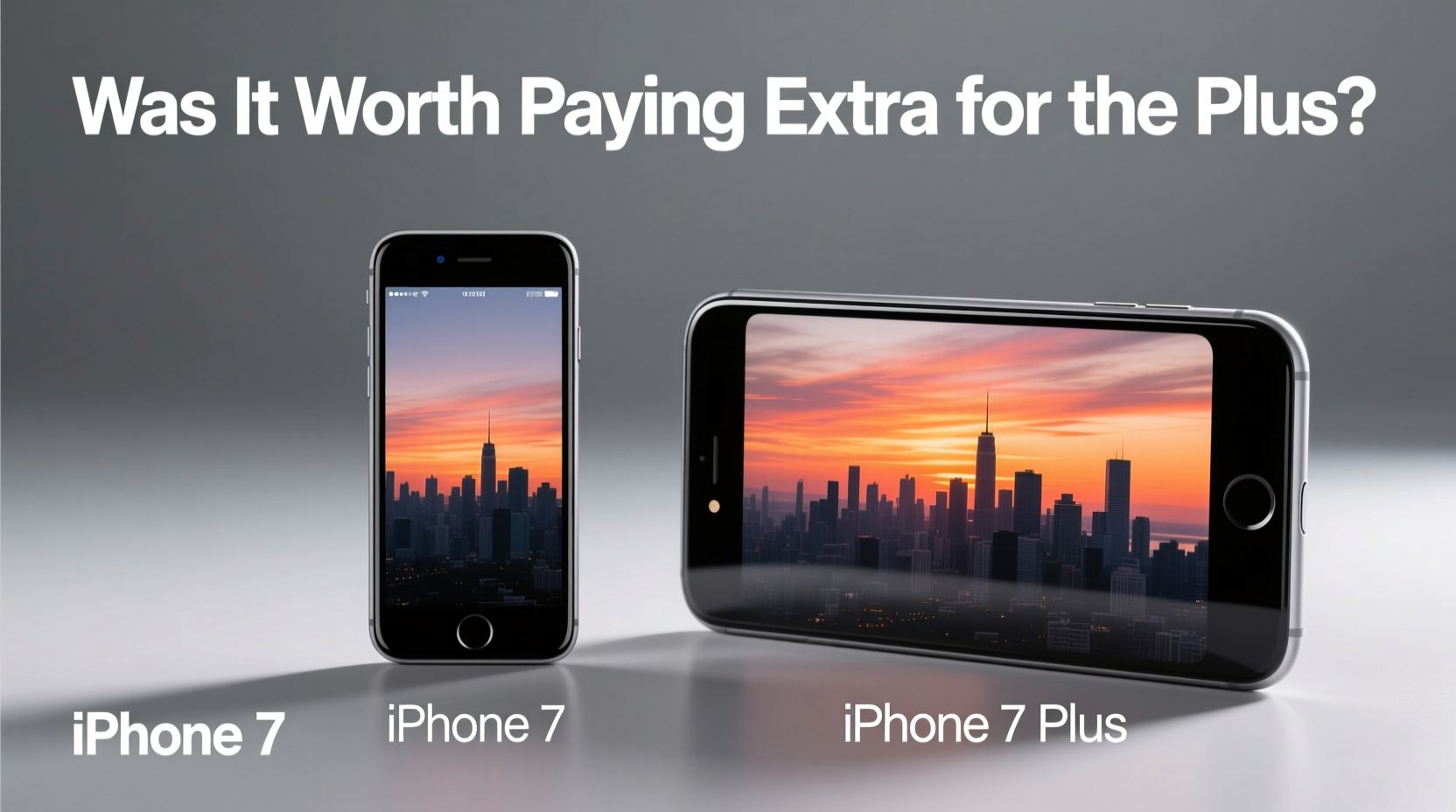
The most obvious distinction between the two models lies in their physical dimensions and display quality. The iPhone 7 featured a 4.7-inch Retina HD display with a resolution of 1334x750 pixels, while the iPhone 7 Plus offered a 5.5-inch screen at 1920x1080—Apple’s first Full HD display on an iPhone.
While both used IPS LCD technology, the larger screen on the 7 Plus provided a noticeably better viewing experience for media consumption, gaming, and multitasking. For users who frequently watched videos or read e-books, the extra screen real estate made a meaningful difference.
However, the trade-off was portability. The iPhone 7 fit comfortably in smaller hands and pockets, making it ideal for those prioritizing compactness. The 7 Plus, while not excessively large by today’s standards, required two-handed use for many tasks and felt bulkier in everyday carry.
“With the 7 Plus, Apple finally gave power users a true productivity device without sacrificing iOS polish.” — David Pierce, The Verge (2016)
Battery Life: A Clear Advantage for the Plus
One of the strongest arguments in favor of the iPhone 7 Plus was its superior battery life. Apple rated the 7 Plus for up to 21 hours of talk time compared to 14 hours on the iPhone 7. In real-world usage, this often translated into an extra four to six hours of mixed use.
For heavy users—those streaming music, using GPS navigation, or browsing social media throughout the day—the extended battery life meant fewer midday charges and greater reliability during travel or long workdays.
Camera Capabilities: The Game-Changer
The most significant technological leap came in the camera department. The iPhone 7 had a single 12MP rear camera with optical image stabilization (OIS), f/1.8 aperture, and improved low-light performance. It was excellent for its time.
But the iPhone 7 Plus introduced a dual-camera system—a first for any iPhone. Alongside the standard wide-angle lens, it included a second 12MP telephoto lens with 2x optical zoom. This enabled lossless zooming and, later via software update, Portrait Mode, which simulated DSLR-like depth-of-field effects.
Photography enthusiasts and casual users alike found the 7 Plus’s camera versatility compelling. Being able to zoom in without digital degradation or capture professional-looking portraits added tangible value.
| Feature | iPhone 7 | iPhone 7 Plus |
|---|---|---|
| Rear Cameras | Single 12MP (wide) | Dual 12MP (wide + telephoto) |
| Optical Zoom | No | 2x |
| Portrait Mode | Not supported | Available (iOS 10.1+) |
| Video Recording | 4K at 30fps, 1080p at 60fps | Same as iPhone 7 |
| Front Camera | 7MP | 7MP |
The dual-camera system wasn’t just a gimmick—it laid the foundation for future iPhone photography innovations. For anyone who took mobile photography seriously, the 7 Plus offered capabilities the standard 7 simply couldn’t match.
Performance and Storage Options
Both phones ran the same A10 Fusion chip—the fastest smartphone processor at the time—and delivered nearly identical app launch speeds, gaming performance, and multitasking responsiveness. There was no measurable performance gap due to hardware.
However, storage options played a role in perceived value. Both models launched with 32GB, 128GB, and 256GB variants. But given the 7 Plus’s strengths in video recording and photo zoom, users were more likely to fill storage faster, making higher-capacity models more appealing.
That said, if your usage leaned toward messaging, calls, and light apps, the iPhone 7’s lower storage tier might have sufficed, further reducing the total cost of ownership.
Real-World Example: Sarah’s Upgrade Dilemma
Sarah, a freelance photographer and part-time traveler, upgraded from an iPhone 6 to either the 7 or 7 Plus in late 2016. She needed a reliable phone for capturing candid shots, navigating unfamiliar cities, and editing photos on the go.
She initially considered the iPhone 7 for its sleek size and lower price. But after testing both in-store, she realized the 7 Plus’s dual-camera system allowed her to frame tighter shots without moving closer—an essential feature during street photography. Additionally, the larger screen made Lightroom edits easier, and the battery lasted through full-day shoots.
Sarah chose the iPhone 7 Plus and kept it for over four years, citing the camera and battery as reasons the extra $120 upfront paid for itself in long-term utility.
Step-by-Step: How to Decide Which Model Was Right for You
If you were weighing the decision back in 2016—or are evaluating a used purchase today—here’s a logical way to assess whether the Plus was worth the premium:
- Evaluate your daily usage: Do you watch videos, play games, or use productivity apps heavily? Larger screens enhance these experiences.
- Assess photography needs: If you regularly take photos, especially portraits or distant subjects, the dual-camera system is a major advantage.
- Consider battery habits: Do you charge multiple times a day? The 7 Plus offered significantly longer endurance.
- Test for comfort: Hold both models. Can you operate the 7 Plus one-handed? Is pocket space a concern?
- Compare prices: Factor in resale value. The 7 Plus generally held value better due to higher demand.
Checklist: iPhone 7 vs 7 Plus – Key Decision Factors
- ✅ Need 2x optical zoom or Portrait Mode? → Choose 7 Plus
- ✅ Want longer battery life? → Choose 7 Plus
- ✅ Prefer a compact, one-handed phone? → Choose iPhone 7
- ✅ Use phone mostly for calls, texts, and social media? → iPhone 7 may suffice
- ✅ Editing photos or watching videos often? → 7 Plus provides better screen and performance headroom
Frequently Asked Questions
Did the iPhone 7 Plus have better speakers than the iPhone 7?
Yes. Both models featured stereo speakers, but the 7 Plus used a combination of the earpiece and bottom-firing speaker, creating a wider soundstage. The effect was more immersive, especially when holding the phone horizontally.
Was the iPhone 7 Plus significantly heavier?
The 7 Plus weighed 188 grams (6.63 oz), compared to 138 grams (4.87 oz) for the iPhone 7. That 50-gram difference was noticeable during prolonged use, particularly when holding the phone one-handed.
Can the iPhone 7 still be used in 2024?
Limitedly. While basic functions like calling and texting work, lack of app updates (many apps no longer support iOS 15 and below) and degraded battery performance make it impractical as a primary device today.
Conclusion: Was the Extra Cost Justified?
For many users, yes—the iPhone 7 Plus was worth the additional investment. The dual-camera system alone represented a generational leap in mobile photography, and the battery life improvements addressed one of the iPhone’s longstanding weaknesses. Add in the superior screen and audio, and the Plus model offered a more complete, future-proof experience.
However, the answer wasn't universal. Users who valued portability, had modest usage patterns, or were sensitive to price might have found the iPhone 7 more than sufficient. The smaller model remained a powerful, polished device with excellent build quality and performance.
In hindsight, the iPhone 7 Plus wasn't just a bigger phone—it was a glimpse into Apple’s vision for the future of smartphones. Its innovations became standard in later models, reinforcing that the extra cost in 2016 bought not just more features, but a preview of where mobile tech was headed.




 浙公网安备
33010002000092号
浙公网安备
33010002000092号 浙B2-20120091-4
Comments
No comments yet. Why don't you start the discussion?