
The iPhone 7 launched in 2016 as a flagship device that set a new standard for build quality, camera performance, and iOS optimization. Nearly a decade later, many users still hold onto their iPhone 7s—some out of loyalty, others due to budget constraints. But in today’s smartphone landscape, where Android devices offer high-end features at every price point, is holding on to an iPhone 7 wise? Or is it time to make the switch?
This isn’t just about nostalgia. It’s about functionality, security, app compatibility, and long-term usability. Whether you’re clinging to your iPhone 7 because it “still works” or considering buying one secondhand to save money, this breakdown will help you decide if it's still a viable option—or if upgrading to a modern Android phone is the smarter move.
Performance and Hardware: Can the iPhone 7 Keep Up?
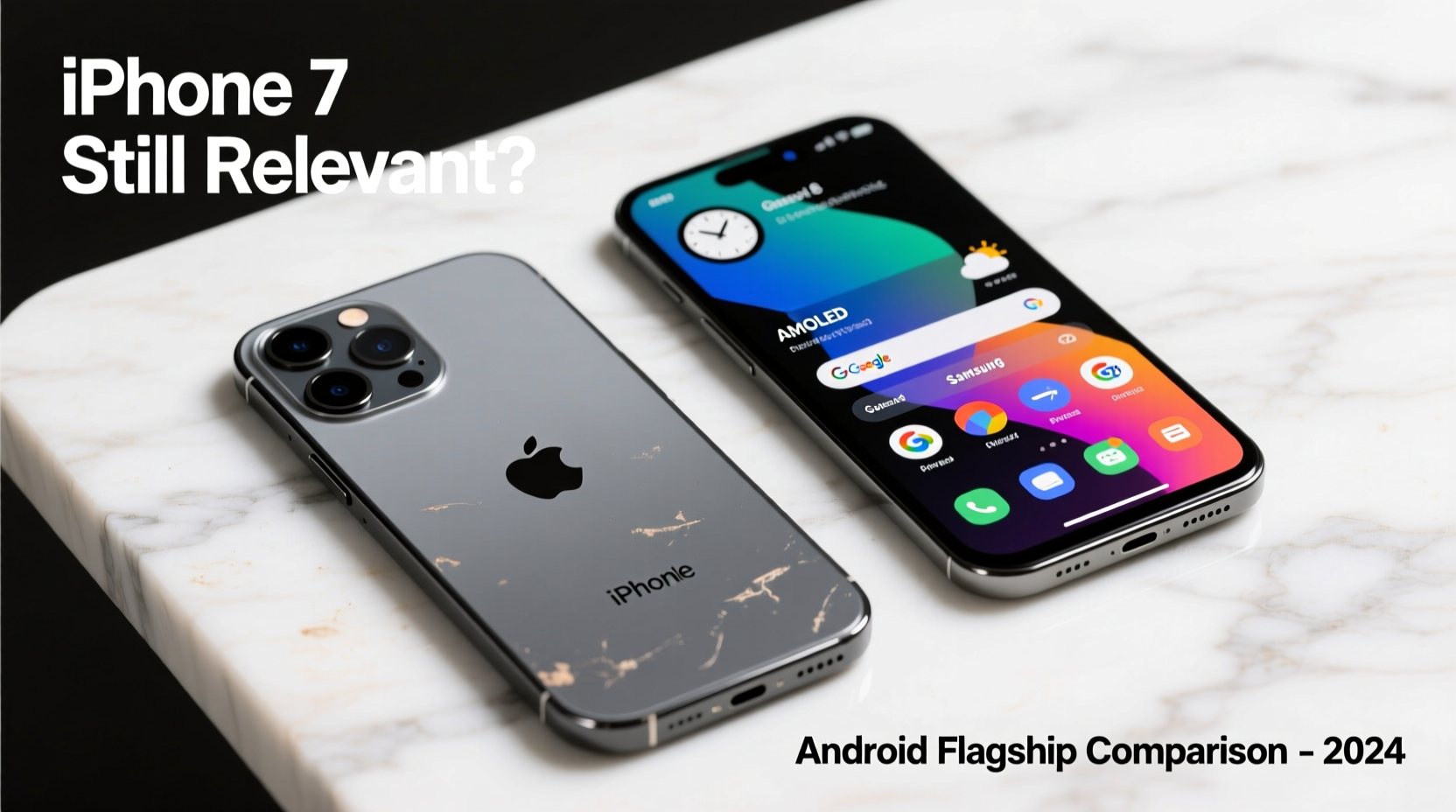
The iPhone 7 was powered by Apple’s A10 Fusion chip, which was groundbreaking in 2016. At the time, it outperformed most Android competitors in both CPU and GPU benchmarks. Even today, iOS optimization allows the iPhone 7 to run basic tasks like calling, texting, and light web browsing without major hiccups—on paper.
In reality, daily use has changed. Modern apps demand more memory and processing power. Social media platforms like Instagram and TikTok now include complex animations, video editing tools, and AR filters. The iPhone 7’s 2GB of RAM struggles with multitasking, often reloading apps from scratch after switching between them.
By contrast, even entry-level Android phones in 2024 come with at least 4GB of RAM and processors like the MediaTek Helio G series or Qualcomm Snapdragon 4-series chips—capable of handling multiple apps, HD streaming, and casual gaming without breaking a sweat.
Software Support and Security: The Hidden Risk
Apple typically supports its iPhones with iOS updates for around 5–6 years. The iPhone 7 last received a major update with iOS 16 in 2022. While it can still receive minor security patches, it is no longer eligible for new iOS versions. This means no future feature updates, bug fixes, or critical security improvements.
Lack of updates is a serious concern. Without ongoing security patches, your device becomes increasingly vulnerable to malware, phishing attacks, and data breaches—especially as developers stop testing apps on outdated OS versions.
On the Android side, Google and OEMs have improved support timelines significantly. Phones like the Pixel 6a or Samsung Galaxy A54 receive 4–5 years of OS and security updates. Even mid-range Android devices now offer better long-term software support than the iPhone 7 ever will again.
“Once a phone stops receiving OS updates, its digital lifespan effectively ends—not because it can’t turn on, but because it can’t stay safe.” — Lena Park, Mobile Security Analyst at CyberShield Labs
Camera Quality and Everyday Use
The iPhone 7 featured a 12MP rear camera with optical image stabilization (on the Plus model) and a respectable f/1.8 aperture. For its time, it delivered excellent photo quality in daylight and solid low-light performance. However, modern expectations have shifted dramatically.
Today’s budget Android phones often include multiple lenses (ultra-wide, macro), night modes, AI scene detection, and 4K video recording—all capabilities the iPhone 7 lacks. Software enhancements allow even $200 Android devices to outperform the iPhone 7 in dynamic range, color accuracy, and low-light clarity.
Moreover, social media apps now optimize for newer camera formats. Features like portrait mode, AR filters, and live captions rely on hardware and software coordination that the iPhone 7 simply cannot support.
Camera Comparison: iPhone 7 vs Budget Android (2024)
| Feature | iPhone 7 | Budget Android (e.g., Redmi Note 13) |
|---|---|---|
| Rear Cameras | Single 12MP | Triple: 50MP main + 8MP ultra-wide + 2MP macro |
| Front Camera | 7MP | 13MP with AI beautification |
| Video Recording | 4K at 30fps | 4K at 30fps, slow motion 1080p at 120fps |
| Night Mode | No | Yes, with multi-frame processing |
| AI Enhancements | Limited | Scene detection, HDR, face retouching |
Real-World Example: Maria’s Dilemma
Maria, a freelance photographer assistant in Portland, used her iPhone 7 for six years. She appreciated its simplicity and durability. But in 2023, she started missing job opportunities because she couldn’t run the latest version of Lightroom Mobile, which dropped support for 32-bit apps—and the iPhone 7’s architecture couldn’t handle the updated software.
She tried sideloading older versions, but they crashed frequently. Eventually, she switched to a used Samsung Galaxy A34 with 6GB RAM and Android 13. Not only did her workflow improve, but she gained access to cloud sync, faster exports, and RAW editing—features previously unavailable on her aging iPhone.
Maria’s story isn’t unique. As professional and creative tools evolve, legacy devices fall behind—not because they’re broken, but because they’re incompatible.
Value and Cost: Is the iPhone 7 Still a Bargain?
On the surface, buying a used iPhone 7 for $50 might seem like a smart financial decision. But consider the hidden costs:
- Limited resale value: You can’t trade in an iPhone 7 anywhere officially.
- Potential repair bills: Battery replacements are expensive, and original parts are scarce.
- App incompatibility: Many services now require newer OS versions.
- Data risk: No security updates mean higher exposure to online threats.
Meanwhile, Android offers exceptional value. For under $200, you can get a brand-new phone with 5G, a large battery, modern camera setup, and guaranteed updates until 2027. Brands like Motorola, Nokia, and Samsung offer reliable entry-level models backed by warranties and customer support.
Checklist: When to Upgrade from iPhone 7
- You’re running iOS 15 or earlier and aren’t receiving updates.
- Apps frequently crash or fail to install.
- Battery life lasts less than half a day.
- Camera can’t capture clear photos in low light.
- You need features like Google Maps Live View, WhatsApp voice status, or mobile banking apps that require newer APIs.
- You feel hesitant using public Wi-Fi due to security concerns.
Frequently Asked Questions
Can the iPhone 7 still be used safely in 2024?
It can function, but not safely. Without security updates, vulnerabilities remain unpatched. Avoid entering passwords, using banking apps, or connecting to public networks on an unsupported iPhone 7.
Is there any reason to keep using an iPhone 7?
Only as a secondary device—for music, offline games, or emergency calls. For primary use, especially involving internet access or personal data, it’s no longer recommended.
What’s the cheapest Android phone that outperforms the iPhone 7?
The Moto G Power (2023) or Samsung Galaxy A14 5G, both under $200, offer better performance, larger screens, longer battery life, and continued software support.
Final Verdict: Time to Move On
The iPhone 7 was a landmark device—one of the last iPhones with a headphone jack, solid build, and excellent speaker quality. But technology moves forward. Holding onto a phone that no longer receives updates, struggles with modern apps, and poses security risks isn’t frugality; it’s digital stagnation.
Modern Android phones don’t just match the iPhone 7—they surpass it in nearly every practical category: performance, camera, battery life, connectivity, and long-term support. And they do so at prices accessible to almost everyone.
If you're still relying on an iPhone 7 as your daily driver, the best thing you can do for your productivity, privacy, and peace of mind is to upgrade. You don’t need to spend $1,000. A well-chosen Android device under $250 will serve you better today than your iPhone 7 ever could again.




 浙公网安备
33010002000092号
浙公网安备
33010002000092号 浙B2-20120091-4
Comments
No comments yet. Why don't you start the discussion?