
In 2024, the iPhone 7 and Galaxy S7 Edge are over seven years old—ancient by smartphone standards. Yet, some users still rely on them daily, either out of necessity or loyalty to devices they once loved. With app demands growing, security updates ending, and newer models flooding the market, a pressing question remains: is it still worth holding onto these phones, or should you upgrade?
This comparison isn’t about which was better in 2016—it’s about how they hold up today. We’ll examine real-world usability, software support, battery life, camera quality, and future-proofing to help you decide whether to move on.
Performance and Hardware in 2024
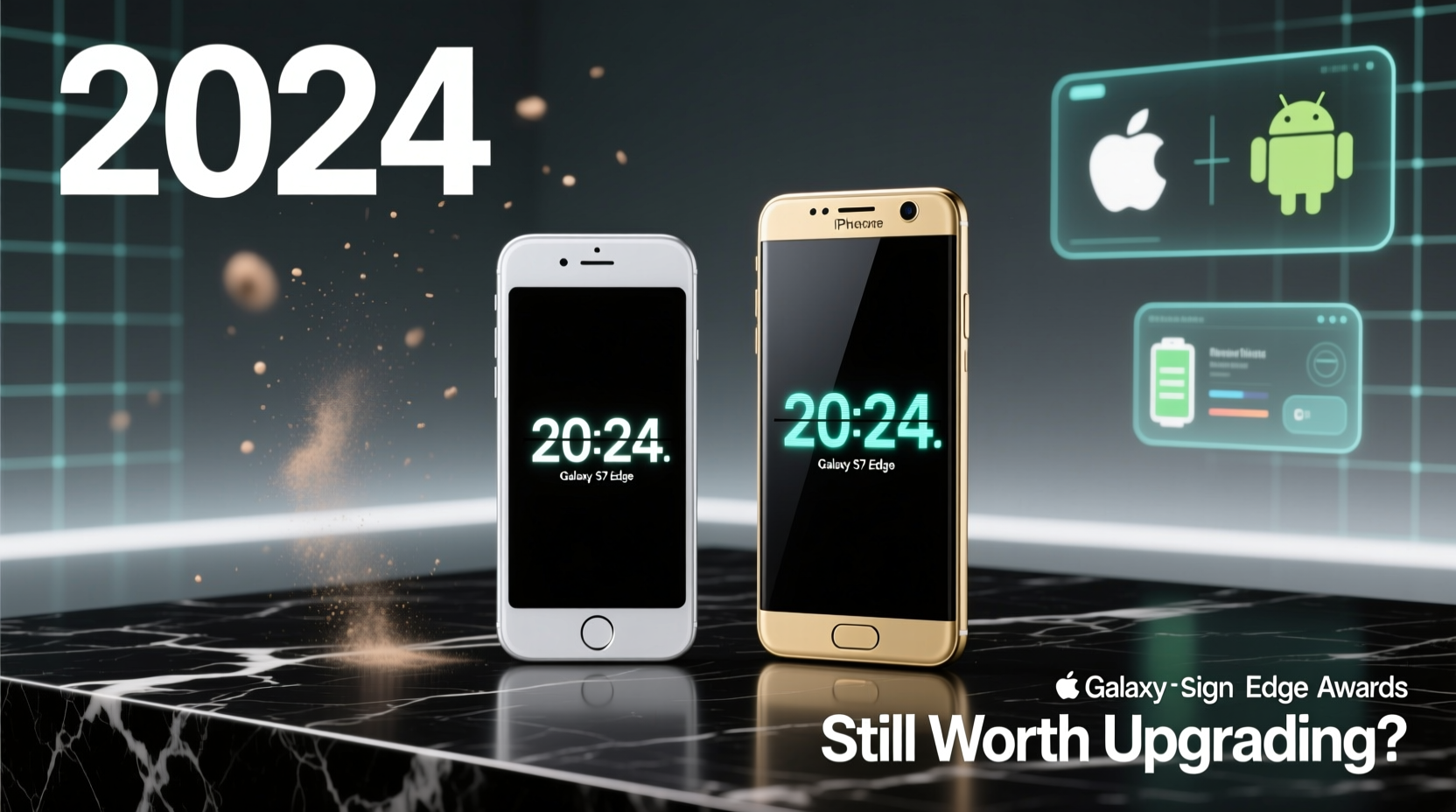
Both phones were powered by flagship-tier hardware in their time. The iPhone 7 ran Apple’s A10 Fusion chip, while the Galaxy S7 Edge used either the Snapdragon 820 or Exynos 8890, depending on region. These processors were top performers in 2016, but today’s mobile apps demand far more.
Modern operating systems and apps like Instagram, Google Maps, and video conferencing tools require faster CPUs, more RAM, and optimized graphics processing. On both devices, multitasking is sluggish. Apps reload frequently, and background processes are aggressively killed. Basic web browsing works, but complex sites with JavaScript-heavy designs often lag or crash.
Battery degradation is another major issue. After 7+ years, even if the phone hasn’t been heavily used, lithium-ion cells degrade significantly. Users report needing to charge multiple times a day—or carrying power banks just to stay connected.
Software Support and Security
Software longevity differs drastically between Apple and Samsung. The iPhone 7 received iOS updates until 2023, with iOS 16 being its final supported version. That means no new features, bug fixes, or critical security patches beyond that point. While iOS 16 is stable, running an unsupported OS exposes users to unpatched vulnerabilities.
The Galaxy S7 Edge fared worse. It stopped receiving Android updates after Android 8.0 Oreo in 2018. No security patches have been issued since 2019. This makes the device highly vulnerable to malware, phishing attacks, and data breaches—especially when downloading apps or visiting websites.
“Devices without ongoing security updates are ticking time bombs for personal data.” — Dr. Lena Patel, Cybersecurity Researcher at MobileTrust Labs
App developers increasingly drop support for older operating systems. WhatsApp ended support for iOS 12 and below in 2023, affecting iPhone 7 users unless they upgraded. Similarly, many banking and productivity apps now require Android 9 or higher, rendering the S7 Edge incompatible.
Camera Quality: Nostalgia vs. Reality
In their prime, both cameras were exceptional. The iPhone 7 offered excellent color accuracy and dynamic range, especially in daylight. The S7 Edge featured a dual-pixel sensor that improved low-light focus—a rarity at the time.
Today, however, computational photography has evolved dramatically. Modern smartphones use AI-driven HDR, night modes, portrait depth mapping, and multi-frame stacking to produce images that far surpass what the iPhone 7 or S7 Edge can capture.
The lack of software enhancements means photos appear flat, lack detail in shadows, and struggle with motion blur. Video recording is limited to 1080p at 60fps on the iPhone 7 and 4K on the S7 Edge (a rare advantage), but stabilization and audio processing are outdated.
| Feature | iPhone 7 | Galaxy S7 Edge |
|---|---|---|
| Rear Camera | 12MP, f/1.8 | 12MP, f/1.7 (Dual Pixel) |
| Front Camera | 7MP | 5MP |
| Video Max | 1080p @ 60fps | 4K @ 30fps |
| Night Mode | No | No |
| Digital Zoom Quality | Poor beyond 2x | Softens quickly |
If photography matters to you, neither phone meets current expectations. Even mid-range 2024 smartphones outperform them in every lighting condition.
Real-World Usage: A Mini Case Study
Consider Maria, a freelance writer who’s used her iPhone 7 since 2016. She avoided upgrading due to cost and satisfaction with the compact size. In early 2023, she noticed increasing issues: her email app crashed during client submissions, Safari froze on research pages, and FaceTime calls dropped unexpectedly.
After switching to a used iPhone SE (2022) model—still affordable but running iOS 17—she reported smoother performance, reliable app functionality, and better battery life. “I didn’t realize how much stress my old phone caused until I upgraded,” she said. “It wasn’t just slow—it was holding me back professionally.”
Likewise, James, a college student using a Galaxy S7 Edge, struggled with campus apps that required biometric login and secure authentication—features his device couldn’t support. He eventually moved to a budget Android phone and regained access to digital classrooms and library services.
Is Upgrading Worth It? A Step-by-Step Decision Guide
If you’re still using either device, follow this timeline to determine your next move:
- Evaluate Daily Usability: Are apps crashing? Is the phone overheating? Does it take more than 10 seconds to open common apps?
- Check App Compatibility: Try installing essential apps (banking, messaging, maps). If they won’t install or run poorly, upgrade is necessary.
- Assess Battery Health: On iPhone, go to Settings > Battery > Battery Health. Below 70% capacity indicates replacement need. On Android, third-party apps like AccuBattery can estimate wear.
- Review Security Needs: Are you handling sensitive information? Using online banking? Unsupported devices increase risk.
- Compare Upgrade Costs: Refurbished iPhones (SE, 8+) or budget Androids (Pixel A-series, Samsung A14) offer modern performance under $200.
Upgrade Checklist: What to Look For
- At least 4GB RAM (6GB recommended for longevity)
- Minimum Android 12 or iOS 15 (for continued update eligibility)
- Regular security patch commitment (e.g., Google, Samsung, Apple)
- Battery capacity over 4000mAh for all-day use
- USB-C port (Android) or Lightning-to-USB-C compatibility (iPhone)
- Dual-camera system with night mode and HDR
- Fingerprint sensor or Face ID for secure logins
Frequently Asked Questions
Can the iPhone 7 still receive texts and calls in 2024?
Yes, basic cellular functions still work. However, iMessage and FaceTime may become less reliable as Apple phases out support. SMS and voice calls remain functional on most carriers, though 3G networks have been discontinued in many regions, potentially affecting service.
Is the Galaxy S7 Edge waterproof now?
No. While it had IP68 rating in 2016, seals degrade over time. Water resistance is not guaranteed after years of use, temperature changes, and micro-cracks. Do not submerge it.
Will either phone get Android 14 or iOS 17?
No. The iPhone 7 maxed out at iOS 16. The S7 Edge stopped at Android 8. Neither will receive further OS upgrades.
Final Verdict: Time to Move On
The iPhone 7 and Galaxy S7 Edge were groundbreaking in their era. But in 2024, they are functionally obsolete. They lack security, app compatibility, performance, and camera capabilities expected of even entry-level smartphones today.
Upgrading doesn’t mean buying the latest flagship. A modest investment in a refurbished iPhone or budget Android brings years of reliable use, modern features, and peace of mind. The convenience, safety, and efficiency gained far outweigh the sentimental value of an aging device.
Technology evolves not just to impress, but to serve. Holding onto outdated tools limits your access to communication, information, and opportunity. Letting go isn’t surrender—it’s progress.




 浙公网安备
33010002000092号
浙公网安备
33010002000092号 浙B2-20120091-4
Comments
No comments yet. Why don't you start the discussion?